Lose a tooth
First it wobbles a little, then it can be bent sideways, and somewhere in there comes the question of whether it will hurt. The pictures below show how a baby tooth comes out, step by step, before it actually happens.
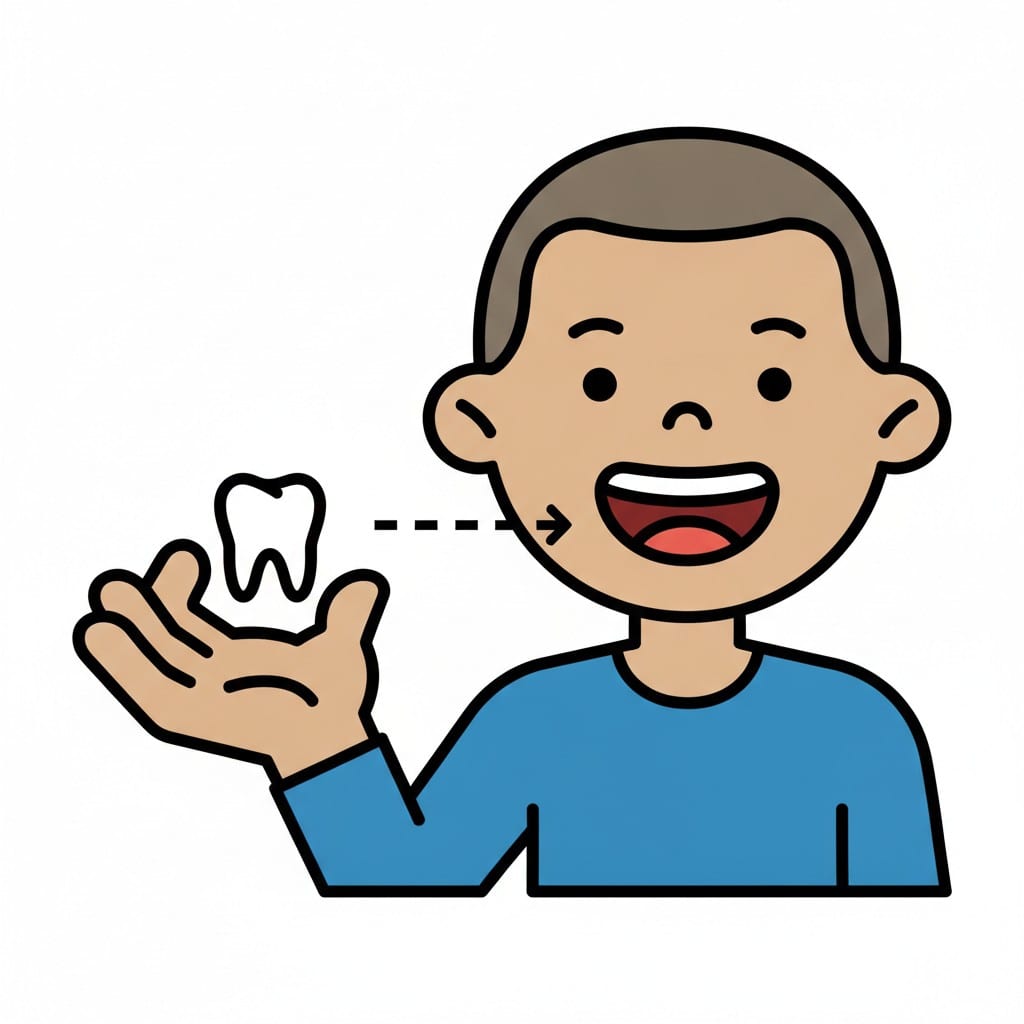 ♂
♂Boy holding a lost tooth
A smiling boy shows the gap in his teeth and holds up the baby tooth that just fell out.
About this visual support
A body that changes on its own is hard to trust. A tooth that suddenly sits loose usually does not hurt, but it feels wrong, and a child cannot know whether the next bite will be the one that frees it. What frightens is the uncertainty, not the tooth.
Seeing the whole process in pictures removes a large part of that. Cards showing a wobbling tooth, a little blood on a napkin, the tooth in a hand, the gap and then the new tooth coming through give the event a known endpoint. Many children are reassured most by the picture of the gap, by knowing that the hole is intended and not an injury. If your child is particularly sensitive to what happens inside the mouth, it helps to go through the pictures several days before the tooth actually comes out.
One tip: decide in advance where the tooth will go, a small jar by the bed for instance, and show that jar on a card of its own. Then there is a plan for the moment itself. In Routined you can save the event in your child's day and talk about it calmly at bedtime.
Use this image in a schedule
Build your own visual schedule with this image and download it as a print-ready PDF. Completely free.

More similar visual supports
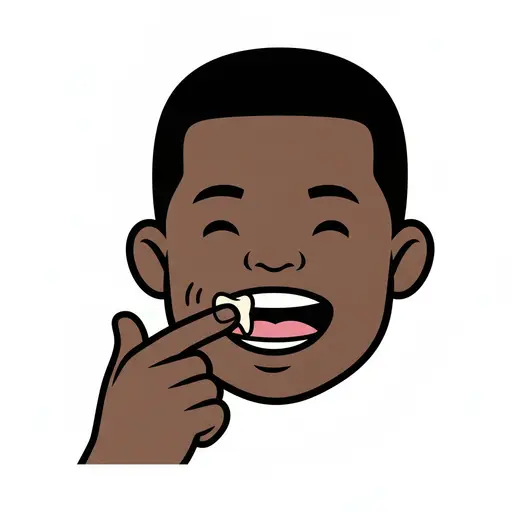
Wiggle a loose tooth
A smiling boy uses his finger to wiggle a loose front tooth.
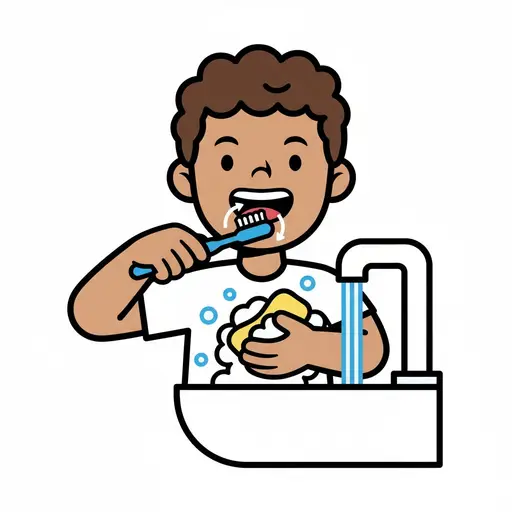
Brush and wash
A boy stands at a sink, actively brushing his teeth with a blue toothbrush and h...
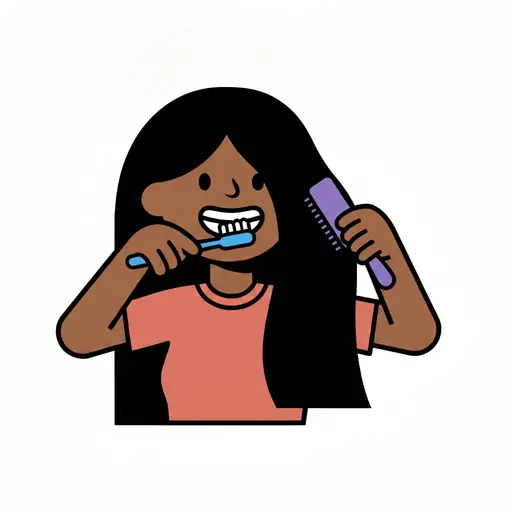
Brush Teeth and Hair
A girl brushes her teeth while holding a comb to her hair.
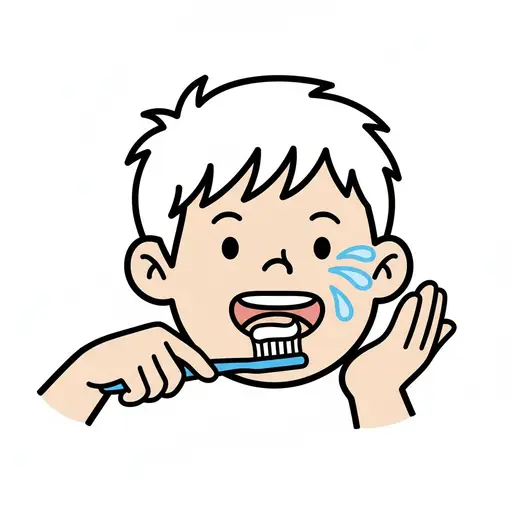
Brush teeth and wash face
A boy brushing his teeth with a blue toothbrush while wiping water droplets from...
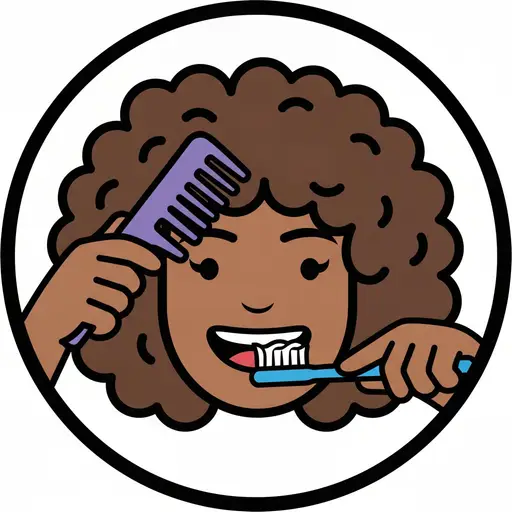
Brush Teeth, Comb Hair
A girl combs her curly hair with a comb and brushes her teeth with a toothbrush.
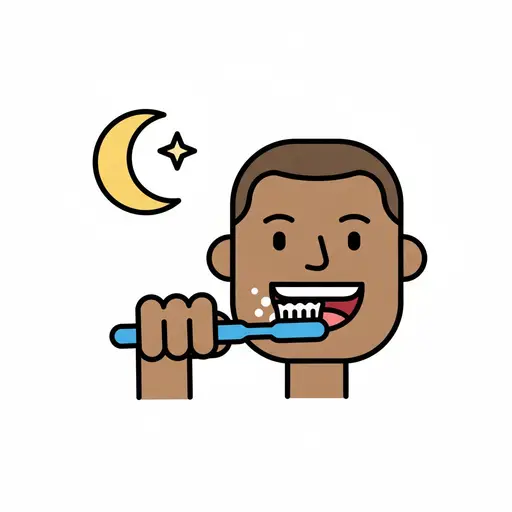
Brush teeth at night
A boy brushes his teeth with a toothbrush while a moon and star appear nearby.
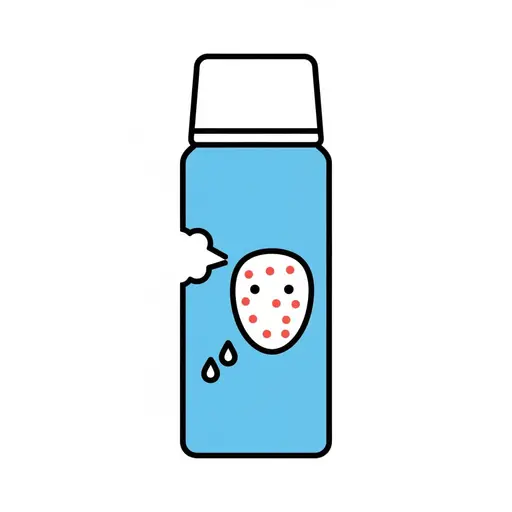
Acne spray
A blue spray bottle spraying towards a face with red spots.

Allergy medicine
Medicine bottle with a red cross next to a capsule, a leaf, and a cloud.
Take the visual supports with you
In Routined you build schedules from these pictures, add timers and voice instructions, and your child follows the day on their own.


* 14-day free trial included for new users.