Rings
Rings do not fill themselves. The child has to link each movement, meal or break to a slice of the circle that slowly closes. The pictures below show how to make that link clearer along the way.

Progress Rings
An illustration of two interlocking rings in yellow and blue, with a section of the blue ring filled in grey to show progress.
About this visual support
Activity rings are a clever visual idea that works fine for an adult who already grasps abstract time. For a child, the ring at first is just a shape on a screen or a paper card. The link between jumping, drinking water or brushing teeth and a curve moving a notch is not obvious until it is shown.
That is where the visual schedule does the work. When each action is paired with the ring it fills, progress becomes concrete: a picture of going outside, a picture of the ring growing, a picture of the goal reached. Children who struggle to hold motivation across a full day get a visible reward that changes with what they do. And anyone who gets lost can quickly see where they are heading.
A specific tip: set only two rings to fill per day in the beginning, one for movement and one for rest, so that progress shows up fast enough to feel relevant. In the Routined app you can link picture cards to each ring so the child sees exactly what moves the gauge.
Use this image in a schedule
Build your own visual schedule with this image and download it as a print-ready PDF. Completely free.

More similar visual supports
5000 Steps
A blue sneaker with the number 5000 and arrows showing movement.
Active Time
A laughing person jumps holding a football in one hand and a basketball in the o...

Activity
Inside a dashed circle a girl runs along holding a paintbrush in one hand and a ...
Activity and exercise
A woman lifts a small dumbbell while holding a tablet that shows a progress char...
Dance
A girl dances with her arms raised and one leg lifted, with movement lines aroun...
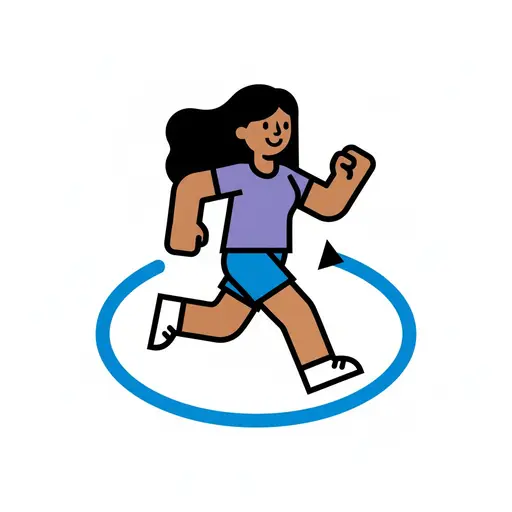
Do a lap
A person running in a continuous circular motion, indicated by a blue arrow, sym...
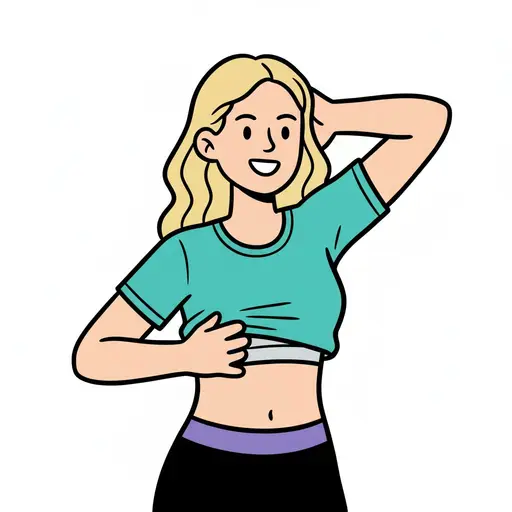
Dress for exercise
A woman putting on her exercise clothes.
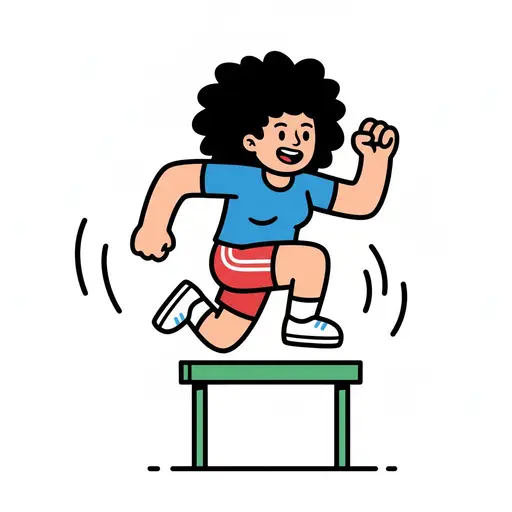
Exercise
Cartoon illustration of a woman in sportswear jumping over a green hurdle.
Take the visual supports with you
In Routined you build schedules from these pictures, add timers and voice instructions, and your child follows the day on their own.


* 14-day free trial included for new users.