Skate
Before the first step on the ice the head has already fallen ten times. The visual support below softens those mental falls by showing every move in advance – how to get up, how to glide, what to do if the balance slips.
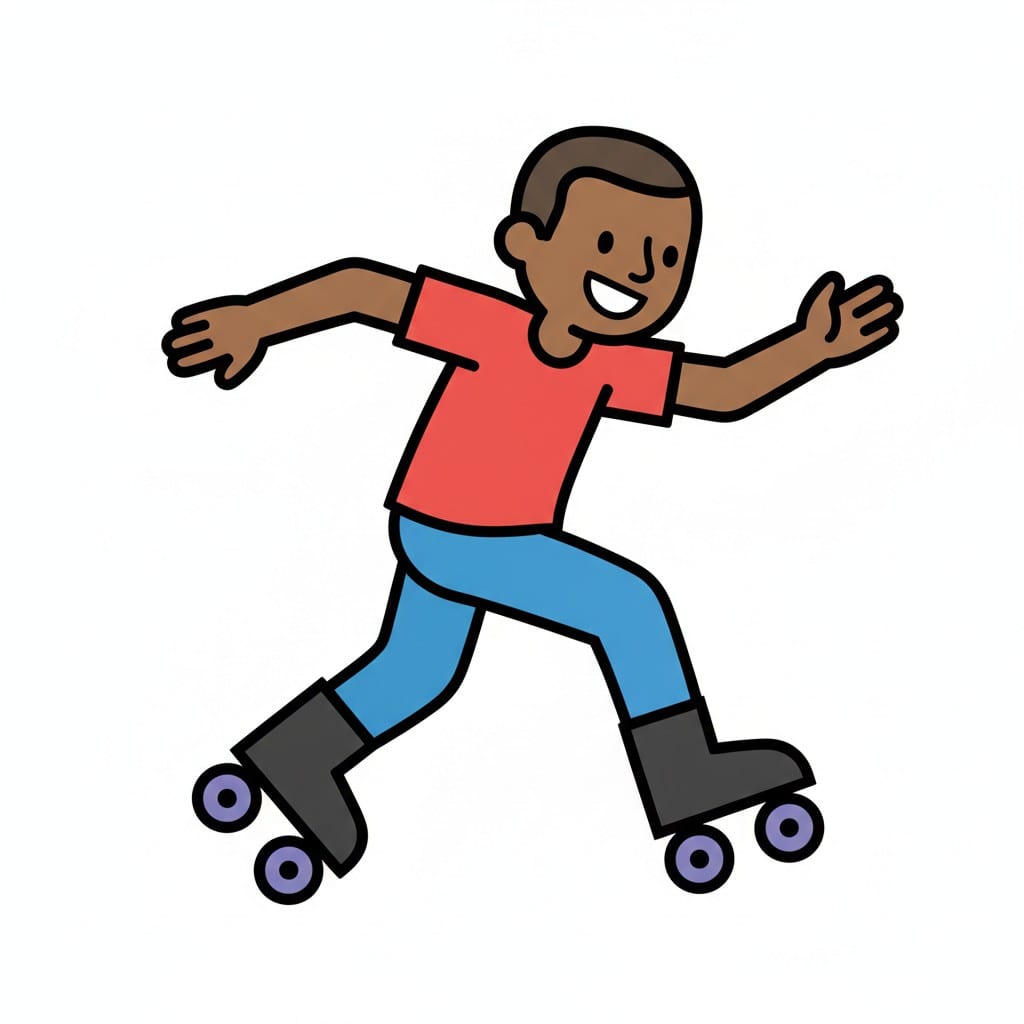 ♂
♂Boy skating
A happy boy wearing roller skates and a red t-shirt skates forward.
About this visual support
The surface decides the body. On ice there is no friction to lean on, so the whole body has to solve balance at once: ankles, knees, hips, arms, gaze. A child who does not yet know what it should feel like spends all their energy bracing for the fall, and there is nothing left for the actual skating.
Visual support helps by splitting the moment into predictable parts. One picture for sitting on the bench and putting on the skates, one for standing up at the boards, one for the first careful step, one for the glide, one for how to get back up after a fall. When the fall is part of the planned sequence it stops being a failure – it becomes a step with an exit.
A concrete tip: place a card of the boards as a resting point in the middle of the sequence. Knowing that you may return to the boards at any time makes it possible to let go of them the first time.
To run the same sequence on every trip to the rink, save it in Routined and pair it with a timer for the length of the session.
Use this image in a schedule
Build your own visual schedule with this image and download it as a print-ready PDF. Completely free.

More similar visual supports

Active Time
A laughing person jumps holding a football in one hand and a basketball in the o...

Activity
Inside a dashed circle a girl runs along holding a paintbrush in one hand and a ...
Floorball
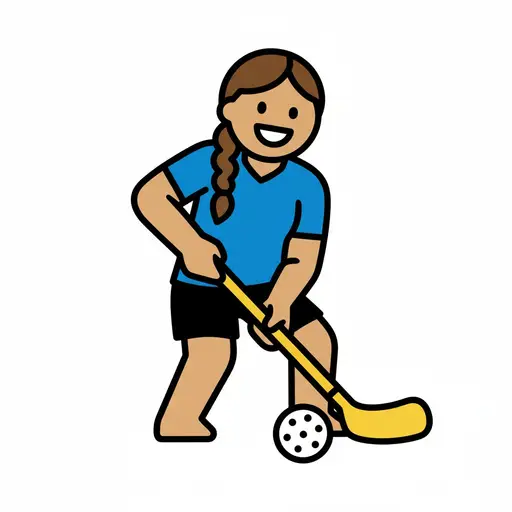
A person with braided hair playing floorball with a stick and ball.

Football
A classic football patterned with black and white panels.
Football practice
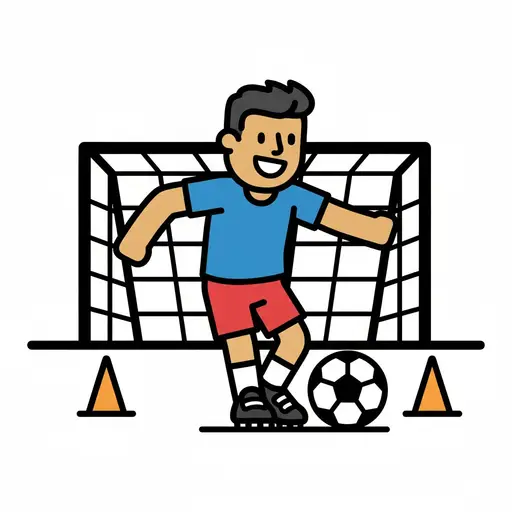
A boy kicking a football in front of a goal with two orange cones.
Ice skating
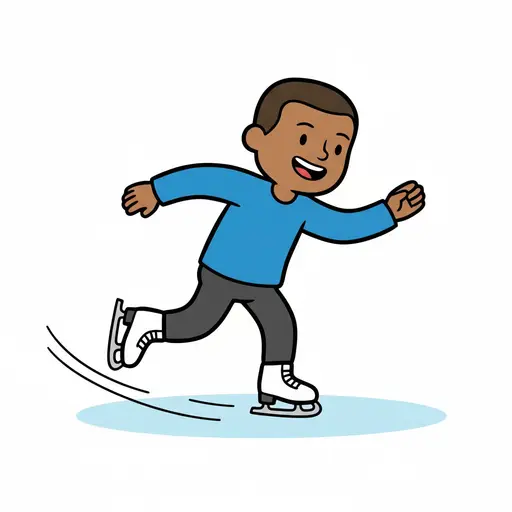
A boy is ice skating on the ice.
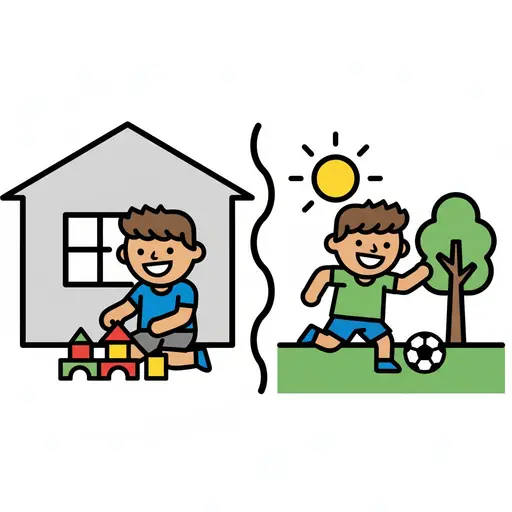
Indoor Outdoor Play
A boy builds with blocks indoors in a house and a boy plays with a football outs...
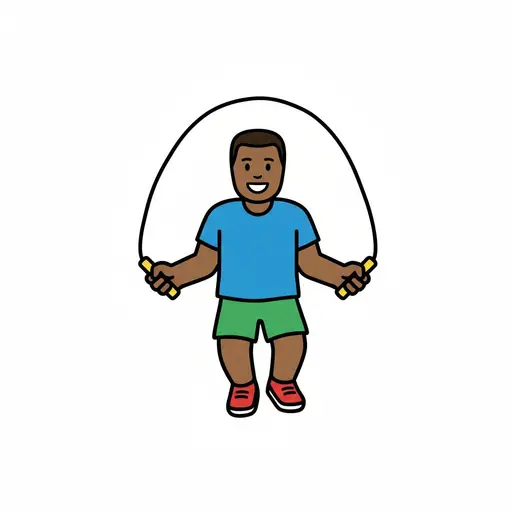
Jump rope
A boy jumping rope.
Take the visual supports with you
In Routined you build schedules from these pictures, add timers and voice instructions, and your child follows the day on their own.


* 14-day free trial included for new users.