Car ride
A belt against the neck, engine noise in the background, motion sickness and a locked sitting position, that is the four-track sensory load a longer car ride puts on a body. The visual support below targets exactly that.
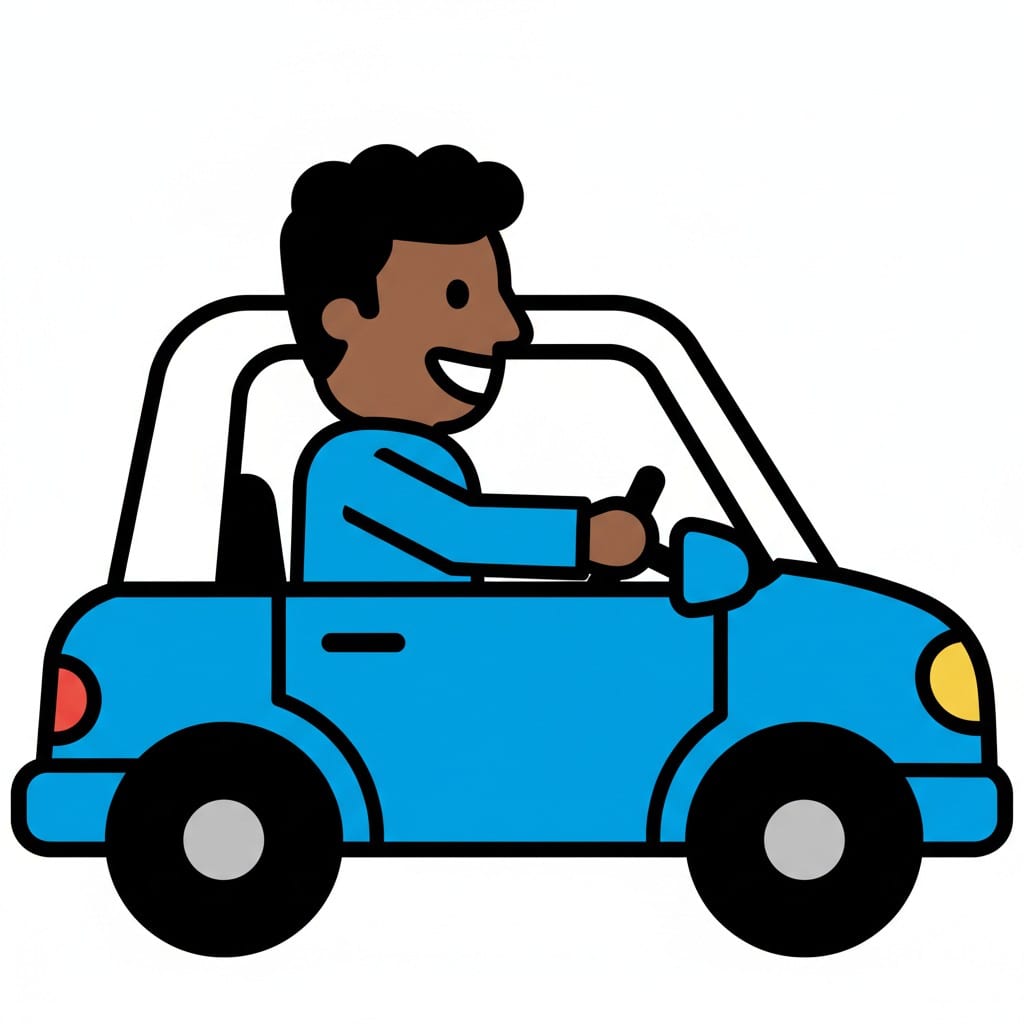 ♂
♂Man drives car
A man in a blue car holding the steering wheel and smiling.
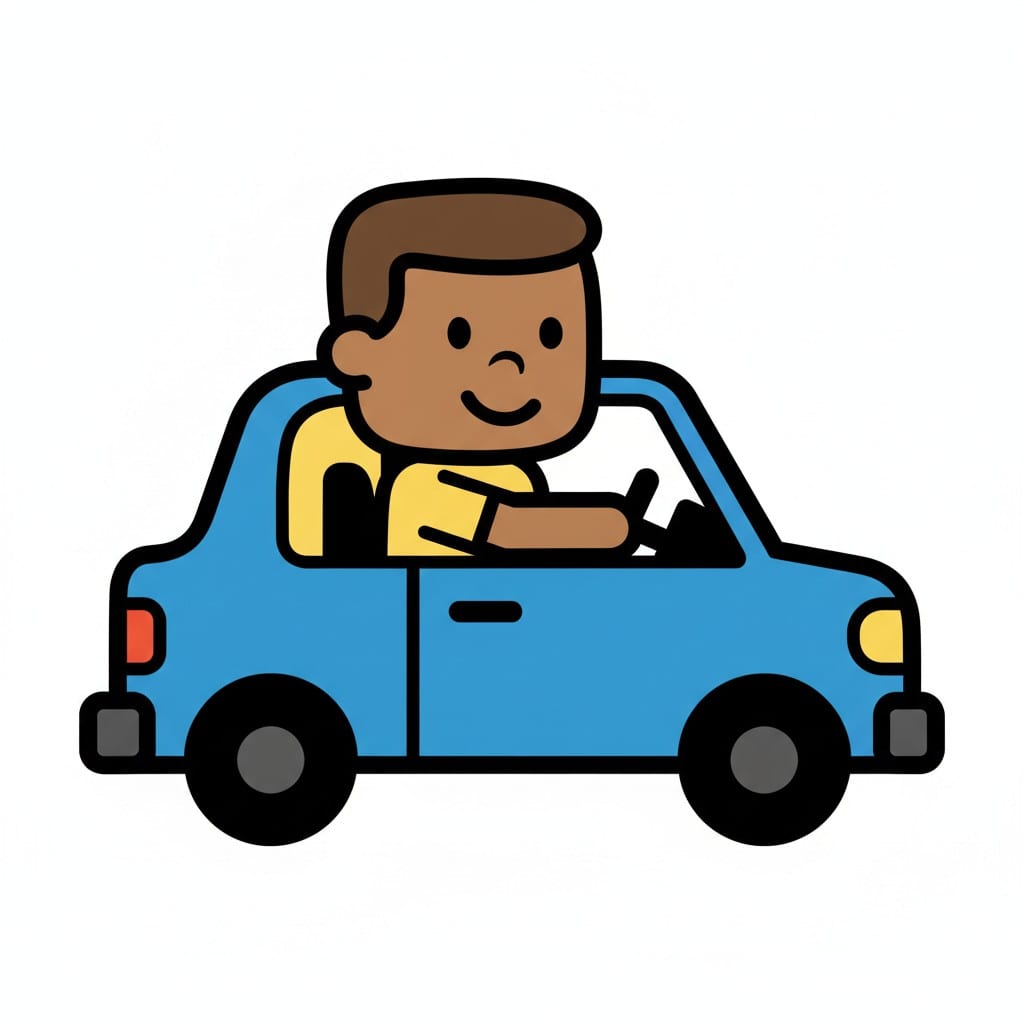 ♂
♂Ride car
A cartoon boy driving a blue car.
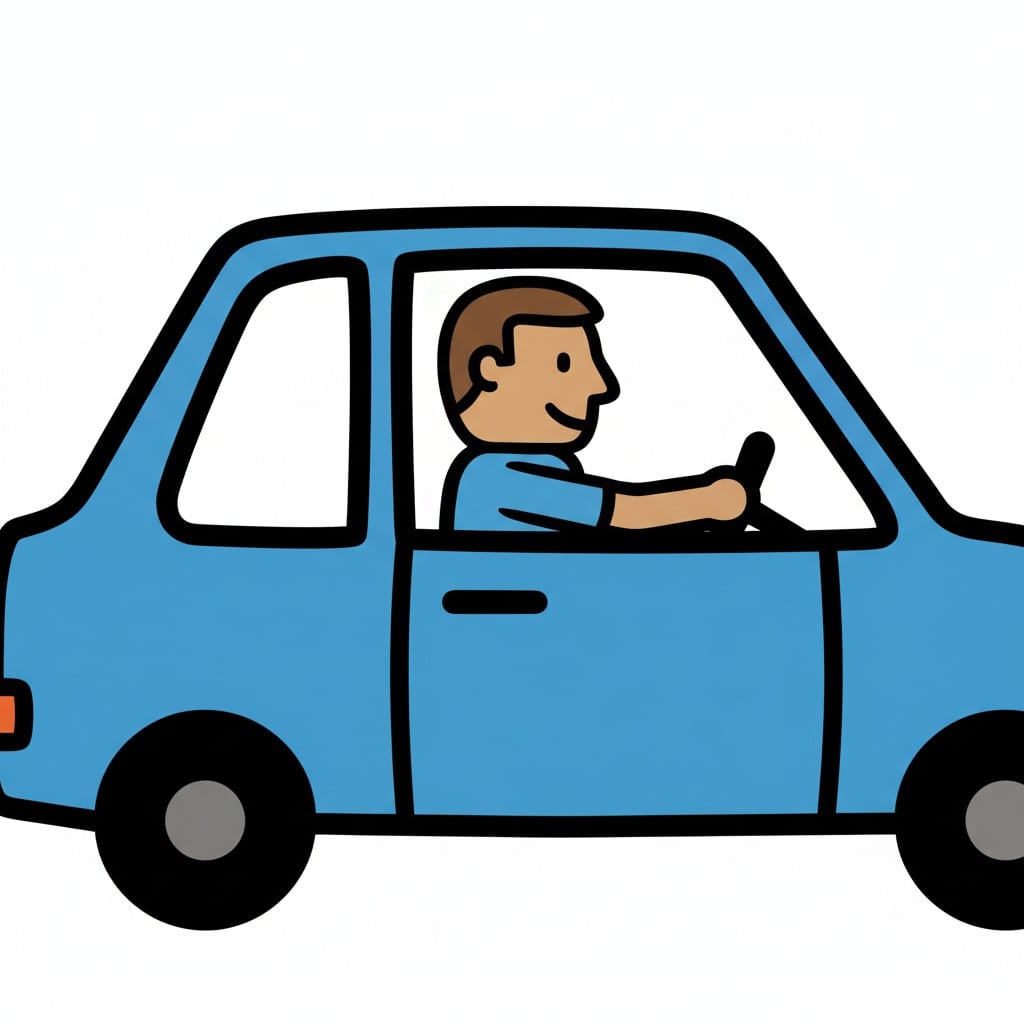 ♂
♂Ride car
A man driving a blue car.
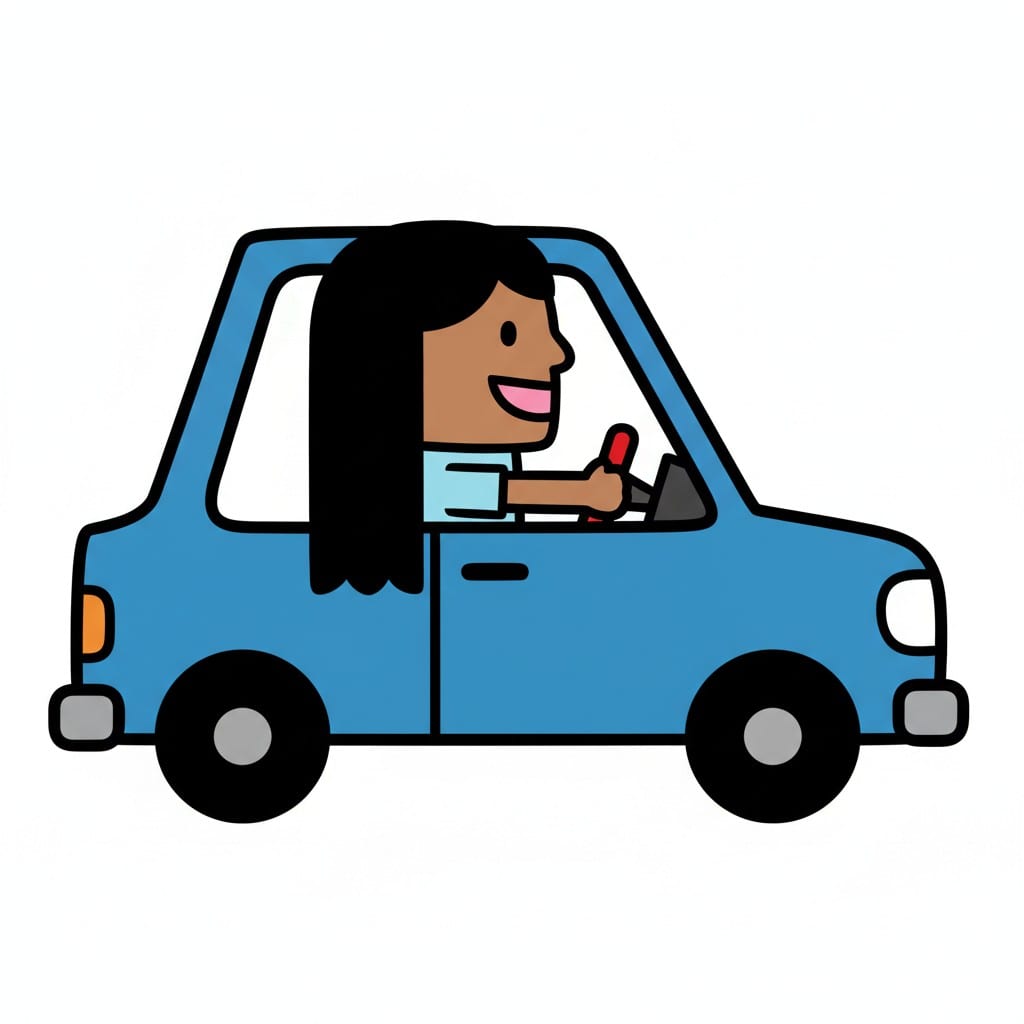 ♀
♀Ride car
A cartoon person with long dark hair is driving a blue car. The person is smiling.
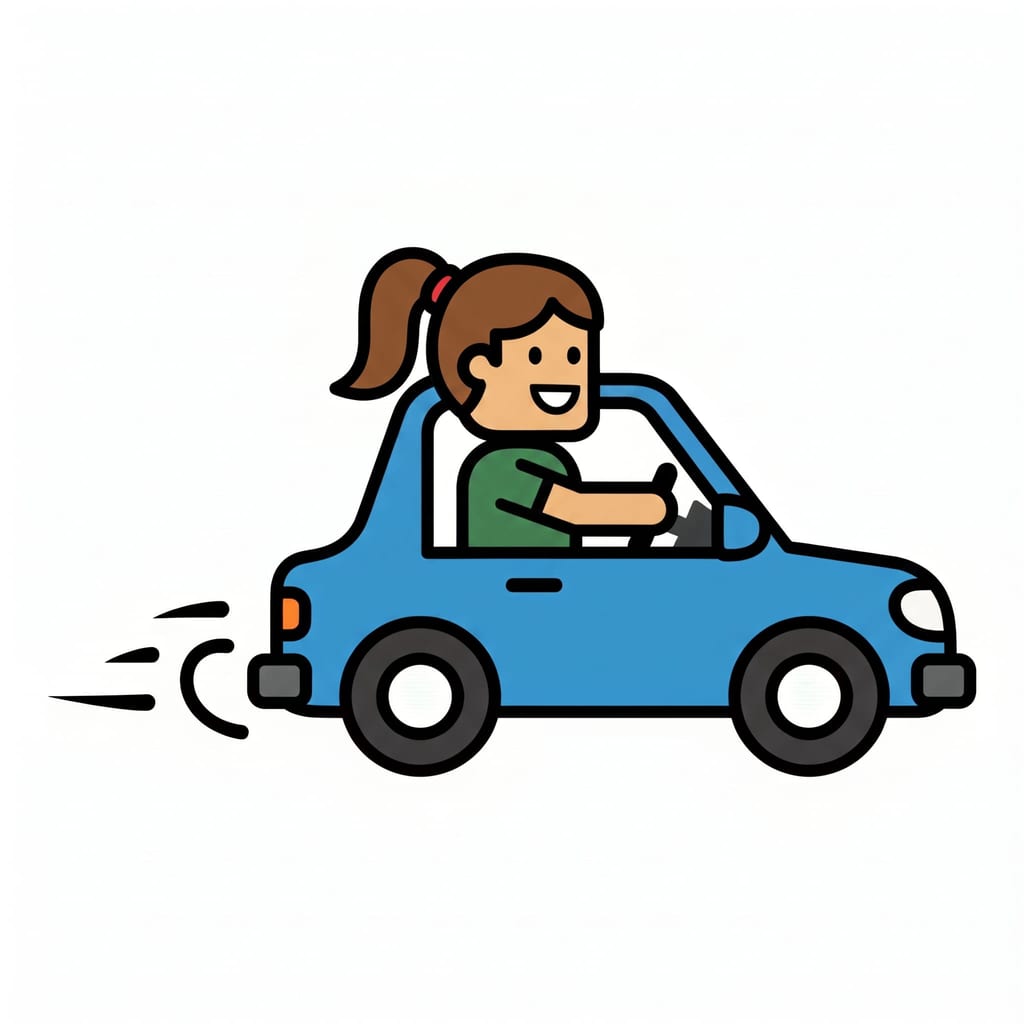 ♀
♀Girl with ponytail driving a blue car
A smiling girl with a ponytail sits at the wheel of a blue car moving forward, with motion lines trailing behind.
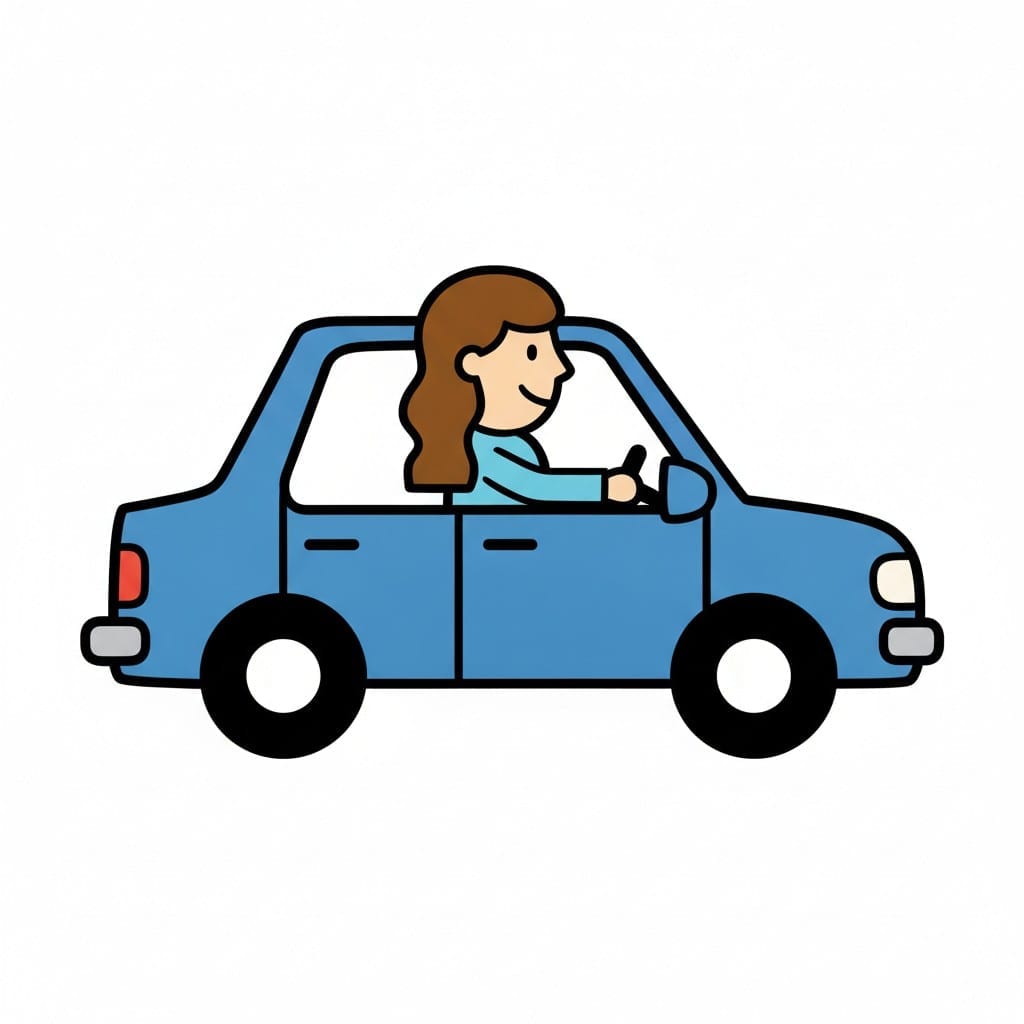 ♀
♀Woman driving the family car
A woman with long hair sits behind the wheel of a blue family car shown from the side.
About this visual support
The odd thing about a car ride is that the body sits still while everything around it keeps moving. The vibrations come up through the seat, the engine sits on a frequency the ears cannot switch off, and the belt cuts against the neck at every turn. For many children, especially sensory sensitive children on the autism spectrum, ten minutes can feel fine and minute twenty suddenly does not.
Visual support helps because it moves the preparation from during the ride to before the ride. When a card has already shown the belt, the water bottle, looking out of the window and a break in twenty minutes, the body knows roughly what is coming, and each discomfort becomes less of a surprise. A concrete tip for car rides in particular: plan a stop every twenty minutes even if the child does not seem to need it. A predictable exit point is calming in itself, because the car becomes a room you may leave, not a room you are stuck in.
In Routined a car journey can be built with start steps, breaks and a destination. The app can be tried free for fourteen days.
This image is part of these ready-made schedules
Use this image in a schedule
Build your own visual schedule with this image and download it as a print-ready PDF. Completely free.

More similar visual supports
Drive car
An illustration of a woman driving a red car on a road.

Buckle up
A person in a red t-shirt is holding a black seatbelt that goes across their che...
Bus
A cartoon illustration of a blue bus with white stripes and black windows.
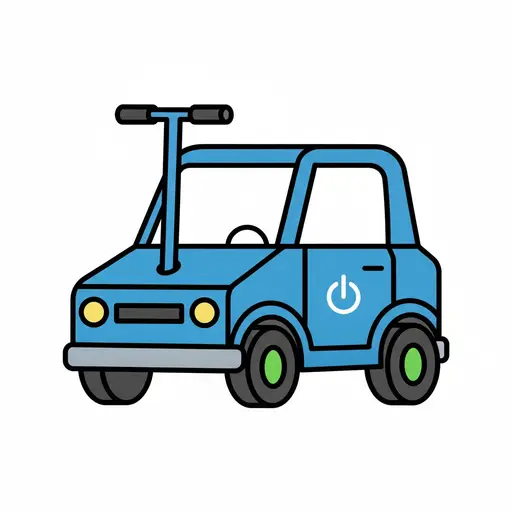
Car or e-scooter
A blue car seen from the side with a scooter handlebar rising from the bonnet an...
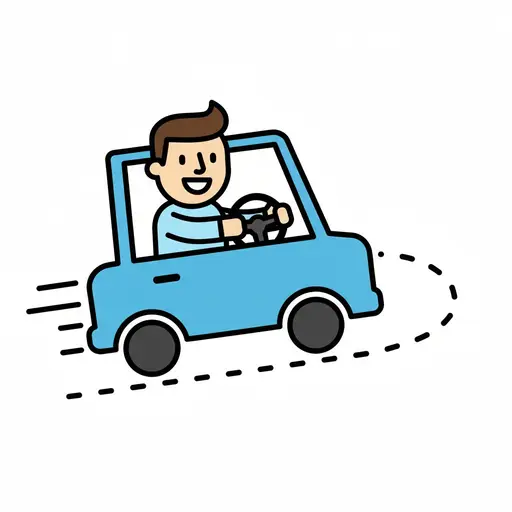
Dad drives
A person is driving a blue car with a steering wheel in their hands. The car has...
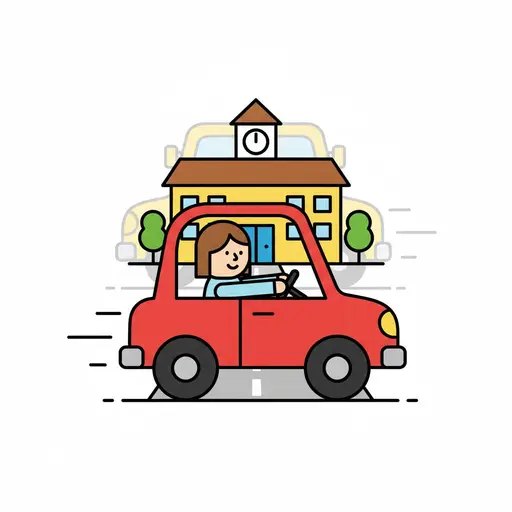
Drive to school
A person drives a car with a school in the background.
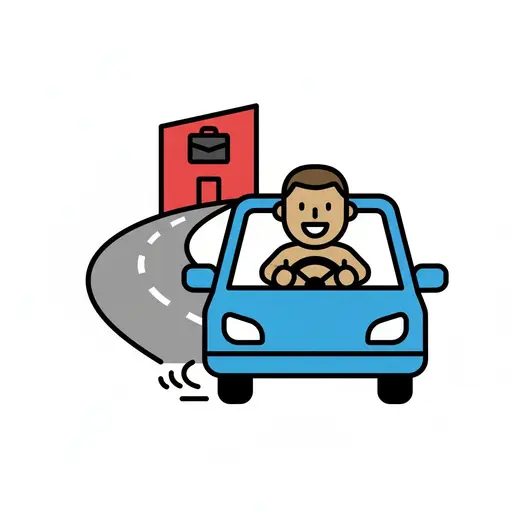
Drive to work
A smiling man driving a blue car along a road that leads to a building marked wi...
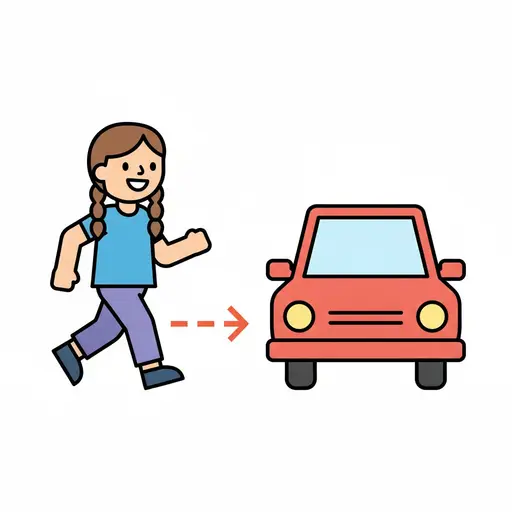
Go to the car
A smiling girl with braids walks towards a red car, with a dashed arrow pointing...
Take the visual supports with you
In Routined you build schedules from these pictures, add timers and voice instructions, and your child follows the day on their own.


* 14-day free trial included for new users.