Morning mood
How are you feeling, really, at seven in the morning with your eyes half open? The mood shifts from day to day and is hard to put into words that early, so the pictures below give a child something to point at instead of explaining.
 ♂
♂Good morning
A boy smiles and gives a thumbs up with a sun, a cup and music above him.
 ♂
♂Calm morning
A boy holds a warm mug and smiles with a sun and a moon beside him.
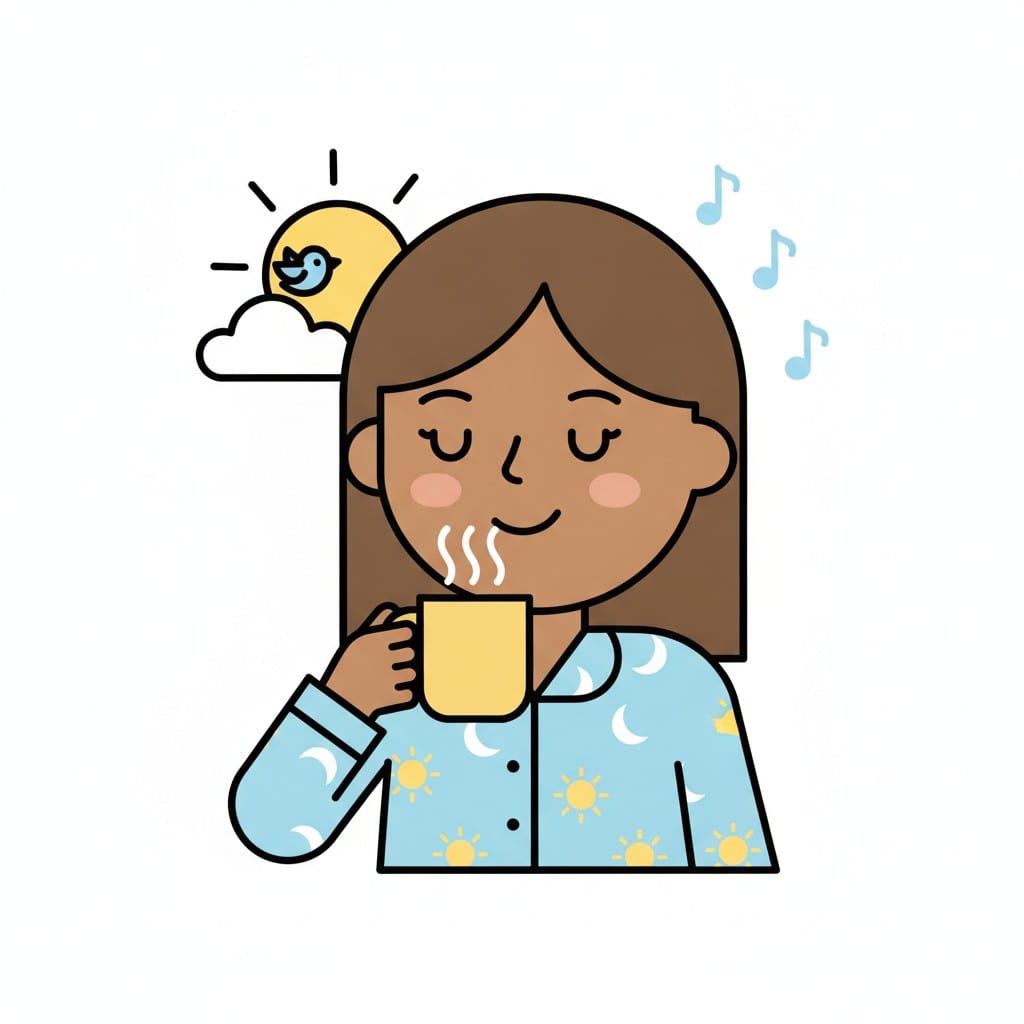 ♀
♀Calm morning
A girl in pyjamas holds a warm mug and smiles with a sun and a bird behind her.
About this visual support
The question of how you are doing almost always arrives too early. A child who has just sat up in bed has not yet sorted out whether it is tiredness, hunger, worry about the school day or simply sleep still sitting in the body. The answer is a shrug, and the grown-up goes on guessing over the coffee.
Visual support moves the question from language to pointing. With feelings available as pictures on the fridge, a child can choose one without forming a single sentence, and you get a starting point: very tired means breakfast can begin slowly, a bit tense means the day plan is worth going through once more. The wordless answer carries a long way.
Try making the morning mood a fixed step between getting up and eating, always in the same spot. Then it becomes a habit rather than an interrogation, and across a week you start to see patterns in which mornings are heavy and what they have in common. In the Routined app the same choice can sit digitally alongside the rest of the morning routine, with fourteen days to try at no cost.
Use this image in a schedule
Build your own visual schedule with this image and download it as a print-ready PDF. Completely free.
More similar visual supports
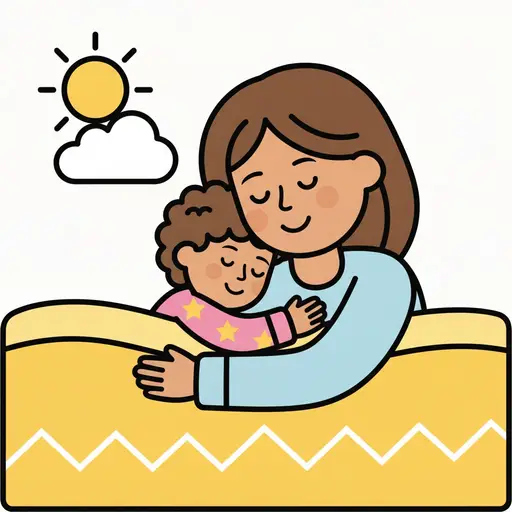
Wake and Snuggle
With the sun up outside, a woman holds a child who rests against her in bed.
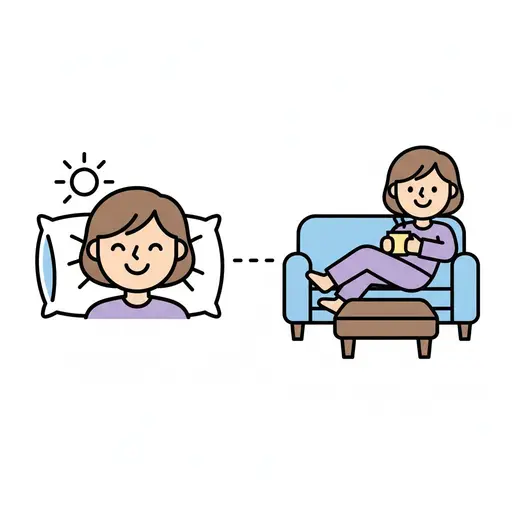
Wake Up and Lounge
A person wakes up in bed and then relaxes on the couch with a cup of drink.
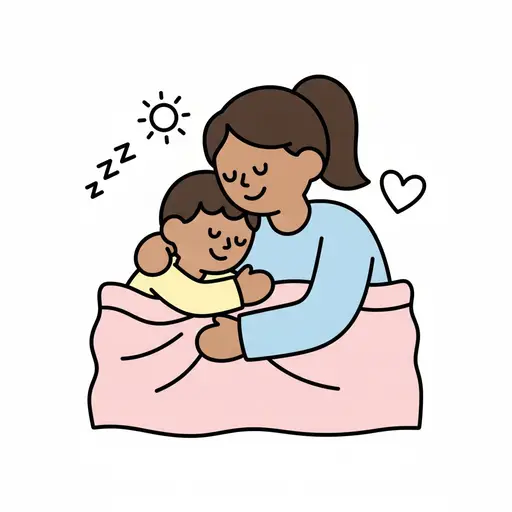
Wake Up Cuddle
An adult cuddles a sleepy child in bed with sleep symbols and a heart around the...
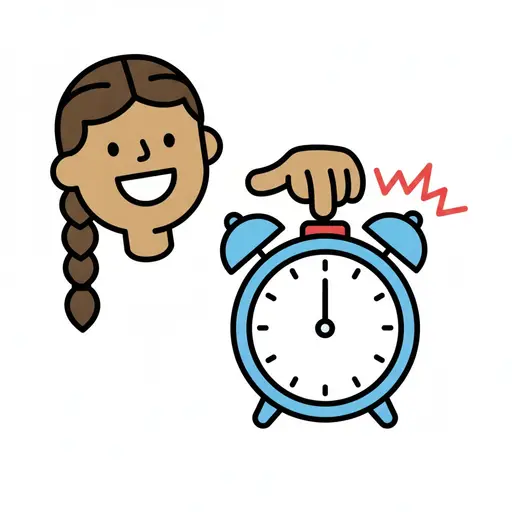
Stop the alarm
A smiling child presses the button on top of a ringing alarm clock to turn it of...
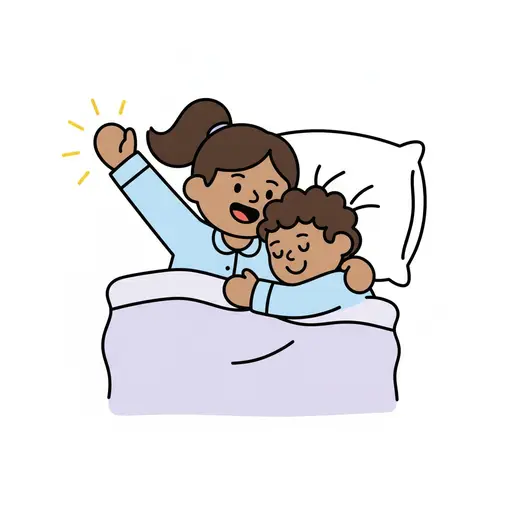
Wake Up and Snuggle
An adult stretches an arm up and snuggles with a child in bed at wake-up time.
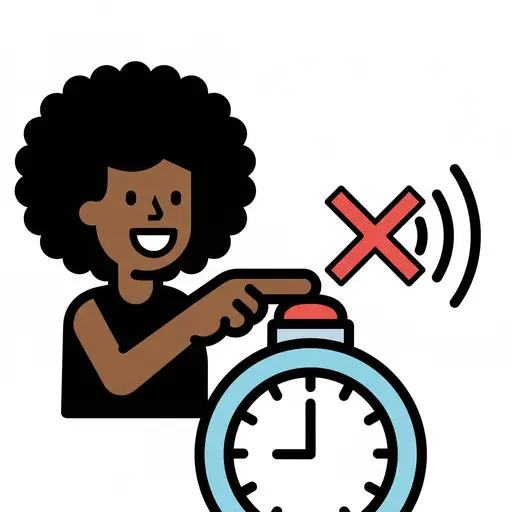
Turn off alarm
A smiling girl presses the red button on top of an alarm clock while a red cross...
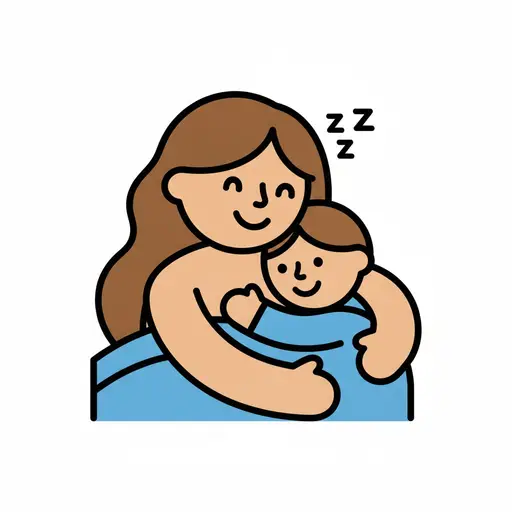
Wake and Cuddle
Under a blue duvet a woman hugs a child, with small sleep symbols floating above...
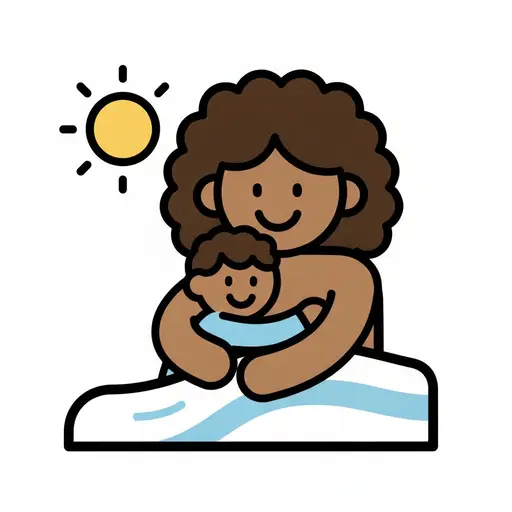
Morning cuddles
A parent cuddles their young child in bed while the sun shines outside.
This visual support in other languages
Take the visual supports with you
In Routined you build schedules from these pictures, add timers and voice instructions, and your child follows the day on their own.


* 14-day free trial, then $2.39 a month or $20.99 a year (US pricing). Cancel anytime.