Mute clock
A ticking or a ringtone can cut straight through the morning for a child who hears sound more sharply than others, and being unable to do anything about it makes it worse. The steps below show how your child can mute the clock themselves and take back the quiet.

No alarm
A clock with a red no-symbol over it, showing the sound is off.
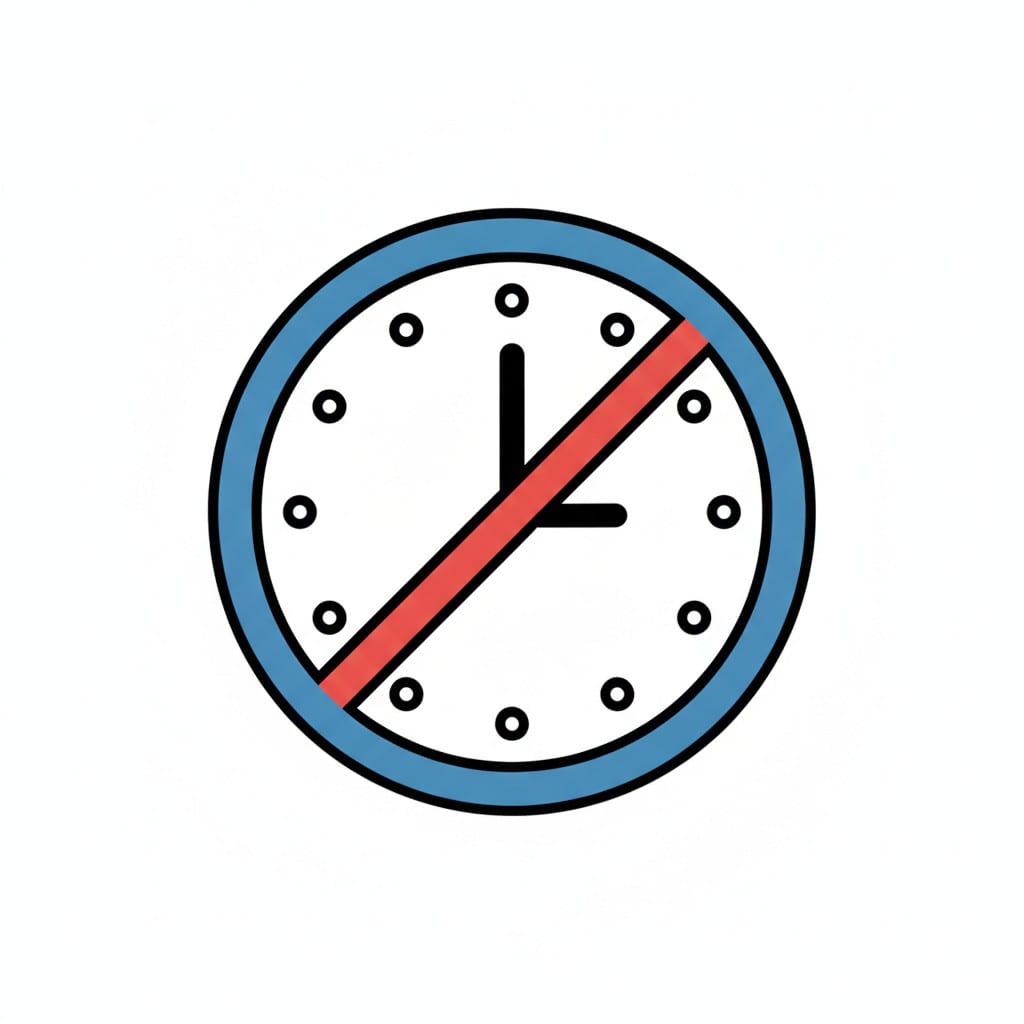
Clock off
A wall clock with a red line through it marking that it is muted.
About this visual support
The sound of a clock fills a room more than you would think. Many children, not least some children with autism, hear the ticking and the ringing more sharply than adults do, and a morning that starts with a sound you cannot shield yourself from sets the tone for the rest of the day. The body tenses before the child is even properly awake.
Being allowed to switch the sound off yourself changes the situation: the child moves from enduring the noise to being in charge of it. The pictures show the whole action, from hearing the clock to pressing the button to the silence afterwards, so the step feels clear and doable. A good tip is to practise the sequence when the clock is not ringing, in the middle of the day, so the movement sits in the hand when it matters in the morning.
In Routined you can put the picture of muting the clock right at the start of the morning chain, so your child knows the first step is always one they can take alone. You can try the app free for fourteen days.
Use this image in a schedule
Build your own visual schedule with this image and download it as a print-ready PDF. Completely free.

More similar visual supports
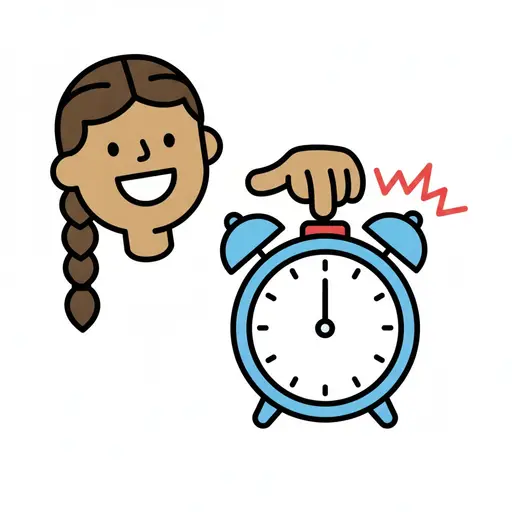
Stop the alarm
A smiling child presses the button on top of a ringing alarm clock to turn it of...
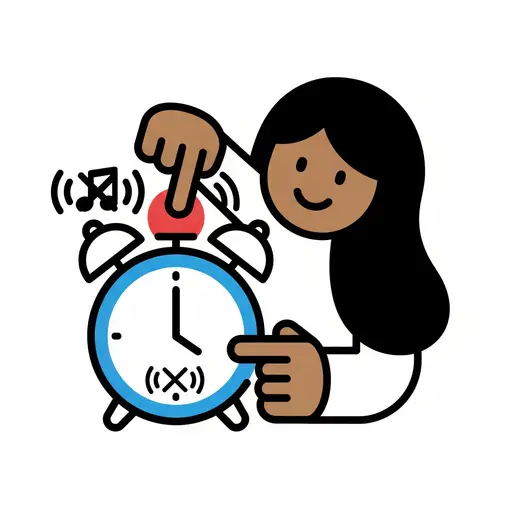
Turn off the alarm
A girl presses the button on top of a ringing blue alarm clock to turn off the s...

Clock rings
A child cups a hand to one ear and listens, with a speech bubble showing a clock...
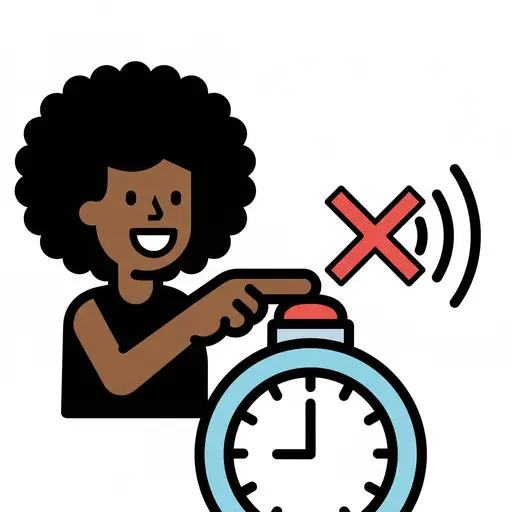
Turn off alarm
A smiling girl presses the red button on top of an alarm clock while a red cross...

Cozy sweater
A light blue, knitted turtleneck sweater with a cable pattern.

Daily
A girl holds a calendar with a repeat symbol next to an icon showing a sun and m...
Daily routine
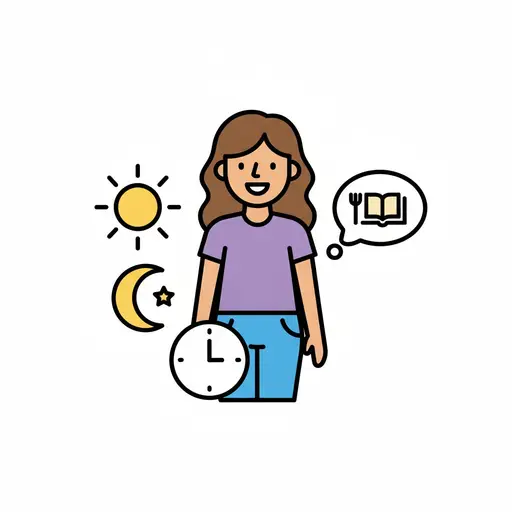
A woman stands with a sun, moon and clock, thinking of food and reading.

Daily routines
Illustration of a daily routine showing a clock with sun and moon, and symbols f...
Take the visual supports with you
In Routined you build schedules from these pictures, add timers and voice instructions, and your child follows the day on their own.


* 14-day free trial, then $2.39 a month or $20.99 a year (US pricing). Cancel anytime.