Routines
A routine is not one action but a chain, and the chain usually snaps in the same link: what comes next. The visual schedule below lets the eye carry what the brain cannot plan.
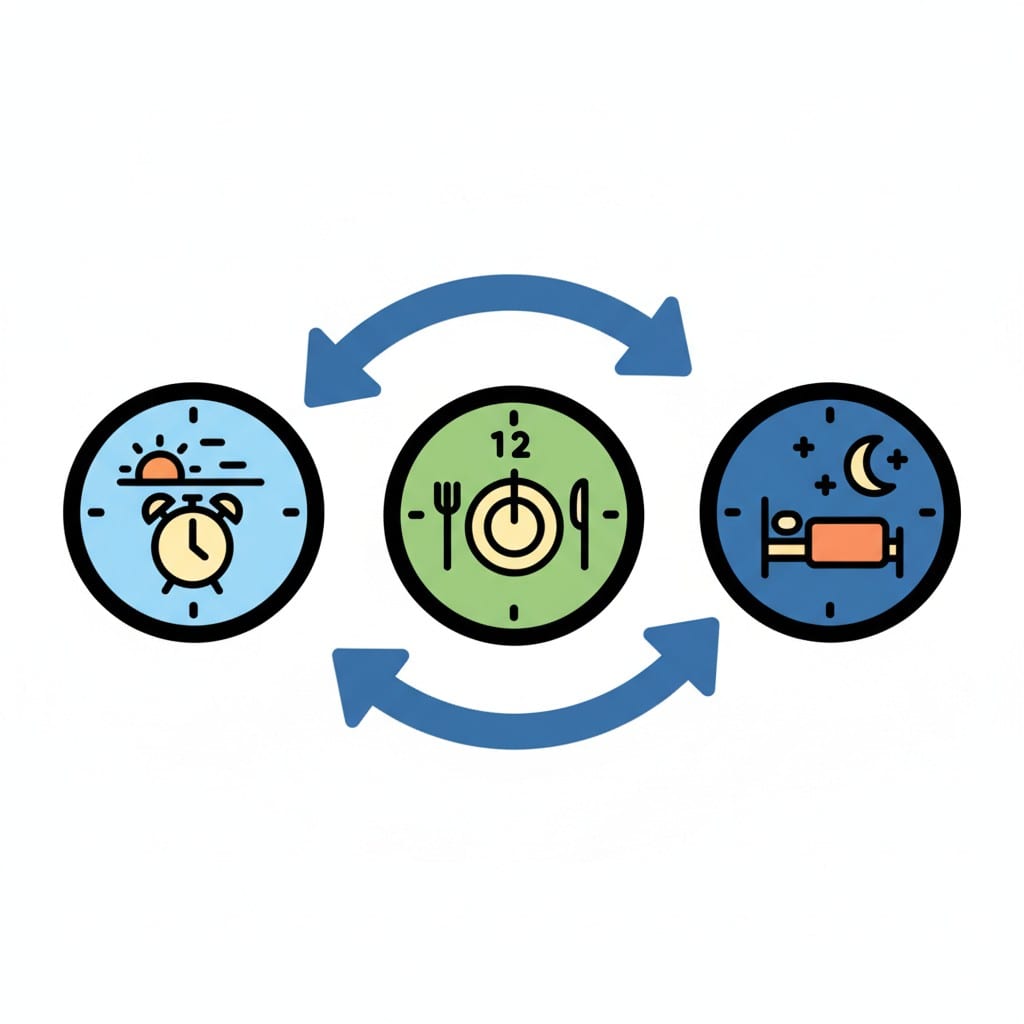
Daily Routine
An icon showing three clocks in a cycle, representing a daily routine. The first clock shows an alarm and sun for morning, the second a plate and cutlery for mealtime, and the third a bed and moon for night. Blue arrows connect them in a circle.
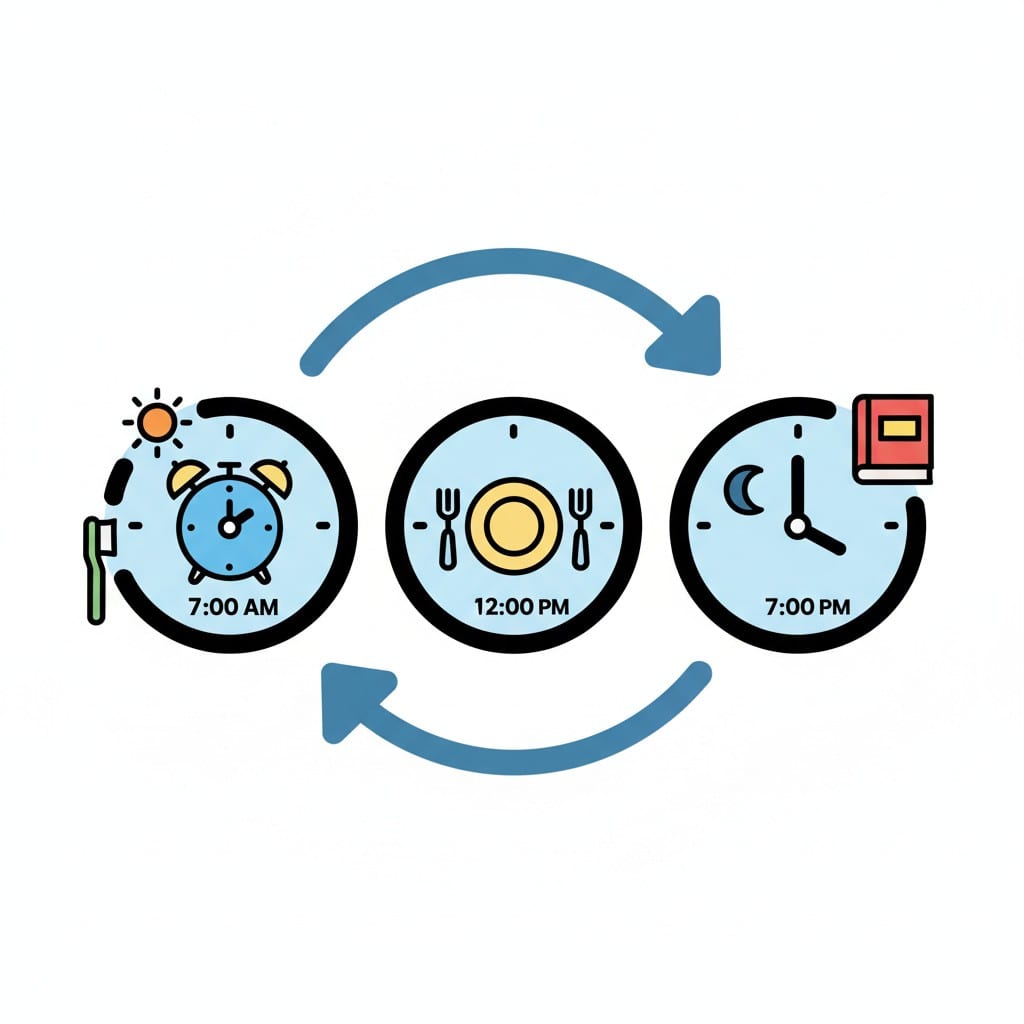
Daily routine
An illustration depicting a daily routine with three circular elements in a cycle. The first shows an alarm clock, sun, and toothbrush at 7:00 AM. The second shows a plate with cutlery at 12:00 PM. The third shows a moon, a clock, and a book at 7:00 PM.
About this visual support
The hard part of a routine is rarely the steps themselves. The hard part is holding the order in your head all the way from the edge of the bed to the front door, day after day, even when sleep was thin and the mood is brittle. Executive function is the muscle that tires first.
With the steps laid out as pictures in a row, the child does not have to retrieve the sequence from memory. A finger can travel across the images and each completed step becomes visible, which is often enough to find the entry to the next one. The structure lives outside the body instead of inside it.
One concrete tip: place the hardest step in the middle, not first or last. The picture for the step that tends to stall, say getting dressed or brushing teeth, benefits from sitting between two easier ones so momentum carries through. In the Routined app you can build that order yourself and let the child tick steps off as they go.
Use this image in a schedule
Build your own visual schedule with this image and download it as a print-ready PDF. Completely free.
More similar visual supports
Daily routines
Illustration of a daily routine showing a clock with sun and moon, and symbols f...

Wake up & breakfast
A person stretches one arm and eats a bowl of cereal with a spoon at the breakfa...
Weekdays
A schedule board with a sun and moon plus check marks and crosses for the days.

Morning schedule
A schedule board with a sun, alarm clock, clock and bowl, plus a downward arrow.
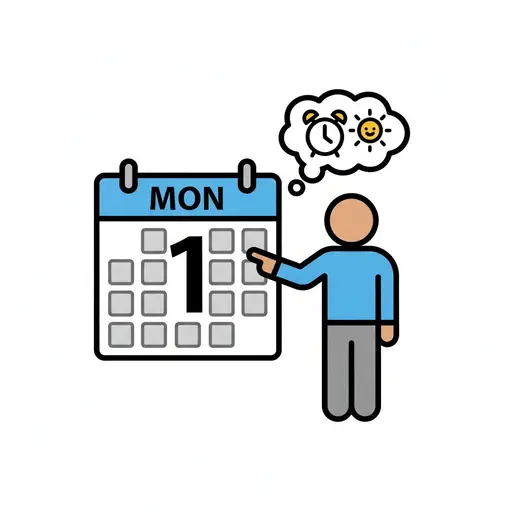
Monday
A person points at a Monday calendar, thinking of an alarm clock and the sun.
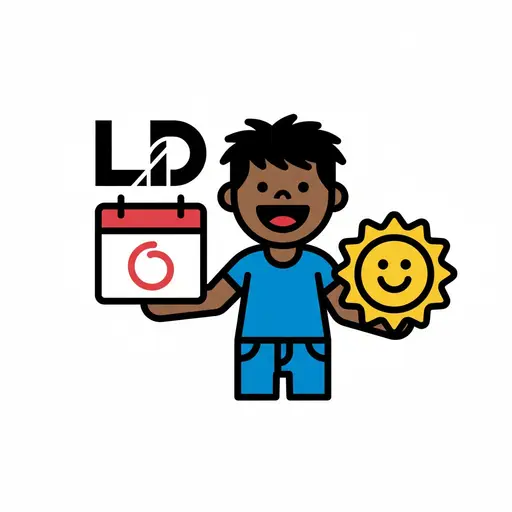
Levi's day
A cartoon boy holds a calendar and a sun, symbolizing a day's schedule.
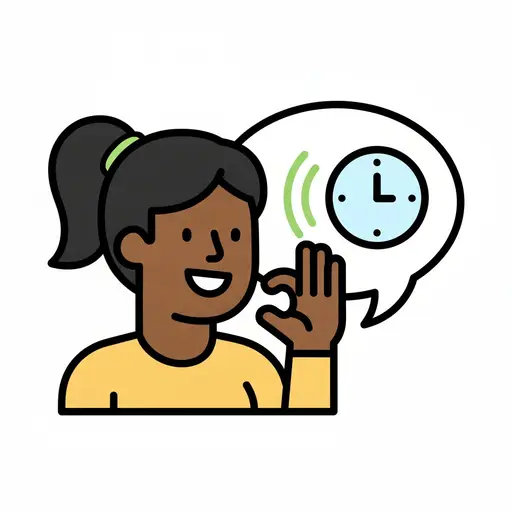
Clock rings
A child cups a hand to one ear and listens, with a speech bubble showing a clock...
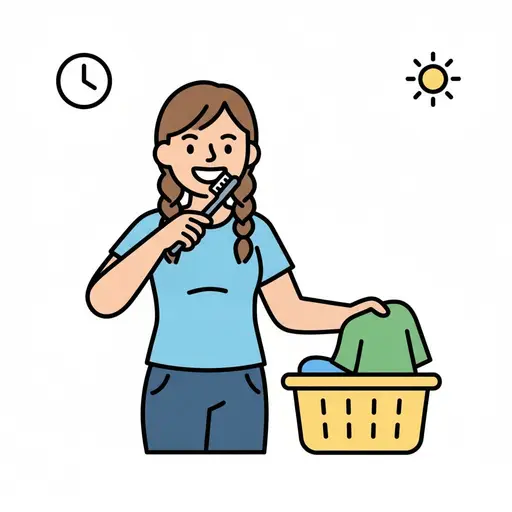
Daily routine
A girl with braids brushes her teeth and holds a laundry basket, with a clock an...
This visual support in other languages
Take the visual supports with you
In Routined you build schedules from these pictures, add timers and voice instructions, and your child follows the day on their own.


* 14-day free trial, then $2.39 a month or $20.99 a year (US pricing). Cancel anytime.