Take the bus
A bus journey is full of things that cannot be negotiated. The departure is set by someone else, stops pass whether or not the child is ready, and strangers sit close to the body. The visual support below gives the child anchor points through the whole trip.
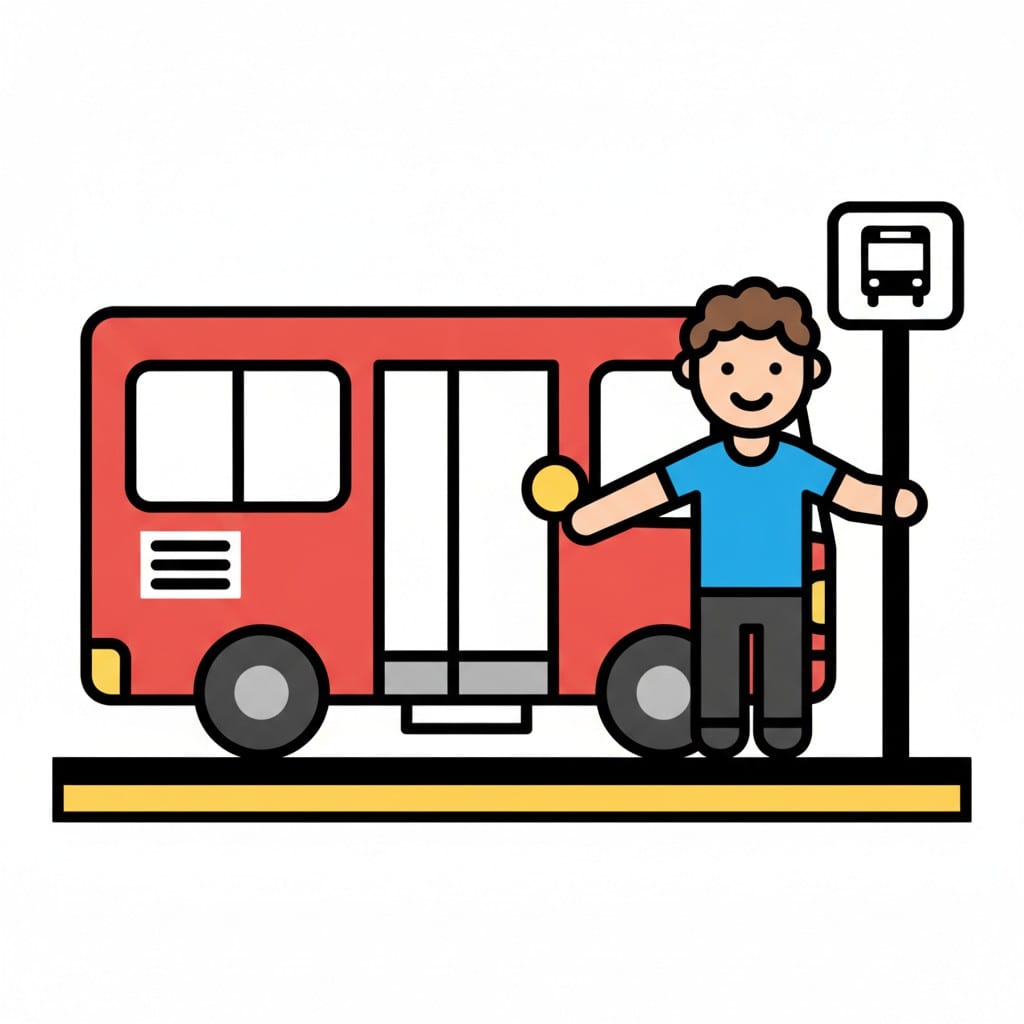 ♂
♂Person waiting at the bus stop
A smiling person stands by a sign with a bus symbol beside a red bus stopped at the kerb.
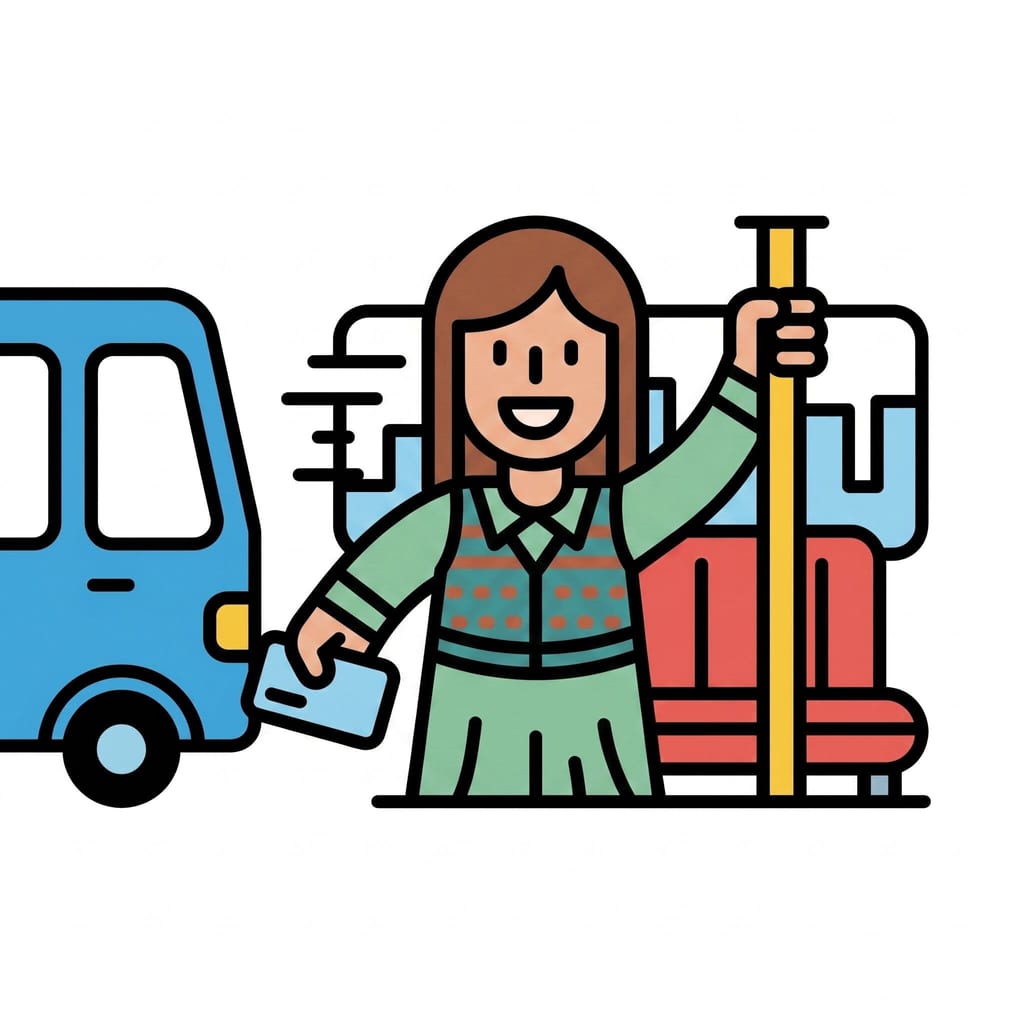 ♀
♀Woman taking the bus
An icon of a woman standing in a bus, holding a pole and a ticket.
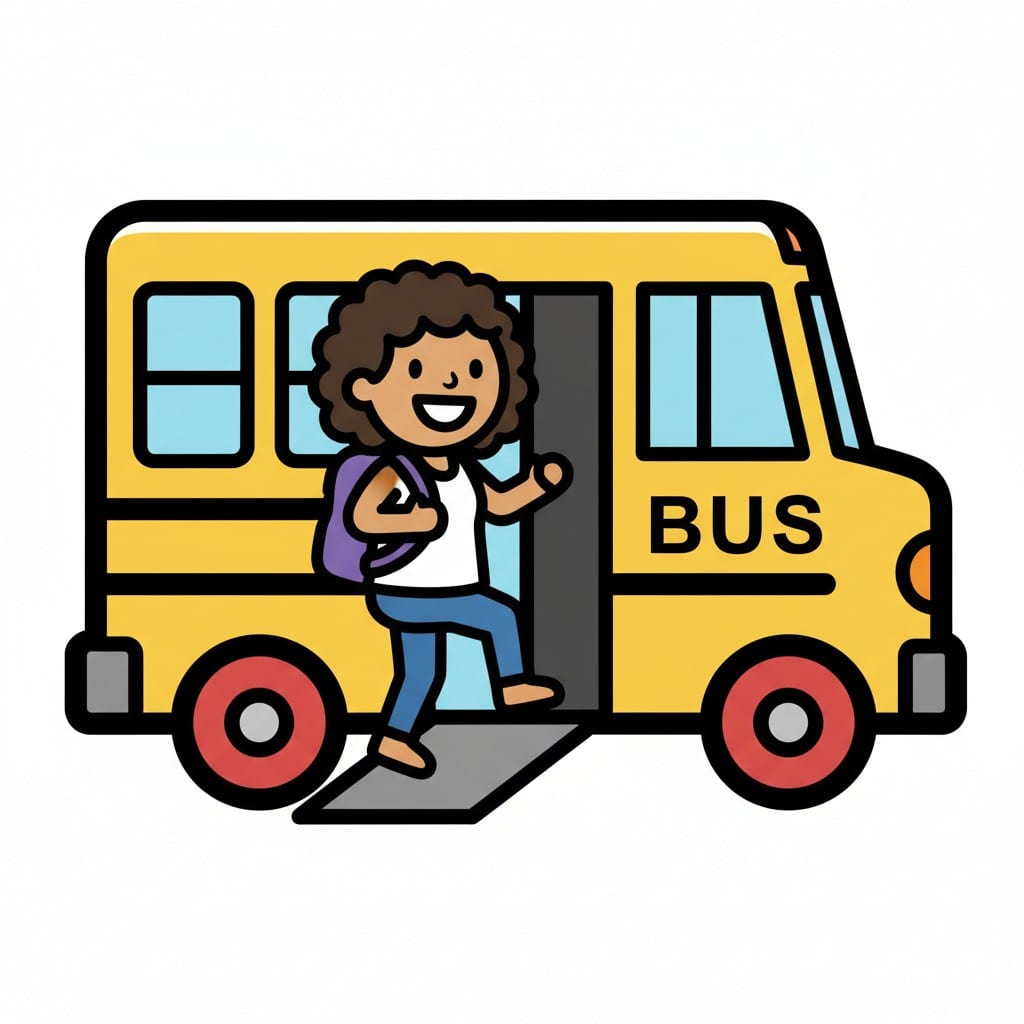 ♀
♀Take bus
A girl with curly hair and a backpack is stepping onto a yellow bus, with the word 'BUS' on its side.
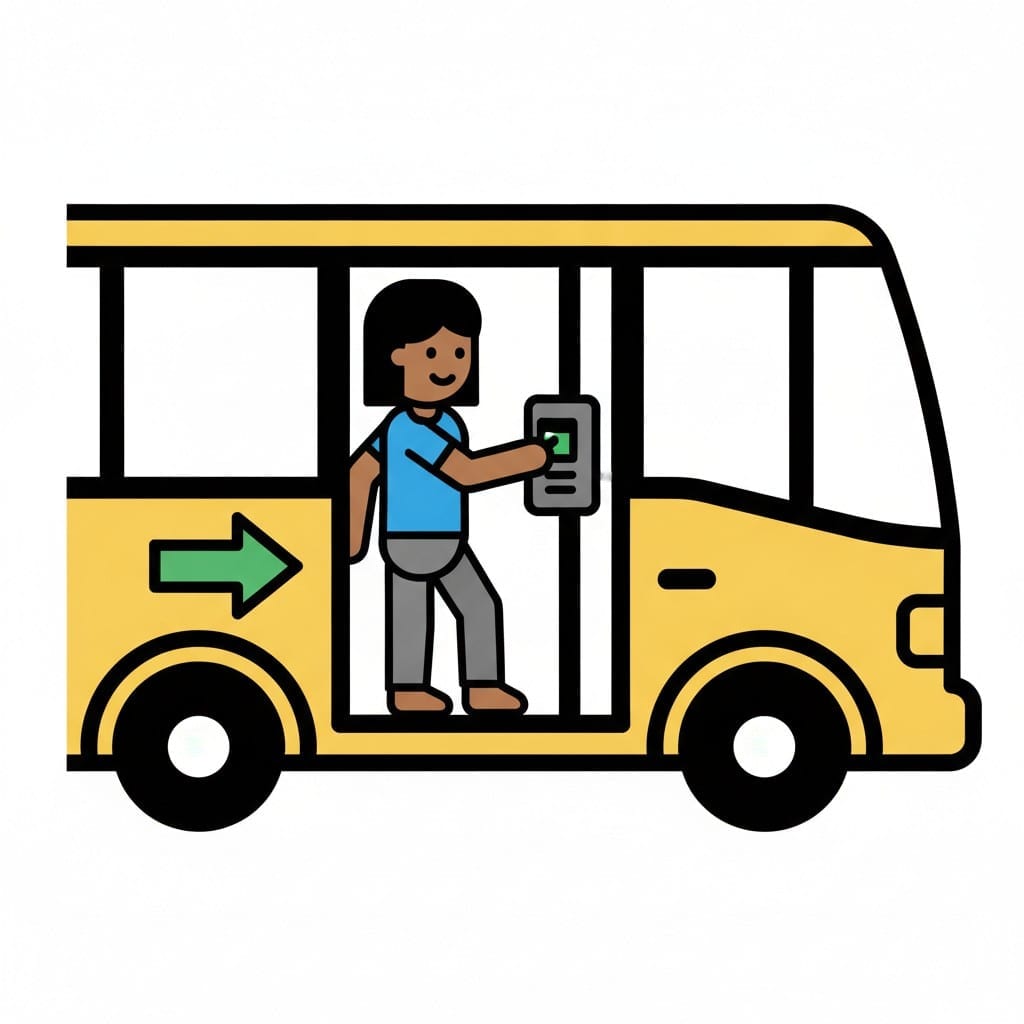 ♀
♀Person boarding the bus
A smiling person with a bag boards a yellow bus and holds a card to a reader, with a green arrow pointing at the door.
About this visual support
The bus is one of the few places in a child's day where most things lie outside their own control. The timetable rules the departure, the number of people on board ranges from empty to packed, the noise of engine and brakes shifts constantly, and at every stop the same question hangs in the air – is this ours? That uncertainty builds a quiet, low-grade stress that the child may not be able to name but shows in the body.
Visual support makes the outside world a little more graspable. Walk to the stop, check the sign, wait until the bus arrives, board at the front, find a seat, press the signal in good time, step off. When each step has its own card, the child knows what to do even if the bus is late or crowded.
A small thing that genuinely helps: decide in advance which stop is yours, and show it as a picture or on a map before you leave home. The signal button is then tied to a specific place rather than guesswork. In Routined you can build the full bus routine and get a reminder when it is time to head out, so the time pressure disappears from the trip itself.
Use this image in a schedule
Build your own visual schedule with this image and download it as a print-ready PDF. Completely free.

More similar visual supports
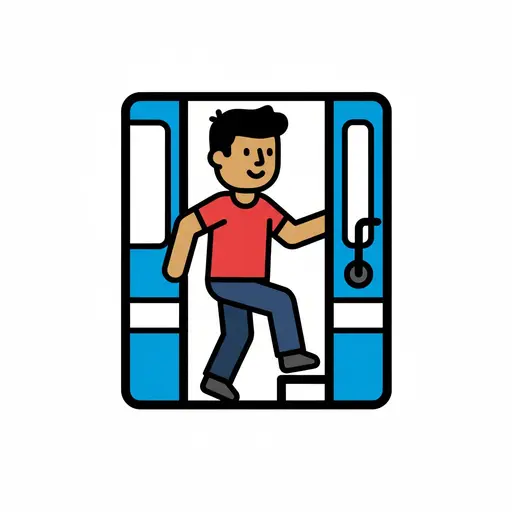
Get on the bus
An illustration of a boy in a red shirt and blue pants stepping into a blue bus.
Bus
A cartoon illustration of a blue bus with white stripes and black windows.
Before the train
A boy stands on the platform while a dashed arrow points toward a red train on t...
Drive car
An illustration of a woman driving a red car on a road.
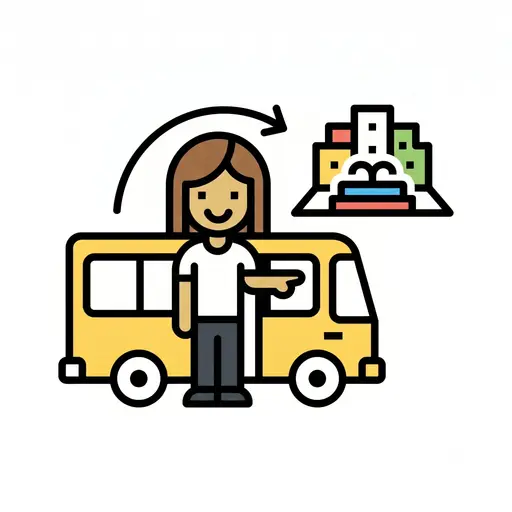
Ride Bus to the Plaza
A girl rides a yellow bus with an arrow pointing to a plaza with buildings.

Buckle up
A person in a red t-shirt is holding a black seatbelt that goes across their che...
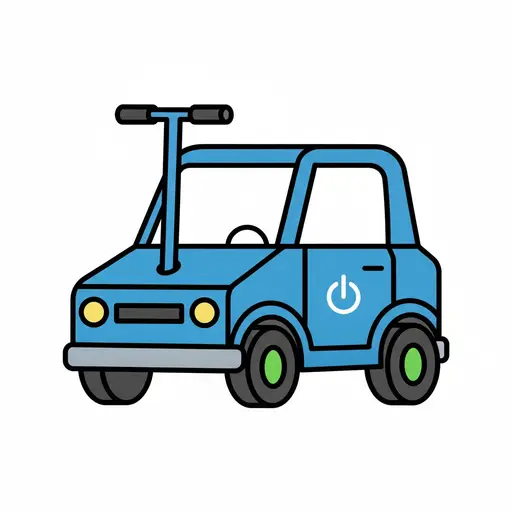
Car or e-scooter
A blue car seen from the side with a scooter handlebar rising from the bonnet an...
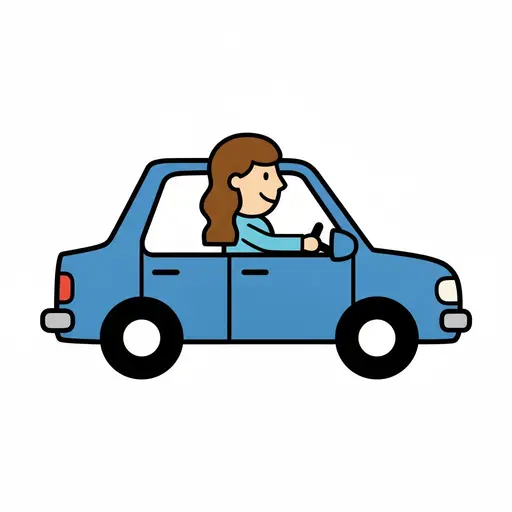
Car ride
A woman with long hair sits behind the wheel of a blue family car shown from the...
Take the visual supports with you
In Routined you build schedules from these pictures, add timers and voice instructions, and your child follows the day on their own.


* 14-day free trial included for new users.