Screen-Free Zones and Times: Simple Boundaries That Stick
Constant negotiation over screens is exhausting. Designated screen-free zones and times replace daily battles with clear, predictable boundaries the whole family can follow, including the adults.

Screen-free zones and times are simply the places and moments in your day where devices are put away by default: no phones at the dinner table, no tablets in bedrooms, no screens in the first hour after waking. Instead of deciding the answer to 'can I have my tablet?' twenty times a day, you decide it once. The boundary does the talking, and everyone knows the rule before they ask.
That single shift, from constant negotiation to a few clear boundaries, is what makes screens manageable in most homes. It is especially powerful for children with ADHD or autism, who tend to feel calmer and more secure when the rules are predictable and don't change with your mood or energy levels.
Why boundaries beat constant negotiation
Every open-ended 'maybe' invites a debate. When a child knows there is a chance you'll say yes, it is worth pushing, again and again. That is not bad behaviour; it is logical.
A fixed boundary removes the debate. 'We don't use screens at the table' isn't a decision you make in the moment, so there is nothing to argue against and no reason to keep asking. You stop being the gatekeeper who has to be persuaded, and become the person who simply reminds everyone what the family already agreed.
This protects your relationship, too. You spend far less time saying no, and far more time just being together.
Common screen-free zones and times to consider
You don't need all of these. Pick one or two that would make the biggest difference to your family right now, and build from there.
Zones (places)
- Bedrooms, so screens don't eat into sleep or become a private, unmonitored world
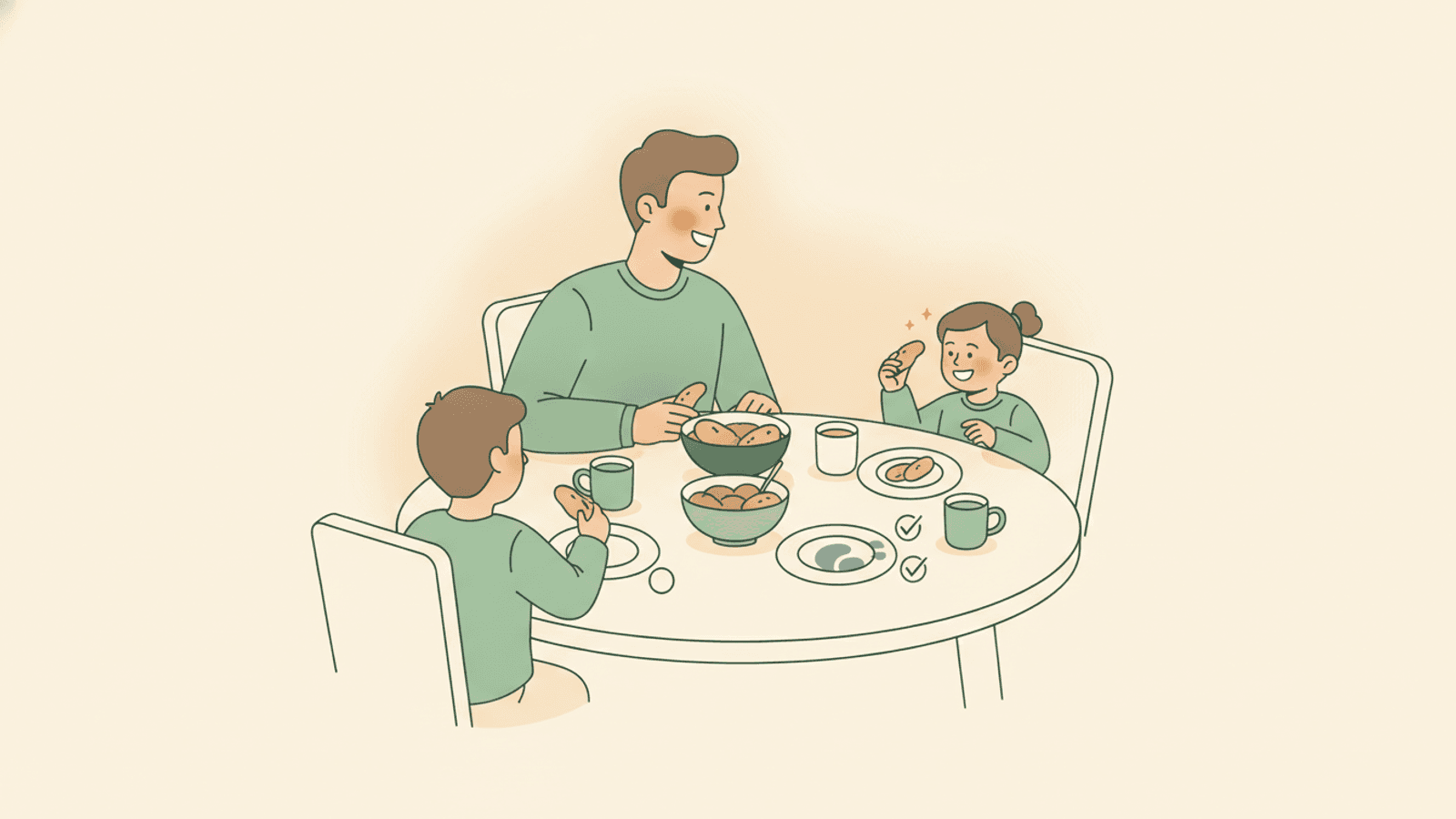
- The dinner table, so meals stay a time to talk and connect
- The car on short trips, so there's space to chat or simply look out of the window
Times (moments)
- Mealtimes, when everyone is present and phones are away, adults included
- The first hour of the day, so mornings start with getting ready rather than a screen
- The hour before bed, to protect wind-down time and sleep
- During homework or a specific getting-ready routine
The goal isn't to fill the day with restrictions. A couple of well-chosen boundaries that you actually keep will do more than a long list you quietly abandon by Wednesday.
Make it apply to the whole family
This is the part that makes or breaks it. If the rule is 'no screens at the table' but you're checking messages between bites, children notice instantly, and the boundary loses all its authority.
Frame screen-free zones and times as something the family does together, not a punishment aimed at the kids. When adults put their phones in the basket too, the message changes from 'you have a problem with screens' to 'we're all choosing to be present here.' That is far easier to accept, and it models exactly the behaviour you want to see.
Children rarely do what we tell them and reliably do what we do. A boundary the adults keep is a boundary that sticks.
How to introduce them without a war
You don't have to overhaul everything overnight. A calm, gradual rollout works better and lasts longer.
- Start with one boundary, not five. Let it become normal before adding another.
- Explain the why in simple terms: better sleep, more time to talk, calmer mornings.
- Involve your child in the details where you can, for example choosing where the 'phone basket' lives or what you'll do instead.
- Give notice before it begins, so it doesn't feel like a surprise punishment.
- Pick a neutral moment to introduce it, not the middle of a screen-time meltdown.
Agreeing the rule when everyone is calm means you're setting an expectation together, rather than imposing one in the heat of a conflict.
Replace, don't only remove
Taking a screen away leaves a gap, and a bored child will fight to get the screen back. The trick is to have something ready to fill the space.
Think about what the screen was providing, and offer an alternative for that need. Downtime, stimulation, connection and comfort can all come from other places.
- Before bed: a shared book, an audio story, quiet drawing or a warm bath
- First hour of the day: a simple, visual morning routine your child can follow independently
- At the table: an easy conversation game or taking turns to share one thing about the day
- After school: a snack, movement, or a hands-on activity like Lego or cooking together
When the alternative is genuinely appealing, the boundary stops feeling like a loss and starts feeling like a different, good part of the day.
Be consistent and make it visible
Boundaries wobble when they live only in your head. Making them visible takes the pressure off you to remember and enforce every single time.
A physical cue helps: a basket by the door for phones, a small sign, or a picture on the fridge showing when screens are away. For younger children and many children with ADHD or autism, a visual schedule that shows 'first we get dressed and eat, then screen time' turns an abstract rule into a concrete, followable sequence.
Consistency matters more than perfection. If the rule bends every time there's a bad day, children learn that pushing hard enough works. Keeping the boundary steady, even when it's inconvenient, is what makes it reliable.
How to handle pushback
Expect protest at first, especially in the first week or two. Testing a new boundary is normal, and it usually fades once your child sees the rule really is the rule.
- Stay calm and brief. You don't need to win an argument; you just need to hold the boundary.
- Acknowledge the feeling: 'I know it's annoying to stop. It's hard.' Empathy isn't the same as giving in.
- Point back to the shared rule rather than making it about you: 'That's our table time.'
- Keep it consistent so the testing doesn't get rewarded with an exception.
For children with ADHD or autism, transitions off a screen can be genuinely hard, not just defiance. A countdown or a clear warning that screen time is ending soon can make the switch far less painful than an abrupt 'time's up.'
Why this helps children with ADHD and autism
Clear, predictable boundaries reduce battles because they reduce uncertainty. A child who knows exactly when screens happen doesn't have to hold the question open, negotiate, or manage the disappointment of an unexpected no. The structure does that work for them.
Visual support and consistent routines lower anxiety, make transitions smoother, and help a child feel in control of what comes next. That's why a screen-free time embedded in a familiar routine tends to cause far less friction than a one-off rule announced on the spot.
How Routined helps
Routined lets you build screen-free times into a proper daily routine your child can actually see and follow. You can use plain text with checkboxes, or Visual Support mode with big picture cards, using the built-in picture library, AI images or your own photos. An optional visual countdown timer per step makes 'nearly finished' concrete, which softens the transition when a screen-free block begins or ends. And if you use screen-time minutes as a reward, they're earned by completing the routine, a simple counter of earned time rather than something the app locks or controls on the device.
The takeaway
You don't need a perfect system or a house full of rules. Choose one screen-free zone or time that would ease the most friction, apply it to everyone, offer something good to do instead, and make it visible. Hold it steady through the early pushback, and within a couple of weeks the daily negotiation quietly disappears, replaced by a boundary that simply belongs to your family.
Read more
Frequently asked questions
What are screen-free zones and times?
They are specific places and moments where devices are put away by default, such as bedrooms, the dinner table, mealtimes, the first hour of the morning or the hour before bed. Deciding the rule once removes the need to negotiate it repeatedly.
How do I introduce screen-free times without a big fight?
Start with just one boundary, explain the reason simply, and agree it during a calm moment rather than mid-meltdown. Give notice before it starts, involve your child in the details, and always have an appealing alternative ready to fill the gap.
Should the rules apply to parents too?
Yes. Screen-free zones work best when the whole family follows them, adults included. When parents put their phones away too, it stops feeling like a punishment aimed at the child and becomes something you all do together, which models the behaviour you want.
Why do clear screen boundaries help children with ADHD or autism?
Predictable boundaries reduce uncertainty, which lowers anxiety and cuts battles. When a child knows exactly when screens happen, they don't have to negotiate or manage an unexpected no. Visual schedules and countdowns also make transitions off screens much smoother.
What should we do instead of screen time?
Match the alternative to what the screen was providing: a shared book or audio story before bed, movement or a hands-on activity after school, or a simple conversation game at the table. When the alternative is genuinely enjoyable, the boundary feels less like a loss.