Explaining Autism to Your Child: Words That Help, and Words That Do Not
The best explanation starts with the sensory world your child already lives in, not with a definition. Here is how to have the conversation.
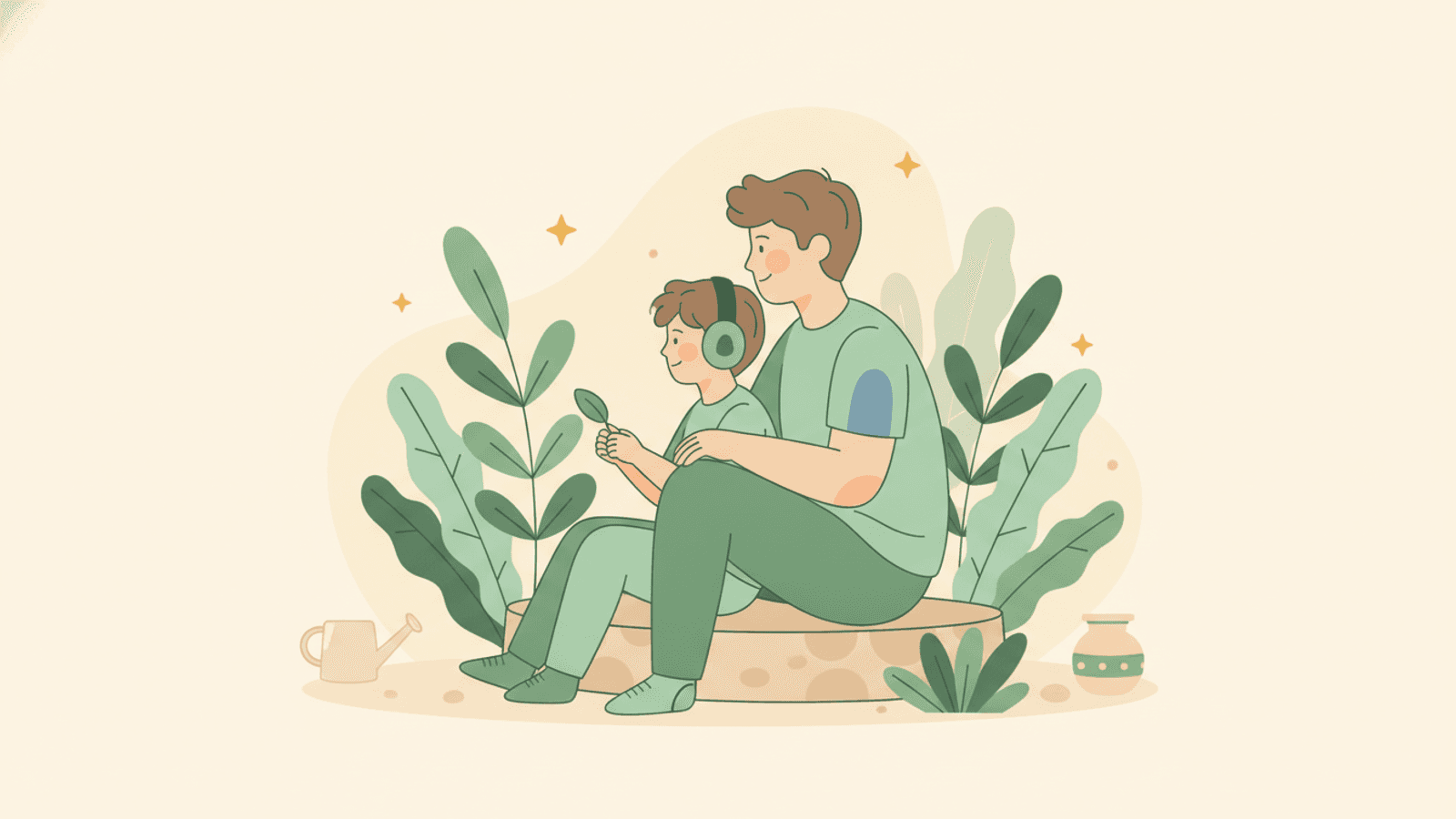
The most useful way to explain autism to your child is to start with what they already notice about themselves, and give it a name. Not a definition, not a list of traits, but the specific things they live with: that the hand dryer genuinely hurts, that seams in socks are unbearable, that they know more about volcanoes than their teacher does, that other children seem to follow rules nobody wrote down. Autism is the word for that particular combination.
Autistic children very often know they are different long before anyone tells them, and the version they arrive at alone tends to be harsh. Being given the real explanation early, in ordinary language, is one of the more protective things a parent can do.
Start with the senses, not the label
A sensory-first explanation works better than a social one, because sensory experience is the part your child can verify from the inside. "You know how the hall at school is too loud for you and other people do not seem to mind? That is a real difference in how your brain takes in sound. It is part of being autistic." Once that lands as true, the rest is credible.
Then add the other pieces, one at a time and over weeks rather than in one sitting: that changes to the plan feel worse for them than for others, that they read people differently, that a deep interest is a strength and not a problem.
What to say, by age
Four to six
"Everybody’s brain works a bit differently. Yours notices sounds and lights much more than most people do, and it likes knowing what happens next. That is called being autistic. It is why we have the picture list, and it is why we bring your ear defenders."
Seven to ten
"Being autistic means your brain works differently in a few specific ways. You feel sound, light and touch more strongly. Surprises and changes are harder for you than for most people. Social rules that other people pick up without noticing, you have to work out, which is tiring. And when you are interested in something you learn it properly, not just a bit. None of that is a fault. It is how you are built, and it comes with a set of things that help."
Eleven and over
Be direct and treat them as the expert on their own experience. Say what autism is, that it is lifelong, that it is not an illness and there is nothing to cure, and that autistic people are a normal part of human variation. Then ask rather than tell: which parts of this match what you notice? What is hardest? What would actually help at school? At this age the conversation should move quickly from explaining to collaborating.
Language matters more here than with most diagnoses
- "Autistic" or "has autism"? Many autistic adults prefer identity-first language, "autistic person", because it is not something separable from who they are. Others prefer "has autism". Use identity-first as your default and ask your child what they prefer as they get older, then follow their lead.
- Avoid "mild" and "severe". They describe how much other people are inconvenienced, not how much the person struggles. Talk about specific support needs instead: "you need quiet after school", "you need to know the plan".
- Avoid "a bit autistic". Nobody is a bit autistic, and it teaches your child that the word is something to soften.
- Avoid cure language. No "getting better from" or "growing out of". Skills grow; the wiring does not change.
- Be careful with "superpower" for the same reason it fails for ADHD: it makes the hard days confusing. Name real strengths and real costs.
The questions that come
- "Am I still me?" Yes. Nothing changed today except that you have a word for something that was already true.
- "Will I always be autistic?" Yes. It is not an illness and it does not go away. What changes is how much you know about what helps you.
- "Is something wrong with me?" No. Your brain is a less common design. Some things are harder in a world built for the common one, and some things you do better than almost anyone.
- "Do other people know?" Answer honestly about who has been told, and hand them the decision about everyone else.
- "Why do I have to go to that group?" Be honest about the purpose of any support you have agreed, and be open to changing it if your child hates it.
Masking, and why telling can help
Many autistic children spend the school day suppressing what they naturally do: sitting on their hands, copying other children, holding in the reaction to noise. That effort is invisible from outside, and it is why so many children hold it together all day and fall apart at home. Naming autism can reduce the pressure to mask, because a child who understands why something is hard is less likely to assume they are simply failing at being normal.
Some children mask harder for a while after being told, out of a wish not to be different. Watch for it, do not push, and make home the place where masking is not required. Let stimming be, unless it is unsafe: it is regulation, not a habit to be corrected, as covered in stimming, what it is and how to support it.
When, where and who
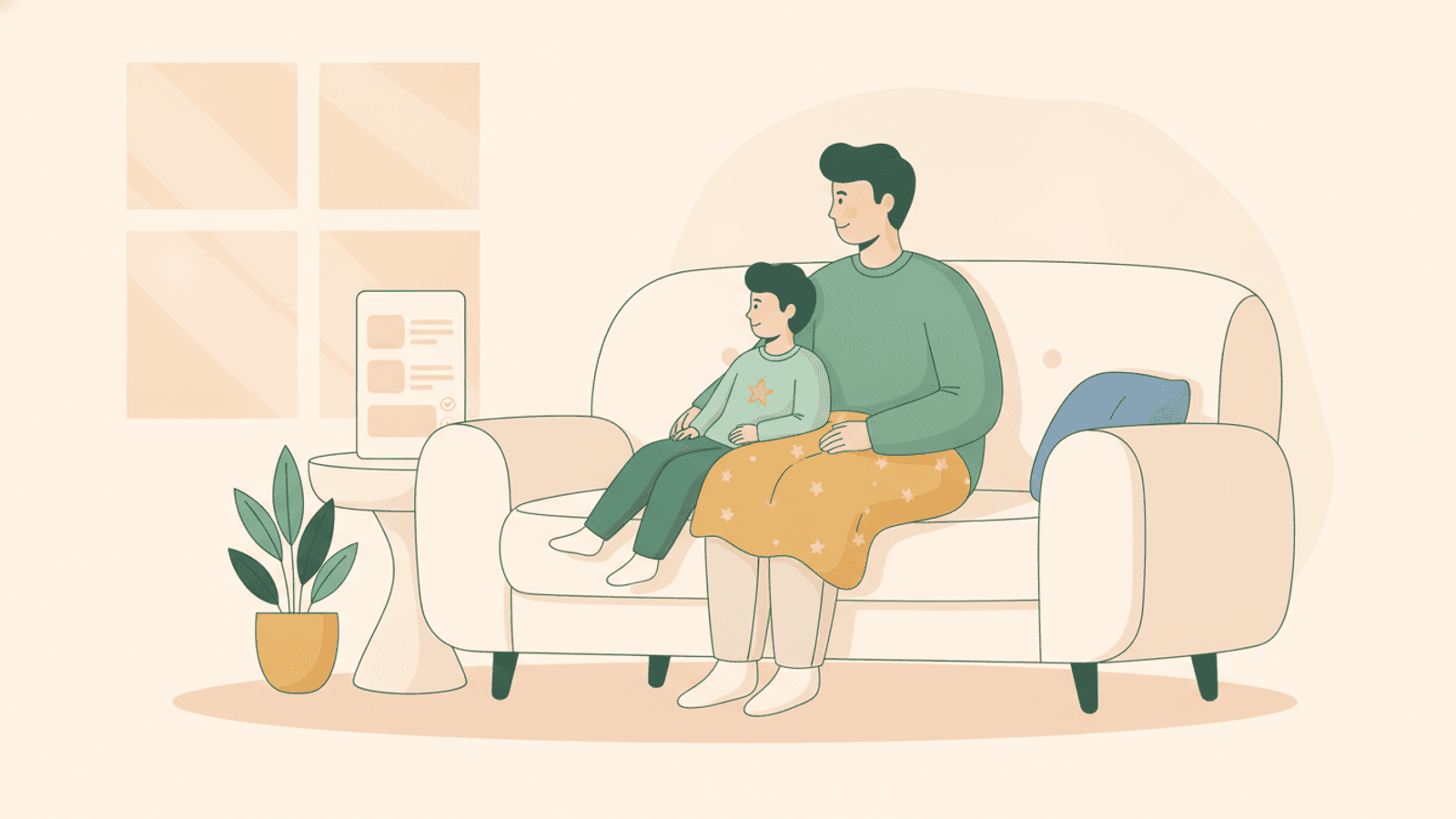
Choose a low-key moment where your child is comfortable and not being looked at directly: a car journey, a walk, side by side rather than face to face. Keep the first conversation short. Do not do it after a hard day, do not do it in front of siblings, and let it come from a parent rather than from a report or a teacher.
Then expect it to reappear in fragments for months. Answer briefly each time. Leave books about autism, ideally by autistic authors, somewhere they can be picked up without asking.
Meeting other autistic people
The single thing that most changes how a child feels about the word is meeting other autistic people, especially autistic adults and older teenagers who are getting on with their lives. A group, a club, a family friend, a YouTube channel by an autistic creator. Being the only one is the hard part; discovering there is a whole category of people who make sense to you is what shifts it.
If your child is upset, or relieved
Both reactions are common, and relief is more common than parents expect, especially in children over eight who have spent years wondering what was wrong with them. If your child is upset, do not rush to fix it. Sit with it, say that it is a lot to take in, and come back to it in a few days. Distress at the first conversation is not a sign you should have waited.
What not to do
- Do not present it as bad news. Your face and tone carry more than your words.
- Do not explain everything at once. One true sentence they can hold beats a complete account they cannot.
- Do not use it as an explanation for every behaviour. "That is your autism" after every mistake takes away ownership of everything they do.
- Do not tell other people first and let it filter back.
- Do not promise that things will be easier now. Say that things will make more sense, and that you will be working out what helps together.
After the conversation
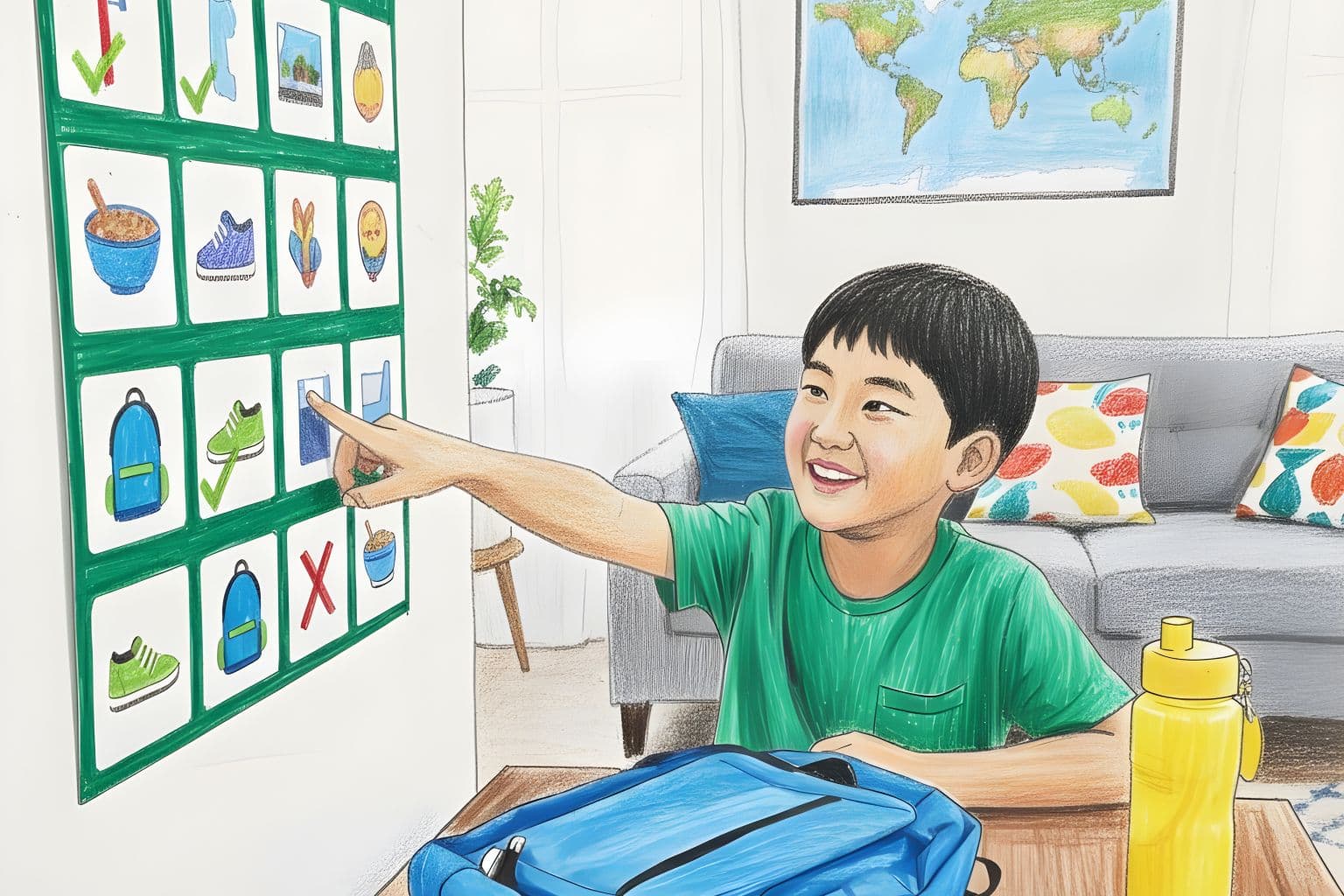
The practical follow-up matters as much as the explanation. Make the day predictable, reduce sensory load where you can, and put the plan somewhere visible, which is the whole point of visual supports and the reason visual support at home works. In Routined you can build each routine as steps with a picture and a timer, shared between both parents, so that "you will know what is happening next" stops being a promise and becomes a thing your child can check.
And if the diagnosis is recent, the order of business for the first weeks is in first steps after an ADHD or autism diagnosis.
Read more
- First steps after a diagnosis — what to do, and what can wait.
- Stimming — what it is, and why it should usually be left alone.
- Visual supports — the practical half of making daily life work.
Frequently asked questions
At what age should I tell my child they are autistic?
As early as they can hold the idea, often around five or six, and immediately if they are older and do not yet know. Autistic children usually notice they are different long before anyone explains why, and the explanation they build alone is generally harsher than the real one.
Should I say "autistic" or "has autism"?
Many autistic adults prefer identity-first language, "autistic person", because autism is not separable from who they are. Others prefer "has autism". Start with identity-first, and as your child gets older ask which they prefer and use that.
What if my child is upset by the news?
That happens, and it is not a sign you did it wrong or should have waited. Keep it short, sit with the feeling rather than fixing it, and return to it a few days later. Relief is actually the more common reaction in children over about eight.
Should I describe autism as a superpower?
It is more useful to name both the strengths and the costs. Superpower framing can leave a child feeling they are failing at their own diagnosis on the days when everything is hard, which is the opposite of what the conversation is for.
Who else should know?
The school needs to know so support can be put in place. Beyond that, give your child as much control as their age allows over who is told and by whom. Control over their own story matters to autistic children more than most, and forced openness tends to backfire.