Blended Family Routines: How to Make Two Homes Work
In a blended family the hard part is not the schedule, it is that two homes have two sets of unwritten rules. One small shared routine can carry the child across the gap.
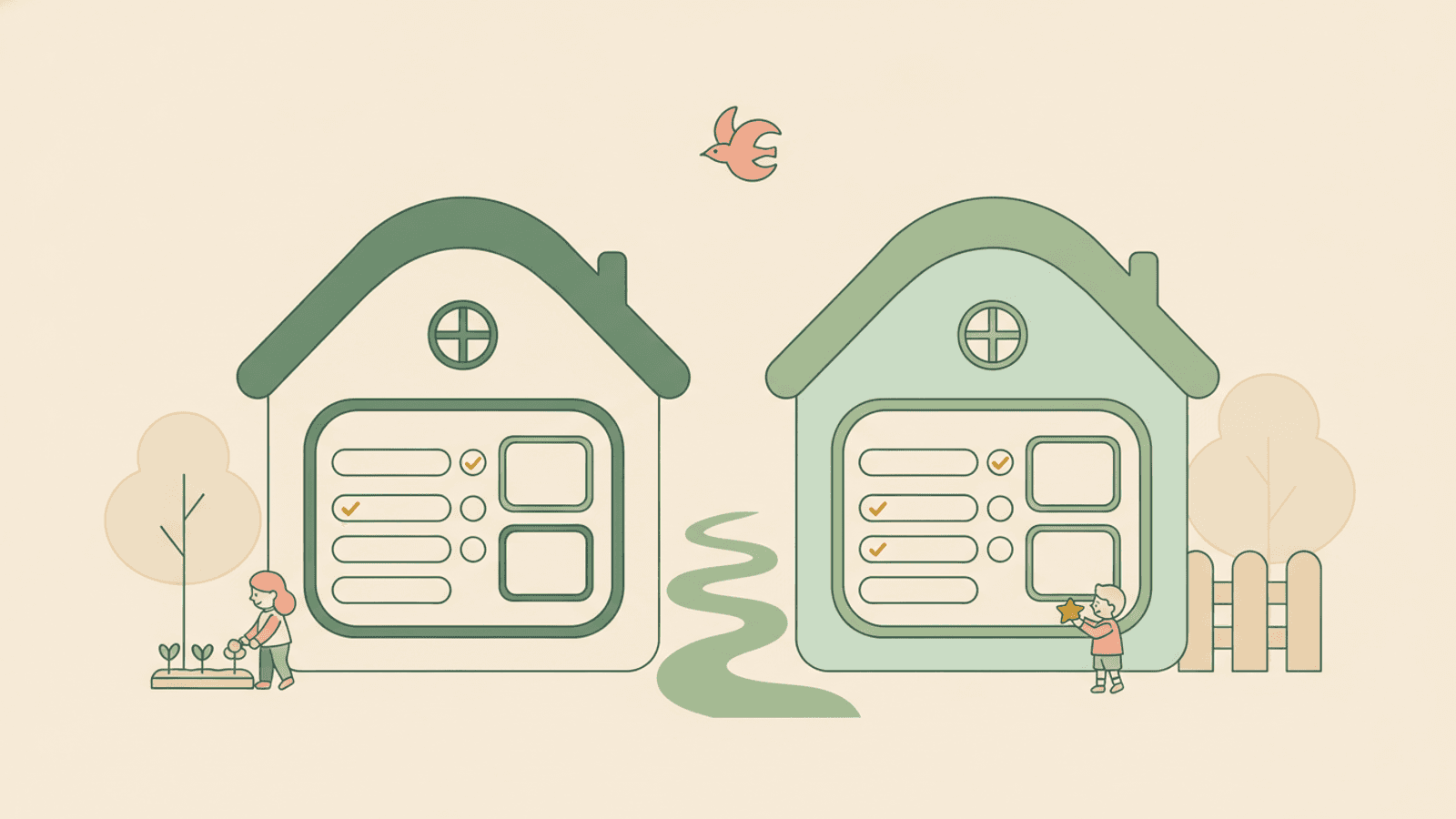
The hardest part of routines in a blended family is not the schedule. It is that two homes run on two different sets of unwritten rules, and the child is the one who pays the cost of switching between them. The fix is not to make both homes identical, which usually is not possible anyway. Pick one small core routine that stays the same in both places, let everything else differ, and give the child two hours of low demands after a handover.
What is a blended family, and why do routines carry more weight here?
A blended family, also called a stepfamily, is a household formed when at least one adult brings a child from an earlier relationship. It can include stepsiblings, half-siblings, children who are here half the time and children who are here always, two homes or three. None of these versions is more or less a real family than any other.
Routines matter more in a blended family because so much more of daily life is unspoken. In a household that grew up together, everyone absorbed the rules by osmosis: how loud mornings are, whether shoes come off in the hall, who is allowed on the sofa. In a blended family, several people arrive carrying rules learned somewhere else, and nobody wrote any of them down.
A routine is simply a way of making the invisible visible. It turns "you should know this by now" into something a child can look at, follow and finish, without anyone having to be the person who explains it again.
Why children are so exhausted after a handover
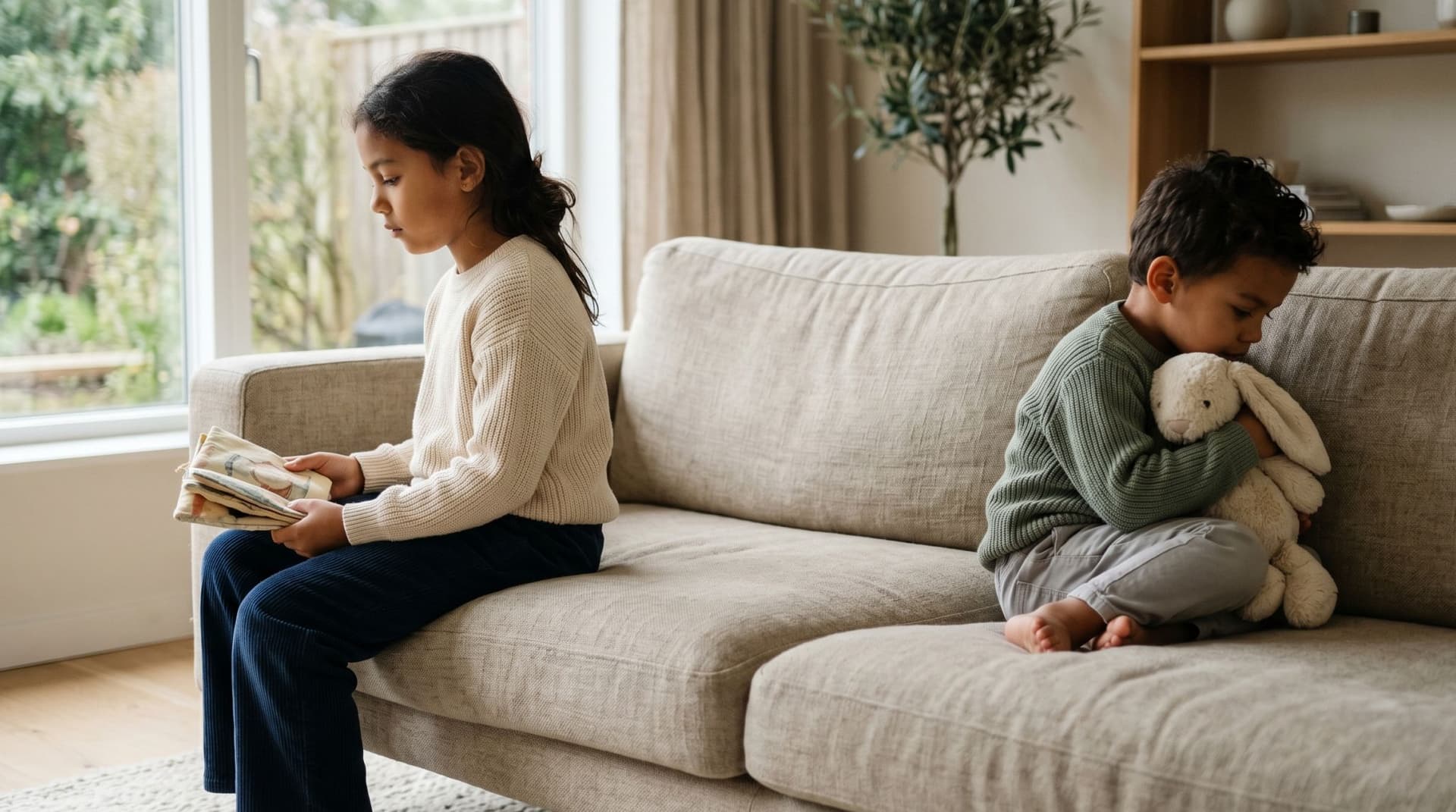
Switching homes is real work. The child has to swap out an entire set of expectations: language, volume, food, bedtime, who to ask for what, which jokes land. For many children this costs a day or two on each side, and it shows up as behaviour rather than as words.
Common signs in the first hours after arriving:
- Irritability or picking a fight over something tiny
- Going quiet, going to their room, refusing contact
- Clinginess and a sudden drop in independence
- Complete refusal of routines that worked fine last week
- Physical complaints such as headache or stomach ache
This is not evidence that the other home is bad, and it is not evidence that your home is. It is the price of the transition, and it goes down when arrival becomes predictable. Children with ADHD or autism often pay more for the same switch, because change of context is the exact thing that costs them the most energy.
An arrival routine beats an arrival conversation
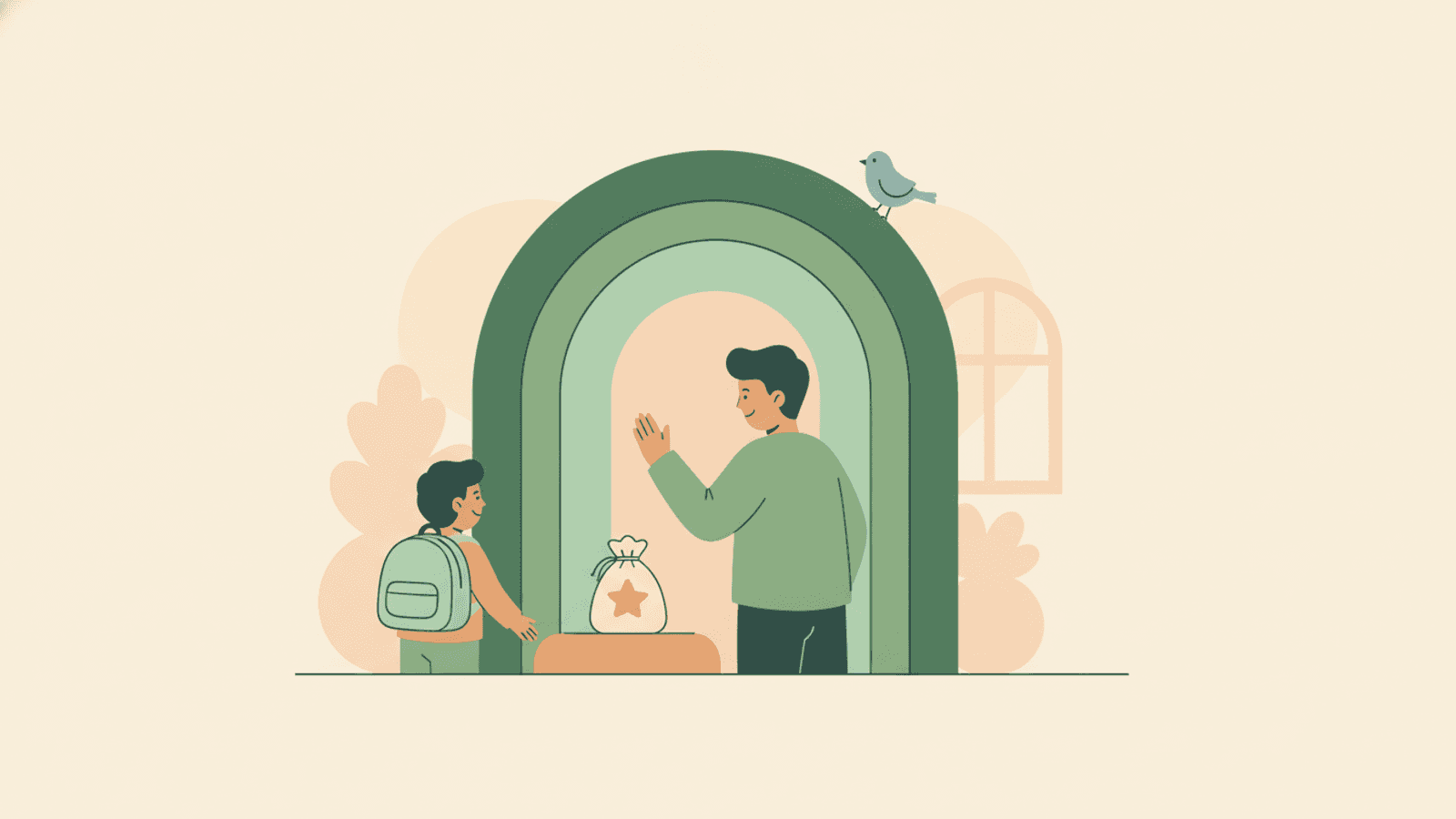
Resist the urge to open with questions about the week. Instead, run the same three or four steps every single time they walk in: bag in the same spot, unpack, something to eat, twenty minutes alone with no demands. Same order, same words, boring on purpose.
Talking happens later, and usually sideways, in the car or at the sink. Not in the doorway.
Choose one core routine, not two identical homes
The goal is not to align two households. It is to give the child one piece of ground that does not move. Choose a single routine and keep it genuinely identical in both homes: same steps, same order, same wording. Everything else is allowed to be different.
Good candidates, in order of usefulness:
- The bedtime wind-down, because sleep is where the transition cost shows up worst
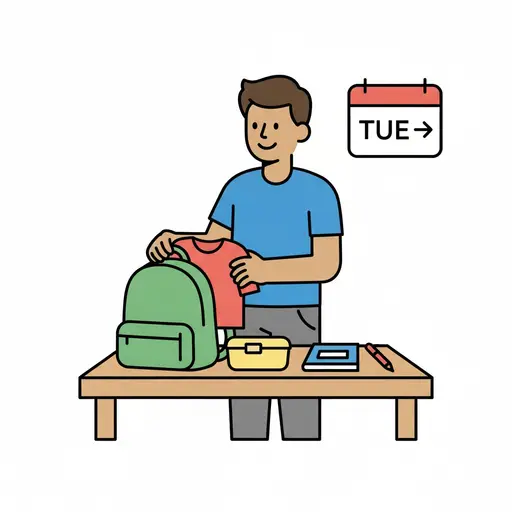
- The morning out-the-door sequence, because school does not adjust to whose week it is
- The arrival routine after a handover
Keep it to four to six steps. A twelve-step routine is not a routine, it is a rulebook, and it will not survive being carried between two houses. If you use an app such as Routined, this is where it earns its keep: the steps can carry photos of your own hallway and your own bathroom, so the routine looks like this home while still saying the same thing as the other one, and a routine you have already built for one child can be copied to another.
The stepparent supports the routine and does not own the discipline
Early on, the biological parent should hold the consequences. The stepparent's job is to be useful, warm and predictable, and to build a relationship that can later carry authority. Skipping to enforcement is the single most common way this goes wrong.
A routine solves this neatly, because it moves the authority out of the adult and into the system. The list says what happens next, so the stepparent does not have to. That is the whole reason routines are such good neutral ground in a stepfamily.
In practice:
- Say "what is next on your list?" rather than "go brush your teeth now"
- Help with the step, sit next to them, hand them the toothbrush, start the timer
- Hand real conflicts to the biological parent, in private, not in front of the child
- Never be the one who removes a privilege in the first months
How long is the beginning? Longer than you want. Months, not weeks, and slower with teenagers than with a five-year-old. The routine lets you be helpful the whole time without becoming the enforcer.
When the other household will not coordinate
Sometimes the co-parent is not interested, or the relationship cannot carry a joint project. You can still do most of this. You cannot run a routine in a house you do not live in, but you can make your house predictable enough that arriving costs less.
Control what happens under your own roof, and let the rest go. A child who has one calm, predictable home is far better off than a child caught between two adults negotiating through them.
What helps:
- Offer once, plainly, with no system attached: "we do these four things at bedtime, you are welcome to the list if it is useful"
- Never send the child as a messenger, and never ask them to report on the other home
- Do not compare out loud, even mildly, even when you are right
- Accept different rules as normal rather than as a problem to be fixed
Stepsiblings, fairness and territory
Children keep an exact ledger, and in a blended family the ledger has more columns: who is here more, who got the bigger room, whose parent is the biological one. Friction over fairness is usually about safety, not about the actual bedtime.
Two things reduce it more than anything else. First, same structure, different content: everyone has a bedtime routine, but the seven-year-old's is not the thirteen-year-old's. Fair means everyone gets what they need, and it is worth saying that sentence out loud in the house until it is boring.
Second, territory. Every child needs something that stays theirs while they are away: a drawer, a shelf, a bed nobody else sleeps in, a hook in the hall. If a child comes back to find their space reassigned, no routine will fix the mood that follows.
Loyalty conflicts: when a routine gets rejected because it came from the other house
A child who says "that is what we do at dad's, I am not doing it here" is usually not being defiant. They are protecting a relationship. Adopting the other home's routine can feel like taking a side, and children in blended families are extremely alert to sides.
Do not argue about where it came from. Let the child have real ownership of the version that lives here: they choose the order of two steps, take the photo for a step themselves, pick what the routine is called. Ownership dissolves loyalty conflicts faster than reasoning does. It also helps if the parent's voice on a step is recorded by the parent who lives in this home, since it plays automatically when the child opens the step.
And say the quiet part clearly, more than once: you are allowed to love them and like it there. Nobody here is competing.
Give each child one thing that is only theirs in this home
Not a bigger present, and not a competing tradition. Something small and specific that belongs to this house and to this child: Friday pancakes with the stepparent, the walk to the shop, the film nobody else in the family likes.
This matters because children who move between homes often feel like guests in both. A ritual that exists only here, with only them, is the cheapest way to turn a guest back into a family member.
What you can do tonight
- Pick one routine, and cut it down to four to six steps
- Write those steps in the exact words the child will hear every time
- Decide what the first two hours after a handover look like, and lower the demands in them
- Check that every child has one physical space that is theirs even when they are not here
- If you are the stepparent, agree with your partner tonight on who holds consequences for the next few months
None of this requires the other household to cooperate, and none of it requires the family to look a particular way. It requires one routine that does not move, and adults who agree on who does what.
Read more
Frequently asked questions
How do you create routines in a blended family when both homes have different rules?
Do not try to align both households. Choose one core routine, usually bedtime or the morning sequence, and keep it word-for-word identical in both homes while letting everything else differ. If the other home is not interested in coordinating, run it in your home anyway, since a predictable home lowers the cost of arriving.
Why is my child so difficult right after coming back from the other parent?
Switching homes means switching an entire set of expectations, and that takes energy the child does not have left for anything else. Irritability, withdrawal or refusing routines in the first hours is a transition cost, not a verdict on either home. A boring, identical arrival routine and two hours of low demands usually shortens it.
What role should a stepparent have in daily routines?
Support the routine, but do not own the discipline. The stepparent helps with steps, sits alongside and asks what comes next, while the biological parent handles consequences, especially in the first months. Because the routine itself says what happens, the stepparent can be useful without becoming the enforcer.
How do you handle fairness between siblings and stepsiblings?
Use the same structure with different content, so everyone has a bedtime routine but not the same one, and say out loud that fair means everyone gets what they need. Make sure each child keeps a physical space that stays theirs while they are away. Most fairness fights in a blended family are about feeling secure, not about the actual rule.
My child refuses a routine because it comes from the other parent's home. What now?
That is usually a loyalty conflict rather than defiance, since adopting the other home's system can feel like choosing a side. Skip the argument about where it came from and give the child real ownership here: they pick the order, the name or the photos. Also say plainly that liking it there is allowed.