Sibling Fights: Why They Get Worse on School Breaks (and 5 Things That Actually Help)
Eleven hours together, no school, no schedule — and by 10 AM they're at each other's throats. Sibling conflict on school breaks isn't bad luck; it's the predictable result of lost structure and overlapping territory. Five fixes that move the needle.
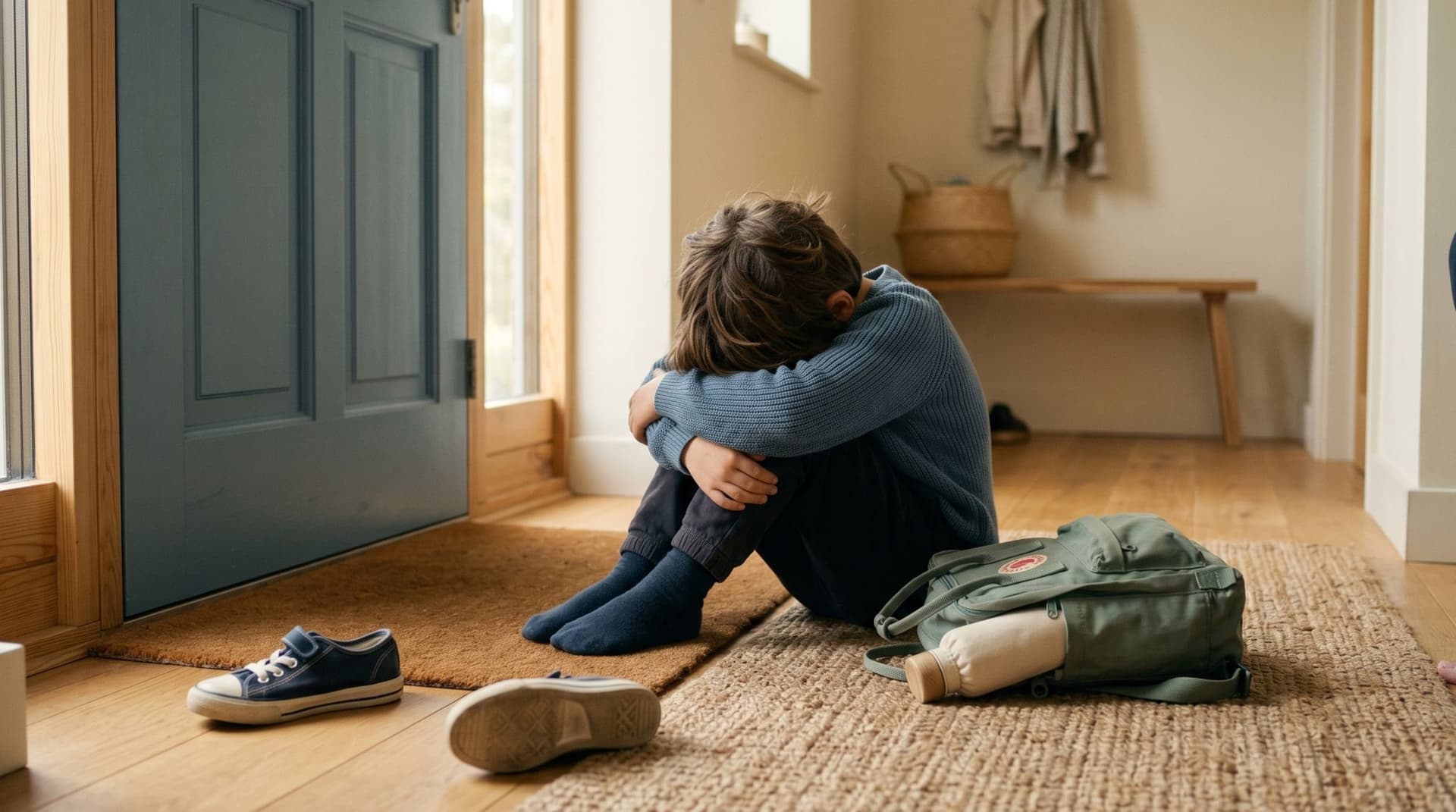
Day three of summer break. The seven-year-old is screaming because the four-year-old looked at her LEGO build. The four-year-old is screaming because the seven-year-old took the iPad. You haven't had a coherent thought since breakfast.
The fights have been worse since school ended. They were fine during the term. What happened?
The answer is structural, not behavioral. Sibling conflict spikes on school breaks for three predictable reasons.
Why fights spike during breaks
1. Lost daily separation. During the school year, siblings spend most waking hours apart. School, daycare, after-school activities, friends. They reunite for a few hours each evening — short enough that conflicts don't have time to compound. On breaks, that separation evaporates. Eleven hours together is structurally different from three.
2. Overlapping territory. With everyone home all day, every space becomes contested. The couch. The good chair. The view of the TV. The corner of the kitchen counter where homework usually happens. Without separate routines pulling kids into separate physical spaces, the house becomes a single shared zone — and shared zones produce friction.
3. Lost individual rhythm. Each child has their own optimal pace. One wakes up at 6:30 and wants to play. The other wakes up at 9:00 and wants quiet. During the school year, these rhythms don't collide because school enforces a shared one. On breaks, both rhythms hit the same shared space at the same time, and the friction is constant.
Most "sibling fights" aren't really about the LEGO or the iPad. They're symptoms of a system with no breathing room.
Five fixes that work
1. Build separate routines, not a shared one
The instinct on a break is to have "family activities" — a shared morning, a shared lunch, a shared outing. This can backfire spectacularly. Two children with different ages, different energy levels and different needs sharing every minute is a setup for conflict.
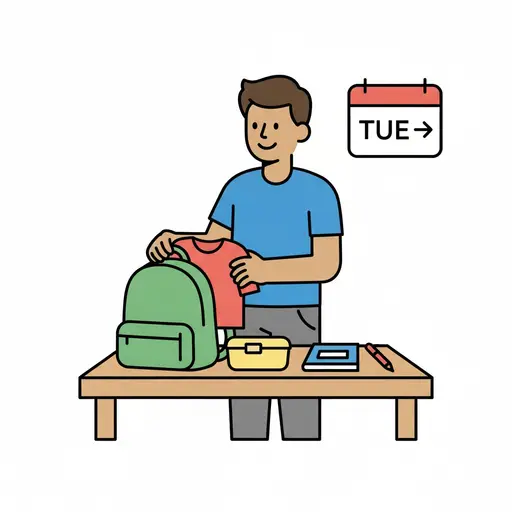
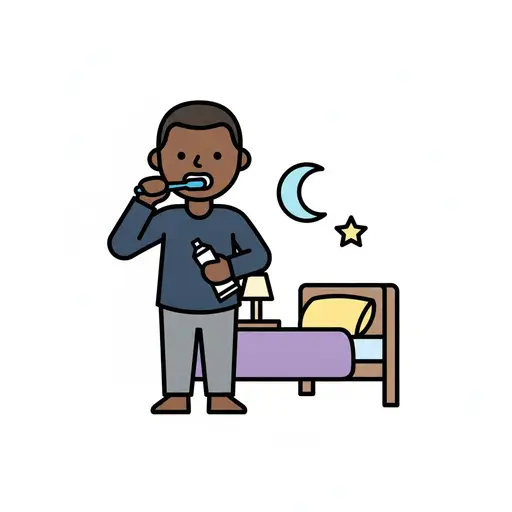
Instead, give each child their own short morning routine. They start their day on their own track. Maybe they overlap at breakfast, but the structure before and after is individual. The same applies to wind-down in the evening.
Routine apps make this easier — you can build entirely different sequences for each child, with different visuals, timers and rewards. They don't have to share a system; they share a household.
2. Engineer physical separation
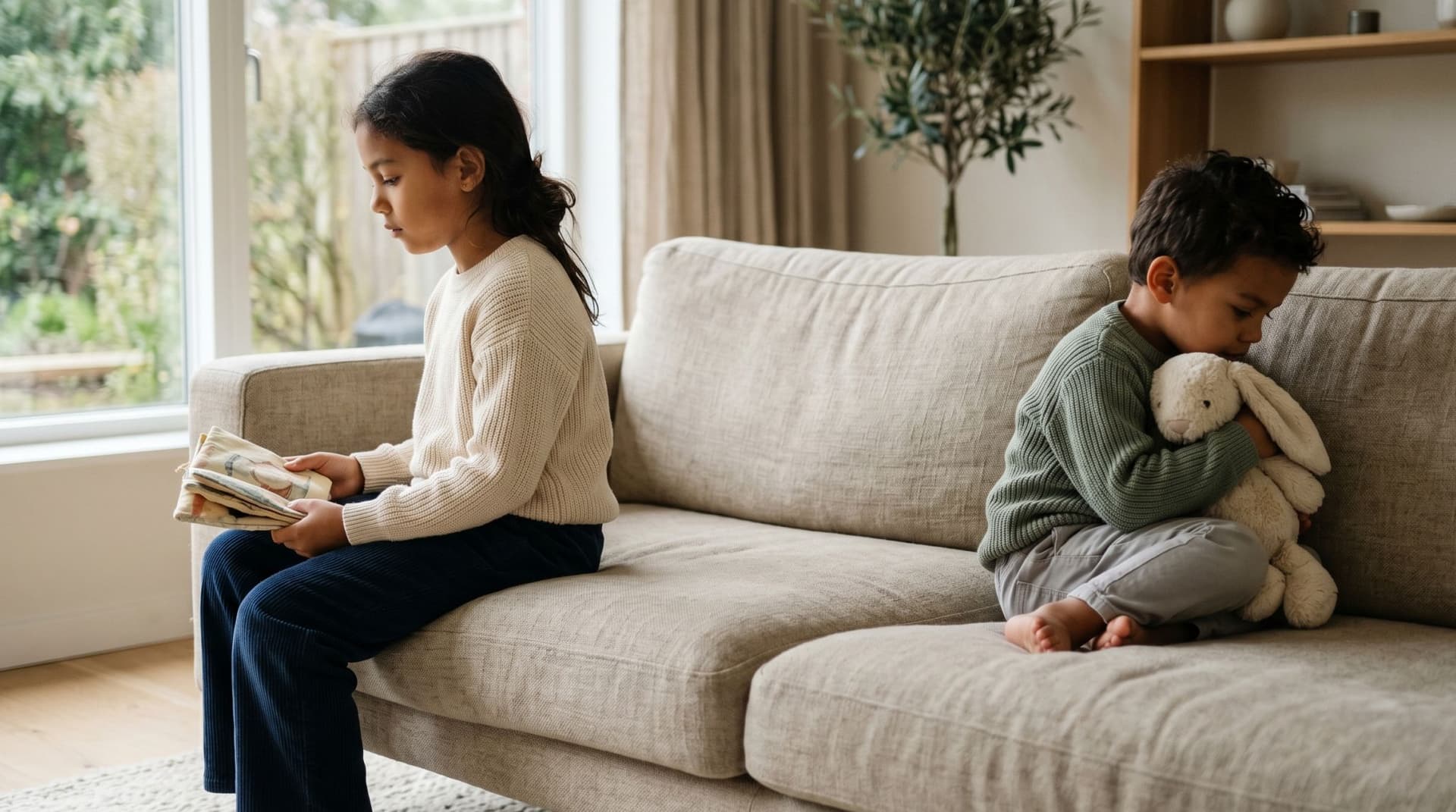
For at least 90 minutes a day, the children should be in different physical zones. Not in time-out, not as punishment — just separated. One in the living room, one in their bedroom. One at the kitchen table, one in the garden.
Quiet hour, screen-time-in-different-rooms hour, independent-play hour — it doesn't matter what you call it. What matters is that for some part of each day, they're not in each other's space.
This is what school does invisibly. You're recreating it.
3. Stop refereeing
The single most exhausting parenting role on breaks is referee. He said, she said, who started it, what's fair. Refereeing trains kids to escalate so the parent intervenes. The parent becomes part of the conflict cycle.
When a fight starts, your first move should usually be to leave the room. If safety isn't at stake, the children will resolve a remarkable share of conflicts on their own once the audience is gone. If you must intervene, intervene to separate physically — not to adjudicate. "Different rooms for twenty minutes." No analysis, no court case.
This is hard. It requires unlearning the reflex to fix every conflict. But every fight you don't referee teaches the children that fights aren't a route to your attention.
4. Give each child a "no-share" item
Sharing is great, except when everything is shared. Each child needs at least one item — toy, book, blanket, art supplies — that is theirs alone and that the other sibling cannot touch without permission.
This isn't selfish. It's the basis of being able to share other things. A child with no protected territory cannot generously share — they're defending the last inch they have.
Make it explicit. Write it on a sticky note on the item. "This is Erik's. Ask first."
5. Anchor the day with shared rhythm points
Three short shared moments per day are usually enough: breakfast, the midday meal, and a wind-down. Everything else can be parallel — same house, different tracks. The shared moments give the day cohesion. The parallel time gives everyone space.
If you have older kids, add a fourth: a short check-in or game right after dinner. Adolescents in particular need a deliberate point of family contact, but not a constant one.
The mental shift
The hardest part of break-week parenting isn't the kids — it's the parent's assumption that being together more should mean being together always. It shouldn't, and it doesn't, in any functional family.
Reducing sibling fights isn't about teaching kids to get along. It's about engineering a day with enough separation, individual rhythm and protected territory that the natural baseline isn't constant friction. The kids who got along beautifully during the school year are the same kids. The system around them is what changed.
Restore the system — different routines, separate physical zones, protected items, shared rhythm points — and most of the surface-level fighting resolves on its own.
A break isn't a marathon family activity. It's eleven weeks of structurally different days. Build the days with each child's needs in mind, not the family unit's, and the family unit benefits anyway. Less referee, more rhythm.
Frequently asked questions
My kids are different ages — 4 and 11. They can't possibly have the same break.
They shouldn't. Different ages means dramatically different routines, sleep needs, activity levels. The 11-year-old should have more autonomy and more independent time. The 4-year-old should have more structure and parent contact. Don't try to keep them on the same track.
What about only children? Don't they need socializing?
Yes, but with peers, not via constant parent contact. An only child needs friend time built into the break — a friend over, a day camp, a trip to a cousin. The parent doesn't have to be the social partner for every hour.
My teenagers fight with the little ones constantly.
This is usually a sign the teenager needs more independent time, not more "family time." A 14-year-old who's been included in every family activity for a week starts picking fights as an exit strategy. Give them legitimate space — friends, screens, alone time — and the picking usually stops.
Won't separating them mean they don't bond?
Bonding happens in moments of shared positive experience, not in shared boredom or shared captivity. Shorter, better moments together produce more bonding than long stretches of friction.