“I’m Bored”: Turning Summer Boredom Into Independence
By mid-July the “I’m bored” chorus starts. Boredom isn’t a problem to solve for your child — it’s a skill to build. Here’s how to step back without the day descending into chaos.
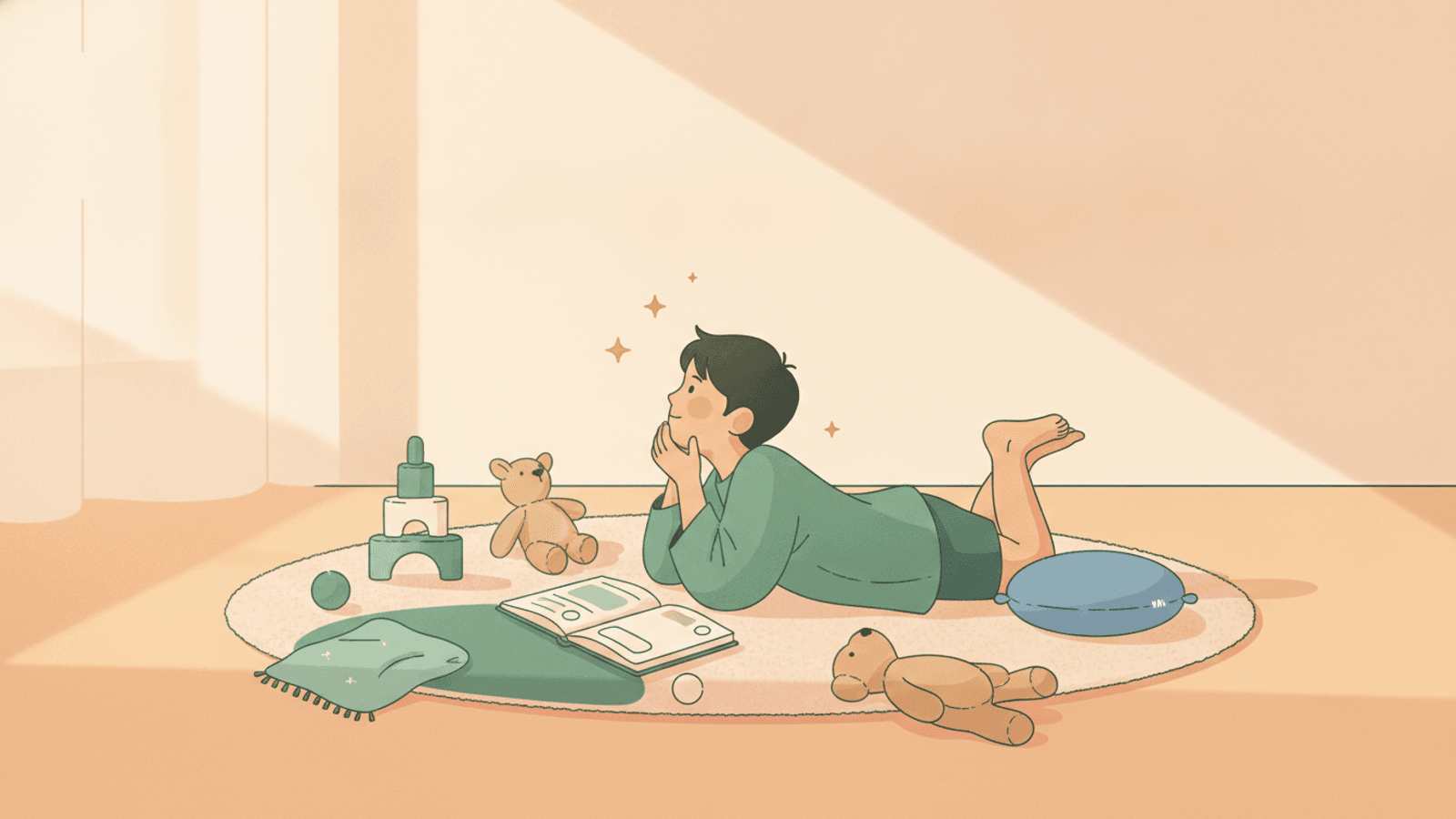
When your child says I am bored summer days can suddenly feel very long. Instead of seeing it as a problem to be fixed, view "I'm bored" as a golden opportunity. It's a chance for your child to tap into their innate creativity, develop crucial problem-solving skills, and grow into a more independent individual.
Boredom Is Not the Enemy
It’s a phrase that strikes fear into the hearts of parents everywhere: “I’m bored!” Our immediate instinct is often to swoop in, suggest an activity, or even provide entertainment. But what if we paused and considered boredom not as an adversary, but as a powerful, albeit uncomfortable, ally?
Boredom is, in essence, an invitation. It’s the brain’s quiet signal that its current activity isn't stimulating, prompting it to seek out something new. For children, this state is incredibly fertile ground. It’s where creativity sprouts, where imagination runs wild, and where the first seeds of self-direction are planted. When children are regularly 'rescued' from boredom, they miss out on developing the internal compass that guides them toward engaging, meaningful activities on their own. They learn to rely on external stimuli rather than cultivating their inner world.
Think about it: the greatest innovations, the most imaginative games, the deepest reflections often begin in moments of quiet, unstructured time. Giving your child the space to feel bored, and then the tools to navigate it, is giving them a profound gift – the ability to entertain themselves, solve their own problems, and discover their passions. It teaches them resilience and fosters a sense of agency that will serve them well throughout their lives. It's not about leaving them completely adrift, but about providing a framework that empowers them to find their own way.
Why It Feels Worse With ADHD/Autism
For parents of children with ADHD or autism, the declaration of "I'm bored" can feel particularly fraught. What might be a mild annoyance for one family can quickly escalate into a meltdown, persistent nagging, or a cycle of despair for another. This isn't because your child is being difficult; it's often rooted in neurological differences that make self-starting and self-regulation uniquely challenging.
Children with ADHD often struggle with executive functions, which include initiating tasks, planning, and maintaining focus. Their brains may also have differences in dopamine regulation, making it harder to find the internal motivation to start an activity, especially if it doesn't offer immediate gratification. Boredom, in this context, isn't just a lack of external stimulation; it can feel like an intensely uncomfortable, restless void. The effort required to transition from "nothing" to "something" productive or engaging is significantly higher.
Similarly, children on the autism spectrum may struggle with initiating play, especially unstructured, imaginative play, due to differences in social communication, flexible thinking, or sensory processing. The open-ended nature of "go find something to do" can feel overwhelming and anxiety-inducing, rather than liberating. They might prefer predictable routines or specific interests, making general boredom particularly distressing. Understanding these underlying differences helps us approach their boredom with greater empathy and tailor our support to their specific needs. It's about recognizing that their struggle is real and providing structured options that reduce cognitive load and enhance accessibility.
The Light Scaffold: A Loose Three-Anchor Day + a "Boredom Menu"
So, how do we foster independence and creativity without leaving our children feeling completely lost, especially those who thrive on structure? The answer lies in creating a "light scaffold" – a framework that provides enough predictability to feel safe, but enough flexibility to allow for self-directed exploration.
We don't need a minute-by-minute summer schedule. Instead, think about a "three-anchor day." These are predictable, non-negotiable points in the day that provide a sense of rhythm and security. They act as gentle guideposts, allowing everything in between to be more fluid.
Anchor 1: Morning Connection & Preparation. This includes breakfast, getting dressed, and a brief chat about the day's general flow. It's not about starting an activity, but getting ready for the day.
Anchor 2: Lunch Time. A consistent time for a meal, a natural break in the day.
Anchor 3: Evening Wind-Down & Dinner. The transition from active play to family time and preparing for rest.
The magic happens in the vast, open spaces between these anchors. This is where boredom can truly flourish and lead to self-discovery, especially when coupled with a powerful tool: the "Boredom Menu."
Build the Boredom Menu Together
The boredom menu is not a list you hand to your child; it's a collaborative masterpiece you create together. This process itself is incredibly empowering, giving your child ownership over their choices and an understanding of their own potential activities.
Here’s how to build one:
1. Brainstorm Big! Sit down with your child (or children) and ask them to list everything they could do when they feel bored. No idea is too silly or too small.
2. Categorize for Clarity. Group similar ideas. For children with ADHD/autism, categories can be especially helpful for navigating choices. Consider:
- Creative Corner: Drawing, painting, playdough, building blocks, craft supplies.
- Active Adventures: Playing outside, jumping rope, dancing, riding a bike, obstacle course.
- Quiet Contemplation: Reading a book, listening to music, puzzles, looking through magazines.
- Learning & Exploring: Simple science experiments, nature scavenger hunt, building a fort, practicing an instrument.
- Helping Hands: Tidying their room, helping set the table, watering plants.
3. Make it Visual. For younger children or visual thinkers (common in ADHD/autism), use pictures, drawings, or printed icons next to each idea. You could even create a "menu board" with removable cards.
4. Include Preferred & Less Preferred. Make sure there’s a good mix. Perhaps "screen time" is an option, but it's listed among many others, not as the default. Also, include some options that might require a little more effort but yield greater satisfaction.
5. Location, Location, Location. Place the menu in an easily accessible and visible spot. When the cry of "I'm bored!" erupts, you can simply point to the menu.
The beauty of the boredom menu is that it removes the mental load of inventing an activity on the spot. It provides clear, tangible choices, reducing overwhelm and making self-initiation far more manageable.
Resist Becoming the Entertainment Director
This is perhaps the hardest, yet most crucial, step. Once you’ve established your light scaffold and created your boredom menu, your role shifts from entertainer-in-chief to facilitator.
When your child says, “I’m bored,” your instinct might be to jump in with suggestions or to feel guilty if they’re not constantly stimulated. However, the goal here is to empower them to choose, to initiate, and to discover.
Instead of: "Why don't you go play with your LEGOs?"
Try: "Hmm, that's a tricky feeling, isn't it? What's on your boredom menu that sounds good right now?"
Then, step back.
It might feel uncomfortable. There might be some initial resistance, a bit of whining, or even a period of just 'languishing.' This is normal. This is where the crucial work of internalizing self-direction happens. Hold firm. Trust the process.
Your boundary might be: "I'm busy making dinner right now, but I know you have lots of ideas on your boredom menu to choose from. I'm excited to hear what you pick!" This sets a clear expectation that you are not the sole source of their entertainment, while still being supportive and engaged with their eventual choice.
Celebrate their small wins. When they choose an activity, even if it's not what you would have picked, acknowledge their independence: "Wow, I love how you looked at your menu and decided to build that fort! That shows great thinking."
By providing structure, choice, and then space, you're not just surviving summer boredom; you're actively cultivating independence, resilience, and a lifelong capacity for self-directed engagement. This summer, let "I'm bored" be the starting gun for their next great adventure, chosen and executed entirely by them.
Read more
Frequently asked questions
Is it bad to let my child be bored?
No, it's actually highly beneficial. Boredom is often the precursor to creativity, critical thinking, and developing internal motivation. It provides children with the quiet space needed to explore their own interests and learn to entertain themselves, fostering crucial life skills.
My child with ADHD melts down when bored — is that normal?
Yes, it can be quite normal. Children with ADHD often struggle with executive functions like task initiation and internal motivation due to differences in dopamine regulation. This can make the feeling of boredom intensely uncomfortable and overwhelming, leading to frustration or meltdowns, as finding an activity requires significant mental effort.
How much screen time is okay when they say they are bored?
Screen time can be one option on a "boredom menu," but it shouldn't be the default or only choice. It's helpful to set clear limits and encourage a balance with other activities like creative play, outdoor exploration, or reading. The goal is to use screens mindfully, not as an instant pacifier for every moment of boredom.
What is a “boredom menu” and how do I make one?
A "boredom menu" is a collaborative list of pre-approved activities your child can choose from when they feel bored. To make one, sit down with your child to brainstorm ideas, categorize them (e.g., active, creative, quiet), and make it visual with pictures or drawings. This empowers them to pick their own fun.
Should every day of the summer have a plan?
Not a rigid, minute-by-minute plan. A light structure, like a "three-anchor day" with predictable meal times, provides security. However, leaving plenty of unstructured time between these anchors allows for free play, exploration, and the use of the "boredom menu," which is crucial for fostering independence and creativity.