Morning Meltdowns Before School: Why They Happen and How to Help
The clock is ticking, you need to leave in ten minutes, and your child is on the floor in tears over a sock. Morning meltdowns are exhausting and they make everyone late. Understanding why they happen makes them rarer and shorter.
The clock is ticking, you need to be out the door in ten minutes, and your child is on the floor in tears — over a sock, the wrong cup, or nothing you can name. Morning meltdowns are exhausting, they make everyone late, and they can leave the whole family starting the day frayed. The good news is that once you understand why they happen, you can make them both rarer and shorter.
Why mornings trigger meltdowns
A lot stacks up in a short window. There is time pressure, several transitions in a row, often hunger and grogginess, and for many children an undercurrent of worry about the school day ahead. A meltdown is what happens when the nervous system tips past what it can handle — it is not a tantrum to get something, not manipulation, and not a choice. Once you see it as overwhelm rather than misbehaviour, your whole response shifts in a more helpful direction.
Meltdown versus defiance
A meltdown is a loss of control under overwhelm; defiance is a deliberate “no.” They look different and they need different responses. In a meltdown the thinking brain is effectively offline, so reasoning, consequences and demands all pour fuel on the fire. The first job is never to win the argument — it is to help your child come back to calm. The conversation can come afterwards, when they can actually hear it.
Prevent what you can the night before
- Lay out clothes, pack bags and decide breakfast the night before — every morning decision removed is one less flashpoint.
- Protect sleep, and wake with enough time that no one is rushed or running on empty.
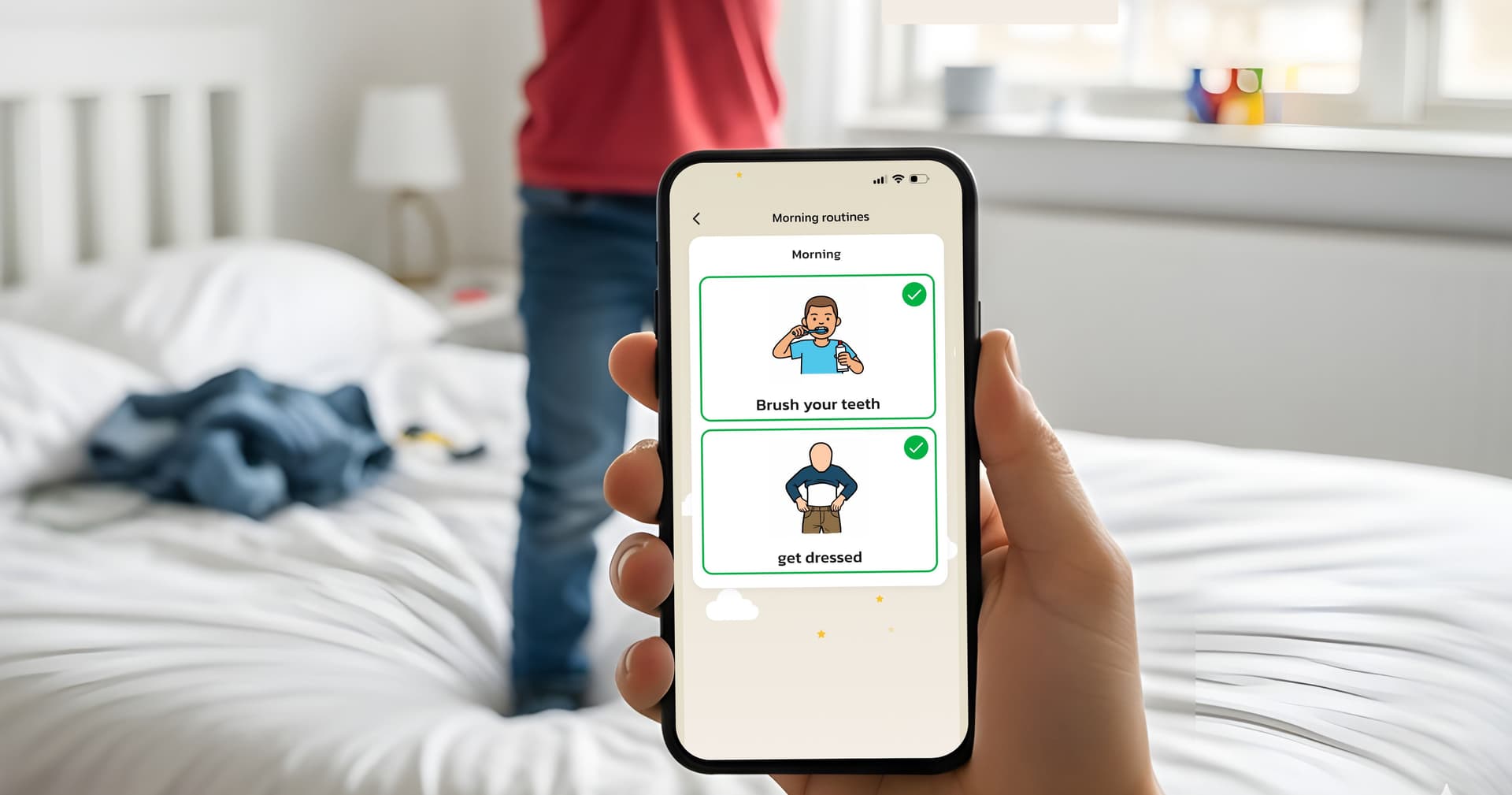
- Use a visual morning routine so your child follows pictures instead of being hit with a stream of verbal demands.
- Connect before you correct — a minute of warm, unhurried attention before the rush settles many children.
In the moment: how to respond
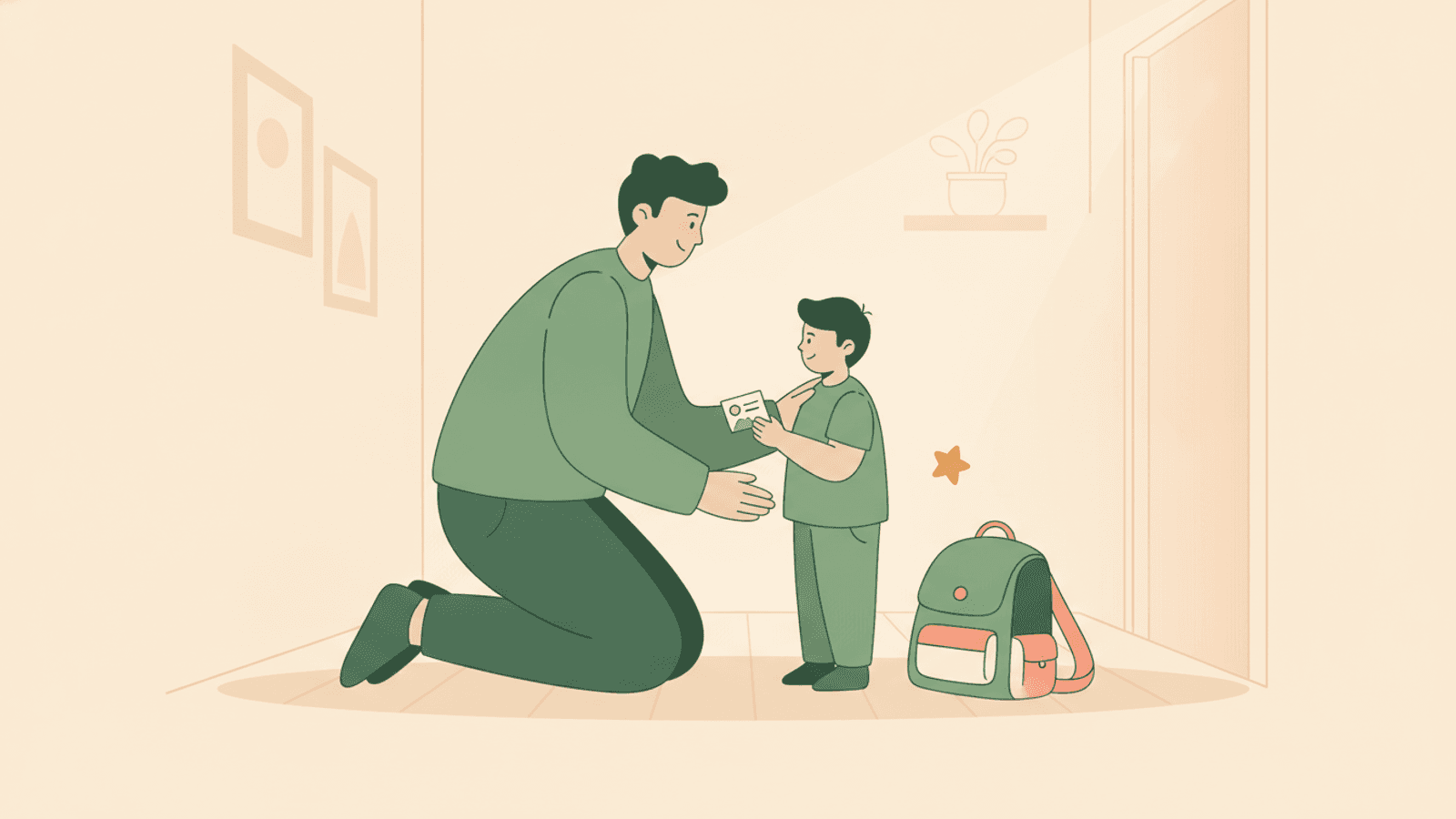
Stay calm yourself first — your calm is the regulation your child borrows. Use few words, drop the timeline pressure for sixty seconds, get down to their level, and offer comfort rather than commands. Do not reason, lecture or threaten mid-meltdown; wait for the wave to pass, then gently move things forward. Lowering your voice and slowing right down does more to end a meltdown than anything you could say.
When it's really about school
If the meltdowns cluster on school mornings and melt away on weekends and holidays, the morning routine may not be the real problem — anxiety about school is. Gently ask what the day holds, watch for a pattern such as a particular subject, a social worry or the drop-off itself, and talk to the teacher. Treating the underlying worry usually calms the mornings far more than tightening the routine.
For children with ADHD or autism
Emotional regulation and transitions are genuinely harder, mornings are a perfect storm of both, and meltdowns are more frequent and more intense — this is not bad behaviour. Lean hard on prevention (preparation, visuals, enough time, protected sleep), clear forewarnings, and calm co-regulation in the moment. Predictability is the single strongest tool you have. This article is general guidance, not medical advice.
Read more
- Meltdowns in Public: How to Stay Calm When Everyone Is Watching
- Say Goodbye to Nagging – 5 Steps to a Stress-Free Morning
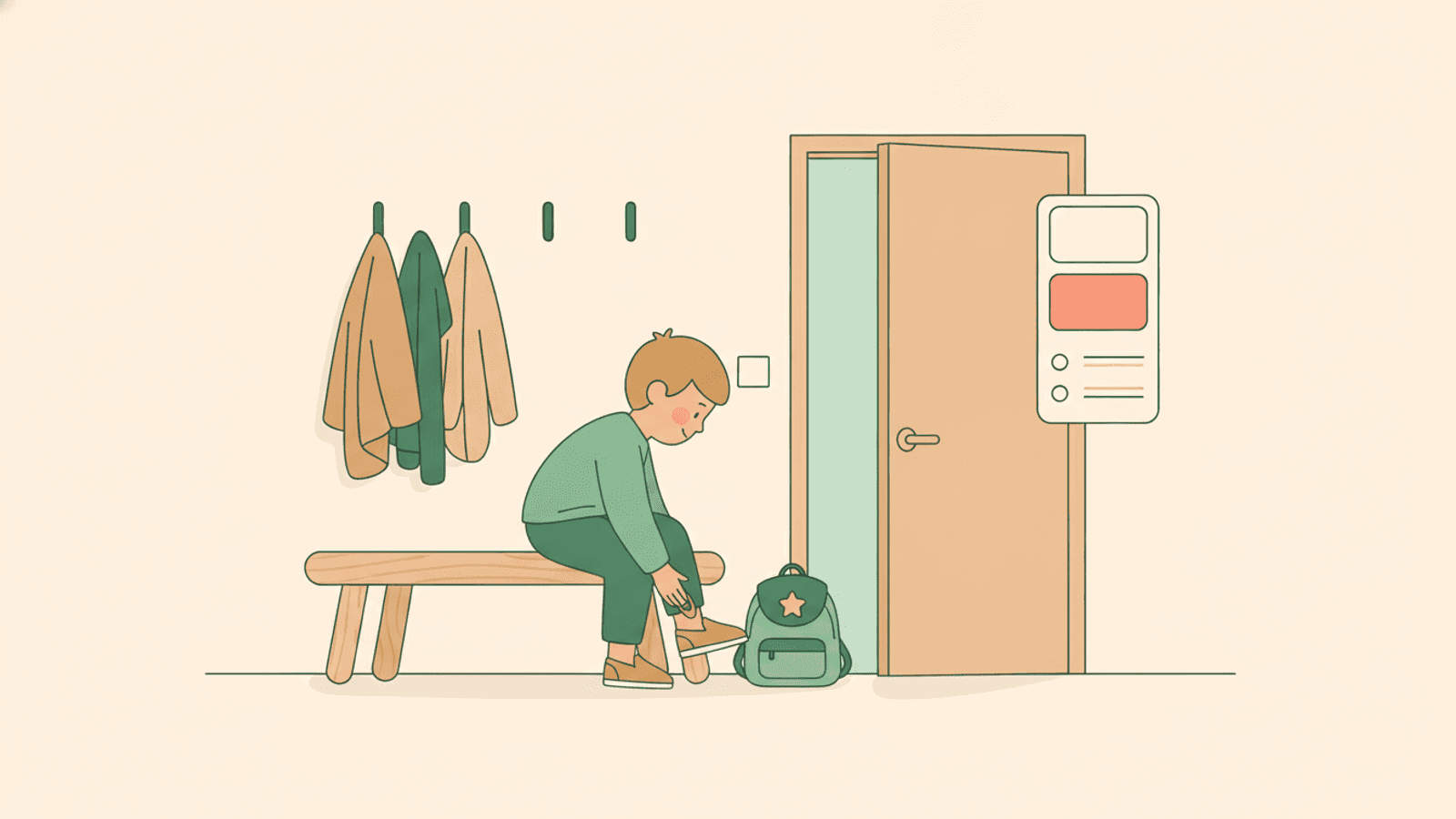
- The Hallway Routine: How to Actually Get Out the Door on Time
- Morning Routines
Tip: Download our ready-made visual schedule Morning routine – visual schedule (free printable PDF), or browse all ready-made visual schedules.
Frequently asked questions
Why does my child have meltdowns every morning before school?
Mornings combine time pressure, several transitions, hunger and tiredness, and often worry about the school day — a lot for a developing nervous system. When it tips past what your child can handle, a meltdown follows. Prevention the night before and a calm pace reduce them most.
What's the difference between a meltdown and a tantrum?
A tantrum is goal-driven — a child wants something and the behaviour stops when they get it or clearly will not. A meltdown is a loss of control under overwhelm, with no goal, and it cannot simply be switched off. Meltdowns need calm and comfort, not consequences.
How should I respond to a morning meltdown?
Stay calm, use few words, get down to your child’s level and offer comfort over commands. Drop the rush for a minute and wait for the wave to pass before moving on. Reasoning, threats and lectures mid-meltdown make it worse, not better.
Should I punish my child for morning meltdowns?
No. A meltdown is not a deliberate choice, so punishment does not teach anything and usually escalates it. Help your child regulate first; if there is something to address, do it calmly later, when they can actually take it in.
How do I know if it is school anxiety?
Look at the pattern: if meltdowns happen on school mornings but not on weekends or holidays, anxiety about school is a likely driver. Ask gently about the day, watch for a recurring trigger, and talk to the teacher to address the underlying worry.