Perfectionism in Children: When "Not Perfect" Feels Like Failure
A child who crumples a drawing over one wrong line, who will not try unless they are sure they will win, who calls themselves stupid over a small mistake — perfectionism can be heartbreaking to watch. It is not about high standards; it is usually fear.
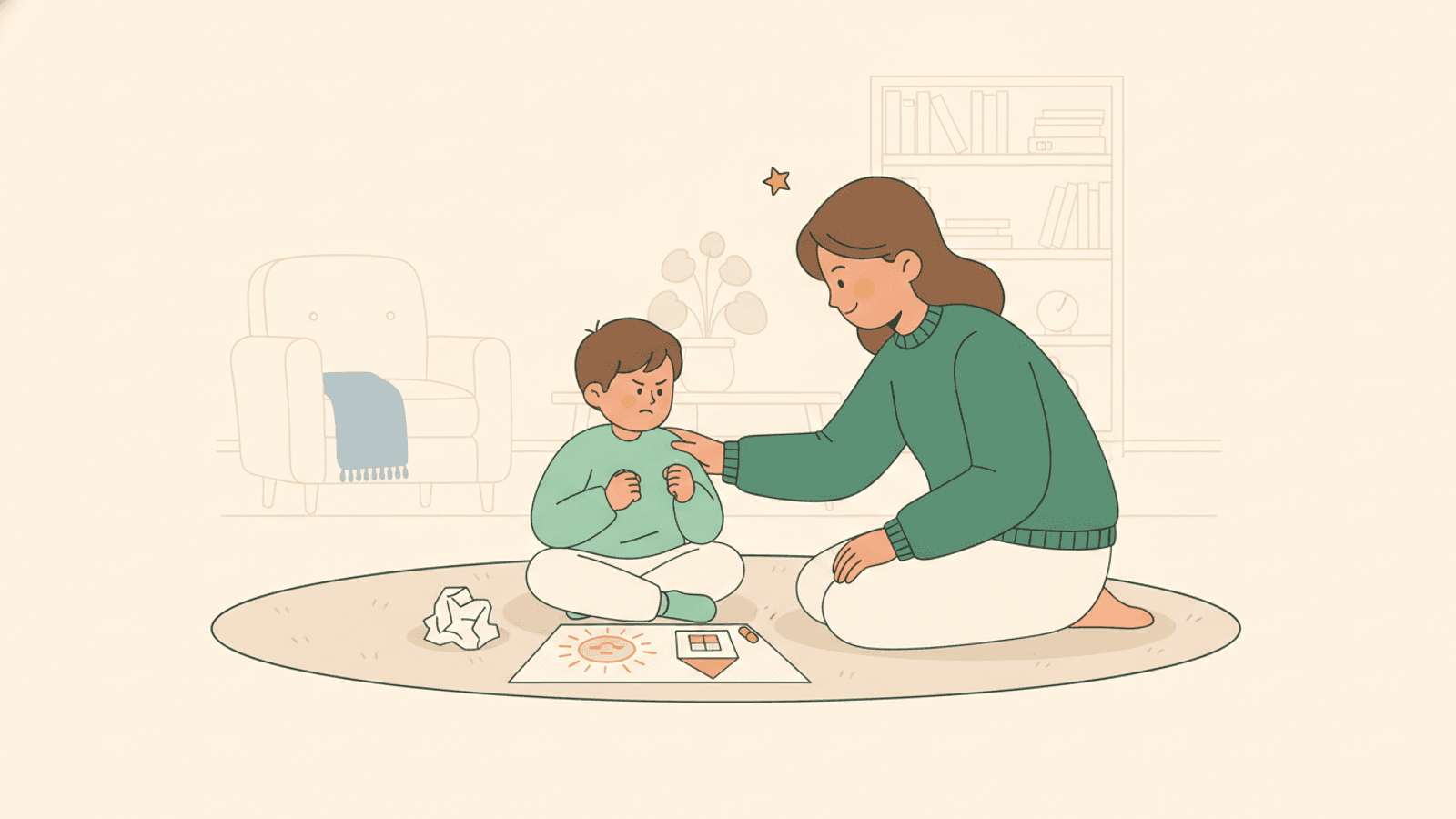
A child who crumples up a drawing because of one wrong line, who refuses to try unless they are certain they will win, who calls themselves stupid over a tiny mistake — perfectionism in children can be genuinely heartbreaking to watch. It is easy to assume it means high standards, but it is almost never really about excellence. Underneath, it is usually fear: a deep dread of getting it wrong. Here is what feeds that fear and what gently shrinks it.
What perfectionism looks like in children
It shows up as ripping up or hiding “imperfect” work, refusing to try new or hard things, big meltdowns over small mistakes, and harsh self-talk like “I’m so stupid” or “I can’t do anything right.” You might see endless checking and redoing, or avoiding anything they cannot master instantly. The common thread running through all of it is an intense fear of getting things wrong, not a genuine love of doing things excellently.
Why it happens
Perfectionism grows from a mix of temperament, anxiety and — often quite unintentionally — how we praise. Praising the outcome, with “you’re so clever” or “you got everything right,” quietly teaches that worth comes from results and from being smart, so a mistake starts to feel like proof that you are not. Some children are simply wired more sensitively, and many also absorb pressure they sense in the world around them.
Praise the effort, not the outcome
The single biggest shift is praising the process rather than the product — “you worked really hard on that” or “you kept going when it got tricky,” instead of “you’re so smart” or “that’s perfect.” This builds a growth mindset, where ability is something that grows with effort rather than a fixed trait you either have or lack. When effort is what counts, a mistake becomes part of learning rather than a verdict on the child’s worth.
Make mistakes safe and normal
- Talk about mistakes as how brains learn — “what a great mistake, now you know for next time.”
- Model your own out loud and calmly — “oops, I got that wrong, let me try again” — so they see you survive it.
- Share the struggle behind success, not just the polished result, so effort and setbacks feel normal.
- Resist fixing or redoing their work to make it “right” — let it stay theirs, imperfect and all.
Separate worth from achievement
A perfectionist child often believes, deep down, that they are only lovable when they perform. Counter that belief constantly: give love and attention that are not tied to results, value who they are over what they produce, and never let warmth cool because of a poor performance. They need to feel, in their bones, that a bad day or a failed test changes absolutely nothing about how much you love them.
Let them struggle a little
Rescuing a child from every frustration quietly confirms that mistakes are emergencies to be rushed away. Within reason, let your child sit in the discomfort of a hard task, make errors and recover — that is how they discover they can survive imperfection. Reframe failure out loud as information rather than disaster: “that didn’t work — interesting, what could we try instead?”
When to look closer
If perfectionism is fuelling real anxiety, stopping your child from trying things, causing frequent distress, or coming with very harsh self-criticism, it is worth talking to a professional. Perfectionism and anxiety overlap a great deal, and both respond well to the right support, so seeking advice early is sensible rather than an overreaction.
For children with ADHD or autism
Rigidity, black-and-white thinking and rejection-sensitive feelings can make perfectionism especially intense, so a small mistake can feel genuinely catastrophic. On top of that, many neurodivergent children hear a great deal of correction, which quietly feeds an “I’m always wrong” belief. Pour on the effort-praise, normalise mistakes relentlessly, and fiercely protect their sense of worth. This article is general guidance, not medical advice.
Read more
Frequently asked questions
Why is my child such a perfectionist?
Perfectionism usually comes from a mix of sensitive temperament, anxiety, and praise that focuses on outcomes and being clever. When worth feels tied to getting things right, mistakes become frightening. It is driven by fear of failure far more than by genuinely high standards.
How do I help a perfectionist child?
Praise effort and process rather than results, make mistakes safe and normal by modelling your own, separate your love from their achievements, and let them struggle a little so they learn they can survive imperfection. Reframe failure out loud as information, not disaster.
Should I praise my child for being smart?
It tends to backfire. Praising a child for being smart or for perfect results teaches that worth comes from those things, so mistakes feel threatening. Praising effort, strategy and persistence instead builds a growth mindset and makes mistakes feel like part of learning.
My child gives up if they can't do something perfectly — what helps?
Lower the stakes: praise the trying, not the result, model your own mistakes calmly, and reframe failure as information. Let them sit with a hard task a little rather than rescuing them, so they discover that imperfection and struggle are survivable and normal.
Is perfectionism in children a problem?
A little is normal, but it becomes a concern when it fuels anxiety, stops a child trying new things, causes frequent distress, or comes with very harsh self-criticism. Perfectionism overlaps with anxiety, and if it is interfering with daily life, professional support helps.