Starting Weekly Pocket Money: A Simple Guide for Parents
Starting pocket money is simple to do and easy to overthink. Here's when your child is ready, how much to give, whether to tie it to chores, and how to help the lesson stick — without a complicated system.

Starting pocket money is one of the simplest ways to teach a child about money — and one of the easiest to overthink. Weekly pocket money is a small, fixed amount you give your child on the same day each week, so they can start making their own spending and saving choices. You don't need a complicated system. You need a small amount, a regular day, and the patience to let your child learn by doing.
Is your child ready for pocket money?
Most children are ready somewhere between four and seven, once they understand that money is exchanged for things and that when it's gone, it's gone. A good sign of readiness is that your child asks to buy things, notices prices, or wants something they could realistically save for. You're not looking for maths skills — you're looking for interest. If your child is curious about money, they're ready to start learning with a little of their own.
How much should you give?
There's no perfect figure, and it matters less than being consistent. A common rule of thumb is a small amount per year of age each week, adjusted to what your family can comfortably afford and what you expect the money to cover. Start low — you can always raise it. The point isn't the sum; it's giving your child enough to make a real choice, feel the weight of spending it, and notice the difference when they save instead.
A fixed payday beats paying on demand
Pick one day a week and stick to it. A predictable payday is what turns pocket money into a lesson rather than a running negotiation. When money arrives on a schedule, your child learns to wait, plan, and budget between paydays. Paying out whenever they ask — or topping them up when they run out — quietly removes the whole point, because there's never a real limit to bump up against.
Should you tie it to chores?
This is the question every parent wrestles with, and there's no single right answer. Some families keep pocket money separate from chores, on the view that helping at home is simply part of being in a family. Others link some or all of it to responsibilities, so money is earned. A middle path works well for many: a small base amount that's simply theirs, plus the chance to earn extra for bigger jobs. Whatever you choose, be clear and consistent so your child always knows the deal.
Make it concrete and visible
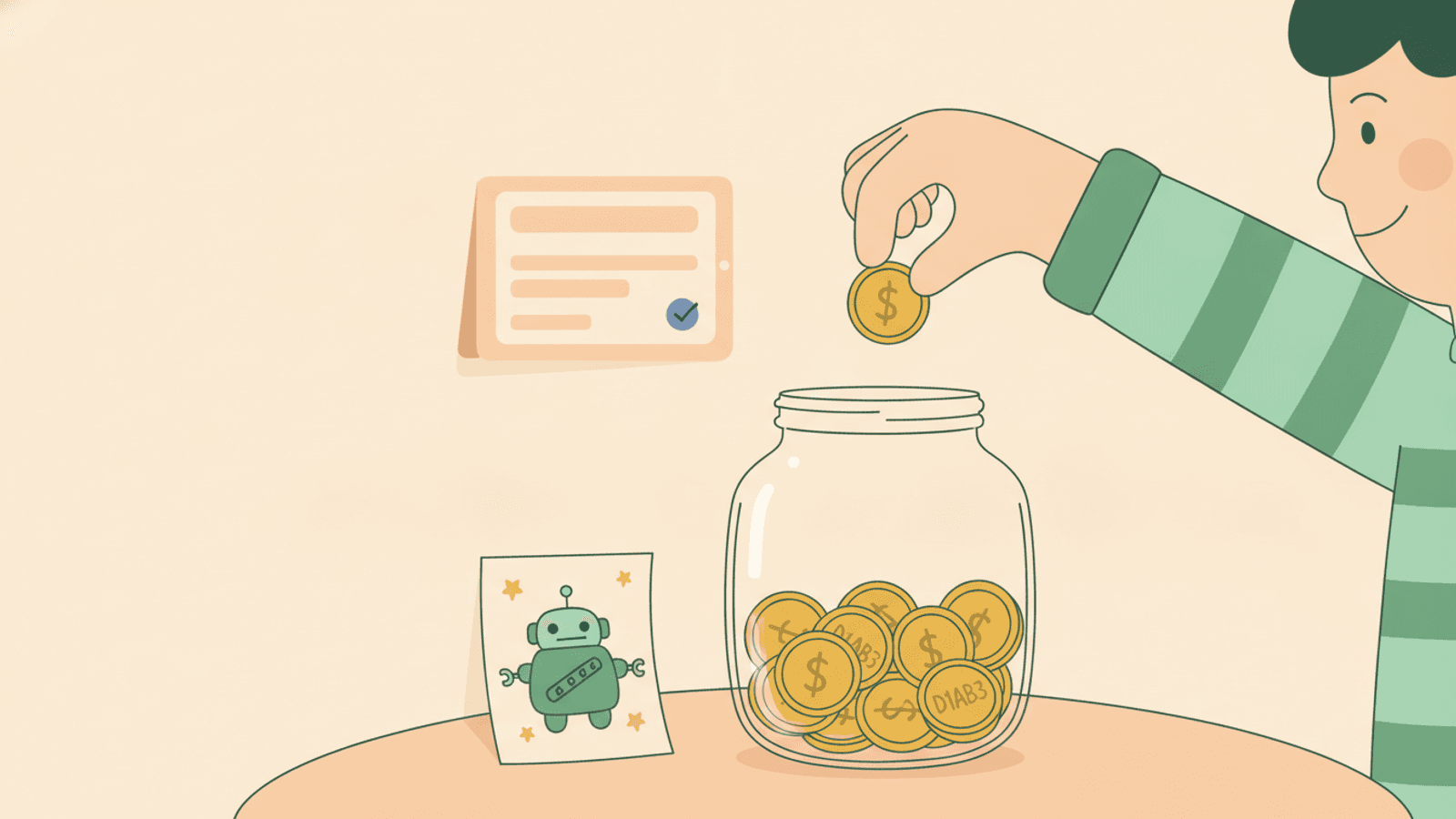
Young children think in the here and now, so make money something they can see. A clear jar they can watch fill up, coins they can hold, and a picture of the thing they're saving for all make an abstract idea real. Seeing the pile grow — and watching it shrink after a purchase — teaches more than any lecture about saving ever could.
Let them spend it, and make mistakes
Once the money is theirs, let it genuinely be theirs. If your child blows the lot on sweets and then can't afford the toy they wanted, that disappointment is the lesson — and a far cheaper one to learn at six than at twenty-six. Resist the urge to rescue them with an early top-up. A few small regrets now build real judgement later.
How Routined helps
In Routined you can set up an allowance as part of your child's routines, choosing real money, points shown as stars, or a custom reward. The allowance pot fills in proportion to how much of the routine your child completes over the week, so effort and reward stay connected, and you pay it out yourself when payday comes. It's an easy way to keep pocket money regular and visible without extra admin — and to let your child watch their balance grow.
Children with ADHD or autism
For neurodivergent children, a week can feel like a very long time to wait. Shorten the loop: pay smaller amounts more often, or pair the weekly total with a visual tracker so the goal stays in sight. Keep the rules simple and unchanging, and celebrate saving out loud, because the delay between saving now and spending later is exactly the part these children find hardest.
The takeaway
Starting weekly pocket money doesn't need a spreadsheet or a philosophy. Pick a small amount, choose a fixed payday, decide where you stand on chores, and then let your child practise — including the mistakes. That regular, low-stakes practice is how children grow into adults who can handle money with confidence.
Read more
Frequently asked questions
What age should a child start getting pocket money?
Most children are ready between about four and seven, once they understand that money buys things and runs out when it's spent. Readiness shows up as interest — asking to buy things, noticing prices — far more than as maths ability.
How much weekly pocket money should I give?
There's no perfect amount. A common guide is a small sum per year of age each week, adjusted to your budget and to what you expect the money to cover. Start low and consistent; you can always increase it later.
Should pocket money be tied to chores?
It's your call. Some families keep the two separate, others link them so money is earned. A popular middle path is a small base amount that's simply theirs, plus the chance to earn extra for bigger jobs — as long as the deal is clear and consistent.
What should my child do with their pocket money?
Let them decide, within reason. A clear jar and a visible savings goal help, but the real learning comes from spending their own money and occasionally regretting it. Resist topping them up when it runs out.