When Your Child Cries at Drop-Off: A Calm Guide to Preschool Goodbyes
The crying at the door says almost nothing about the rest of the day. Here is how to build a goodbye that is short, predictable and survivable.
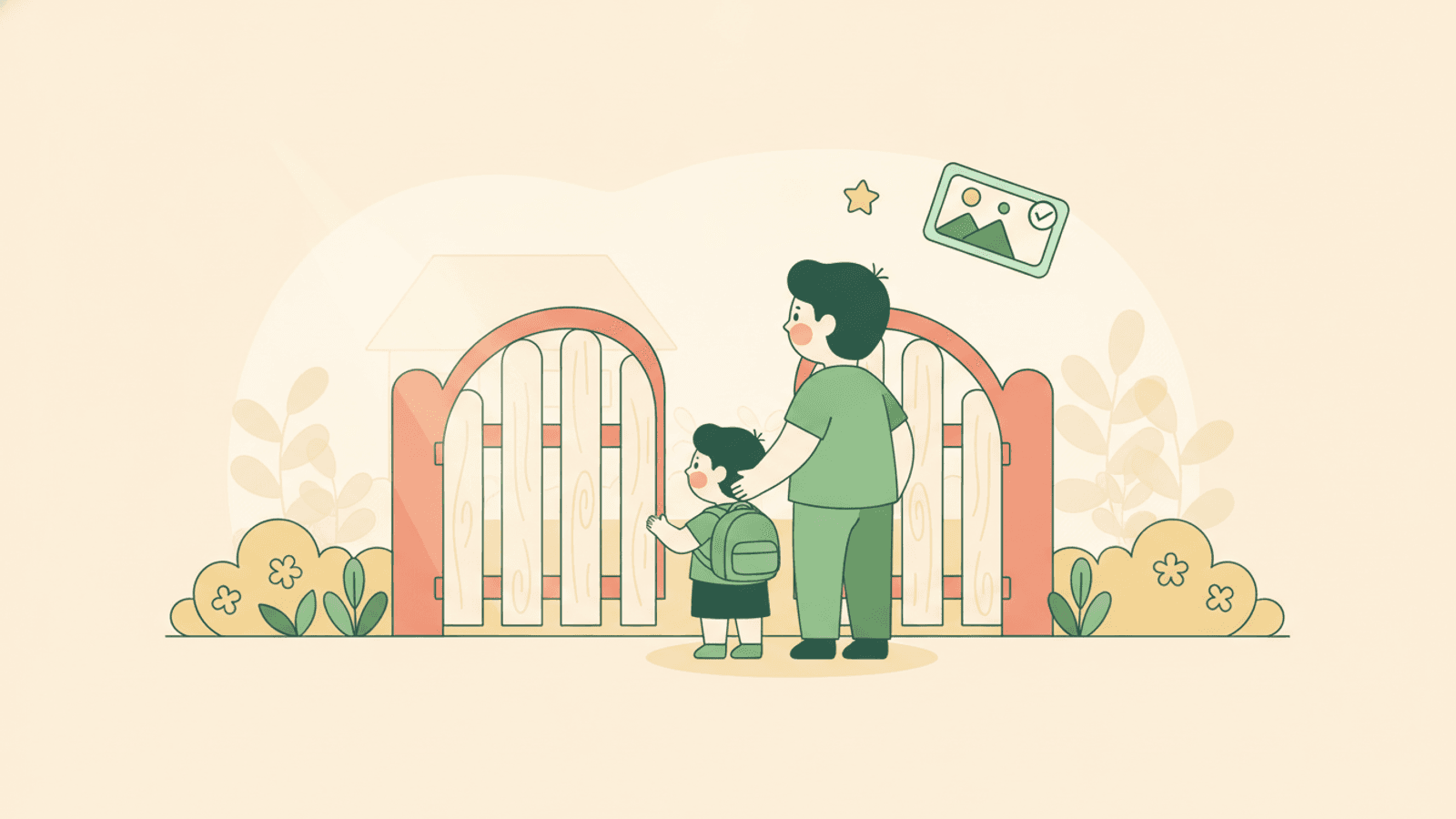
When your child cries at drop-off, the single most useful thing to know is that most of that crying stops within a few minutes of you leaving. Staff see it every morning: the child who was sobbing at the door is at the sand table before you have reached the car. The goodbye is the hard part, not the day. Ask the staff to message you once your child has settled, and you will usually stop guessing after the first week.
Separation anxiety is a normal developmental stage, not a sign that something has gone wrong. It is strongest in toddlers, and it comes back at transitions: a new group, a new key worker, after holidays, after illness, after a baby arrives. A child who protests at leaving you is a child who is attached to you, which is exactly what you were hoping for.
Why the door is the hardest moment
Drop-off stacks three difficult things on top of each other. It is a transition, and transitions are hard for most young children. It happens at the end of a rushed morning, when everyone is already at their limit. And it is the point where your child reads your face for information about whether this place is safe.
That last one matters more than parents expect. If you look worried, hover, or keep asking "are you going to be alright?", your child concludes there is something here to be worried about. Your calm is part of the intervention.
Build a goodbye routine
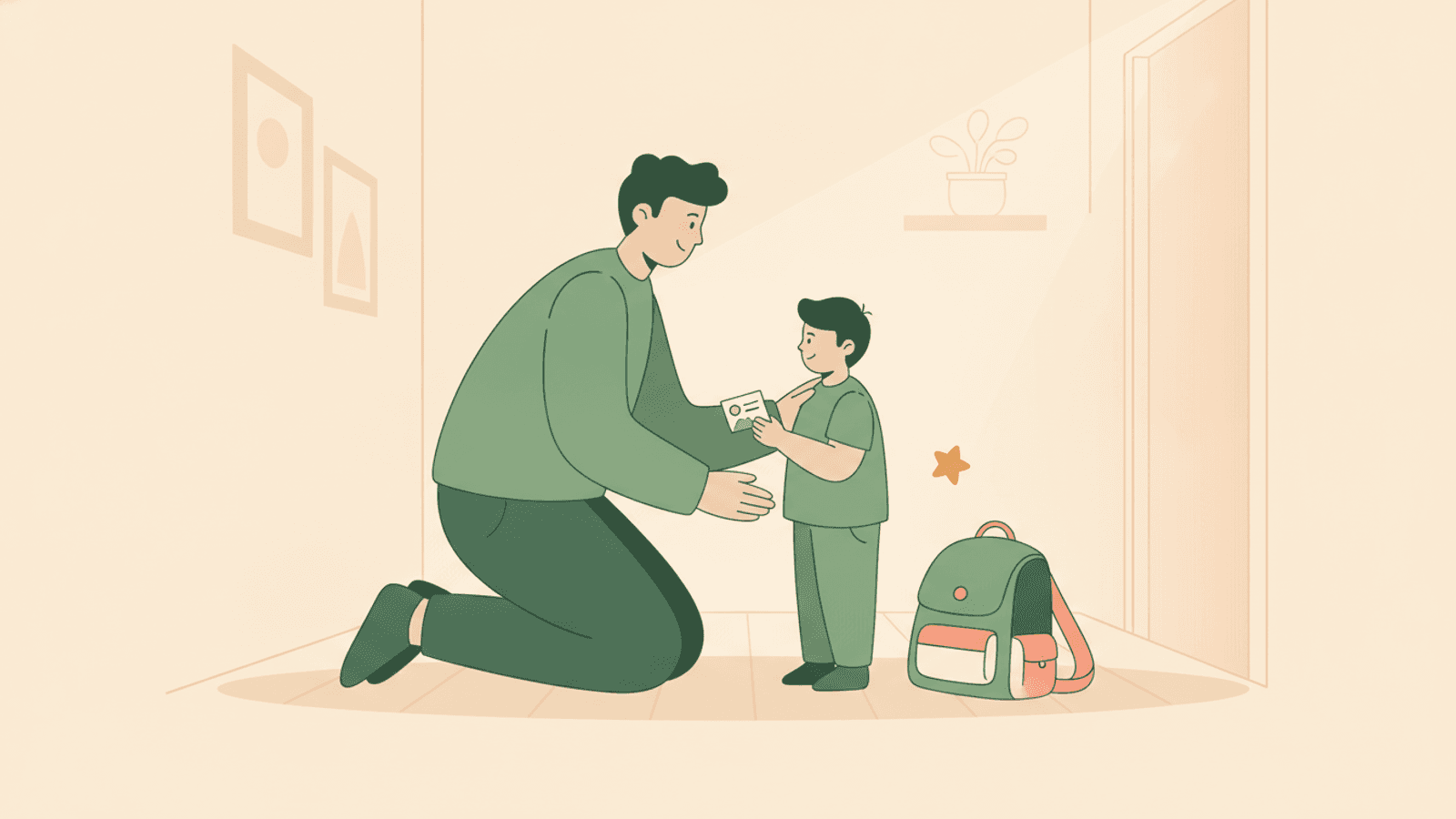
A good goodbye is short, identical every day, and predictable from the moment you leave home. Same words, same order, same length. Predictability is what makes it bearable, not extra time.
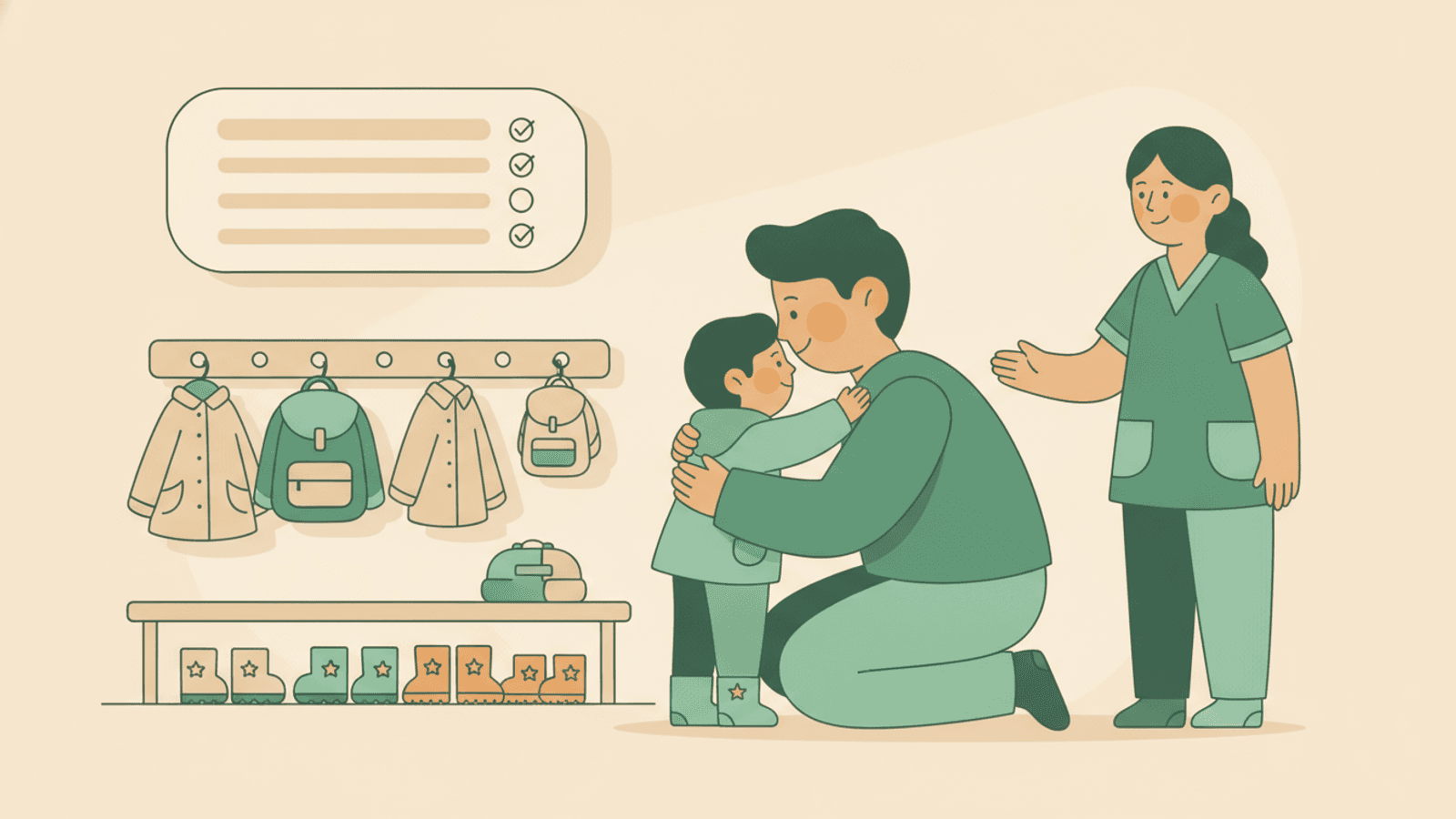
- 1. Predict it. On the way in: "We hang up your coat, you pick a toy, we do two hugs, then I go and Grandad picks you up after snack."
- 2. Do the same three things. Coat, wave at the window, two hugs. Three steps is plenty, and children remember three.
- 3. Say the leaving sentence. "I am going now. I will be back after snack. Bye." Always the same sentence.
- 4. Leave. Hand over to a member of staff, and go. Do not come back for one more hug, even if it feels cruel.
The whole thing should take two or three minutes. A long goodbye does not reduce the distress, it extends it, because the hardest moment is the moment of separation and a slow goodbye simply stretches it out.
What makes drop-off worse
- Sneaking out. It avoids one bad minute and buys you a week of clinginess, because your child learns you might vanish without warning. Always say goodbye.
- Coming back. Returning after the goodbye teaches that crying restarts the process. Once you have said the sentence, go.
- Long explanations. A worried monologue reads as a warning. Short and confident is kinder.
- Negotiating. "Do you want to stay?" is not a real question. Do not offer choices you cannot honour.
- Bribes. A sweet for not crying makes the crying the subject. Reward nothing at the door.
- Rushing. A frantic morning arrives at the door as tension. Leaving the house five minutes earlier does more than anything you say at the gate.
The goodbye starts at home
Most difficult drop-offs are made at home, in a morning with too many decisions in it. A child who has been hurried, nagged and dressed against their will arrives with no capacity left for the door. The fix is not a better goodbye, it is a calmer hour before it — which is what a fixed morning routine is for.
If the morning itself is where things fall apart, start there instead: morning meltdowns before school covers the hour before the door in detail.
This is the ordinary way Routined helps. The morning becomes a visible sequence of steps with a picture and a timer on each one, so a young child can see what is coming and how much of it is left. Fewer surprises before the door usually means an easier goodbye at it.
Work with the staff
Preschool staff have done thousands of these. Use them.
- Agree who receives your child. A named adult who takes their hand at the door is worth more than any technique.
- Ask for a job on arrival: watering the plants, feeding the fish, putting out the cups. Arriving into a task beats arriving into a room.
- Ask them to message you when your child has settled, at least for the first week.
- Tell them what is going on at home. A new baby, a bad night, a parent travelling all change the morning.
- Ask what your child does after you leave. It is usually reassuring, and it tells you whether the crying is a door thing or a day thing.
Comfort objects and photos
A soft toy, a scarf that smells of home, or a small photo of you in their pocket gives a child something concrete to hold when the feeling arrives. Some settings keep a family photo board at child height for exactly this. Check what your preschool allows and make it part of the routine rather than an emergency measure.
When to look a little closer
Most drop-off crying settles within minutes and improves over a couple of weeks. Look more carefully if your child does not settle at all after twenty minutes on most days, if the distress is getting worse rather than better after several weeks, if a child who was fine has suddenly started, or if there are new signs elsewhere: sleep going backwards, stomach aches, new fears, withdrawal. Start with the staff, ask specific questions about the group and the day, and if the anxiety is broader than preschool, worry and anxiety in children is a good next read.
If it is persistent and affecting eating, sleeping or general mood, it is reasonable to raise it with your child health service or doctor. This article is general information, not medical advice.
If you are the one finding it hard
Plenty of parents cry in the car park. Leaving a distressed child, even in good hands, sets off a genuine stress response. Have a plan for yourself too: leave the building before you check your phone, arrange a message from staff so you are not guessing, and do not measure your child’s day by the ninety seconds you witnessed.
A two-week plan
- Days 1–3: design the goodbye routine, say it out loud on the way in, and keep it identical.
- Days 4–7: leave home five minutes earlier and ask staff for a settling message each day.
- Days 8–10: add an arrival job agreed with the staff.
- Days 11–14: shorten the goodbye slightly, and review with the staff what is actually happening after you leave.
Read more
- Starting preschool — how to prepare for the first weeks before they begin.
- Morning meltdowns before school — the hour that decides how the goodbye goes.
- Worry and anxiety in children — what helps, and what quietly makes it worse.
Frequently asked questions
Is it normal for my child to cry at preschool drop-off?
Yes. Separation anxiety is a normal stage, strongest in toddlers, and it returns at transitions like a new group, after holidays or after illness. Most children stop crying within a few minutes of the parent leaving. Ask staff to confirm what happens after you go.
Should I sneak out to avoid the crying?
No. Leaving without saying goodbye avoids one difficult minute and usually creates more clinginess, because your child learns you might disappear without warning. Always say goodbye, keep it short, and leave once you have said your leaving sentence.
How long should the goodbye take?
Two or three minutes. Long goodbyes do not reduce distress, they extend it. The predictable part matters more than the length: same words, same steps, same order every single morning.
My child was fine for months and has suddenly started crying. Why?
Sudden changes usually have a reason: a new key worker, a change of group or room, a friend who left, a period of illness, a new baby or tension at home. Ask the staff what has changed in the group, and look at what has changed at home, before assuming your child has regressed.
When should I be worried about drop-off crying?
If your child does not settle after about twenty minutes on most days, if it is getting worse after several weeks rather than better, or if there are new symptoms elsewhere such as disturbed sleep, stomach aches or withdrawal. Start with the staff, and raise it with your child health service if it persists.