Teaching Your Child to Tell the Time: A Step-by-Step Guide
A warm, practical guide to teaching your child to tell the time, from whole hours to minutes, plus why visual timers often help children with ADHD more than clocks.
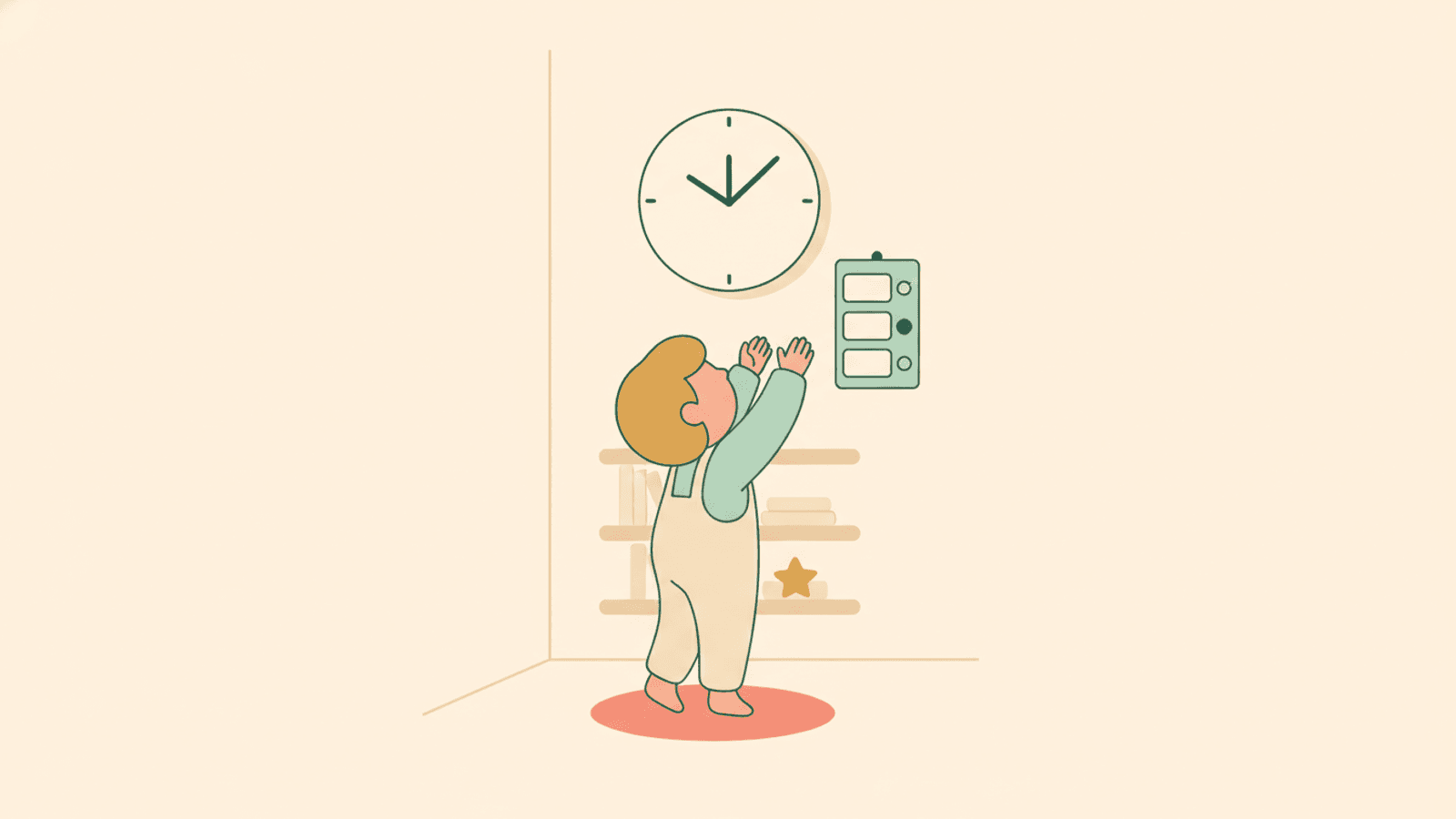
To teach a child to tell the time, start with whole hours on a real clock, then move to half hours, quarter hours and finally single minutes, practising a little every day. Telling the time means reading the clock. Understanding time means knowing how long five minutes actually feels. Most children learn the first before the second, and that is completely normal.
This guide walks through the usual sequence, everyday practice, and the tools that help, including why children with ADHD often benefit more from visual timers than from clock-reading in the early years.
When is a child ready to learn to tell the time?
There is no single right age. Many children begin recognising hours around five or six, and grow more confident with minutes between seven and nine. Readiness matters more than the number on the birthday cake.
Helpful signs of readiness include counting reliably to sixty, understanding "before" and "after", and showing curiosity about clocks or daily events. If those pieces are not in place yet, keep talking about time casually and come back to the clock later.
The usual sequence to teach a child to tell the time
Time is an abstract idea, so it helps to break it into small, ordered steps. Introduce one stage at a time and let it settle before moving on.
- Whole hours first: "It's 3 o'clock." Point to the short hour hand and the long minute hand on the 12.
- Half hours next: "half past 3", with the minute hand on the 6.
- Quarters after that: "quarter past" and "quarter to".
- Minutes last: counting round the clock in fives, then single minutes.
Teach analogue and digital side by side. A child who can say "half past three" should also learn that it matches 3:30 on a phone or oven. Seeing both together builds a stronger mental picture.
Analogue can be harder, and that is fine
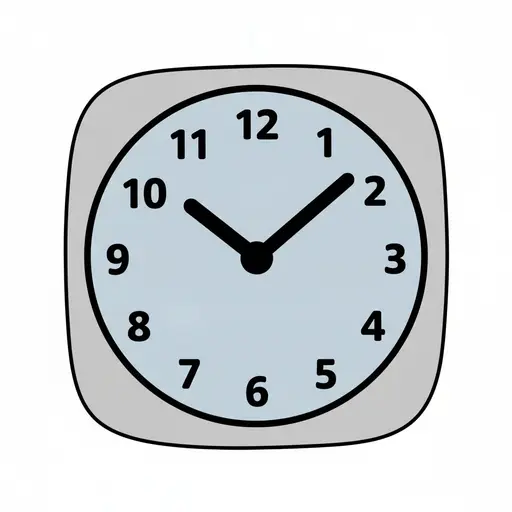
Analogue clocks ask a child to read two hands moving at different speeds. That is genuinely tricky. A large clock with clear numbers, or a learning clock with colour-coded hands, makes the two jobs easier to separate.
Practise time in everyday life
Children learn time best when it is woven into ordinary days rather than taught as a lesson. Narrate the clock as you go: "It's 7 o'clock, so it's teeth-brushing time," or "We leave at half past, in ten minutes."
Keep a real analogue clock somewhere visible, at the child's eye level. Ask small, low-pressure questions: "What does the little hand point to?" Celebrate the attempt, not just the correct answer, so the clock stays a friendly object rather than a test.
Connect time to the daily routine
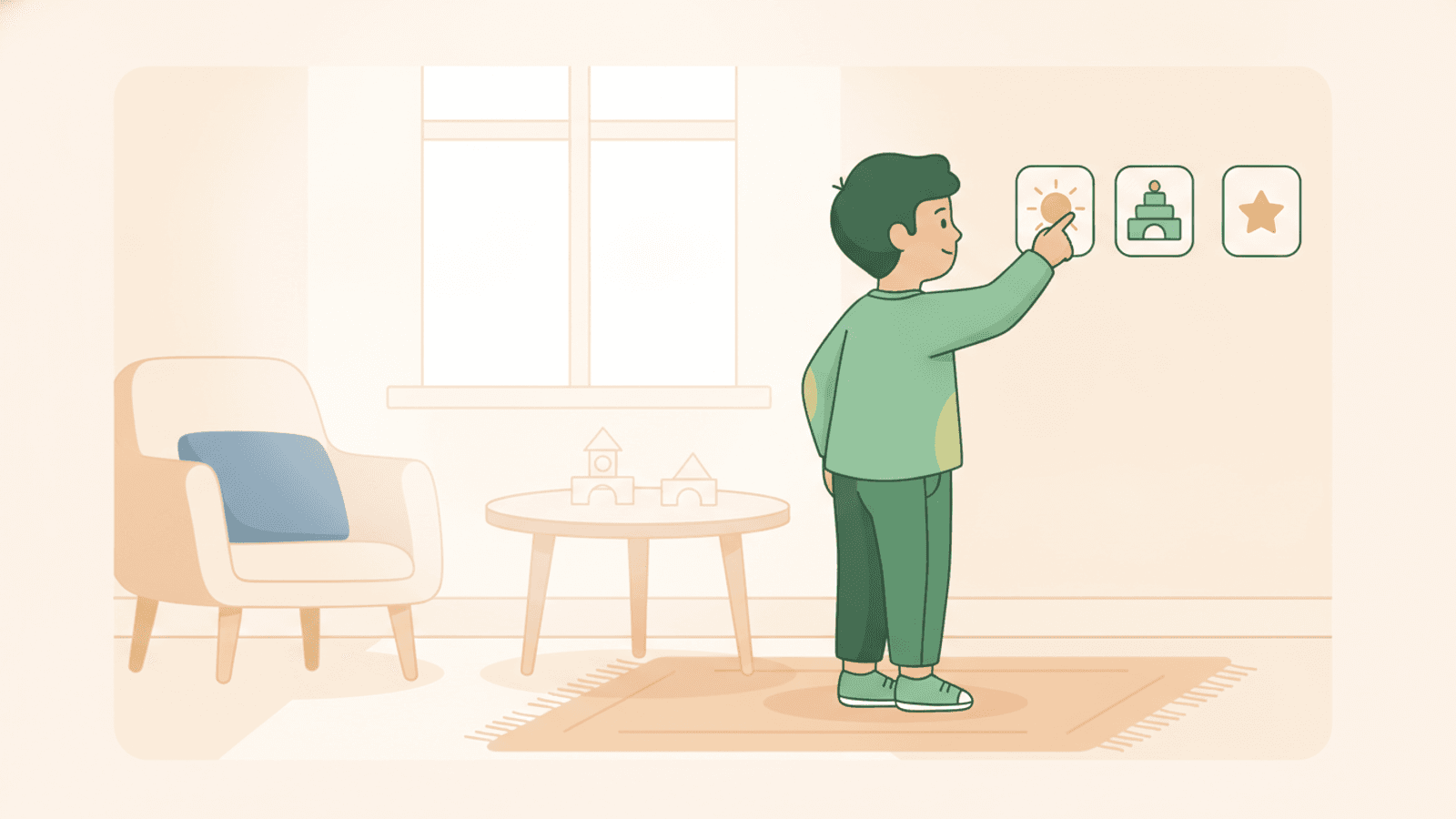
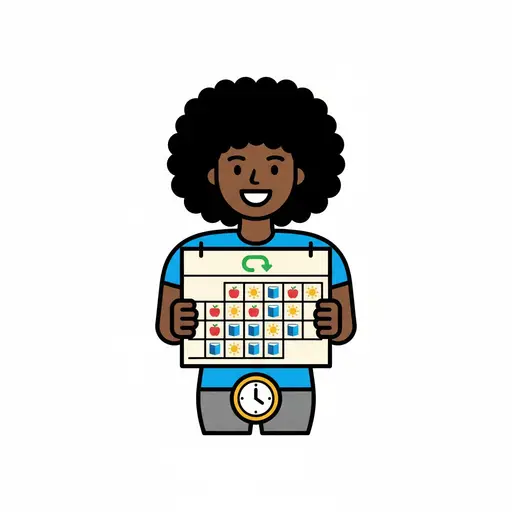
Abstract minutes become concrete when they are attached to familiar events. A visual schedule that shows morning steps in order helps a child anchor clock time to real life: breakfast, then shoes, then out the door.
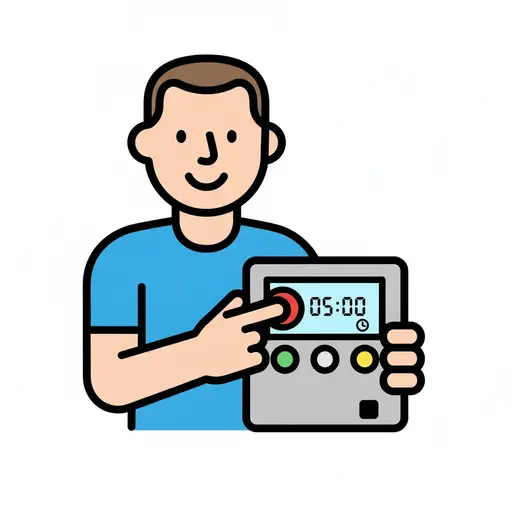
Pairing each step with a timer turns "soon" into something a child can actually see shrinking. Instead of "hurry up", they watch time run down and can pace themselves. This lowers the number of countdown reminders you have to give, which is calmer for everyone.
Games and tools that make it stick
Play removes the pressure and keeps practice short. A few ideas that work well at home:
- "What's the time, Mr Wolf?" and other clock-based games.
- Make a paper plate clock together and set it to daily events.
- Set a timer and guess how many jumps fit into one minute.
- Match cards: pair an analogue clock face with its digital time.
- Ask your child to be timekeeper for a short activity.
Keep sessions brief and frequent. Five focused minutes several times a week beats one long, frustrating stretch.
Telling the time is not the same as understanding it
A child can read a clock perfectly and still have little sense of how long twenty minutes lasts. This gap is sometimes called time blindness, and it is very common in children with ADHD and autism. It is not laziness or defiance; the internal clock simply runs differently.
That is why a child might read "8:15" aloud correctly and still be genuinely surprised that they are late. Reading the clock and feeling the passage of time are two separate skills, and both take practice.
Why visual timers often help more than clocks
For many children, especially those with ADHD, a visual countdown does the heavy lifting a clock cannot. Watching a coloured section disappear, or a bar empty, makes elapsed time something you can see rather than something you have to imagine.
Visual timers reduce nagging, ease transitions, and give a child a fair warning that an activity is ending. If clock-reading is still a work in progress, a visual timer can support daily life in the meantime.
Be patient with an abstract idea
Telling the time is one of the more abstract things we ask young children to master. Some days will click and others will not, and progress is rarely a straight line. Keep it light, keep it frequent, and let understanding grow at its own pace.
How Routined can help
Routined lets families build daily routines with visual support per step, using a built-in picture library, AI images or your own photos. You can add an optional visual countdown timer to any step, so a child sees exactly how long is left rather than guessing. With two display modes, Standard text and checkboxes or Visual Support with big picture cards, you can match the routine to how your child reads best, while they build a feel for time inside their real day.
Takeaway: teach the clock step by step, from hours to minutes, but treat reading the time and sensing time as two separate skills. Practise both in ordinary moments, lean on visual timers for the second, and give it time. With patience and small daily wins, it will come together.
Read more
Frequently asked questions
At what age can a child learn to tell the time?
Many children start recognising whole hours around five or six and grow confident with minutes between seven and nine. Readiness matters more than age: look for reliable counting to sixty and an understanding of "before" and "after".
Should I teach analogue or digital clocks first?
Teach them together. When your child can say "half past three", show that it matches 3:30 on a phone or oven. Analogue is often harder because two hands move at different speeds, so a clear, large clock face helps.
What order should I teach telling the time in?
Start with whole hours, then half hours, then quarter past and quarter to, and finally single minutes by counting round the clock in fives. Let each stage settle before moving on.
Why does my child read the clock but still lose track of time?
Reading a clock and sensing how long time lasts are two different skills. The gap, sometimes called time blindness, is very common in children with ADHD and autism. Visual timers help by making elapsed time something they can see.
Are visual timers better than clocks for children with ADHD?
For many children with ADHD, yes, especially early on. A visual countdown shows time shrinking, which eases transitions and reduces nagging, while clock-reading skills continue to develop alongside it.