How are you?
The question how are you sounds simple, but it assumes you can look inward and find words for what you feel. For many children the feelings have neither shape nor name. The pictures below give the feeling something to point at when words run out.
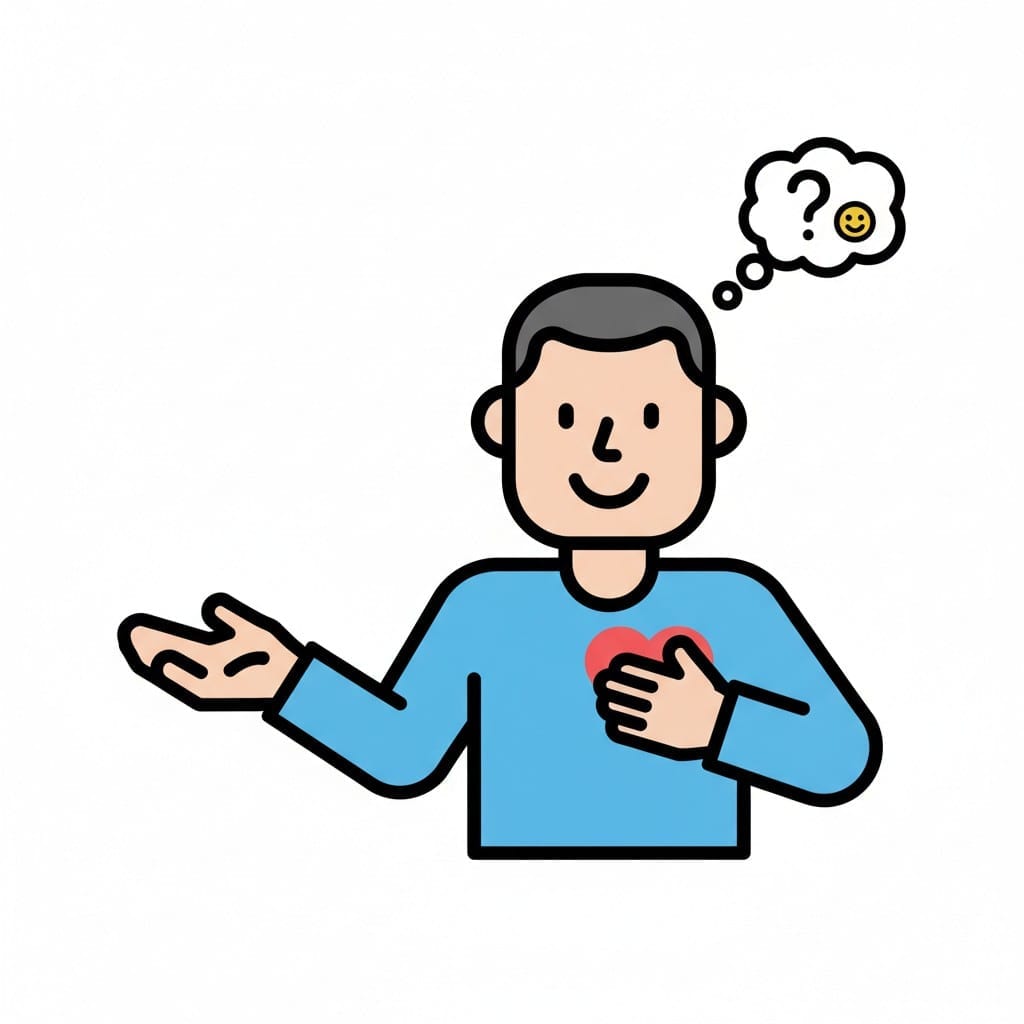 ♂
♂How are you?
A boy with a hand on his heart and a thought bubble with a question mark wonders how he feels
 ♂
♂Not sure
A boy shrugging with a question mark above his head
 ♂
♂I feel good
A happy boy laughing with his hands raised
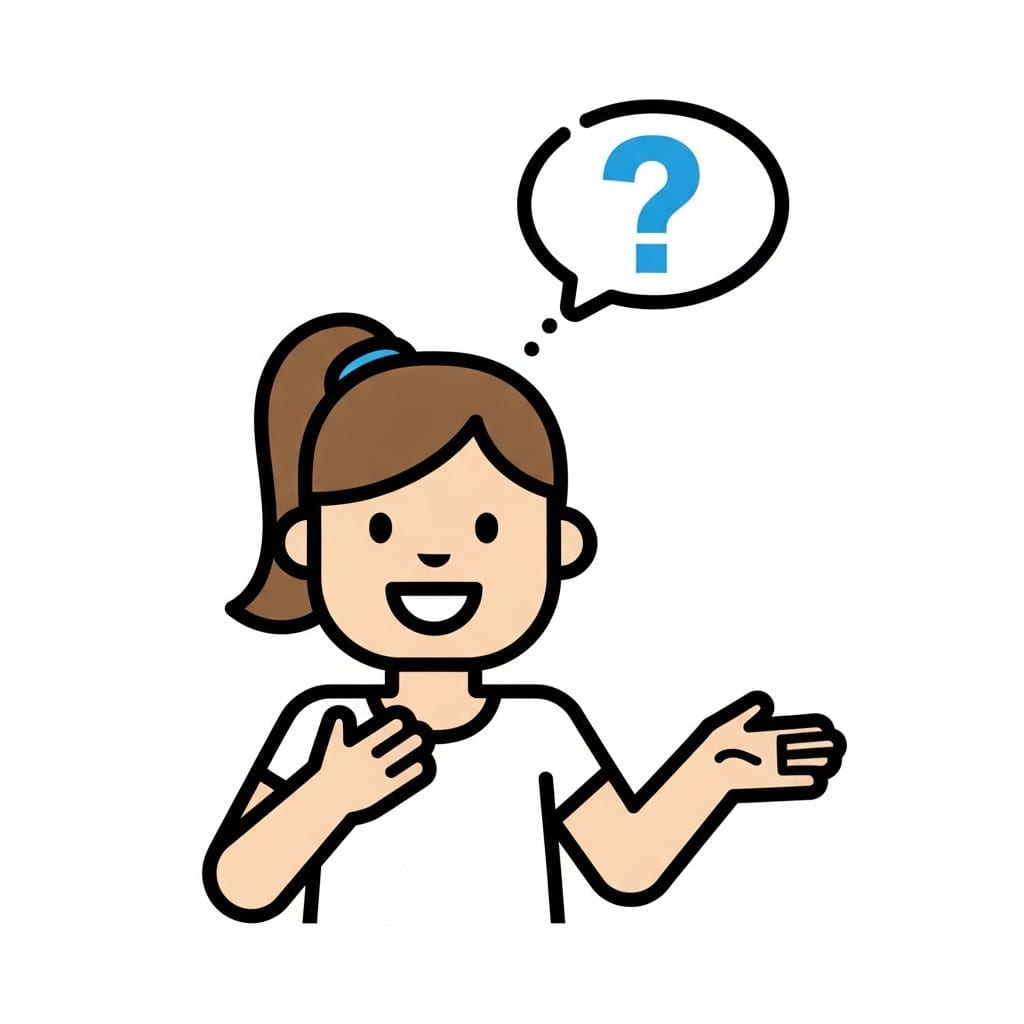 ♀
♀How are you?
A girl smiles and makes a questioning gesture with her hand, with a speech bubble showing a question mark above her.
About this visual support
The question often comes in passing, on the way out the door or in the middle of something else. How are you? And then an answer is expected. But inside it can be murky: a mix of tiredness, irritation and something undefinable with no name. Sorting that in a second and finding the right word is more than many children can do, so the answer often comes out as just fine, whatever is really going on.
With visual support, the feeling gets a visible form before it has to become words. When a child can point at a picture that resembles what is stirring inside, the inner state becomes something concrete to start from, instead of an abstract question whose answer must be guessed.
One concrete tip: start with few and clear options, perhaps happy, sad, angry and tired, and widen the vocabulary as the child recognises more shades. Pointing is a first step towards one day saying it in their own words. To keep the feeling pictures close at hand in daily life, you can gather them in the Routined app.
This image is part of these ready-made schedules
Use this image in a schedule
Build your own visual schedule with this image and download it as a print-ready PDF. Completely free.

More similar visual supports

How are you today?
One hand on his chest and the other open, a man in a blue t-shirt and grey trous...
Child psychiatry
A child with a thought bubble showing a brain and a magnifying glass, with a sma...
Talk about feelings
A boy points to a speech bubble containing icons for a heart, a tear drop, and a...

Worry
A boy with a worried expression resting his hand on his chin, with swirly though...
Allergy medicine
Medicine bottle with a red cross next to a capsule, a leaf, and a cloud.

Antibiotics
A medicine bottle with capsules and a person taking their medicine.
Armband
A person wears a red armband on their upper arm and points at it.
Asthma
A person with a worried expression brings a blue inhaler to their mouth and hold...
Take the visual supports with you
In Routined you build schedules from these pictures, add timers and voice instructions, and your child follows the day on their own.


* 14-day free trial included for new users.