Worry
Worry is often felt in the stomach or chest long before a child finds words for it, and then it is hard to point at what nags or how big it is. Pictures give the feeling a shape that can be shown instead of explained. The visual support is below.
 ♂
♂Worry
A boy with a worried expression resting his hand on his chin, with swirly thought marks above his head.
About this visual support
It often starts as a knot in the stomach or a weight across the chest, something that nags without the child being able to say what it is. Worry has no shape before it has words, and a young child can rarely describe either what weighs on them or how big it feels. The feeling then stays locked inside, and an adult who wants to help has nothing to take hold of.
Pictures give the inside something to point at. When a child can show a picture for an anxious feeling, or compare a small worry with a big one, what was wordless becomes possible to share. This is not about solving the worry right away, but about making it visible enough to name together. For many children, including those with ADHD, the first step is being able to put a picture to what stirs within.
One concrete tip: point together at a picture in the morning and one in the evening, not only when the storm is already there, so your child gets used to reading themselves in calmer moments. Then the tool is in place when worry does come. The pictures here are free to download, and to follow the feelings over time you can try Routined free for fourteen days.
Use this image in a schedule
Build your own visual schedule with this image and download it as a print-ready PDF. Completely free.

More similar visual supports
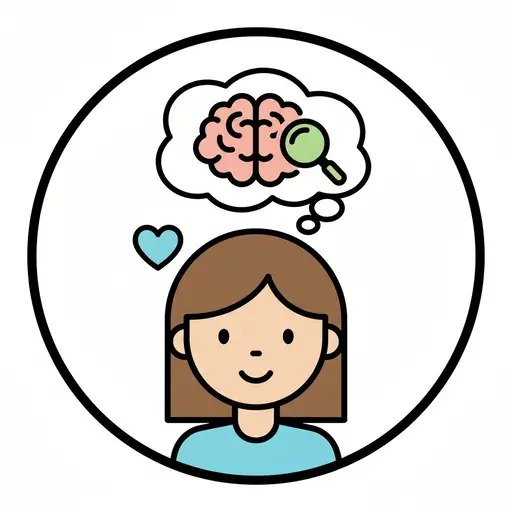
Child psychiatry
A child with a thought bubble showing a brain and a magnifying glass, with a sma...
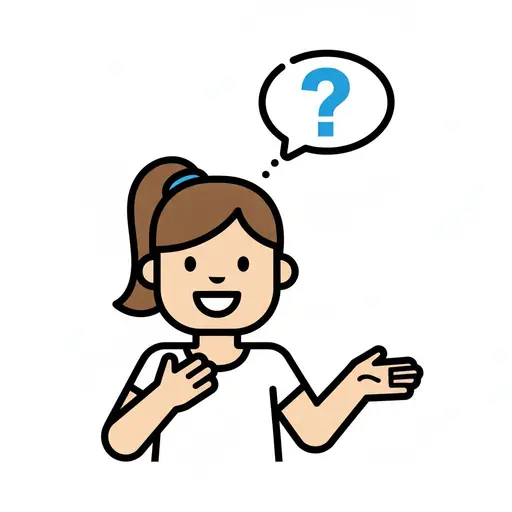
How are you?
A girl smiles and makes a questioning gesture with her hand, with a speech bubbl...

How are you today?
One hand on his chest and the other open, a man in a blue t-shirt and grey trous...
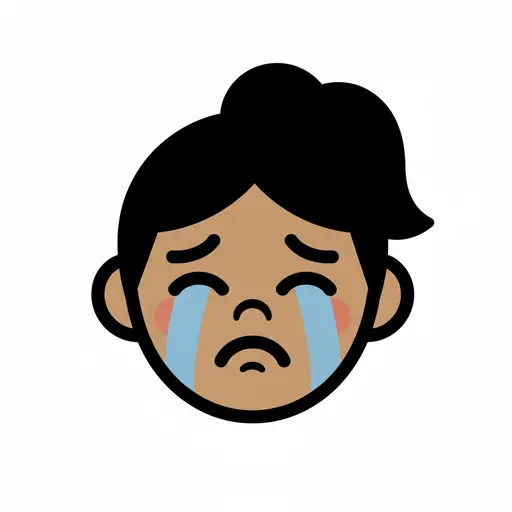
Sad
Image of a girl's face with tears streaming down her cheeks, displaying a very s...
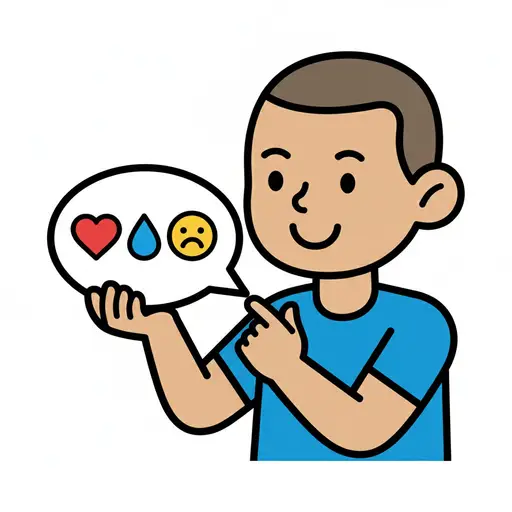
Talk about feelings
A boy points to a speech bubble containing icons for a heart, a tear drop, and a...

Allergy medicine
Medicine bottle with a red cross next to a capsule, a leaf, and a cloud.

Antibiotics
A medicine bottle with capsules and a person taking their medicine.
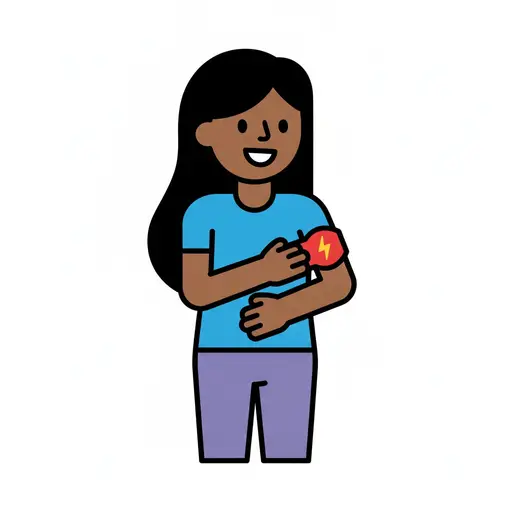
Armband
A person wears a red armband on their upper arm and points at it.
Take the visual supports with you
In Routined you build schedules from these pictures, add timers and voice instructions, and your child follows the day on their own.


* 14-day free trial included for new users.