Take a bath
Sitting in the bathtub is a full-body experience: heat against the stomach, sound muffled at the ear below the surface, and time blurring. The visual support below helps the child sense where in the bath they are, and when a dry towel is coming.
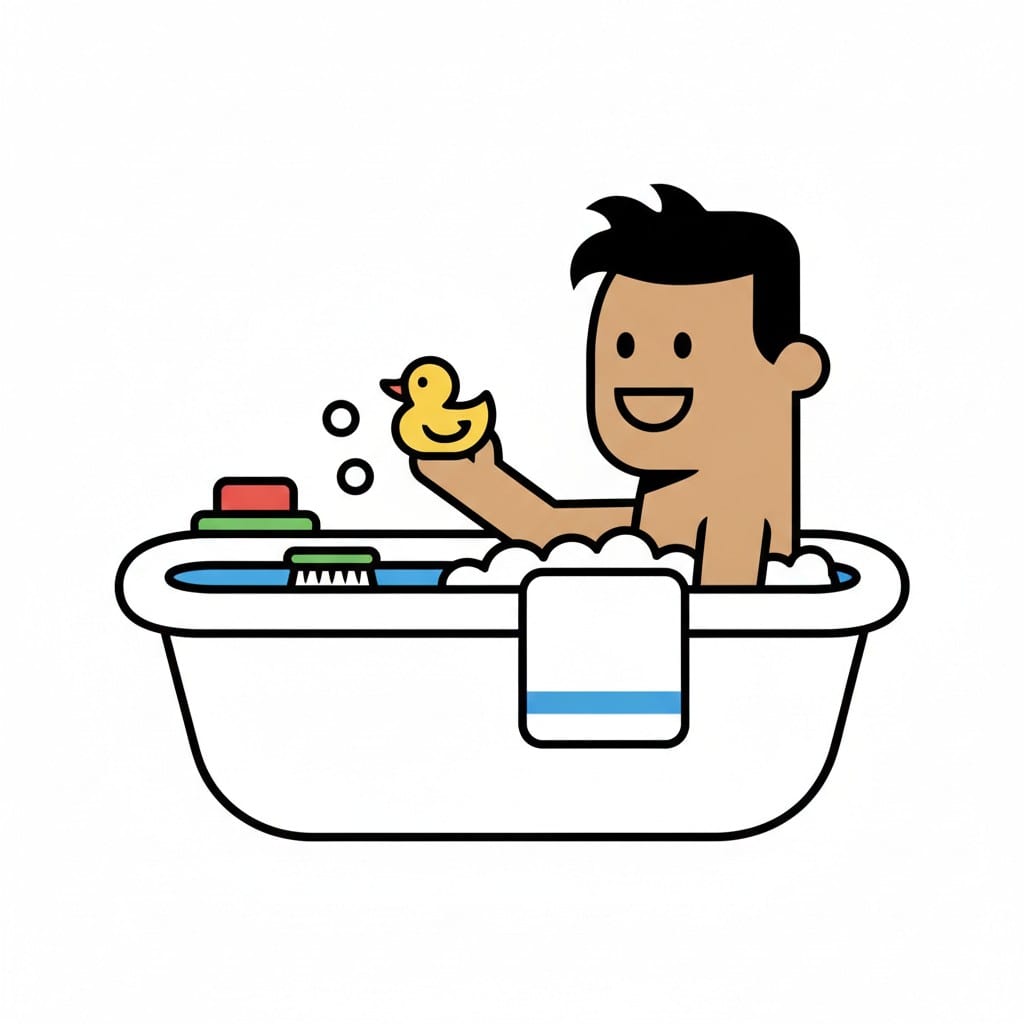 ♂
♂Take a bath
A person sits in a bath with foam holding a rubber duck, with a brush and soap on the rim.
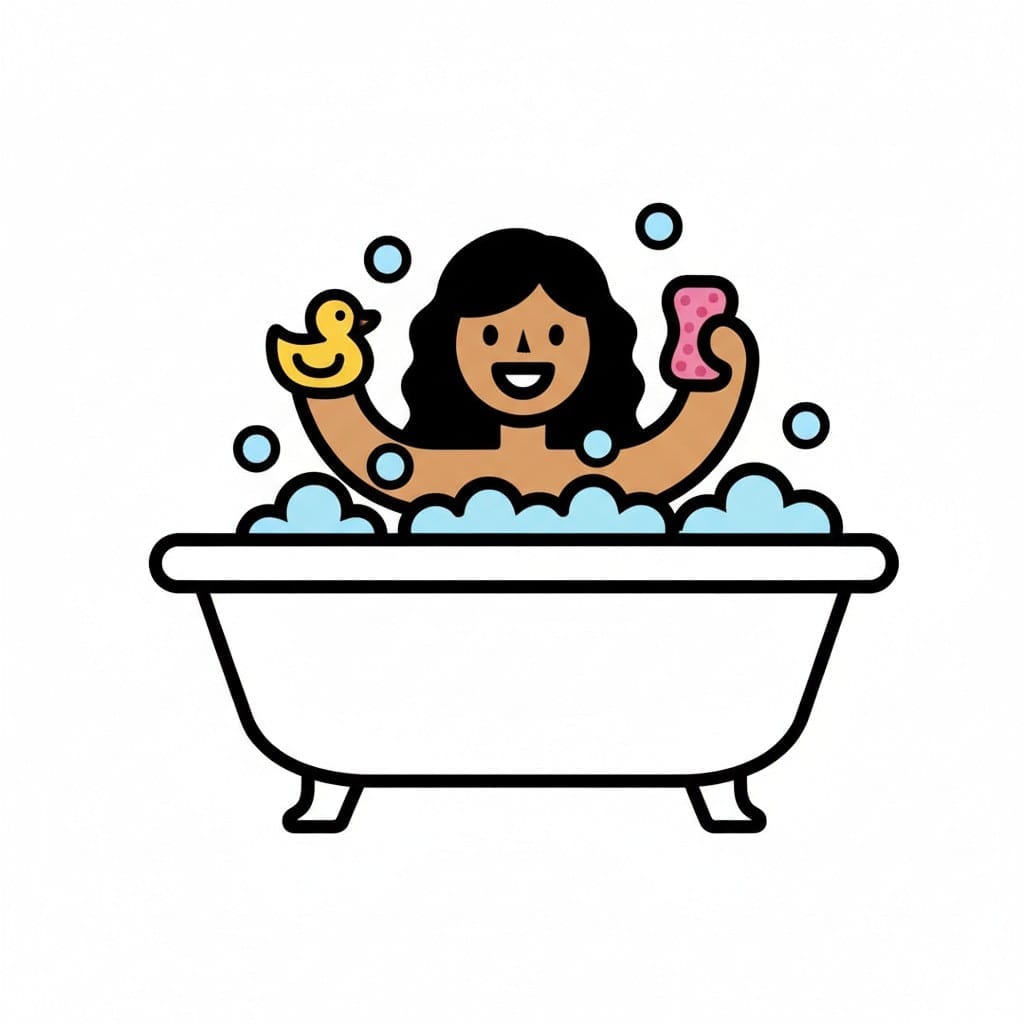 ♀
♀Take a bath
A person sits in a bubble bath holding a rubber duck and a sponge.
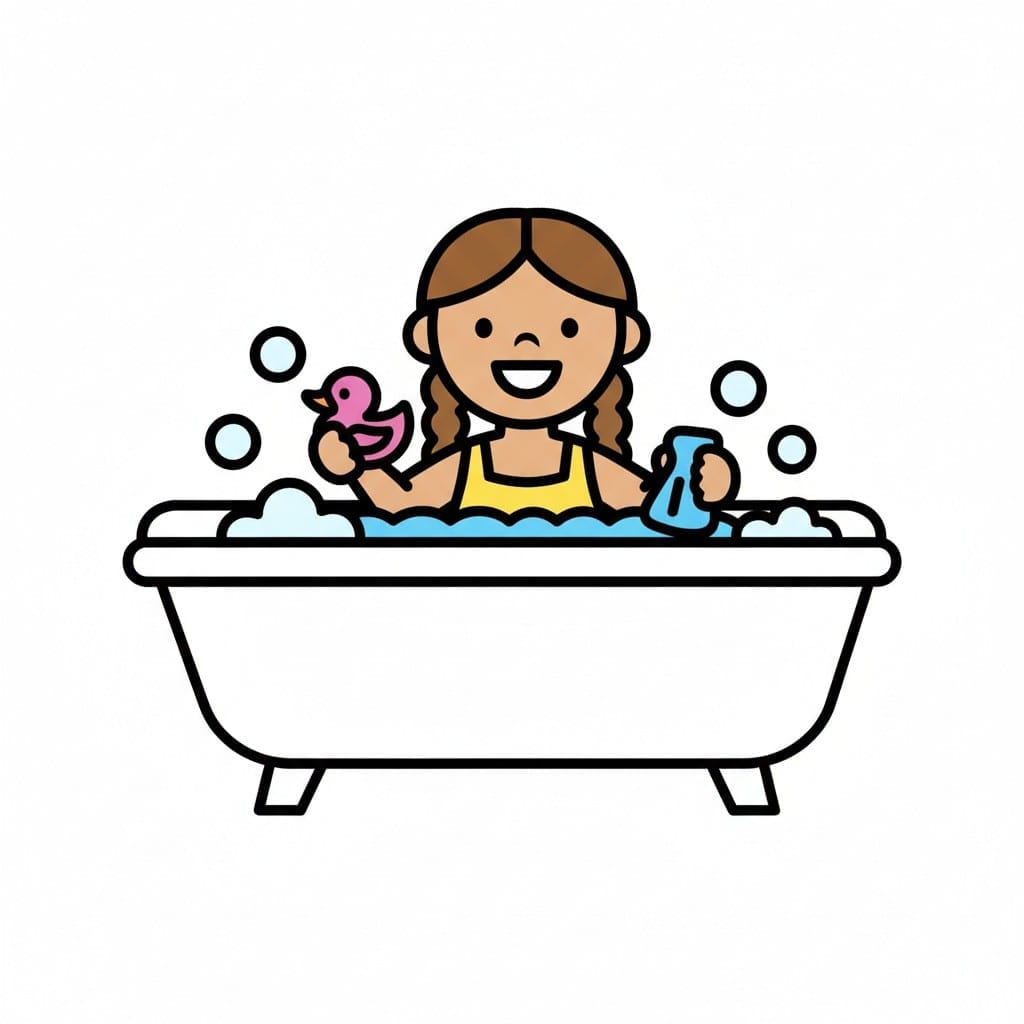 ♀
♀Take a bath
A girl sits in a bubble bath with a pink rubber duck and a blue sponge.
About this visual support
A bath is not only hygiene, it is one of the few moments of the day when the entire body is wrapped in something other than clothes or air. Warm water presses softly against the chest, sounds from the kitchen become distant, and if the child dips their ears under the surface, half the world disappears. For some this is pure rest. For others it is overwhelming – because there is no clear edge between where the bath begins and where it ends.
That is why seeing the bath as a sequence, not as one long moment, helps. Undressing, helping with the water, getting in, playing a bit, washing the hair, rinsing, climbing out, wrapping in a towel. With the pictures on a shelf next to the tub, the child can follow the arc and see for themselves that an ending exists. Knowing the towel is coming makes it easier to agree to the shampoo part.
One concrete tip: pick a clear ending action that is not water has gone cold – for example, pulling the plug while still in the tub. It becomes a bodily signal that the bath is over. If you want to show the whole evening as a chain from bath to bed, you can put it together in Routined and let the child tick off each part.
Use this image in a schedule
Build your own visual schedule with this image and download it as a print-ready PDF. Completely free.

More similar visual supports
Bath
A white bathtub holds blue water and a big mound of foam, with a small yellow du...
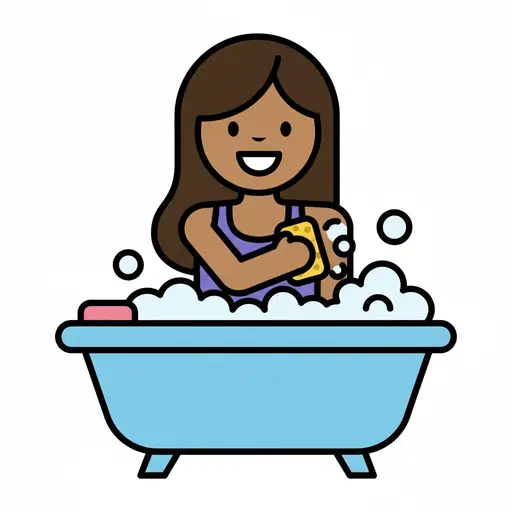
Bathe
A smiling girl sits in a bathtub full of foam and washes her arm with a yellow s...
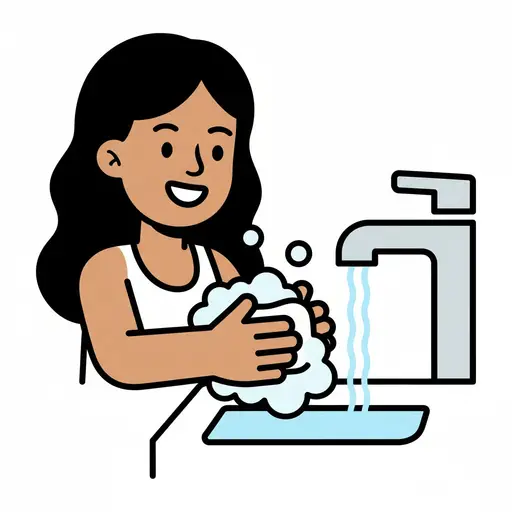
Get clean
Long hair falling loose, a woman works up a lather on her hands under a modern t...
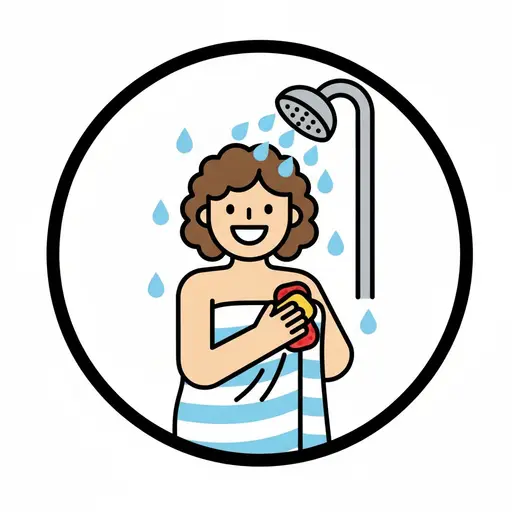
have a shower
A circular icon with a smiling person wrapped in a striped towel washing their a...
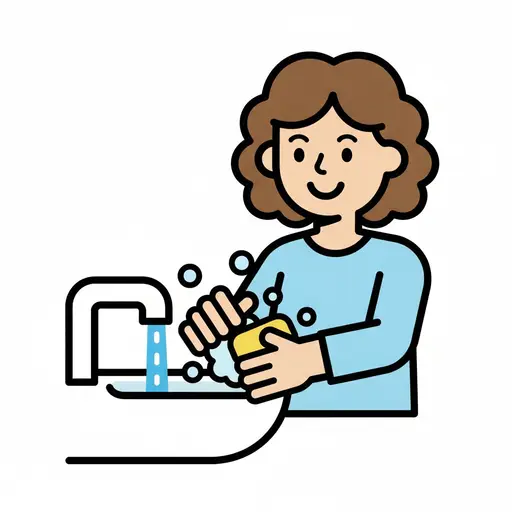
Freshen up
Holding a yellow bar of soap, a woman works up a lather in her hands while water...
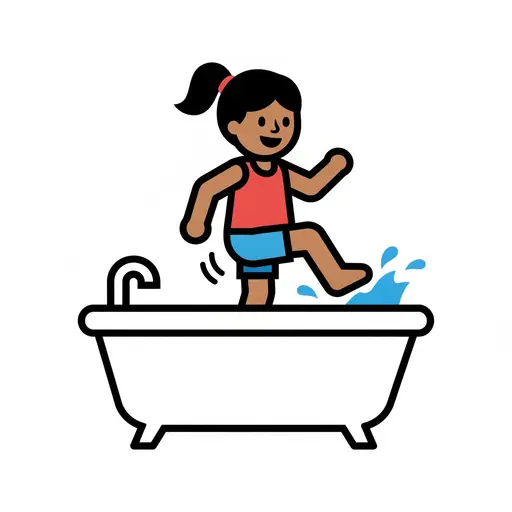
Hop in the bathtub
A girl happily steps into a bathtub and the water splashes.
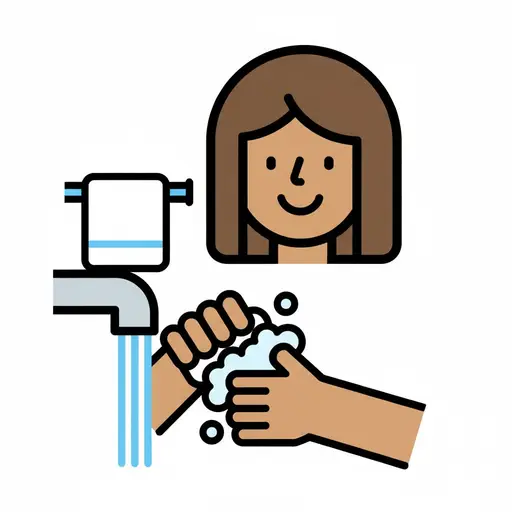
Hygiene
A girl washes her hands with lather under a tap with a towel hanging nearby.
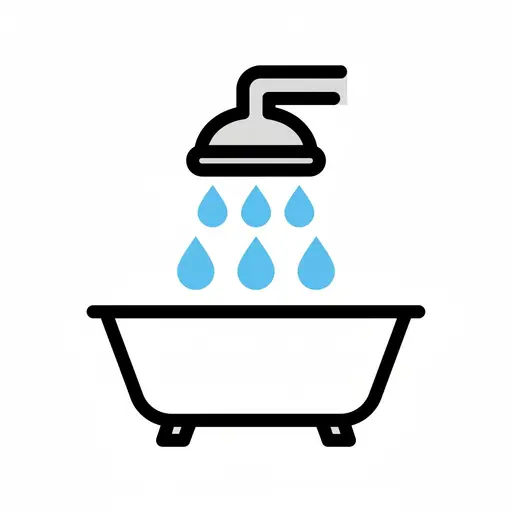
Shower
A shower head sprays water into a bathtub.
Take the visual supports with you
In Routined you build schedules from these pictures, add timers and voice instructions, and your child follows the day on their own.


* 14-day free trial included for new users.