Jazz dance
A choreography demands three things at once: the right movement, the right direction and the right moment. The music does not wait, and losing the count means losing the step. The pictures below make the sequence visible so the steps can be learned without losing the beat.
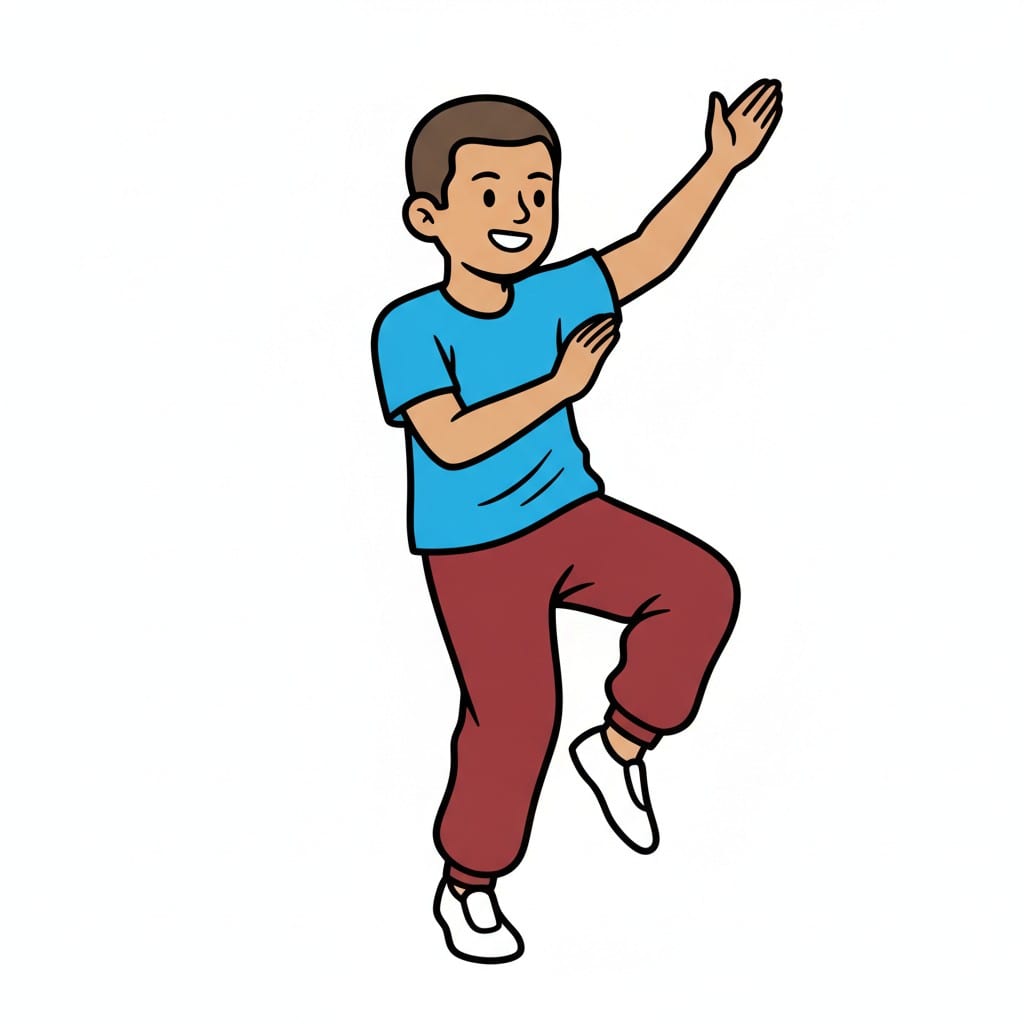 ♂
♂Jazz dance
A boy stands in a dance pose on one leg with one arm raised.
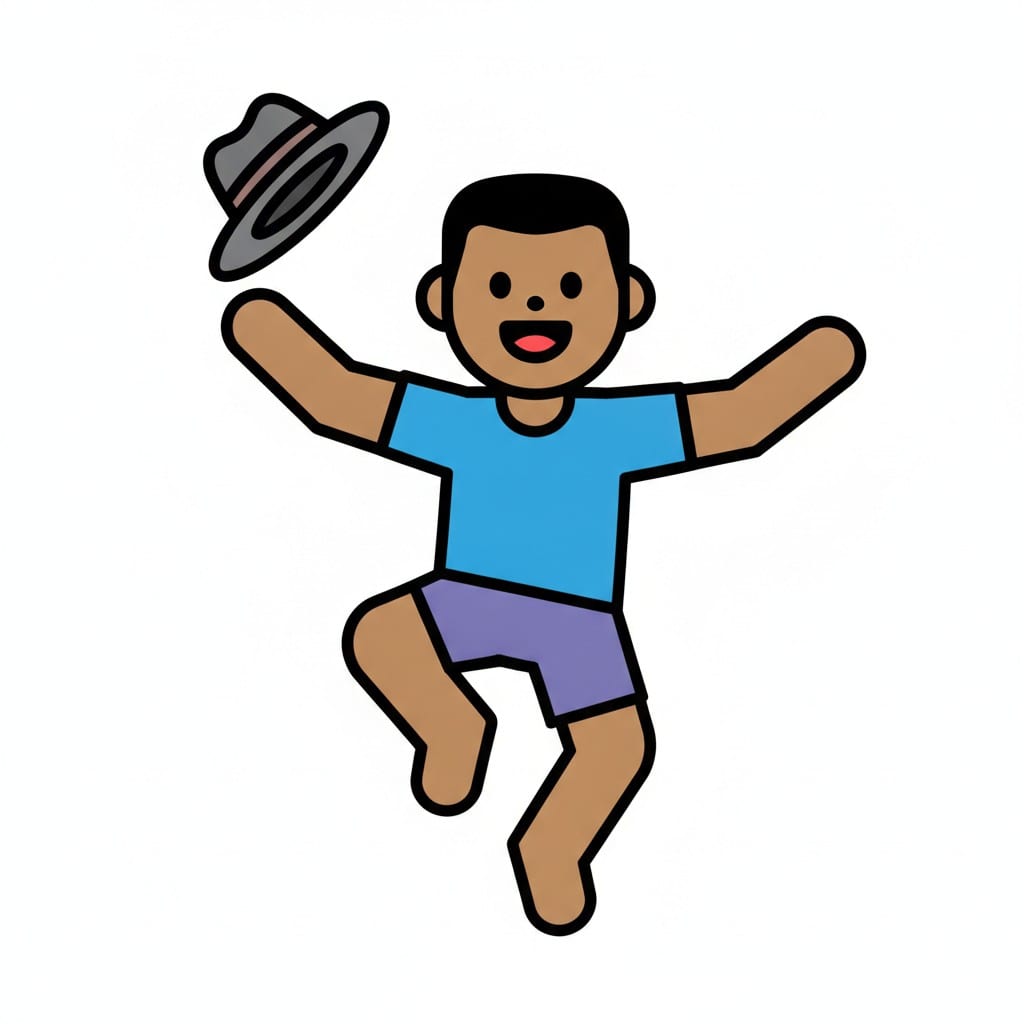 ♂
♂Jazz dance
A boy leaps in a dance step while a grey hat flies off.
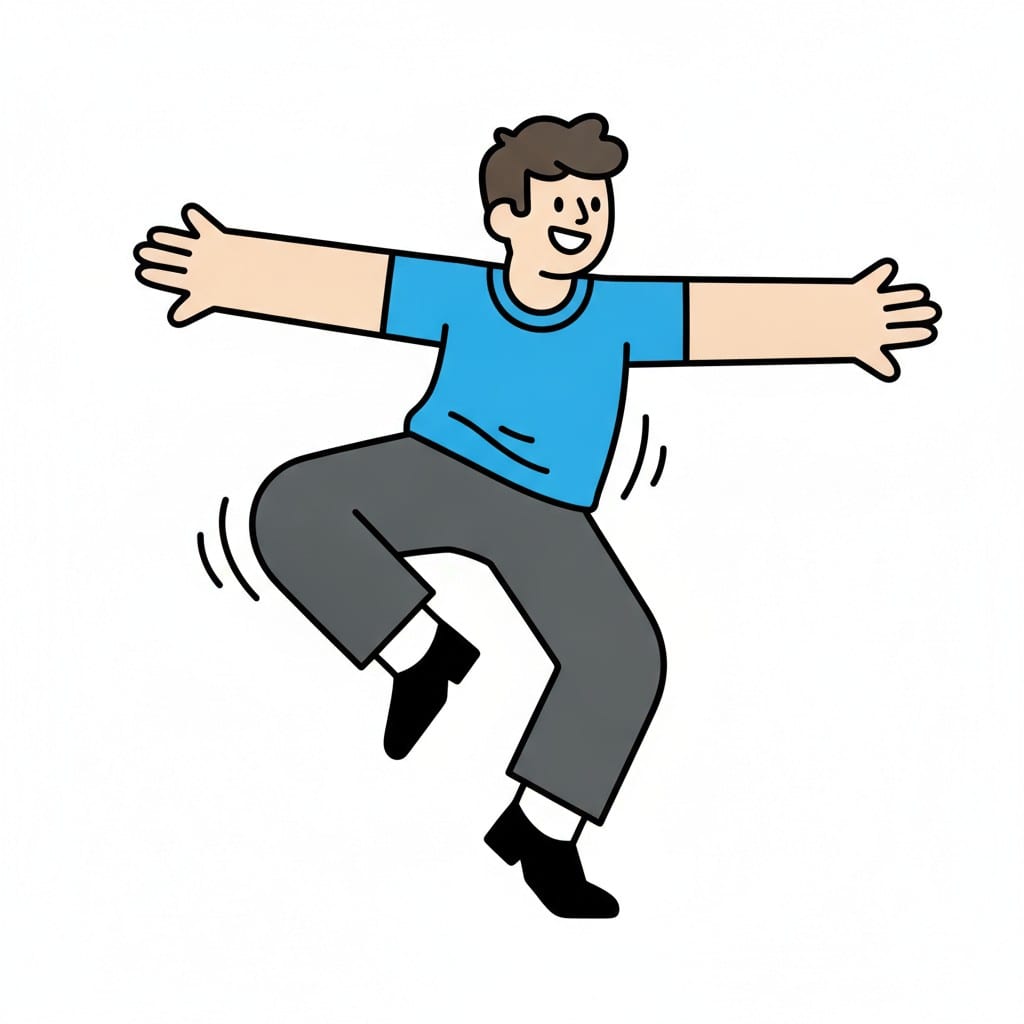 ♂
♂Jazz dance
A person jumps in the air with arms wide and motion lines around.
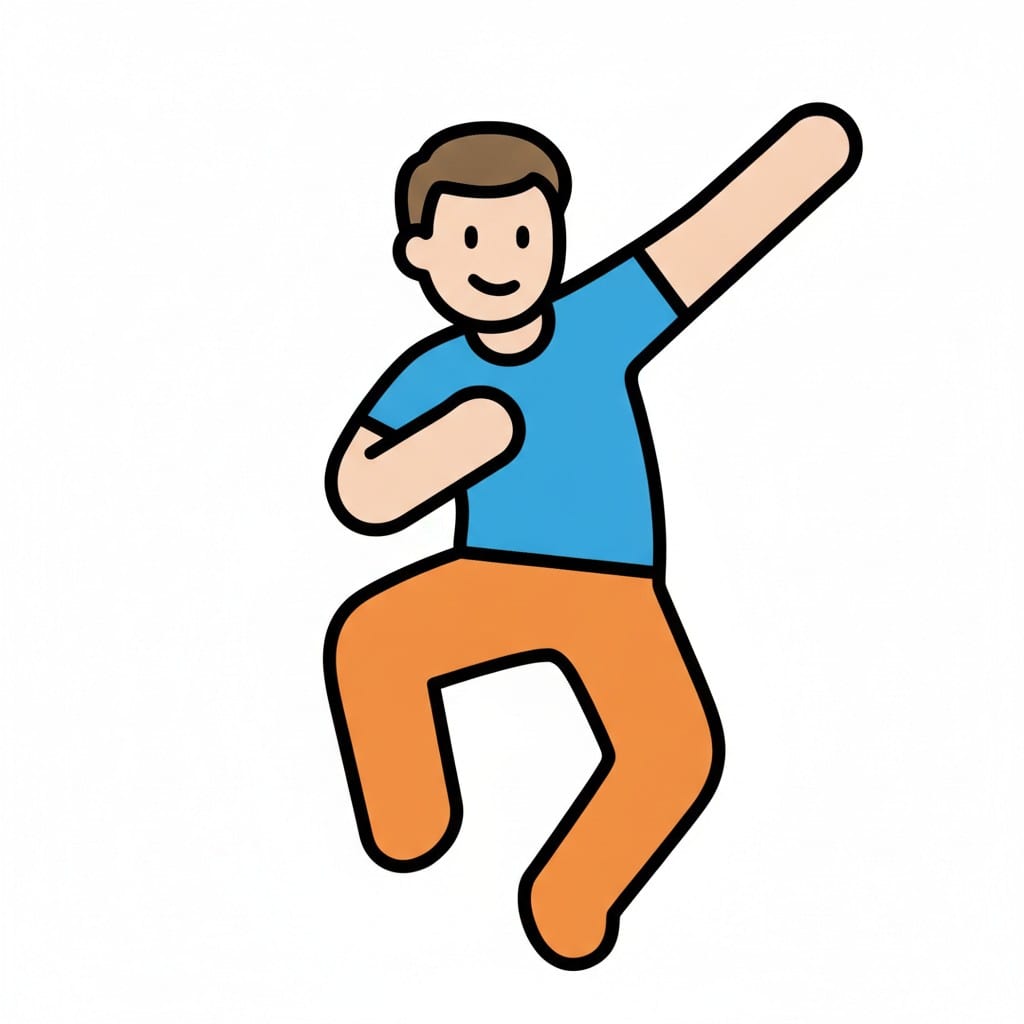 ♂
♂Jazz dance
A person makes a dance leap with one arm stretched upward.
About this visual support
Dance is one of the few activities where memory and body have to work in exactly the same rhythm. The steps must be remembered in order, performed with the right force and land on the right beat in the music. If any of those three takes too much attention, the others drop away, and it shows immediately because the whole group moves at once.
Visual support unloads the memory part. A row of pictures covering the parts of the choreography means the sequence can be rehearsed at home without music, slowly and without pressure. Once the order is secure, capacity is freed up for the rhythm, and rhythm is harder to practise alone.
A concrete tip is to count out loud while practising the steps slowly. The counting then becomes part of the movement memory rather than something to hold in parallel. In Routined the dance day can sit as a routine with packing and a time, and the app can be tried for fourteen days at no cost.
Use this image in a schedule
Build your own visual schedule with this image and download it as a print-ready PDF. Completely free.
More similar visual supports
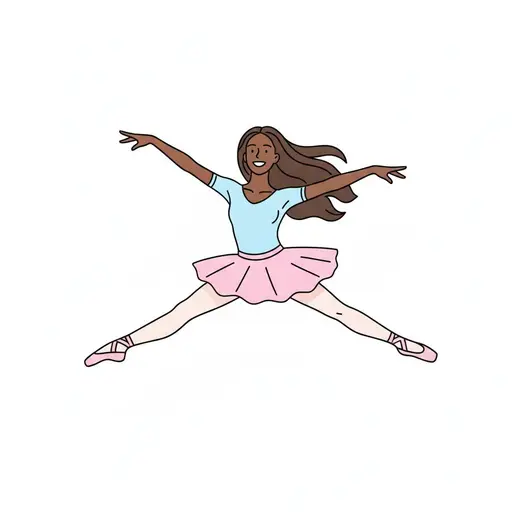
Ballet
A laughing dancer with long hair in a light blue top and pink tutu jumps with le...
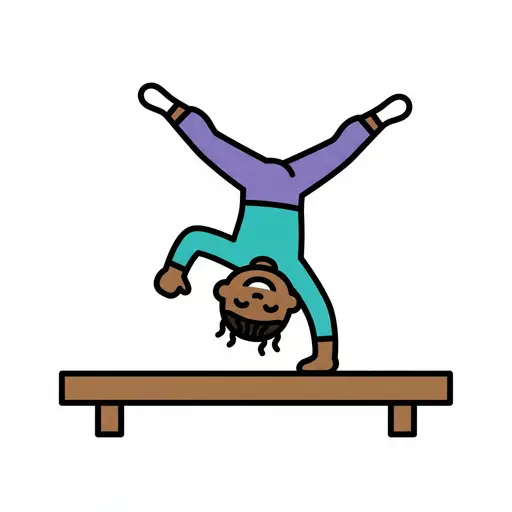
Gymnastics
A person does a handstand on a beam with their legs in the air.
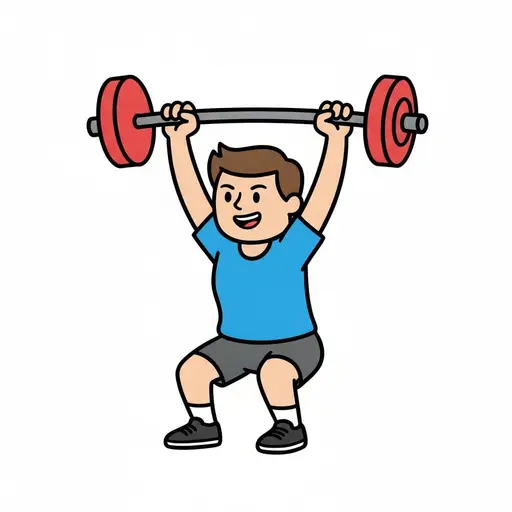
Workout
A person squats and lifts a barbell with red weights above their head.
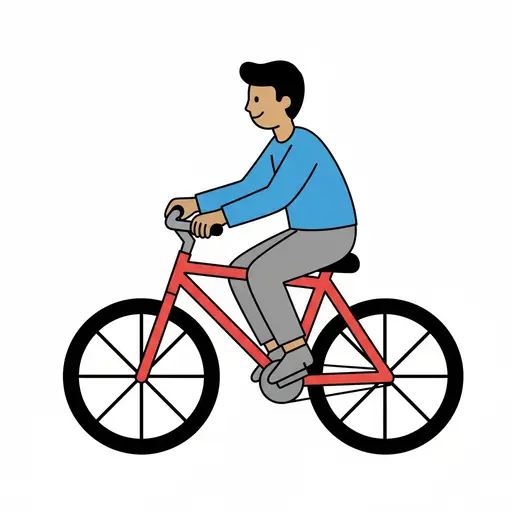
Go horseback riding
A person rides a red bike.
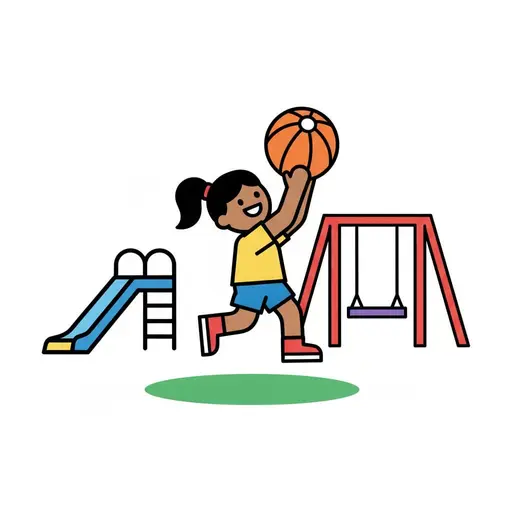
Active play
A girl jumps with a basketball in a playground with a slide and swings.
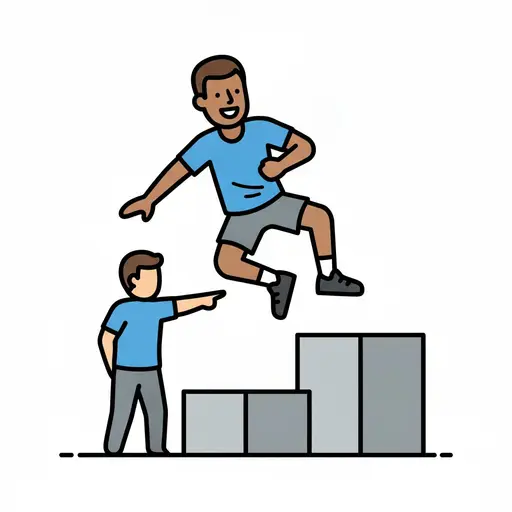
Parkour
A coach points while a boy jumps onto grey blocks.
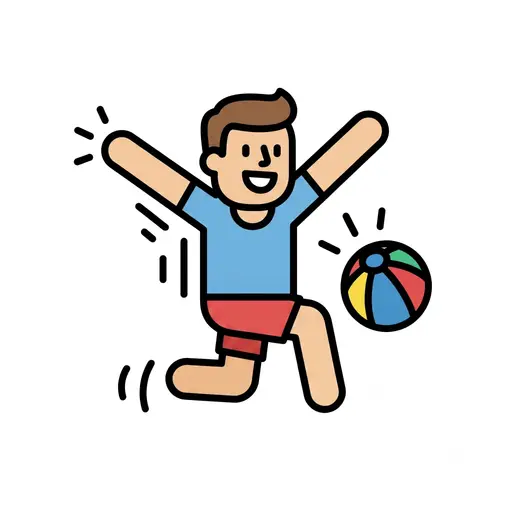
Play and move
A child jumps happily next to a colorful ball.
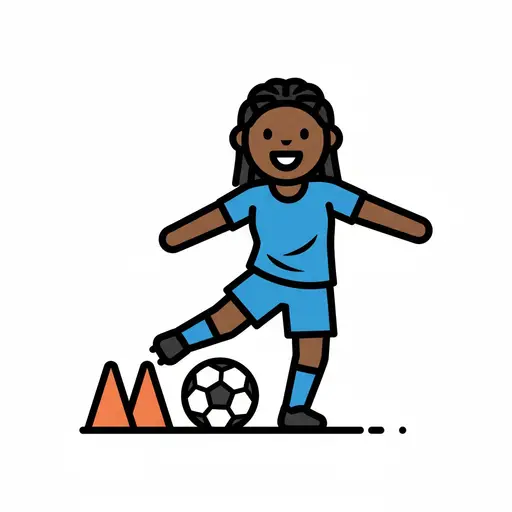
Play soccer
A person playing football, kicking a ball between two cones.
This visual support in other languages
Take the visual supports with you
In Routined you build schedules from these pictures, add timers and voice instructions, and your child follows the day on their own.


* 14-day free trial, then $2.39 a month or $20.99 a year (US pricing). Cancel anytime.