When Your Child Refuses to Take Medicine: A Calm Routine That Works
Medicine battles are rarely about the medicine. Here is how a fixed anchor, visual steps and a bit of control for the child turn the daily dose into a non-event.
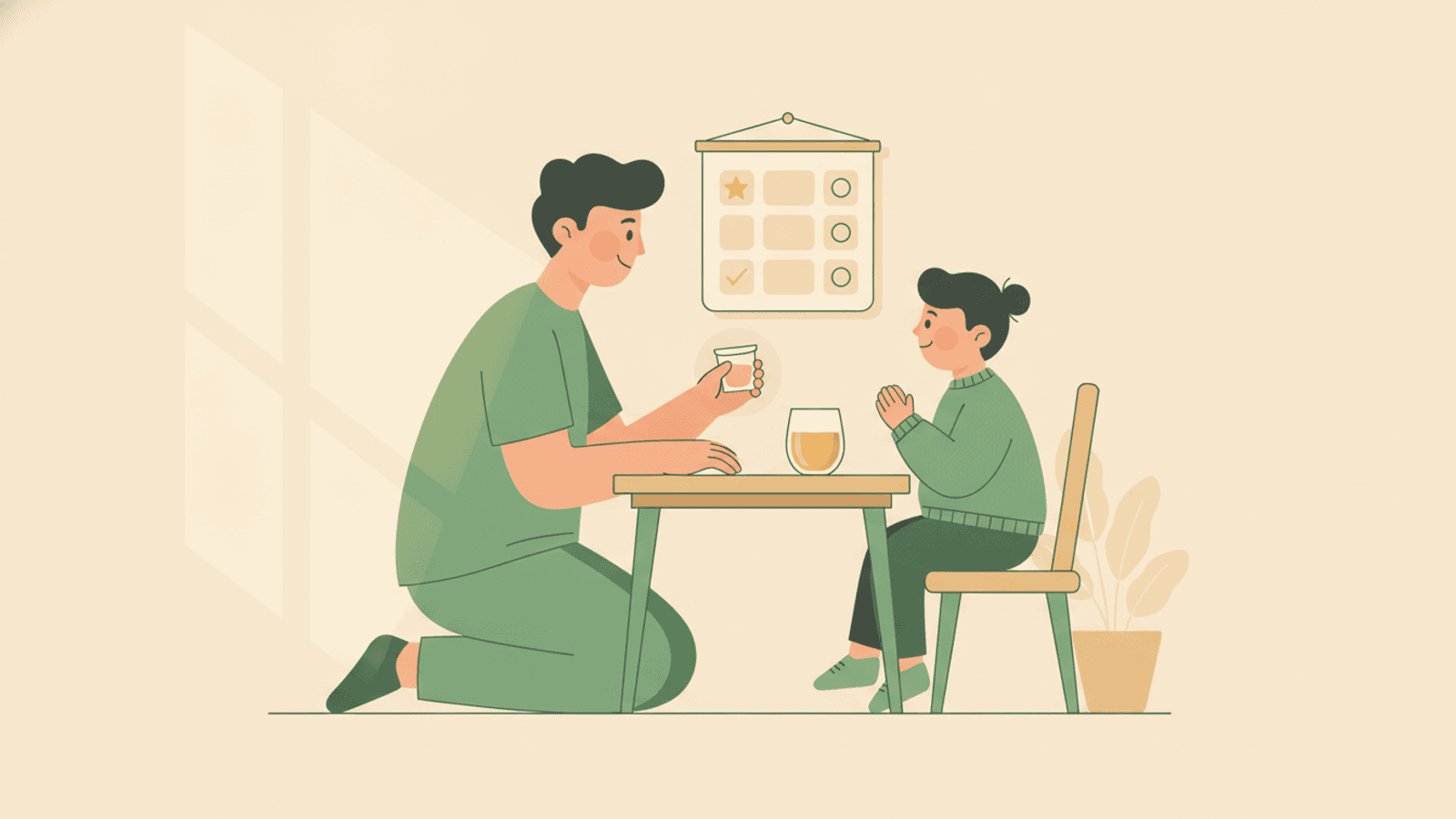
When a child refuses to take medicine, the medicine itself is rarely the whole problem. The dose interrupts play, tastes odd, involves being controlled by an adult — and it happens at unpredictable moments. The fix is usually not more pressure but more predictability: a fixed anchor in the day, a visible routine, and a little control handed back to the child. (This article is general information, not medical advice — questions about a specific medicine belong with your doctor or pharmacist.)
Why medicine turns into a battle
- It interrupts: the dose lands mid-play, and the protest is about stopping, not swallowing.
- It is sensory: taste, smell and texture are real hurdles — especially for sensitive children.
- It is about control: being given something you did not choose invites a power struggle.
- It is unpredictable: when the dose comes at a different time every day, every dose is a surprise attack.
Anchor the dose to something that already happens
Medicine that floats freely in the day gets forgotten and fought. Medicine that always comes right before breakfast, or right after toothbrushing, stops being a decision at all. Pick the anchor once, tell your child, and keep it identical every day — weekends too.
Evening doses belong early in the wind-down, not as a surprise after the last game. If the dose is step two of the evening routine, the argument about it tends to disappear within a week.
Make the moment visible
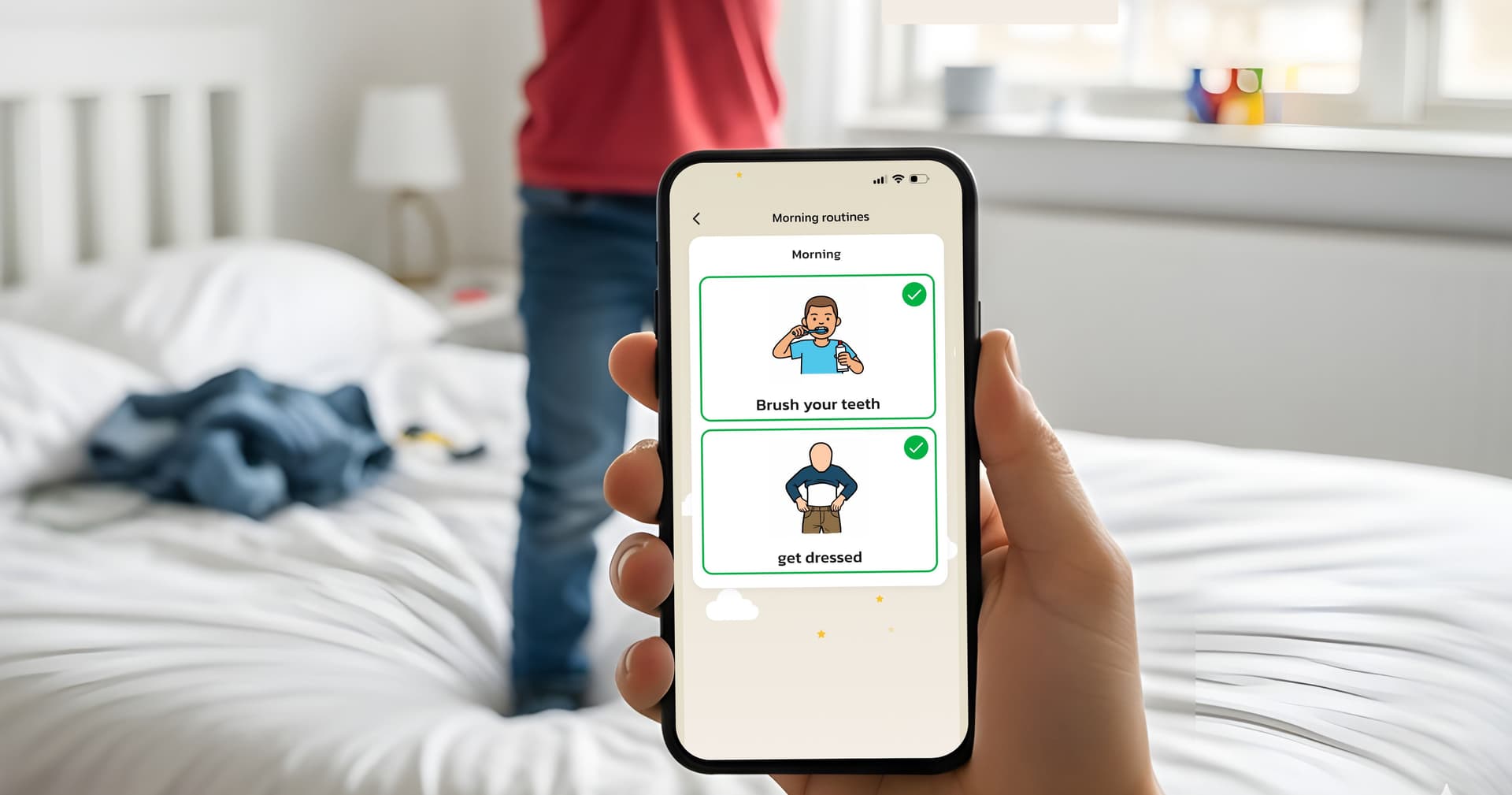
Children argue less with a routine than with a parent. Put the dose in as one visible step among the others — our morning medicine visual support shows what that can look like, and there is an evening version too. When the picture says what comes now and what comes after, the parent stops being the one who "decided".
A short warning helps as well: “after this episode, medicine, then story.” Children handle almost anything that is announced — and almost nothing that ambushes them.
Taste and texture: small tricks that are actually allowed
- Something cold first (a sip of cold water) briefly dulls taste; keep a favourite “chaser” ready for right after.
- Let your child choose everything that is safe to choose: which drink after, where to sit, which hand holds the cup.
- Never crush tablets, open capsules or mix medicine into food or drink without asking your pharmacist first — some medicines stop working or become unsafe.
- If the form itself is the problem, ask whether the medicine exists as a liquid, a smaller tablet or a melt — pharmacists solve this daily.
When your child still says no
Stay calm and boring — a dose refusal that triggers a big reaction becomes interesting to repeat. Do not negotiate about whether, only about how: “medicine is happening; do you want water or juice after?” If it locks up completely, step back, give it ten minutes, and try again at the anchor point. Never force in panic, and never call medicine candy — it needs to stay exactly what it is.
Helping the adults remember
Half of all medicine drama is adult-made: a forgotten morning dose becomes a stressed lunchtime dose at the worst possible moment. A weekly pill organiser, a phone alarm named after the anchor (“breakfast = medicine”), and a clear agreement about which parent owns which dose removes most of it.
ADHD, autism and daily medicines
Children with ADHD or autism are more likely to have daily medicines — and at the same time find interruptions, unfamiliar sensations and sudden demands harder. That combination is exactly why the anchor and the visual step matter most for them. The routine carries the dose, so the parent does not have to. (General information, not medical advice.)
When to talk to your doctor or pharmacist
If your child refuses completely for days, vomits doses up, or you suspect side effects, stop improvising and call your doctor or pharmacist — there is almost always another form, taste or schedule to try. Bring your notes about when and how refusals happen; the pattern helps them help you.
Read more
- 4 evening routines that save your morning — where the evening dose finds its natural place.
- Say goodbye to nagging: 5 steps to a stress-free morning — the morning anchor for the morning dose.
- Picky eating and food refusal — when taste and texture are the battle at the table too.
Frequently asked questions
My child refuses to take medicine — what do we do?
Stay calm, anchor the dose to the same moment every day, make it a visible step in the routine, and give your child control over the parts that are safe to control — which drink after, where to sit. Negotiate how, never whether.
Can I mix medicine into food or drink?
Only after asking your pharmacist. Some medicines lose their effect or become unsafe when crushed, opened or mixed. If the form is the problem, ask about liquids, smaller tablets or melts instead.
How do we stop forgetting doses?
Tie each dose to a fixed anchor that already happens daily — breakfast, toothbrushing, the evening routine — and back it up with a pill organiser and a named phone alarm. Agree on which adult owns which dose.
Should I call the medicine candy to make it easier?
No. It can make medicine dangerously attractive when you are not watching. Keep the honest name, keep the moment calm and predictable, and let the routine do the persuading.