Teaching Your Child to Tidy Their Room, Step by Step
Tidying a whole room feels huge and abstract to a child. Here is how to break it into calm, visual micro-steps, one category at a time, so tidying becomes a routine instead of a battle.
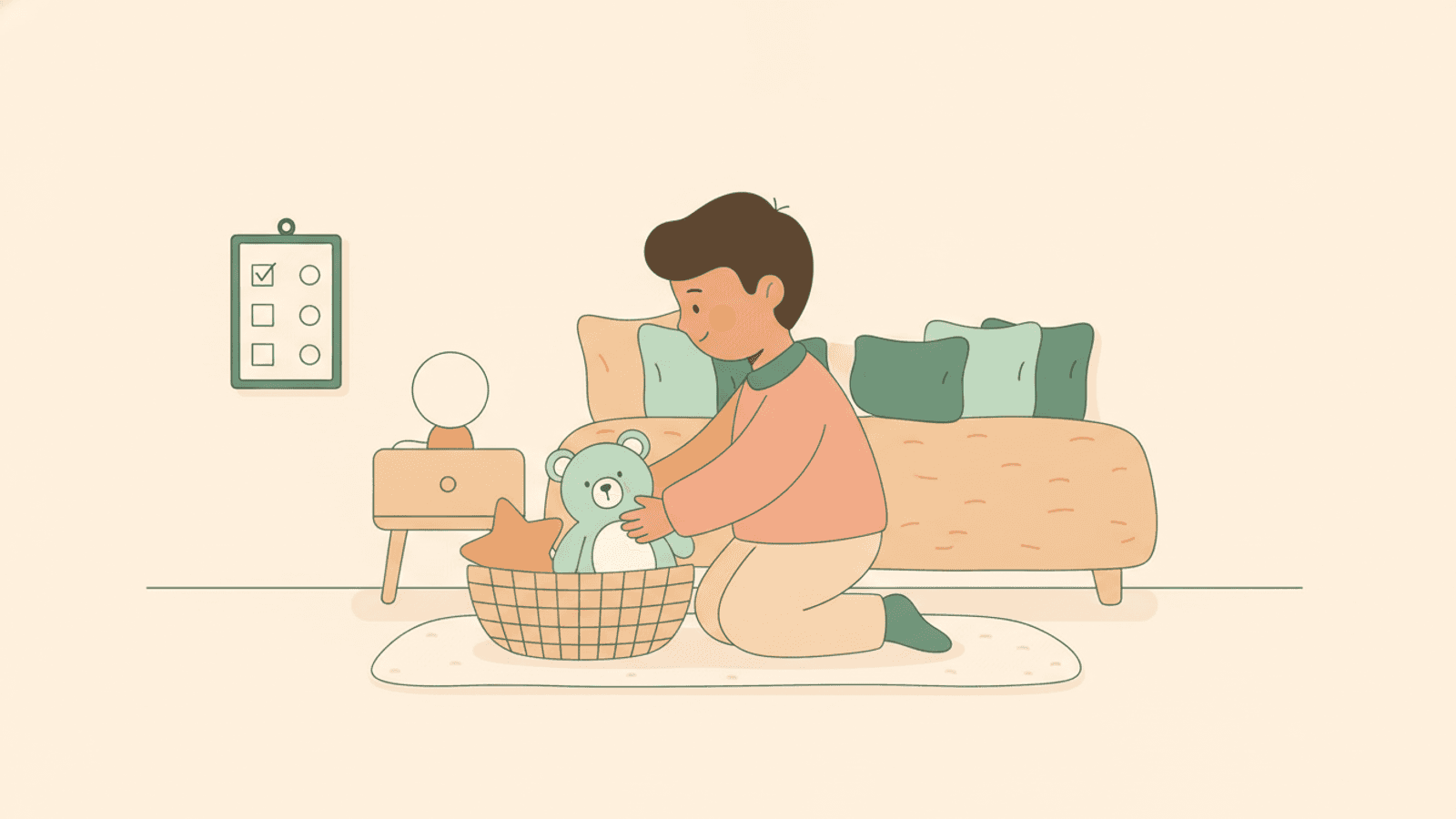
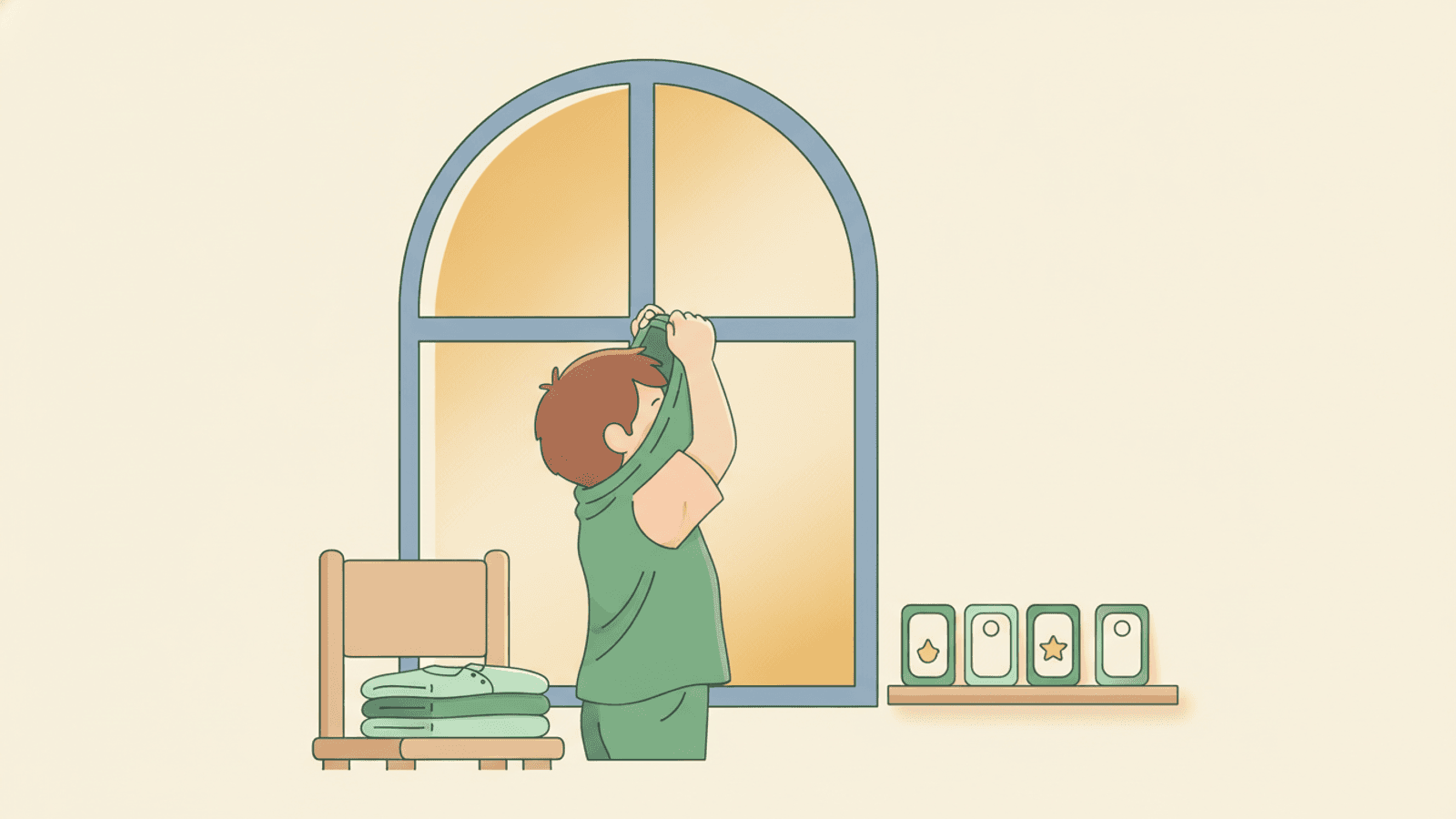
To get your child to tidy their room, break the job into small, single-category steps instead of asking them to "clean up" all at once. A tidy room feels huge and abstract to a child, so give them one clear instruction at a time ("put the books on the shelf"), tidy little and often, and keep the whole thing calm and playful rather than a punishment.
That is the short version. Below we walk through exactly how to make it work, day to day, including what to do if your child has ADHD or autism and needs extra structure.
Why tidying overwhelms children
"Tidy your room" is not one task. It is dozens of tiny decisions bundled into a single vague sentence: where does this go, what do I pick up first, am I done yet? For an adult that bundling is invisible. For a child, especially a younger one, it is genuinely overwhelming.
The room is also full of distractions. A half-built Lego model or a favourite book is far more interesting than the sorting job in front of them. So they freeze, wander off, or melt down, and it looks like defiance when it is really that the task is too big and too abstract.
Break it into micro-steps, one category at a time
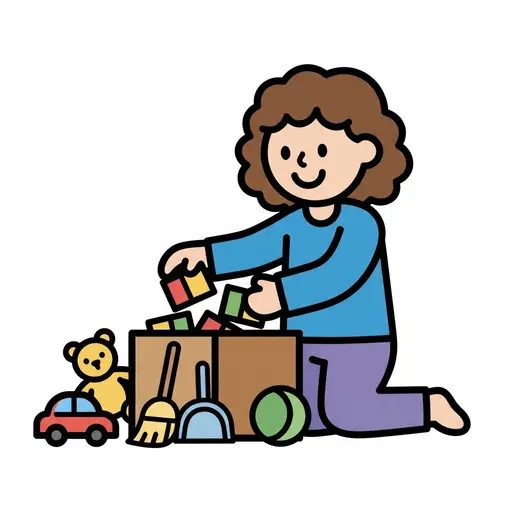
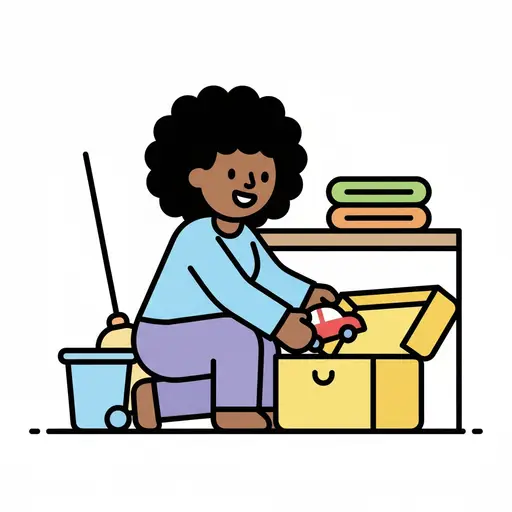
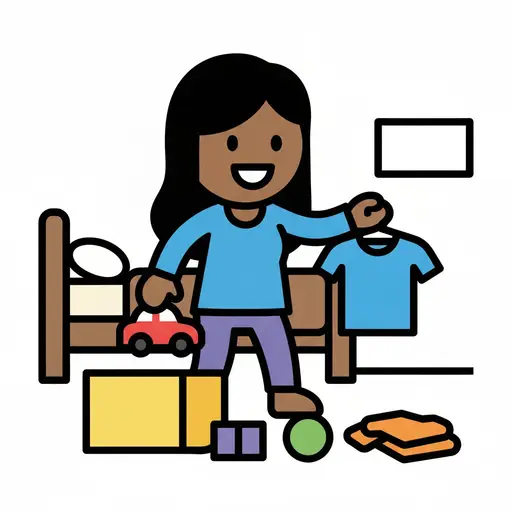
The single most useful change is to stop asking for a tidy room and start asking for one small, concrete action. Instead of the whole room, name a category and do only that.
- "Put all the books back on the shelf."
- Then: "Put the dirty clothes in the basket."
- Then: "Put the soft toys in the box."
- Then: "Cars into the blue bin."
One category at a time turns a mountain into a short list of easy wins. Each finished category is a small success, and success is what keeps a child going. It also removes the paralysing question of where to start, because you have already decided for them.
Give one instruction at a time
Say one thing, wait for it to be done, then say the next thing. A string of instructions ("pick up your clothes and your books and then sort the toys") usually results in none of them happening. One clear instruction, finished, praised, and only then the next.
Make it visual with a picture checklist
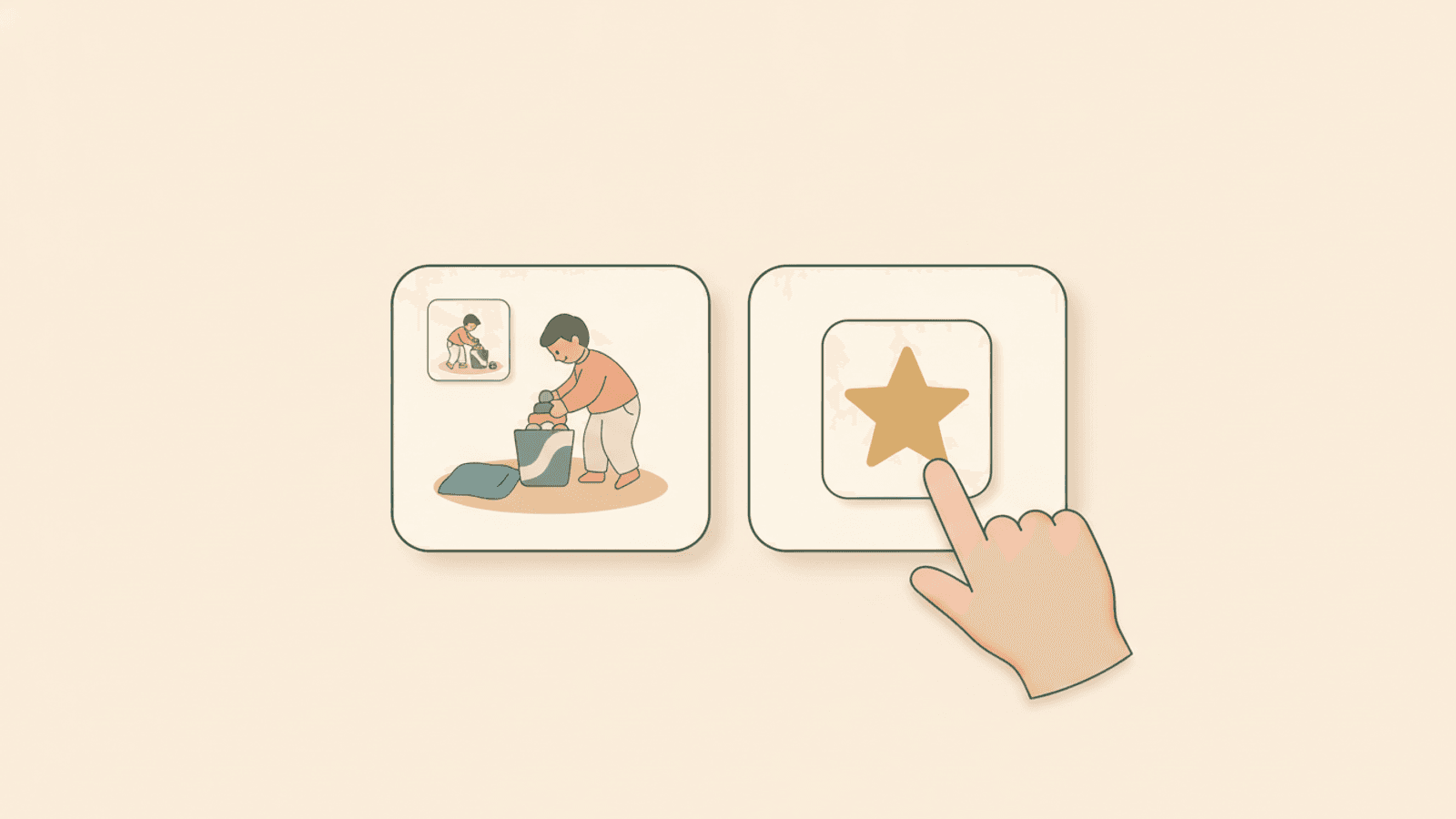
Children follow pictures far more easily than spoken reminders that disappear the moment you leave the room. A simple visual checklist, a photo or drawing for each step, lets your child see what to do and what comes next without you hovering.
A picture sequence might be: books, then clothes, then toys, then a final "floor clear" photo. Your child moves down the list and ticks off each one. The checklist becomes the boss, not you, which quietly removes a lot of the friction and nagging.
Tidy little and often, not one big blitz
A weekend mega-clean is exhausting for everyone and teaches the child that tidying is a dreaded event. Short, frequent tidies work far better. Two minutes of "books away" before dinner, a quick "toys in the box" before bath time.
Little and often keeps the room from ever reaching the overwhelming stage, and it builds a habit rather than a battle. A tidy that takes ninety seconds rarely triggers a meltdown.
Keep it a calm routine, never a punishment
If tidying is used as a consequence ("right, no screen time until this pigsty is clean"), your child learns that tidying is something bad that happens when they are in trouble. That is the opposite of what you want.
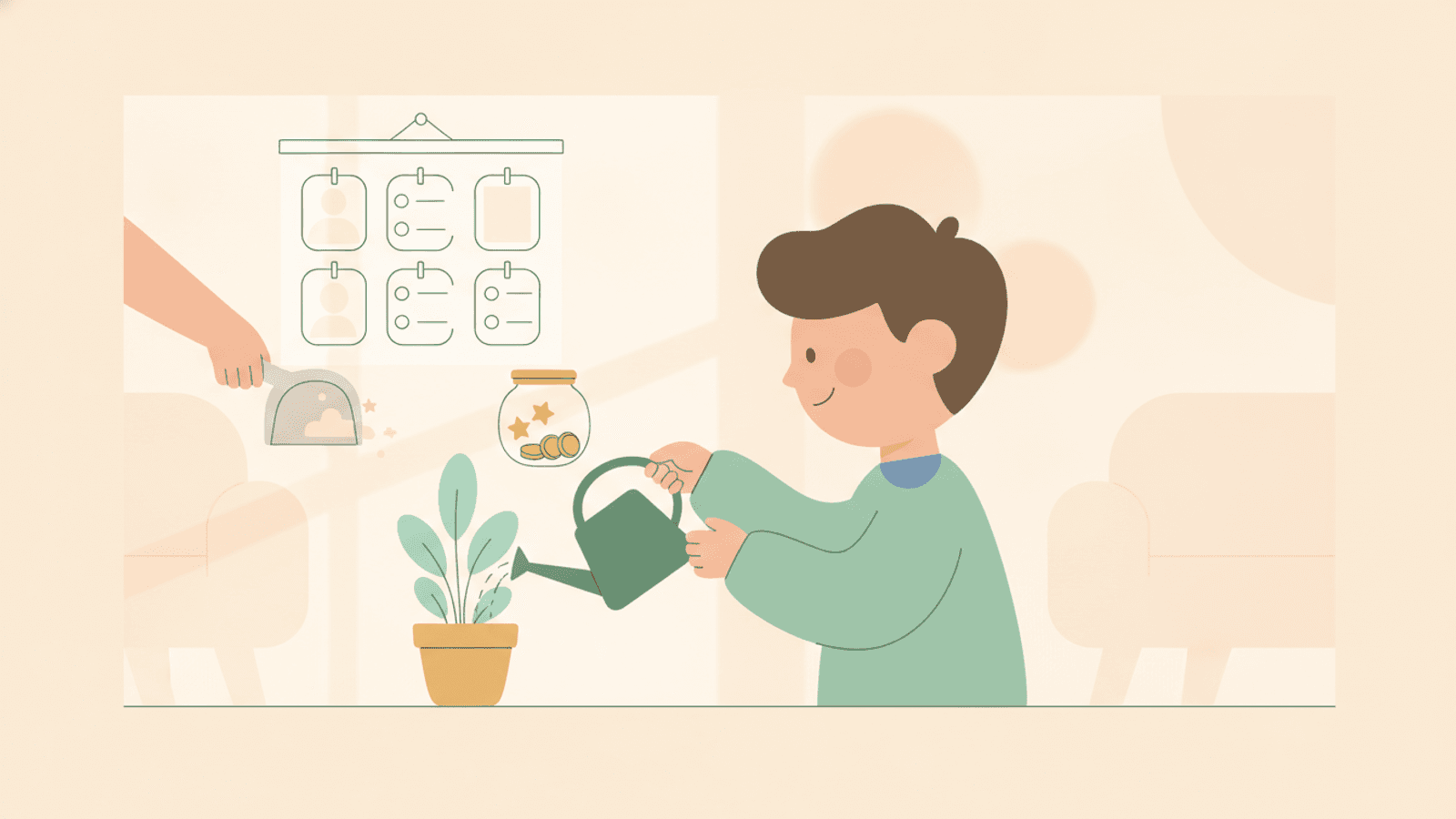
Aim for tidying to be an ordinary, predictable part of the day, like brushing teeth. Same time, same short sequence, calm tone. Predictable routines feel safe, and safe children cooperate more.
Keep it playful
A timer or a song does wonders. "Let's see if we can get the toys away before this song ends" turns a chore into a game. A visual countdown that your child can watch makes the finish line feel real and close.
- Beat the timer to put all the cars away.
- Tidy for the length of one favourite song.
- "Tickle the floor" until you can see the whole carpet again.
When to help and when to step back
Early on, tidy alongside your child. Do it together, narrate what you are doing, and let them copy. You are teaching a skill, not just demanding an outcome, and skills need modelling first.
As they get more confident, step back gradually. Hand over one category to do solo, then two, then let them run the whole checklist while you potter nearby. If a day goes badly, drop back a level without making it a big deal. Progress is rarely a straight line.
Children with ADHD or autism
Everything above matters even more for children with ADHD or autism. Working memory and task-switching are harder, so a long spoken instruction simply cannot be held onto. Give one instruction at a time and let a visual sequence carry the memory load instead of their brain.
Predictability is calming, so keep the same order every time: books, clothes, toys, floor. Many autistic children find a fixed sequence genuinely reassuring. Break categories down further if needed ("cars" and "blocks" as separate steps rather than one big "toys"), and keep sessions short so attention does not run out before the job does.
How Routined helps
Routined lets you build a "tidy my room" routine as a clear sequence of steps, shown either as Standard text and checkboxes or as Visual Support with big picture cards. You can give each step its own picture from the built-in library, an AI image, or your own photo of your child's actual shelf or toy box.
You can add an optional visual countdown timer to a step to keep it playful, and record your voice for a step so a gentle "books on the shelf now" plays automatically when your child opens it. A quick mood check before and after lets you see how tidying is landing, and optional star, pocket-money, screen-time-minute or custom rewards can turn a finished routine into a small, motivating win.
The takeaway
You do not get a child to tidy their room by asking harder. You get there by making the task smaller: one category at a time, one instruction at a time, made visual, done little and often, and kept calm and playful. Tidy with them first, then step back as they grow into it. Do that consistently and, bit by bit, the nagging fades and the routine does the work for you.
Read more
Frequently asked questions
At what age can a child start tidying their own room?
Toddlers can help put toys in a box with you from around two, copying what you do. By four or five most children can follow a short picture checklist with support, and gradually take on categories solo as they get older. Focus on modelling the skill first rather than expecting an independent result.
How do I get my child to tidy without nagging?
Let a visual checklist do the reminding instead of your voice. Give one instruction at a time, tidy little and often so it never becomes a huge job, and use a timer or song to keep it playful. The checklist becomes the boss, which removes most of the nagging.
Should tidying be used as a punishment?
No. Using tidying as a consequence teaches children that it is something bad that happens when they are in trouble. Keep it a calm, ordinary, predictable part of the day, like brushing teeth, so it feels safe and routine rather than like a threat.
How can I help a child with ADHD or autism tidy their room?
Give one instruction at a time and use a fixed visual sequence so their brain does not have to hold the whole list. Keep the same order every time, break categories into smaller steps if needed, and keep sessions short so attention does not run out before the job is done.