Responsibility and Household Roles: Raising a Child Who Helps
Why chores build confidence, which jobs suit which age, and how to make helping a calm, visible routine, including adjustments for children with ADHD or autism.
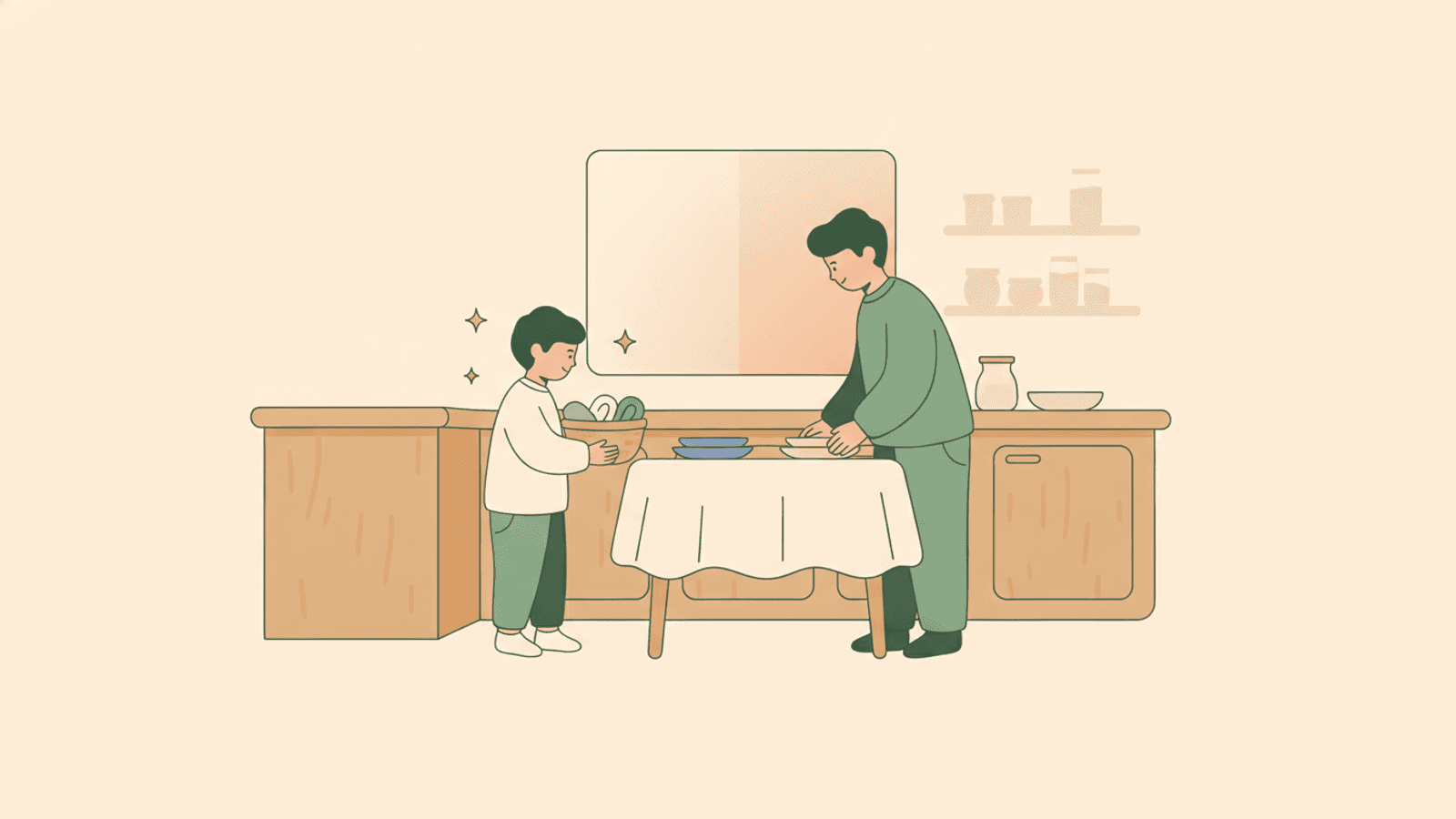
Giving children responsibility at home means handing them real, age-appropriate jobs that keep the household running, then teaching the skill and letting them own the outcome. It is not about a spotless house or perfect results. It is about competence, belonging and life skills. When a child folds towels or feeds the cat, they learn that they matter, that the family relies on them, and that they are capable, which is exactly the foundation that supports confidence for years to come.
For many parents this feels harder than it should. It is often quicker to do the job yourself, and the nagging can be exhausting. This guide walks through why chores matter, which roles suit which age, and how to make helping a calm, visible part of everyday life, including practical adjustments for children with ADHD or autism.
Why giving children responsibility at home matters
Chores are one of the simplest ways to build three things every child needs: competence, belonging and independence. A child who contributes learns that effort produces results, that they are a valued member of the family, and that they can manage real-world tasks on their own.
Household jobs also teach practical life skills that no worksheet can. Sorting laundry, wiping a counter, packing a bag and planning a small task are all rehearsals for adult life. The child who never practises these things at seven does not magically acquire them at seventeen.
- Competence: I tried something and I managed it.
- Belonging: my family counts on me and my help is real.
- Life skills: cooking, cleaning, tidying and planning grow with practice.
- Self-worth: contribution builds a quiet, durable kind of confidence.
Age-appropriate roles from toddler to teen
The goal is to match the job to the child so it stretches them a little without overwhelming them. Here is a rough guide you can adapt to your own child, since development varies widely.
Toddlers (2 to 3)
Little ones love to help and rarely need convincing. Keep tasks tiny and hands-on: putting toys in a basket, carrying their plate to the counter, throwing a nappy in the bin, or fetching a familiar item. The point is participation, not results.
Preschool (4 to 5)
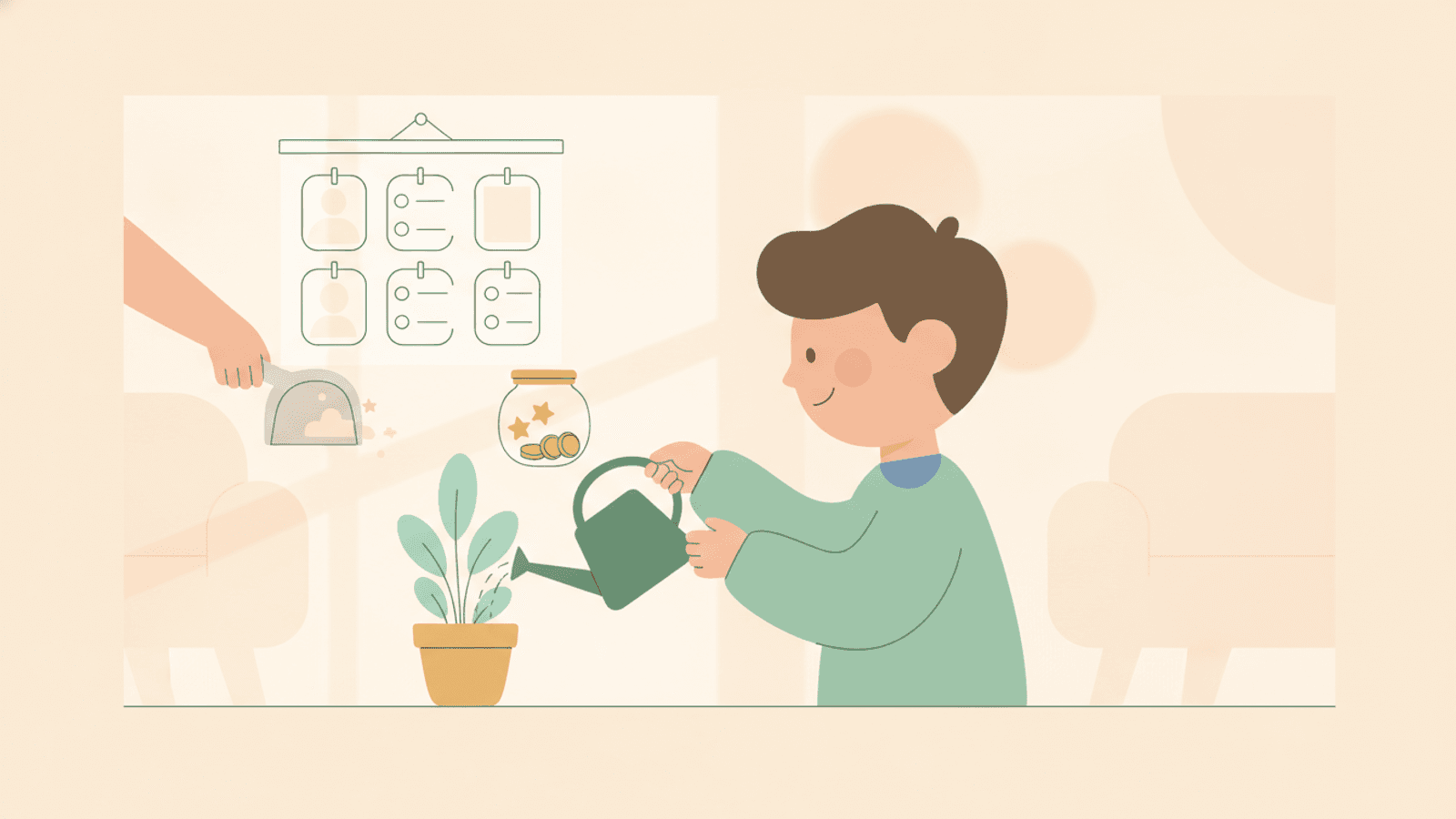
Now children can manage a short sequence with support: watering a plant, feeding a pet, matching socks, setting out cutlery, or wiping a low table. Break each job into two or three visible steps and stay nearby.
School age (6 to 9)
This is a great window for regular, expected jobs: making their bed, packing their school bag, clearing the table, tidying their room, and helping with simple cooking. They can start remembering tasks with a little visual prompting rather than constant reminders.
Tweens (10 to 12)
Older children can handle jobs that affect the whole family: loading or emptying the dishwasher, taking out rubbish and recycling, hoovering, preparing a simple meal, or looking after a pet fairly independently.
Teens (13+)
Teenagers are capable of genuine domestic competence: doing their own laundry, cooking a proper meal, food shopping from a list, and managing their own schedule. Treat them as the near-adults they are becoming, and let natural consequences do some of the teaching.
Family jobs everyone does versus paid extras
One of the clearest ways to prevent conflict is to separate two categories of work. Family jobs are the things everyone does simply because they live here: making your bed, clearing your plate, keeping your own space reasonable. These are not paid, because being part of a household means contributing to it.
Paid extras are optional, larger jobs that sit outside the daily basics: washing the car, a big garden task, or a deep clean of the garage. These can be linked to pocket money if you choose. Keeping the line clear helps children understand that ordinary help is just part of family life, not a transaction.
Some things we do because we get paid. Most things we do because we are a family.
Make helping a visible routine
Responsibility sticks best when it is predictable and visible, rather than something a parent has to remember to demand. A chore that lives inside a daily routine, at the same time and in the same place, quickly stops feeling like a fight and starts feeling like just what happens after dinner.
A visible chart or checklist does the reminding for you, which spares everyone the nagging. When the child can see what is expected, they can take ownership rather than waiting to be told. Ticking off a finished job is also genuinely satisfying and reinforces the habit.
Teach the skill, and do not expect perfection
Children are not born knowing how to make a bed or wipe a counter well. Show them, do it alongside them a few times, then let them try while you resist the urge to swoop in and redo it. A wonky bed made by a six-year-old is a success, not a job half done.
If you re-do their work in front of them, the message they hear is that their effort was not good enough. Praise the trying, tolerate the imperfection, and let competence build slowly. The standard rises naturally as the child grows.
Avoid over-praising and over-paying ordinary help
It is tempting to shower a child with rewards and applause every time they help, but ordinary contribution does not need a prize. If every small chore earns money or lavish praise, children can start to expect payment for basic family life and lose the intrinsic satisfaction of being useful.
Aim for warm, specific acknowledgement rather than gushing: I noticed you set the table without being asked, thank you. Save money and bigger rewards for the genuine paid extras, and let everyday helping simply be normal and expected.
Rotate jobs to keep it fresh
The same chore every single day can go stale, and one child can end up feeling stuck with the worst job. Rotating tasks weekly keeps things fair and a little more interesting, and it means everyone learns a broader range of skills rather than specialising in one narrow chore.
A simple wheel or a rotating list on the fridge works well. Children are far more willing to take a turn at the less popular jobs when they can see the rotation is even-handed.
Children with ADHD or autism: break it down and acknowledge it now
For children with ADHD or autism, a vague instruction like tidy your room can be genuinely overwhelming, because it hides a dozen invisible sub-steps. The task is not too hard; it is too undefined. Breaking it into small, concrete, visual steps turns an impossible-feeling job into a series of doable ones.
- Break it down: put dirty clothes in the basket, then books on the shelf, then toys in the box.
- Make it visual: pictures or photos of each step reduce the working-memory load.
- Acknowledge immediately: recognition needs to come right after the effort, not hours later.
- Keep it consistent: the same steps in the same order build a reliable routine.
Immediate acknowledgement matters especially for children with ADHD, whose sense of reward is very much tied to the here and now. A tick, a word of thanks or a visible bit of progress the moment the job is done is far more motivating than a promise of something at the weekend.
How Routined helps
Routined lets you turn chores into a calm, visible routine. You can choose a Standard mode with text and checkboxes, or a Visual Support mode with big picture cards for each step, using a built-in picture library, AI images or your own photos. An optional countdown timer and a voice recording per step, which plays automatically when your child opens it, help less independent readers work through a job on their own. Finished routines can fill an allowance pot in proportion to how much was completed, which you pay out manually, and one-off extra tasks can require your approval, keeping the family-jobs and paid-extras line clear.
Takeaway
Raising a child who helps is a slow, patient project, not a quick fix. Give real jobs that fit their age, make them visible, teach the skill without demanding perfection, and acknowledge effort straight away. Keep ordinary family help unpaid and matter-of-fact, save rewards for genuine extras, and adapt tasks for children who need them broken down. Do this steadily and you raise not just a tidier home, but a capable, confident person who knows they belong.
Read more
Frequently asked questions
At what age should children start helping at home?
As early as two. Toddlers can put toys in a basket or carry a plate. Keep tasks tiny and hands-on, since the point at that age is participation rather than a job done well.
Should I pay my child for chores?
Keep everyday family jobs like making the bed or clearing the table unpaid, because contributing is part of belonging to a household. Save money for optional paid extras such as washing the car or a big garden task.
How do I get my child to help without constant nagging?
Make the chore a predictable part of a daily routine and use a visible chart or checklist so the child can see what is expected. When the reminder is on the wall rather than in your voice, ownership shifts to them.
How can I help a child with ADHD or autism manage chores?
Break each job into small, concrete steps, make those steps visual with pictures or photos, and acknowledge the effort immediately rather than hours later. A vague instruction like tidy your room hides many invisible sub-steps and can feel overwhelming.
What if my child does the chore badly?
Resist redoing it in front of them. Show the skill, do it together a few times, then tolerate the imperfect result. Praising the effort builds competence over time, and the standard rises naturally as the child grows.