Birthday Parties and Neurodivergent Children: Going to One, and Hosting One
Noise, chaos, cake and twenty children. Here is how to plan a party your neurodivergent child can actually enjoy, at either end of the invitation.
Birthday parties are hard for many neurodivergent children for a reason that has nothing to do with sociability: they are loud, unstructured and unpredictable, all at once. The two fixes are the same whether you are going to a party or hosting one. Make it shorter, make the order of events visible in advance, and decide the exit before you arrive. Ninety good minutes is a successful party.
It is worth separating the two situations, because they need different preparation. Going to someone else’s party means managing an environment you do not control. Hosting means you get to design one that works, which is often the easier of the two.
Why parties are hard
- Noise. Twenty excited children in one room is genuinely loud, and it builds rather than settles.
- No structure. Unstructured time is the hardest kind for many children with ADHD or autism. Nobody says what happens next.
- Unpredictability. The schedule bends: cake is late, a game is added, someone cries and everything stops.
- Food. Unfamiliar food, on a plate you did not choose, in front of an audience.
- Competition. Elimination games mean most children lose in public, early.
- Sudden sensory events. Balloons popping, singing, the lights going off for the cake.
- Being watched. Opening presents in a circle is a performance, and so is being sung at.
Going to someone else’s party
You cannot control the room, so control the information and the exit.
- Ask the host for the plan. "What time is cake, and what happens before it?" Most parents are happy to say, and it takes two minutes.
- Show it to your child in pictures. Arrive, play, food, cake, one game, home. A visible order turns an unpredictable event into a sequence with an end.
- Arrive early, not fashionably late. An empty room that fills up gradually is far easier than walking into a full one.
- Find the quiet room on arrival. Ask where your child can go if it gets too much, and show them, before they need it.
- Bring the kit. Ear defenders, a familiar snack, water, and something to hold.
- Hand over the present at the door. It removes one social performance from the middle of the party.
- Agree the exit before you go in. A signal that always works, immediately, and a time you leave regardless.
On whether to stay: if your child needs you, stay, and do not let anyone make that awkward. A short party with a parent in the kitchen is better than a long one alone that ends badly. Tell the host in one sentence — "he does better if I stay nearby for the first bit" — and leave it there.
If food is the sticking point rather than the noise, the same approach as eating out with a neurodivergent child applies: bring a known alternative, and take the pressure off the plate entirely.
Hosting a party that actually works
When it is your party you can design out most of the problems. The best parties for neurodivergent children look sparse compared with what parents imagine a party should be, and they go far better.
- Fewer guests. The old rule of one guest per year of age is already generous here. Three or four children your child actually likes beats a whole class.
- Shorter. Ninety minutes, two hours at the outside. End before the crash, not after it.
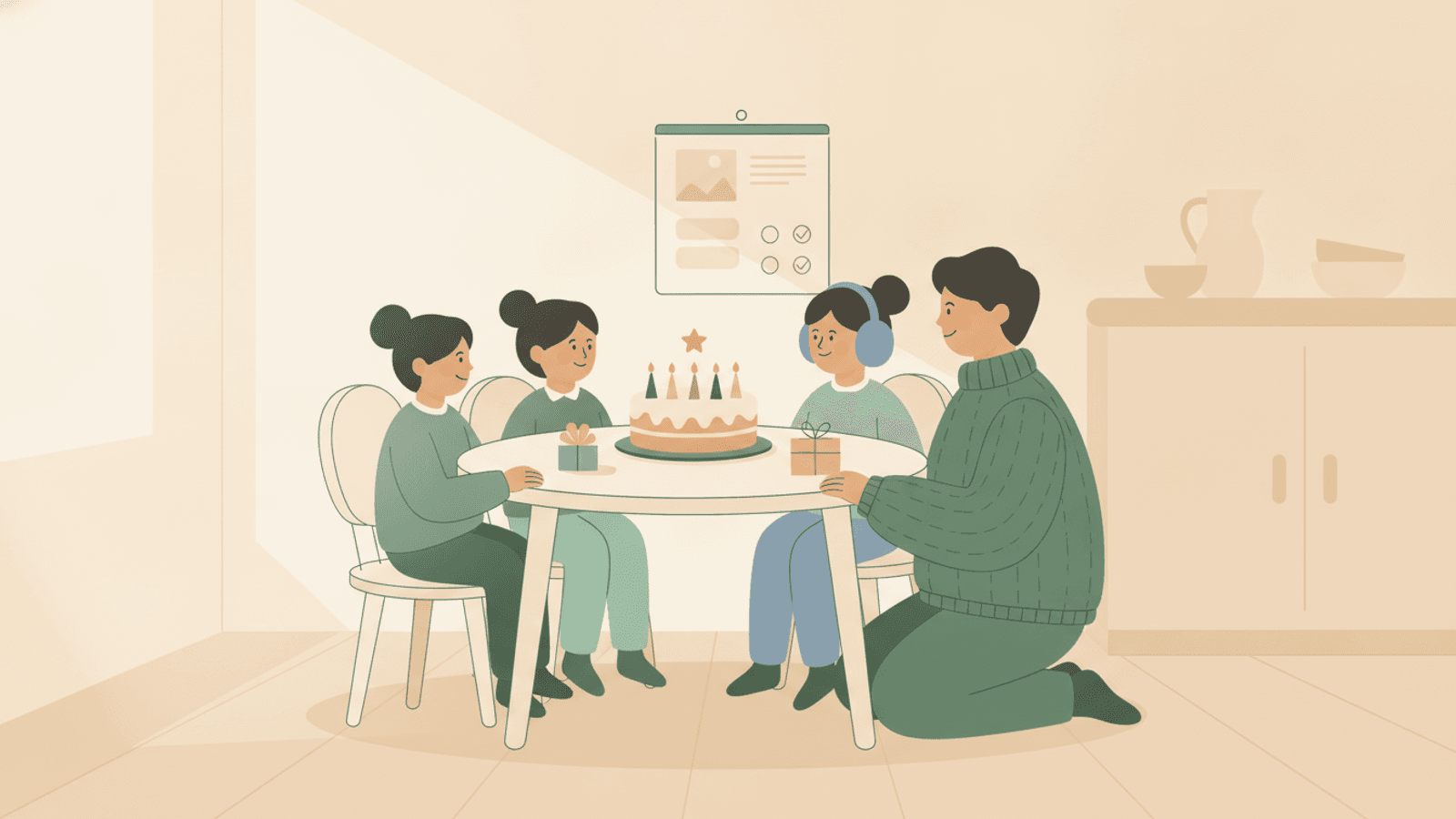
- A written run of order on the wall. Play, game, food, cake, one more game, goodbye. Everyone reads it, not just your child.
- Familiar food. Serve what your child eats, plus something plain. This is not the day to introduce anything.
- A quiet room, announced at the start. "If it gets too much, this room is open." Say it to all the children, so using it is not a mark of difference.
- One adult whose only job is your child. Not the host, not the person doing the food.
- Presents opened later. Not in a circle, not with everyone watching. Thank the giver at the door instead.
Games that work, and games that do not
Avoid elimination. Musical chairs sends most of the room to the sidelines within four minutes, and the children who struggle most are usually out first. Better options are games where everyone keeps playing.
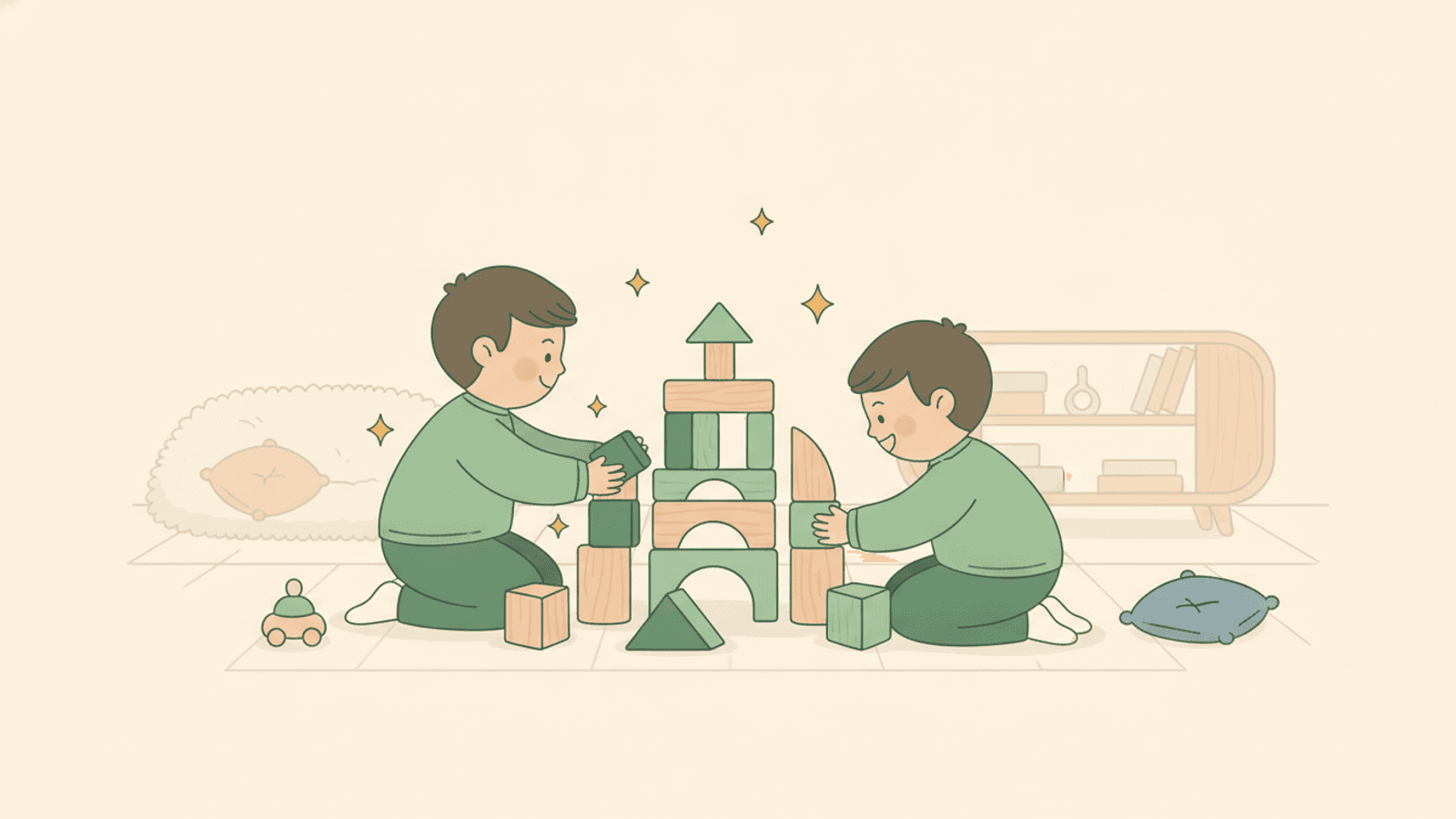
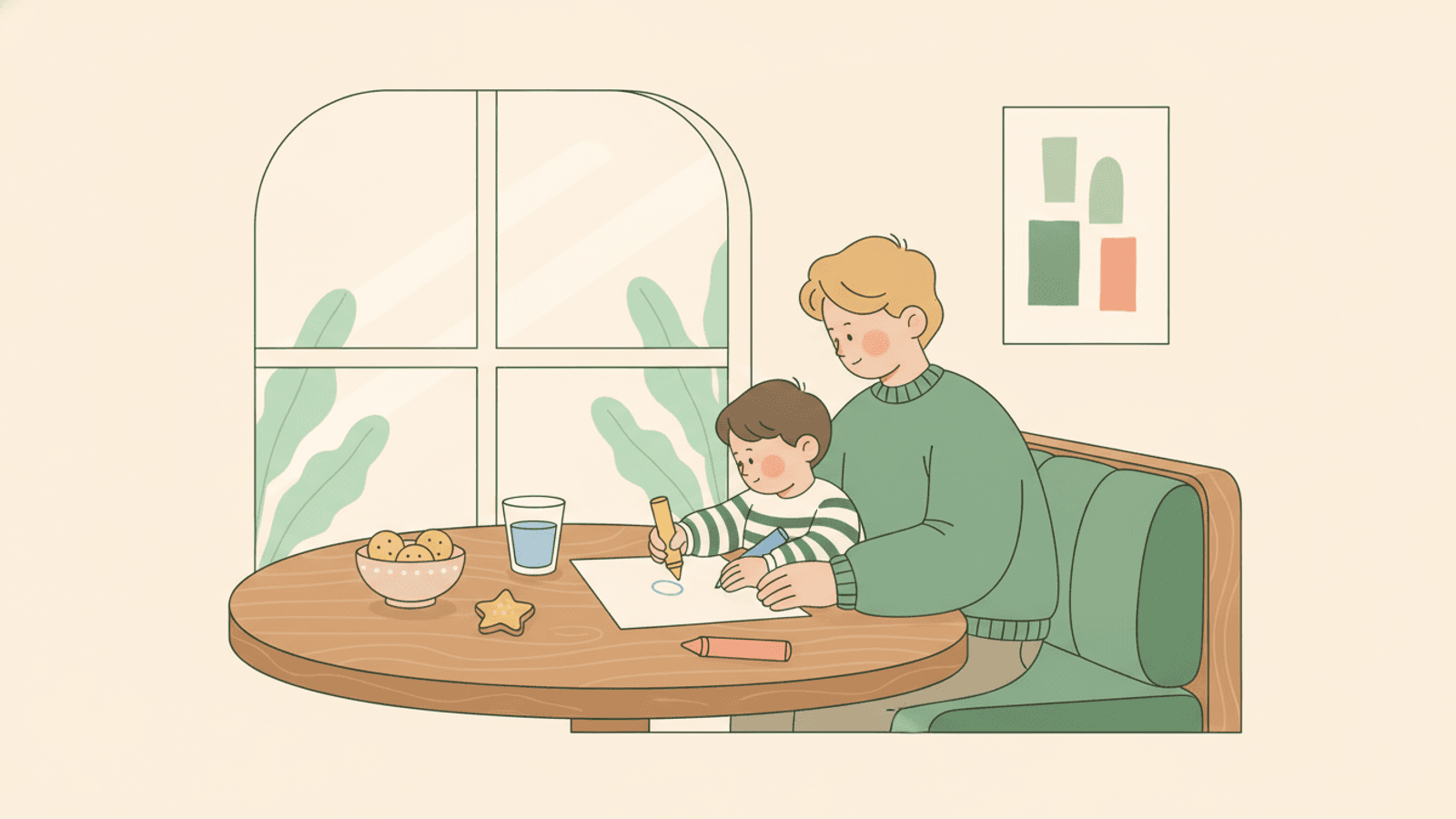
- Stations rather than one big game: a table with drawing, a corner with blocks, something physical outside. Children move at their own pace.
- Treasure hunts, where everyone finds something.
- Parachute games, bubbles, or anything where the point is doing it rather than winning it.
- A short film at the end, as a deliberate wind-down before pickup rather than a failure of imagination.
The specific triggers: balloons, singing and cake
Balloons pop, and for a child with sound sensitivity the anticipation is worse than the bang. Use paper decorations instead, or keep balloons in one room your child does not have to enter. Warn before the singing starts, offer ear defenders, and let your child stand at the edge or in the doorway. If lights-off with candles is frightening, keep the lights on: nothing about the tradition requires the dark.
When your child does not want to go
Sometimes the answer is not to go, and that is a legitimate decision rather than a failure. Other times the reluctance is about a specific part — the noise, the not knowing what happens, one particular child — and naming which part makes it solvable. Going for forty minutes and leaving before cake counts as going.
If your child is rarely invited, that is worth looking at separately and gently, because it is usually about the mechanics of making friends rather than about being disliked: helping your child make friends has the practical version.
Prepare it the way you would any big event
Write it out in advance, in pictures or a few short sentences: who will be there, what happens in what order, how long it lasts, and what your child can do if it gets too much. That is exactly what a social story is for, and it does more for a party than any amount of reassurance on the doorstep. The same principle underpins visual support generally.
In Routined you can build the party as a short routine with a picture and a timer on each step, and add it to the calendar as a one-off event your child can see in advance, with a reminder before it starts. Knowing when it is and how long it lasts removes a surprising amount of the dread.
Afterwards
Expect a crash. A child who held it together for two hours has spent everything, and the meltdown at home is the bill for the effort, not proof that it went badly. Keep the rest of the day empty, go back to the ordinary routine, and do not schedule anything else that evening. The same recovery pattern applies to any big outing, as covered in sensory overload on outings.
A short checklist
- Ask the host for the schedule, or write your own if hosting.
- Show your child the order in pictures beforehand.
- Agree the exit signal and the leaving time.
- Pack ear defenders, water and a familiar snack.
- Find the quiet space on arrival.
- Keep the rest of the day empty.
Read more
- Helping your child make friends — the part that happens before the invitation.
- Eating out with a neurodivergent child — unfamiliar food, in public, without the battle.
- Social stories — how to write one for an event like a party.
Frequently asked questions
How long should a birthday party be for a child with ADHD or autism?
Ninety minutes is usually right, and two hours is the outside limit. The aim is to end while it is still going well rather than after the crash. If you are attending someone else’s party, arriving early and leaving before or just after the cake gives the same effect.
Should I stay at the party with my child?
If your child needs you nearby, stay. Tell the host in one sentence and do not apologise for it. A shorter party with a parent in the kitchen usually goes better than a longer one alone that ends in a meltdown, and it builds the confidence to be dropped off next time.
How many guests should I invite?
Fewer than you think. Three or four children your child genuinely likes will produce a better party than a whole class. Noise and unpredictability scale with the number of guests, and both are the main problem.
My child gets invited but never wants to go. What should I do?
Find out which part is the problem: the noise, the not knowing what happens, the food, or a specific child. Most reluctance is about one element, and that element can usually be planned around. Going for forty minutes and leaving before cake is a perfectly good version of going.
What should I tell the other parents?
As little as you like, and only what is useful. One practical sentence works better than an explanation: "He needs a quiet room if it gets loud", or "we will probably leave before cake". Most parents simply want to know what helps.