Executive Function, Explained for Parents: Why "Just Get Started" Does Not Work
Your child knows what to do and still cannot start. That gap has a name, and it responds to structure far better than to reminders.
Executive function is the set of mental skills that turn intention into action: getting started, holding instructions in mind, planning a sequence, keeping track of time, switching between tasks, and stopping an impulse. It is the brain’s management system rather than its knowledge. This is why a child can know exactly what they are supposed to do, want to do it, and still be sitting on the floor with one sock on twenty minutes later.
Understanding this changes what you do about it. If the problem were knowledge, explaining would help. If the problem were motivation, incentives would help. When the problem is executive function, what helps is making the task visible, shorter and more externally structured, so less of it has to be held in the child’s head.
The parts, in plain language
- Task initiation. Getting from knowing to doing. The hardest one, and the one most often mistaken for laziness.
- Working memory. Holding several things in mind at once. "Get your shoes, your bag and your water bottle" is three items, and two of them may not survive the hallway.
- Planning and sequencing. Knowing what order things go in, and what "tidy your room" actually consists of.
- Time management. Feeling how long ten minutes is, and how long a task will take. Often described as time blindness.
- Flexibility. Switching plans when something changes, without the whole day falling apart.
- Impulse control. Pausing between the urge and the action.
- Emotional regulation. Keeping a feeling at a size that still allows thinking.
- Self-monitoring. Noticing how it is going and adjusting, rather than discovering at the end that half of it is missing.
Every child is a different mix. A child can be excellent at planning and hopeless at starting, or brilliant at flexibility and unable to hold three instructions.
Why it lags, and for how long
Executive skills develop slowly and are among the last to mature, continuing to develop into the mid-twenties. In children with ADHD they typically develop later still: a widely used rule of thumb in the ADHD literature is that executive skills run roughly a third behind chronological age, so a ten-year-old may be working with the self-management of a six or seven-year-old. Autistic children often have a different profile again, with particular difficulty in flexibility and transitions.
Treat that as a planning number rather than a diagnosis. The useful question is not "should they be able to do this by now?" but "what can they do today, and what part still needs to sit outside their head?"
Can’t, not won’t
The single most useful reframe is that inconsistency is characteristic of executive difficulty, not evidence against it. A child who managed the morning routine perfectly on Tuesday and fell apart on Thursday has not proved they can do it whenever they choose. Executive function is heavily affected by sleep, stress, hunger, interest and how much of the day has already been spent. Performance varies enormously, which is exactly what you would expect.
The practical version: if a child can do something on a good day but not a bad one, they need the support on all days, not only on the days they fail.
The four moves that actually help
1. Externalise it
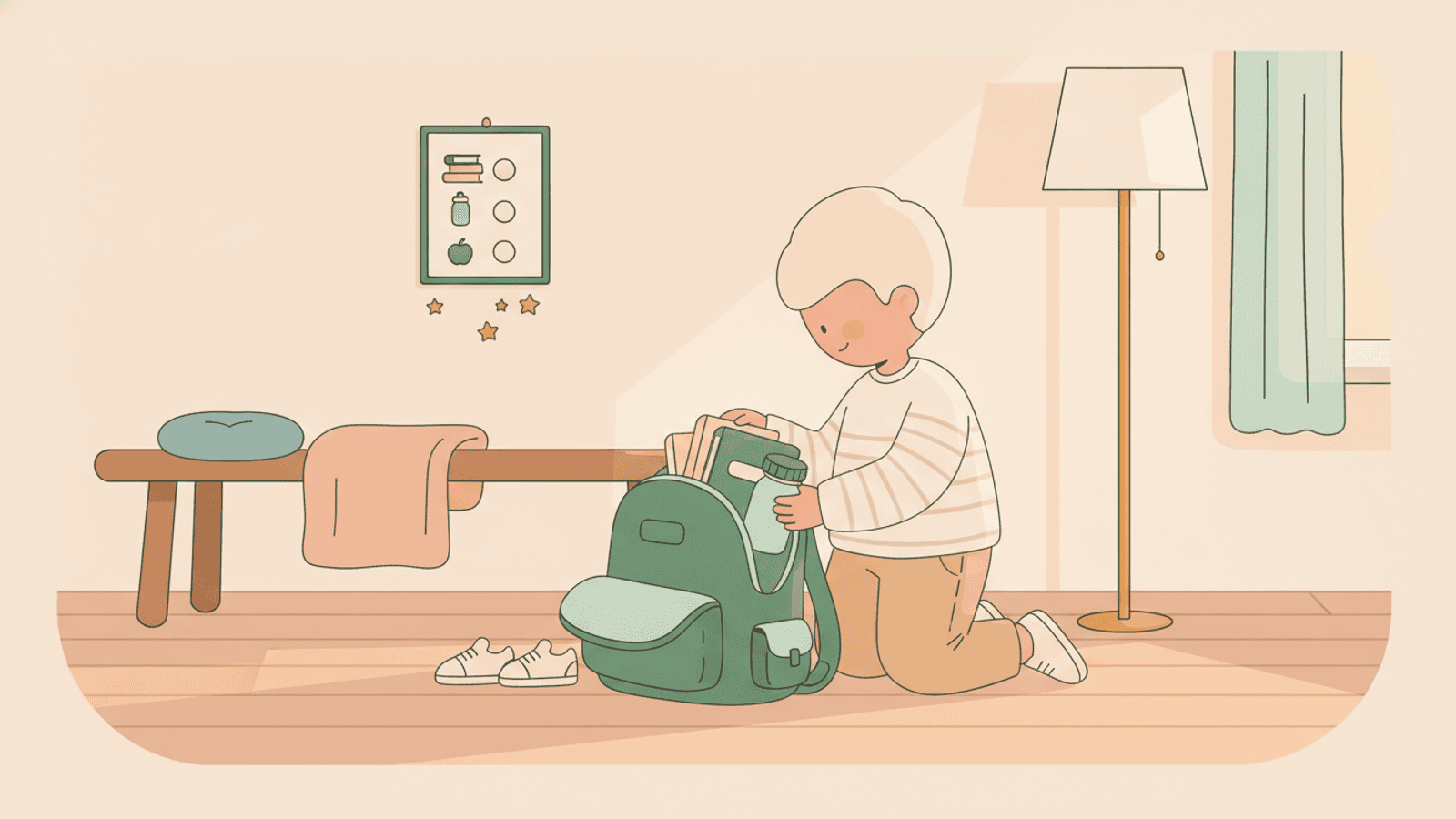
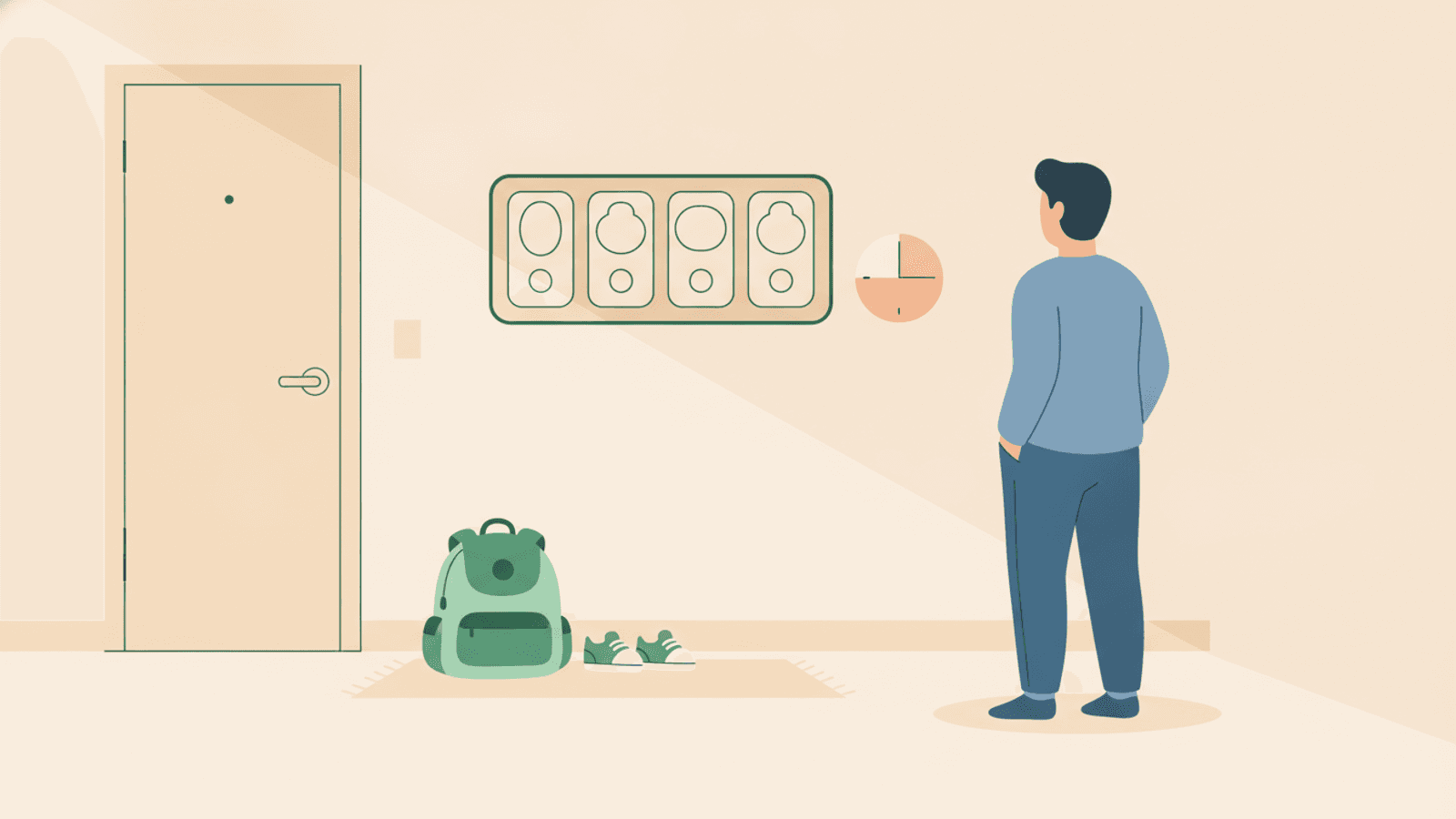
Anything held in the head competes for a resource your child is short of. Put it outside: a written or picture sequence on the wall, a visible timer, a checklist by the door, the bag packed the night before. This is the underlying logic of visual supports and of every routine chart that has ever worked.
2. Shorten the chain
"Get ready for school" is not a task, it is a project with nine steps. Break it into steps a child can complete without a second instruction, and expect to give one instruction at a time until the sequence is automatic. Three-step instructions fail for the same reason a phone number is hard to remember while someone is talking to you.
3. Make time visible
Time is abstract, and abstract things are hardest for a system that struggles with the abstract. A shrinking visual timer, an alarm at the halfway point, or "when this song ends" all convert a duration into something you can see or hear. There is a whole guide to visual time aids, and none of them requires buying anything special.
4. Scaffold, then fade
Do the task with your child, then beside them, then in the same room, then from the kitchen, then not at all. Most parents jump from doing it for the child to expecting independence, and the collapse in between reads as regression when it is actually a missing step. Fade one level at a time, and be prepared to go back a level in a bad week.
What this looks like in practice
- Mornings: the same order every day, visible, with a timer for the two steps that always run over.
- Homework: decide the start time in advance, put the first step on paper, and work in short blocks with the finish line visible.
- The school bag: a photo of the packed bag taped inside the lid beats a verbal list every time.
- Tidying: one category at a time ("all the books"), not "tidy your room".
- Transitions: five-minute warning, then a two-minute warning, then the change. Not one announcement.
Two of those have their own guides: packing the school bag and homework without nagging.
This is also the entire idea behind Routined. Each routine becomes visible steps with a picture, a timer and a checklist, shared between both parents in real time, so the sequence and the time live in the app rather than in your child’s working memory or your voice.
What does not help
- Repeating the instruction louder. If it did not land the first time, volume is not the missing ingredient.
- Adding more steps to the reminder. "And do not forget your…" makes the chain longer, not clearer.
- Rewards for outcomes the child cannot reliably produce. Reward the step they can do, not the finish they cannot.
- Removing supports because "they should be able to by now". Age is not the variable that matters here.
- Long explanations of why it matters. Understanding is rarely the bottleneck.
Building the skill, not just the workaround
Supports are not a substitute for development; they are the conditions under which development can happen. Alongside the scaffolding, teach the skill explicitly: talk your own planning out loud so your child hears what it sounds like, let them plan something low-stakes like a Saturday, review afterwards without judgement, and hand over one more piece each term. Executive skills grow with practice in situations where failure is cheap.
When to get more help
If executive difficulties are affecting school, friendships or self-esteem, take it to the school and, if needed, to your health service. Support at school for organisation, planning and extra time is common and reasonable to request. If your child has no diagnosis and this pattern is persistent and significant, it is worth raising with a professional. This article is general information, not medical advice, and the broader practical toolkit is in visual support for neurodevelopmental differences.
Read more
- Visual time aids — making an abstract thing visible.
- Packing the school bag — a worked example of scaffolding and fading.
- Homework without nagging — task initiation, in its natural habitat.
Frequently asked questions
What is executive function, in simple terms?
It is the brain’s management system: starting tasks, holding instructions in mind, planning the order of things, tracking time, switching when plans change, and pausing before acting. It is separate from intelligence, which is why a bright child can know exactly what to do and still be unable to begin.
Is my child just being lazy?
Laziness is not the usual explanation. Executive difficulty looks inconsistent by nature: good days and bad days, and much better performance on interesting tasks than boring ones. If your child can do it sometimes but not reliably, that pattern points to executive function rather than to willingness.
At what age should a child manage their own morning routine?
Independence with a multi-step routine usually arrives somewhere in the early school years, and later for children with ADHD or autism. A common rule of thumb in ADHD literature is that executive skills lag around a third behind chronological age, so plan for the age your child is functioning at rather than the age on the birthday card.
Do visual supports stop children learning to do it themselves?
No. They do the same job as a recipe or a checklist for an adult: they take the sequence out of memory so attention can go to doing the task. Independence comes from fading support gradually, not from removing it and hoping.
Can executive function be improved?
It develops over many years and continues into the mid-twenties. It improves with maturation, with practice in low-stakes situations, and with an environment that makes tasks visible and short. What does not improve it is repeated failure at tasks that were too big to begin with.