Halloween With a Sensory-Sensitive Child: Costumes, Doorbells and Dark Streets
Halloween is a sensory event dressed up as a party. Here is how to plan a version your child can manage, including the exit.
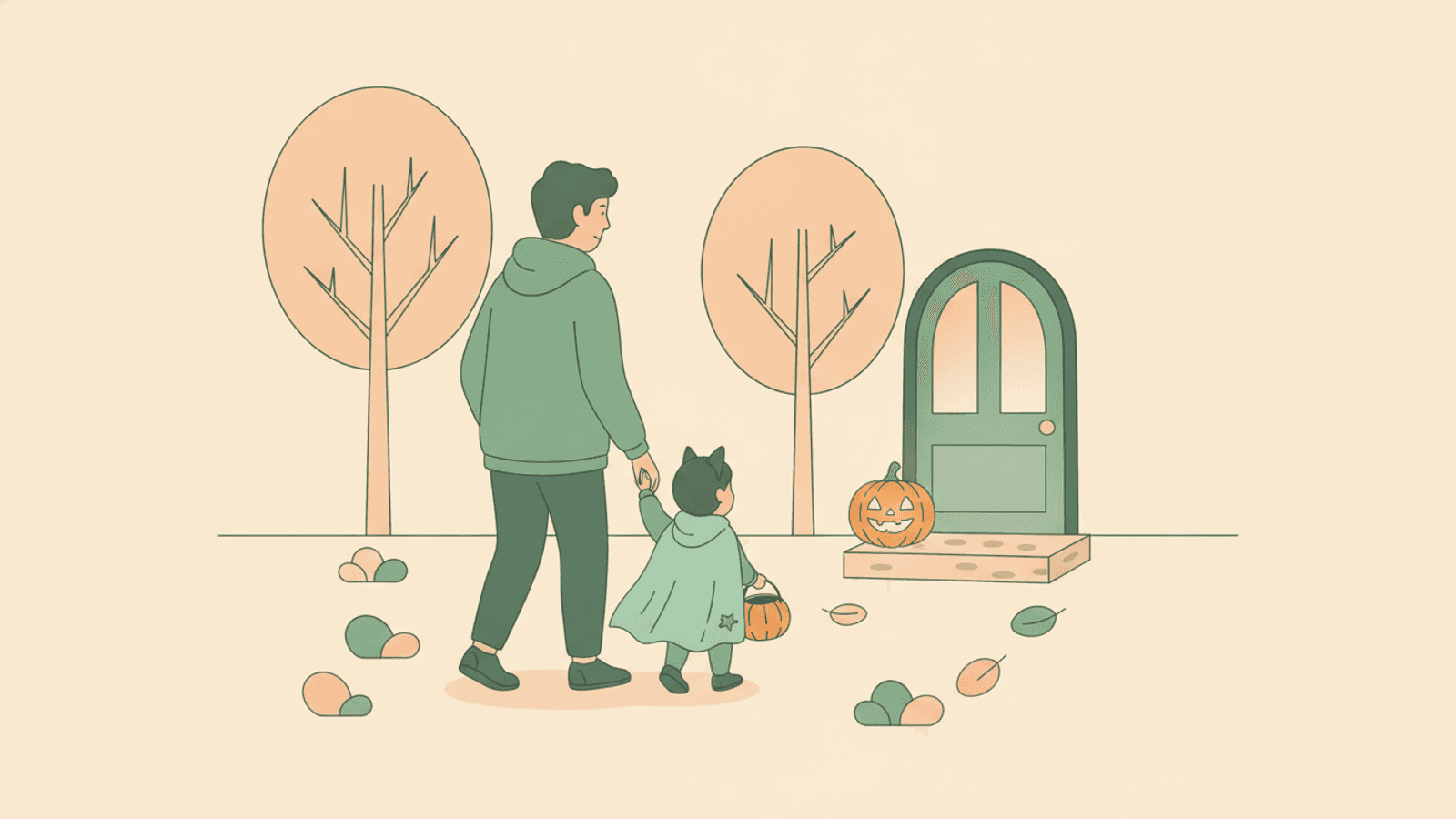
Halloween with a sensory-sensitive child works far better when you plan a smaller version of it on purpose. The costume comes first and has to be comfortable rather than impressive, the route is short and rehearsed in daylight, and you agree the way out before you leave the house. Twenty good minutes is a successful Halloween. Two hours that end in a meltdown on a dark pavement is not.
It helps to see the evening for what it actually is: unfamiliar clothing worn for hours, masks that block vision and touch the face, doorbells, strangers, shouting, darkness, sugar and a late bedtime, all in one go. Almost every element on that list is something you would normally introduce carefully and one at a time.
Why Halloween is hard for some children
- The costume. Stiff fabric, seams, hoods, elastic, face paint and masks are a lot of new sensation at once.
- The dark. Nordic late October is properly dark by five, which changes how familiar streets feel.
- Unpredictability. You do not know who opens the door, what they say, or whether the house has decorations that frighten.
- The social script. Ringing a bell, saying a line to a stranger and then leaving is a lot of steps for a child who finds social sequences hard.
- The crowd. Other children shouting, running and being much more excitable than usual.
- The sugar and the late night. Both make regulation harder just as the evening peaks.
Start with the costume, weeks before
Comfort beats concept every time. The best costume is the one still on at eight o’clock.
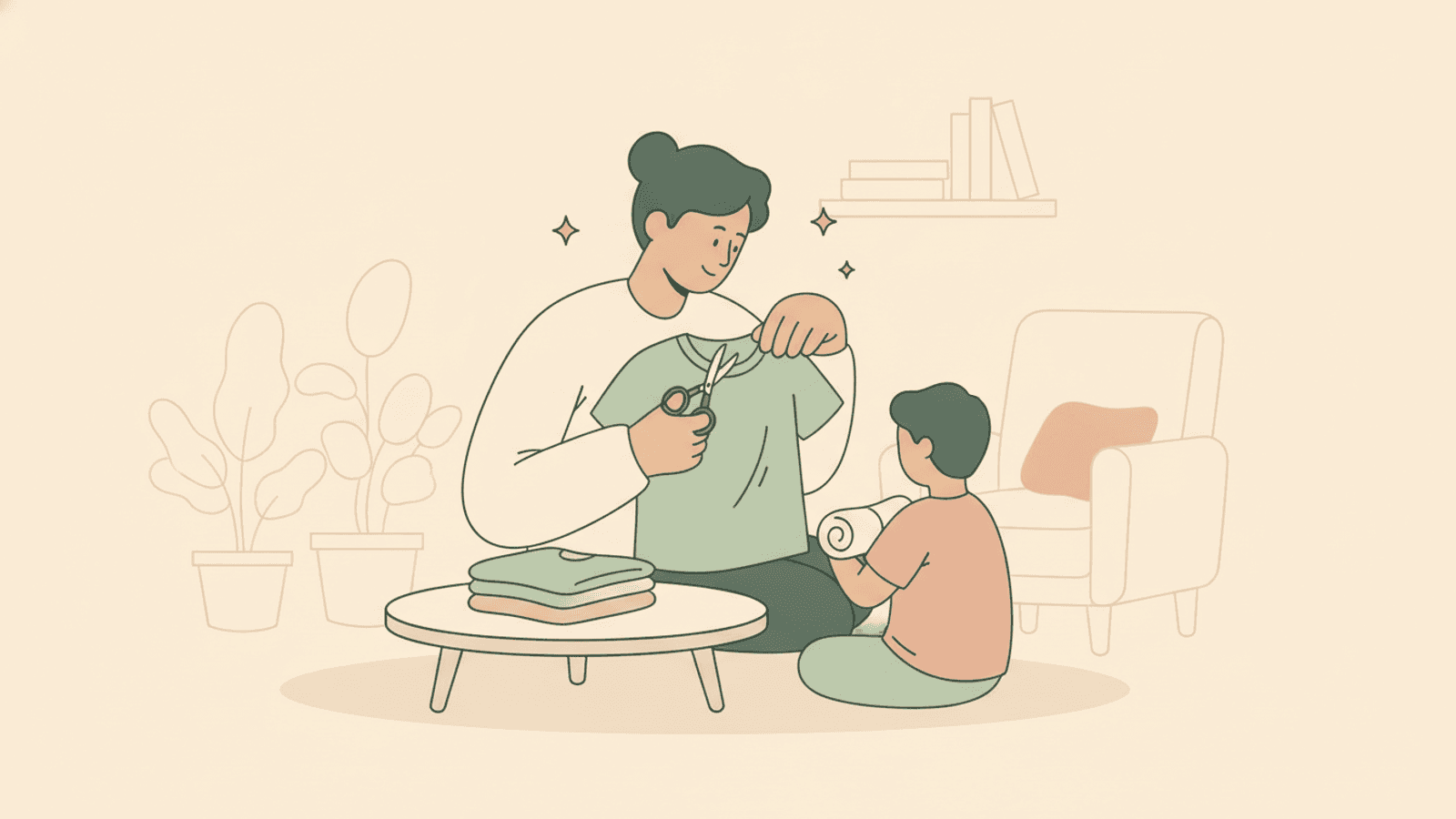
- Build it on clothes your child already wears, and add one recognisable accessory: a cape over a familiar hoodie, ears on a headband they can take off, a tail pinned to their own trousers.
- No mask. Masks block peripheral vision, get hot and press on the face. If a face is essential, use a hat or hood instead.
- Test face paint on the arm days before, and be ready to skip it entirely.
- Cut out labels, turn seams outward if that helps, and let your child wear the costume around the house three or four times first.
- Layer for the cold: in the Nordics the coat goes over the costume, so build a costume that survives a jacket.
If clothing is a daily battle rather than a Halloween one, the underlying problem is worth its own approach: see clothing sensitivity, seams and tags.
Decide the format, and make it small
You are not obliged to do the standard version. Pick one of these and commit to it.
- Five houses. One street, people you know, home in twenty minutes.
- Stay in and hand out sweets. Many children who cannot cope with going out love answering the door, and it is the same festival from the safe side.
- Daylight version. Go at four when it is still light, before the older children come out.
- A party of three. One friend, your own kitchen, familiar food, no doorbells at all.
- Watch from the window. For a child who is frightened rather than reluctant, watching is a legitimate way to take part.
Rehearse it before the night
Walk the actual route in daylight a few days before and point at the houses you will visit. Practise the doorstep sequence at home: ring, wait, say the line, hold out the bag, say thank you, walk away. Three run-throughs turn an unpredictable social event into a script, which is exactly what a social story is for.
Show the plan visually rather than describing it. A short sequence of pictures — get dressed, walk to the corner, five houses, home, one sweet, bath, bed — tells a child how long the evening is and where it ends. In Routined you can build that as a routine with a picture and a timer on each step, and put the evening itself in the calendar as a one-off event that your child can see, with a reminder before it starts.
Plan the exit before you leave
Every good Halloween plan has an ending built into it. Agree it out loud while everyone is calm.
- A time you go home regardless of how it is going, and say it before you set off.
- A word or signal your child can use that means "I have had enough", with a promise that it always works, immediately and without discussion.
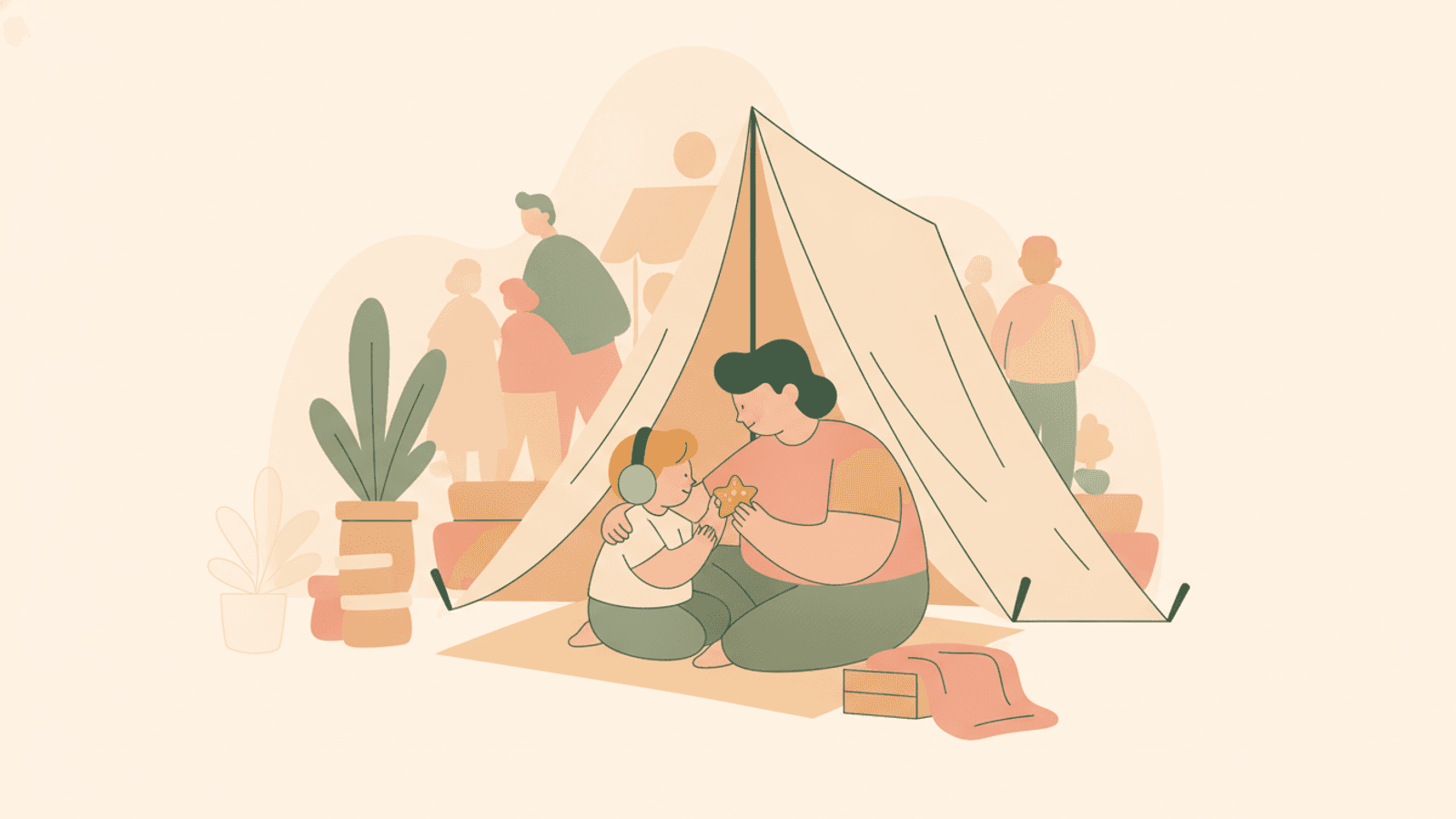
- A bag with ear defenders, water, a familiar snack and a torch your child can hold.
- A parked car or a home you can reach in five minutes.
- One adult per child if you can manage it, so leaving early does not spoil it for a sibling.
Sweets, without the fight at eight o’clock
Decide the sweet rule before the first doorbell, and say it in the same sentence every time it comes up. Something like: choose three tonight, the rest goes in the tin and we have some each day this week. Fighting about it at the end of an overstimulating evening, when everyone is tired, is a fight nobody wins. If your child struggles with the wait, let them pick the three at the first house rather than at the end.
If your child is frightened rather than reluctant
Under about five, many children cannot reliably tell a costume from a real transformation, so a masked adult at the door is genuinely alarming. Take it seriously rather than talking them out of it. Show the mask off the face first, let them see a familiar person put it on and take it off, avoid the houses with heavy decorations, and give them the option of watching from the window. Fear at this age passes with time and exposure on their terms, not with persuasion.
The night after
Expect a late bedtime, a sugar-heavy evening and a tired child the next day, and plan for it: keep the following morning as light as possible, protect the usual wake-up time, and go back to the ordinary routine immediately. In the Nordics, Halloween falls close to the clock change and the All Saints’ weekend, so two disruptions can land in the same week. If you can, do not stack them.
The general approach to big, loud, unpredictable outings applies here too, and it is covered in more depth in sensory overload on outings and in the guide to visual support.
A short checklist
- Costume chosen and worn at home at least three times.
- Route walked in daylight and the doorstep script rehearsed.
- Format agreed: how many houses, and what time you go home.
- Exit signal agreed, and the bag packed.
- Sweet rule decided and said out loud before you leave.
- Tomorrow morning kept easy.
Read more
- Clothing sensitivity: seams and tags — the everyday version of the costume problem.
- Sensory overload on outings — crowds, noise and how to leave early well.
- Social stories — how to write one for an event like this.
Frequently asked questions
How do I find a costume my sensory-sensitive child will actually wear?
Build it on clothes they already like. Add one recognisable accessory rather than a whole outfit, skip masks entirely, cut out labels, and let them wear it around the house several times before the night. If it is not comfortable in the living room, it will not survive a cold street.
My child wants to go but panics at the door. What can I do?
Rehearse the doorstep sequence at home until it is a script, start with houses where you know the people, and let your child hold the bag while you say the line the first few times. Standing slightly back and watching is a legitimate way to take part.
How much candy is reasonable?
Decide before the first doorbell and say the rule the same way every time it comes up, for example three tonight and the rest saved for the week. The point is not the number, it is that the decision was made before anyone was overtired.
Should we just skip Halloween?
Not necessarily, but you can shrink it. Handing out sweets at home, going out at four in daylight, or visiting five houses on one street all count. A short, positive experience this year usually makes next year easier, which a long, overwhelming one does not.
My child is frightened of Halloween. How do I help?
Under about five, children often cannot separate a costume from a real change, so masks are genuinely scary. Show masks off the face, let a familiar person put one on and take it off, avoid heavily decorated houses, and offer watching from the window. Do not argue them out of the fear; give them a version they can control.