My Child Hits: Why It Happens and What Actually Stops It
Hitting almost never means what parents fear it means. Here is what is actually going on, and the three-part response that works.
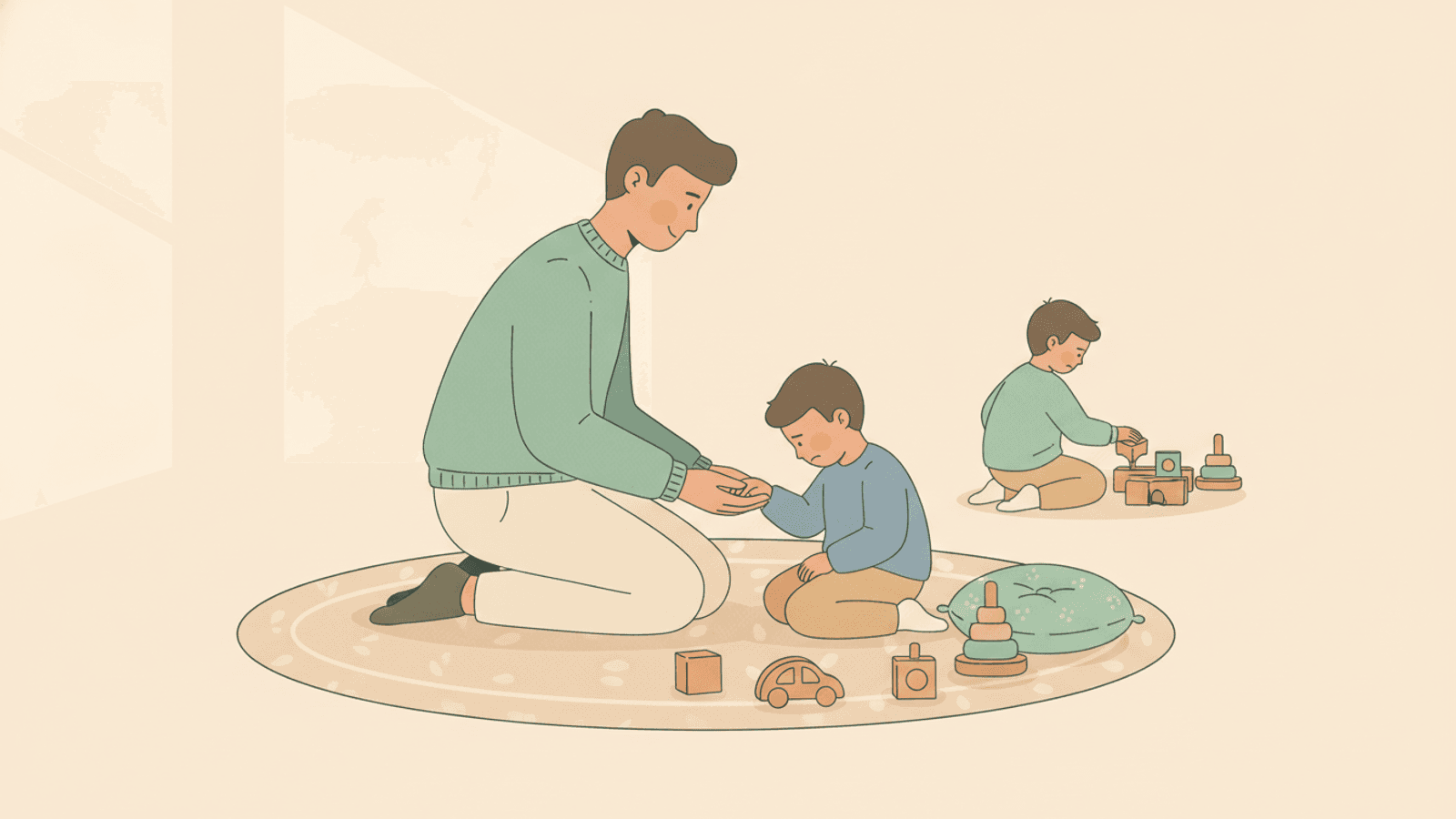
When a child hits, it is nearly always a skills gap rather than a character problem. The feeling arrived faster than the words, and the body did something. The response that works has three parts in this order: stop it calmly, help the child settle, then teach the replacement. Punishment sits outside that sequence and tends to add shame without adding a skill.
Hitting is most common between about eighteen months and four years, when feelings are big and language is small. It also shows up later at moments of overload, in tired weeks, and around transitions. In most families it fades once the child has something else that works, which is the whole job: give them a better tool, and practise it when nobody is angry.
Why children hit
It helps to know which of these you are dealing with, because the fix differs.
- No words fast enough. The most common reason under four. The feeling outruns the vocabulary.
- Overload. Noise, hunger, tiredness, too many people. The hit is the overflow, not a decision.
- It works. Hitting got the toy back, or got a huge reaction. Both are results.
- Testing cause and effect. Very young children genuinely experiment: what happens if I do this?
- Sensory seeking. Some children need strong physical input and find it in crashing, squeezing and hitting.
- Copying. From an older sibling, a screen, or from adults who grab or smack when stressed.
What to do in the moment
Keep it short and physical rather than verbal. A child who has just hit is not in a state to absorb an explanation.
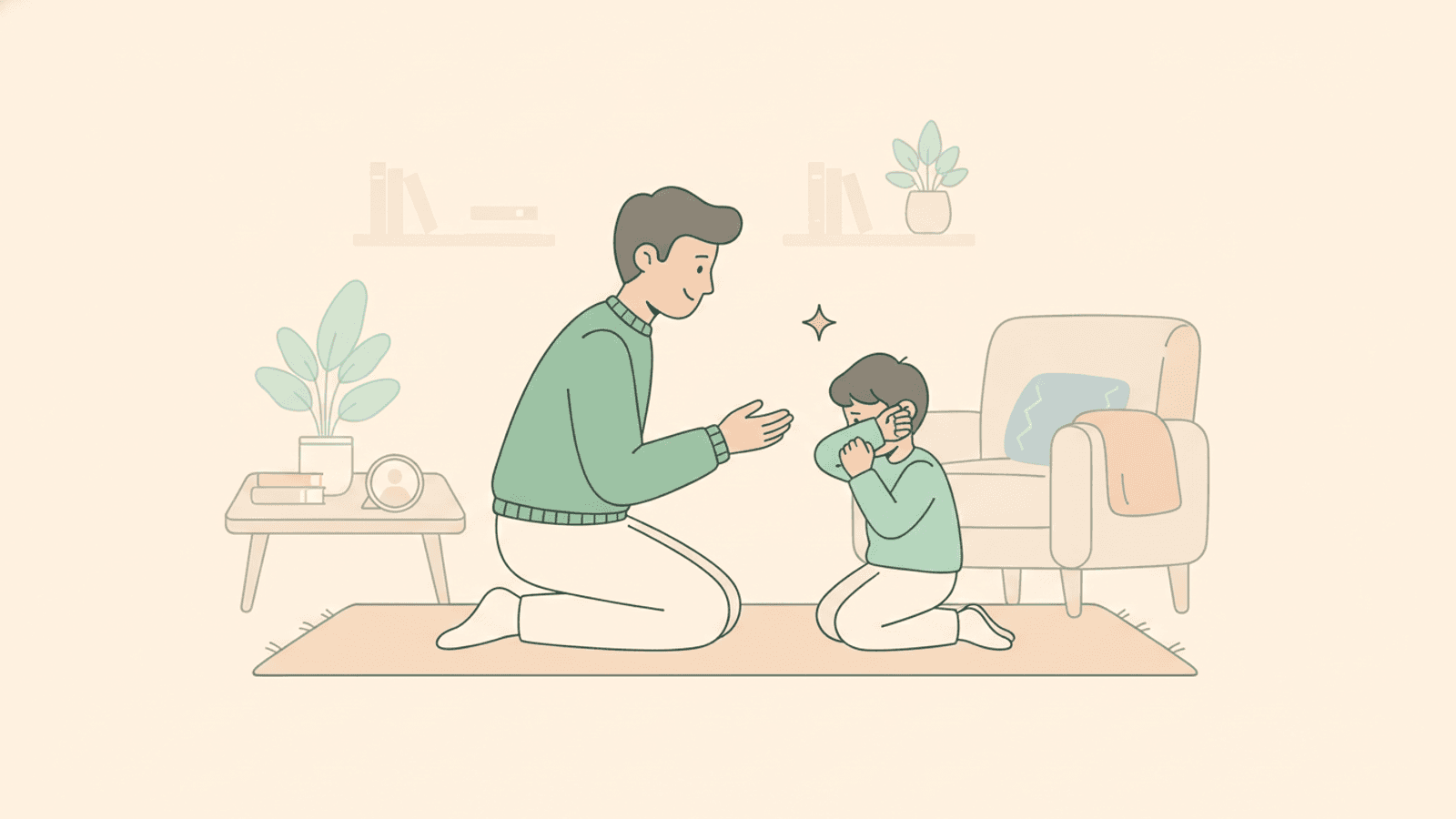
- 1. Stop it with your body, calmly. Block or gently hold the hand: "I will not let you hit."
- 2. Separate. Move your child or the other person a metre or two apart. Not as punishment, as safety.
- 3. Attend to the person who was hit. Briefly and warmly. It shows what matters without lecturing.
- 4. Use one short sentence. "Hitting hurts. You can say stop." Five words are more useful than fifty.
- 5. Stay close and wait. Once your child is calm, and only then, name what happened and what to do next time.
If your child is fully melted down rather than momentarily angry, the priority is bringing the arousal down first: see helping your child manage anger.
What not to do
- Do not hit back to "show how it feels". It teaches that hitting is what big people do when they are angry, which is the opposite lesson.
- Do not lecture in the moment. Nothing lands while the thinking brain is offline.
- Do not ask "why did you do that?". Small children genuinely do not know, and the question invites a lie.
- Do not force an immediate apology. A coerced sorry teaches performance. Repair later, when they mean it.
- Do not shame. "Naughty boy" attaches the behaviour to identity, and children live up to labels.
Teach the replacement, when everyone is calm
You cannot remove a behaviour without putting something in its place. Pick one alternative, name it, and practise it as a game at a neutral moment.
- "Hands down" as a physical instruction, practised until it is automatic.
- A word to use instead: "stop", "mine", "I need help". One word beats a sentence under pressure.
- Something to do with the body: stamp twice, squeeze a cushion, push against the wall, come and find an adult.
- A signal for "I need to leave this room", which is often the real need.
Practise for two minutes at a calm moment, several times a week. This is the same skill-building approach as in the emotion regulation toolkit, and it works because rehearsal is what makes a new response available under pressure.
Find the pattern
For one week, note only four things each time it happens: the time, where you were, who was there, and what happened immediately before. Almost every family finds a pattern within a week: the hour before dinner, the handover at pickup, the sibling who takes things, the last twenty minutes of a play date.
Then change the condition rather than the child. An earlier snack, a shorter play date, one adult per child at the difficult hour, or a predictable order to the afternoon so there is less to fight about. Structure removes more hitting than consequences do.
When your child hits you
Being hit by your own child is upsetting in a way that is hard to admit, and it is very common. Two things matter. First, be boringly consistent: block, say the one sentence, move slightly away. Second, do not let it become a relationship story. Your child is not rejecting you; they are overwhelmed and you are the safest person in the room to fall apart at.
If you notice yourself getting close to your own limit, hand over if there is another adult, or step back for twenty seconds. A parent who has stepped away for a moment is far better for the situation than one who is holding on and escalating.
When siblings are the target
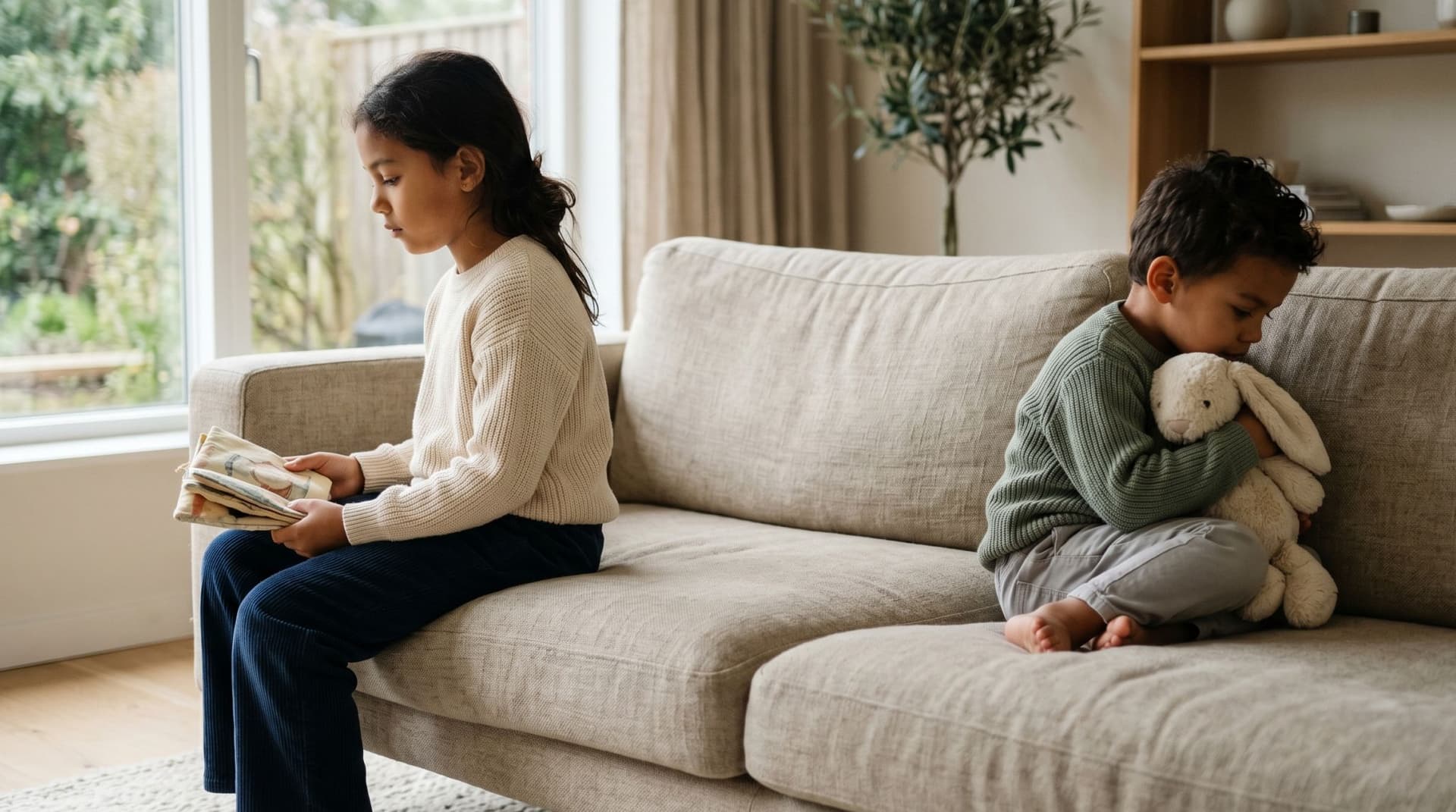
Hitting between siblings usually has a trigger you can design around: the same toy, the same time of day, the same imbalance in size or skill. Separate first, deal with the hurt child, and coach both of them later. Standing rules that everyone knows in advance work better than adjudicating each incident, and sibling fights has the practical version of this.
If it is happening at preschool or school
Ask for specifics rather than a summary: what time of day, which activities, what happened immediately before, and what the staff do afterwards. Then align. A child who gets one response at home and a different one at preschool takes far longer to learn the new skill. Agree on the same short sentence and the same replacement behaviour in both places.
Hitting and neurodivergence
Children with ADHD or autism are not more aggressive by nature, but they hit reactively more often for reasons that make sense: a shorter fuse for sensory and social load, slower recovery afterwards, and sometimes a real gap between what they understand and what they can say under pressure. The most effective changes are usually environmental — lower the load, warn about transitions, make the day predictable and visual — which is what visual support is for.
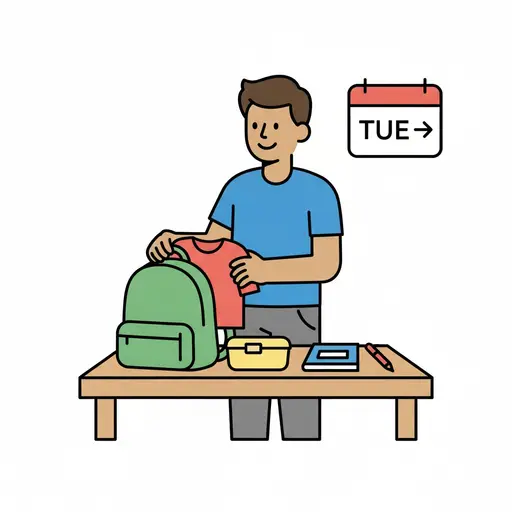
This is the practical piece Routined handles: the day as visible steps with a picture and a timer on each one, so there are fewer surprises to react to and fewer moments where your child is asked to switch tasks without warning.
When to ask for help
Speak to your child health service, doctor or the preschool special needs coordinator if hitting is still frequent after about five or six years of age, if it causes real injuries, if it appears suddenly in a child who was not doing it, if it seems planned and cold rather than reactive, or if you are frightened. Asking early is easier than asking late. This article is general information, not medical advice.
What actually works, over weeks
- The same short response every time, from every adult.
- One clear replacement skill, rehearsed when calm.
- A change to the condition that keeps producing the incident.
- Attention and warmth given generously outside the incidents, not as a reward for not hitting.
- Patience with the timeline: most children need weeks, not days.
Read more
- Helping your child manage anger — the feeling underneath the behaviour.
- A toolkit for emotion regulation — the skills to practise between incidents.
- Sibling fights — when the person being hit lives in the same house.
Frequently asked questions
Why does my toddler hit?
Usually because the feeling arrives faster than the words. Between about eighteen months and four years, children have strong emotions and very little language, so the body acts first. Tiredness, hunger, noise and having something taken away are the most common triggers.
Should I punish my child for hitting?
Punishment stops the moment but does not teach the missing skill, and shame tends to make children hide the behaviour rather than change it. Stop the hitting calmly, look after the person who was hurt, and teach a specific replacement when everyone is calm. Consistency does more than severity.
My child hits me. What should I do?
Block the hand and say one short sentence: "I will not let you hit." Move slightly away, stay nearby, and wait until your child is calm before talking about it. If you are close to your own limit, hand over to another adult or step back for twenty seconds.
Is it normal, and when does it stop?
It is very common in toddlers and most children grow out of it as language and self-control develop, usually well before school age, provided they are taught an alternative. Hitting that is still frequent at five or six is worth discussing with your child health service.
When should I seek help?
If it causes real injuries, if it starts suddenly in a child who did not do it before, if it continues frequently past about age five or six, if it seems cold and planned rather than reactive, or if you feel frightened or out of your depth. Start with your child health service, doctor or the preschool.