Letting Your Child Do Hard Things Themselves
Rescuing your child from every struggle feels loving, but stepping back is often what builds real competence. Here is how to let your child do hard things without leaving them stranded.
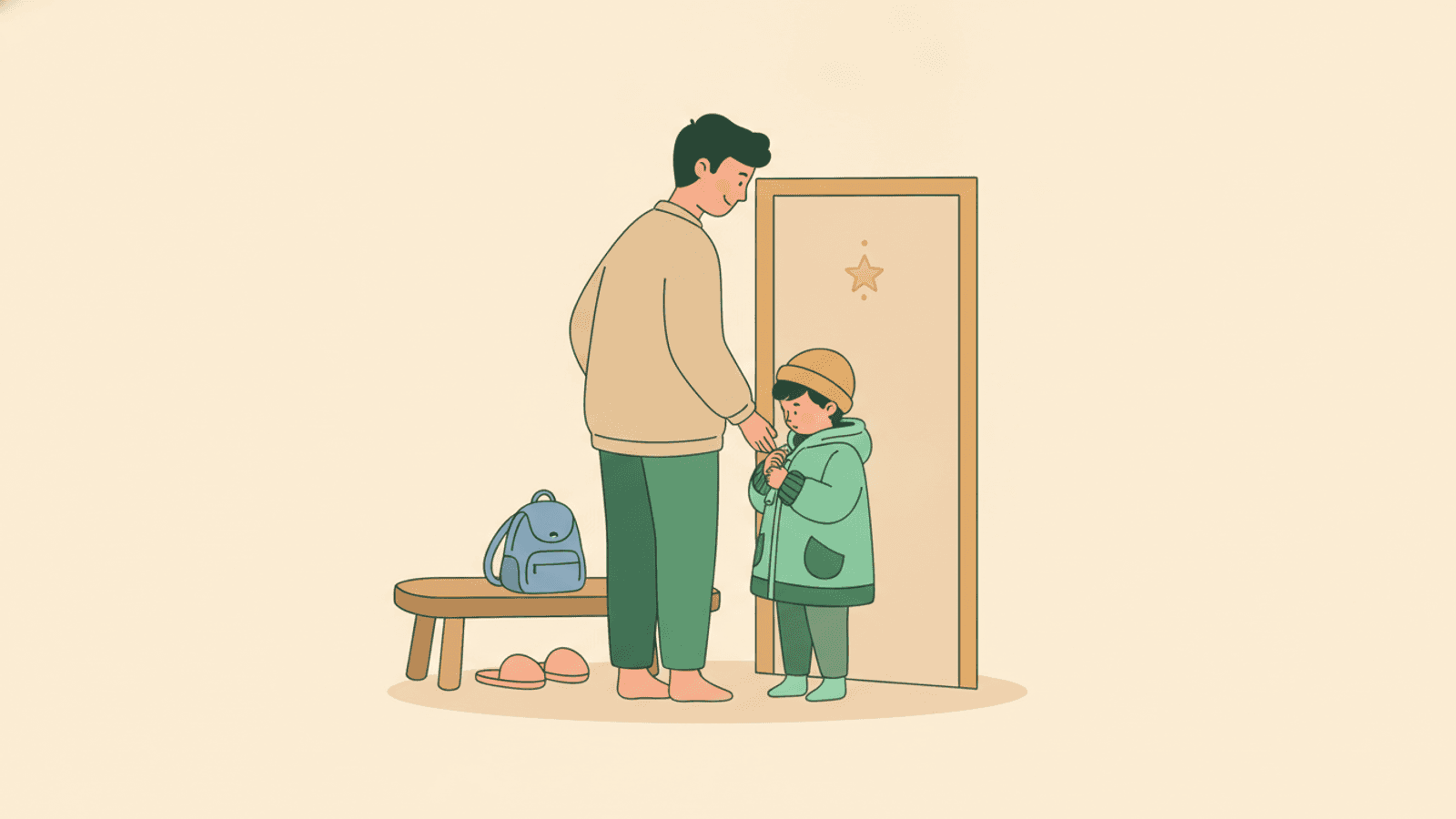
Letting your child do hard things means allowing them to attempt tasks that feel just beyond their current reach, and holding back from taking over the moment it gets difficult. It is the small, deliberate act of letting them wobble, fumble and problem-solve while you stay close but keep your hands to yourself. This kind of productive struggle is one of the most powerful ways children build genuine competence and confidence.
It rarely feels natural. When your child is straining with a stiff zip or staring at a maths problem that is clearly frustrating them, every instinct says to swoop in. But rescuing too quickly sends a quiet message: this is too hard for you, so I will do it. Stepping back, done well, says the opposite.
Why the urge to rescue is so strong
The pull to hover and fix is not a character flaw. It comes from love, and often from your own discomfort. Watching your child struggle activates a real sense of urgency, and helping resolves that discomfort instantly, for you.
There is also time pressure. It is faster to tie the shoelaces yourself, faster to pack the bag, faster to answer the question. In the moment, rescuing is efficient. Over months and years, it quietly teaches dependence.
Naming the urge helps you resist it. When you feel that itch to intervene, pause and ask: is my child actually stuck, or am I just uncomfortable watching them work?
Why letting your child do hard things builds competence
Confidence is not something you can hand a child with encouragement alone. It grows from evidence. Every time a child manages something they thought was too hard, they collect proof that effort pays off and that they are capable.
Struggle is where learning actually happens. Working through the tricky middle part of a task, the bit where it would be easy to give up, builds problem-solving skills, persistence and a tolerance for frustration that will serve your child for life.
When you consistently remove the challenge, you also remove the reward. A child who is always rescued never gets to feel the specific pride of having done it themselves.
The difference between struggle and real distress
Stepping back does not mean abandoning your child to misery. The skill is telling the difference between productive struggle and genuine distress, and they look different.
Productive struggle usually looks like a frustrated but engaged child: frowning, trying again, muttering, experimenting. They are working the problem. Real distress looks like escalation without progress: tears that keep rising, panic, complete shutdown, or a child who has stopped trying altogether.
- Signs of productive struggle: focused frustration, trial and error, occasional grumbling, still attempting.
- Signs of real distress: rising panic, tears that do not settle, freezing or shutting down, aggression, or giving up completely.
Productive struggle is the zone you want to protect. Real distress is your cue to move closer and help. The goal is never suffering for its own sake; it is a manageable challenge with you as a safety net.
How to step back without stepping away
Being present while your child struggles is an active skill. Here are three habits that make it easier.
Wait longer than feels comfortable
Most of us jump in within a few seconds. Try counting slowly to ten before you say or do anything. That short silence gives your child room to think, try a different approach, or ask for help on their own terms.
Offer the least help needed
When help is genuinely warranted, give the smallest amount that keeps them moving. Start with a warm look or a nod. Then a question: what could you try next? Then a hint. Only take over fully as a last resort. Each rung down this ladder keeps more of the work, and the win, with your child.
Resist fixing the small imperfections
If the bed is made unevenly or the toast has crumbs everywhere, leave it. Redoing your child's work, even silently, tells them their effort was not good enough. A slightly wonky result they own beats a perfect one you took over.
Praise the effort, not just the outcome
What you praise is what your child learns to value. If you only celebrate the finished, perfect result, they learn that outcomes matter more than trying. Instead, notice the process.
- "You kept going even when that was really tricky."
- "I saw you try three different ways to make that work."
- "You did that whole thing by yourself."
Praising effort and strategy builds a child who is willing to attempt hard things, because their sense of worth is not riding on getting it right first time.
Tolerate mess and slowness
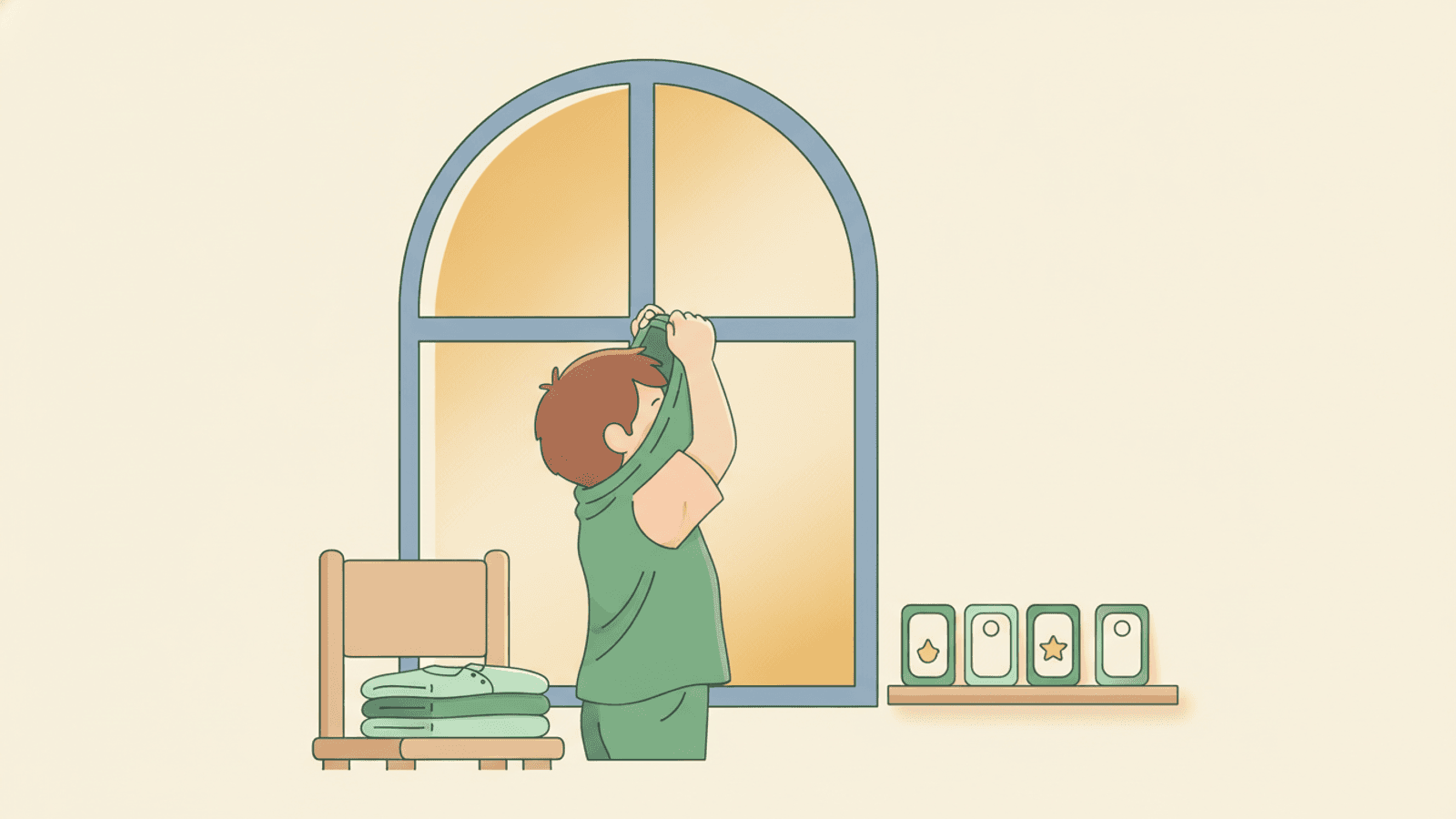
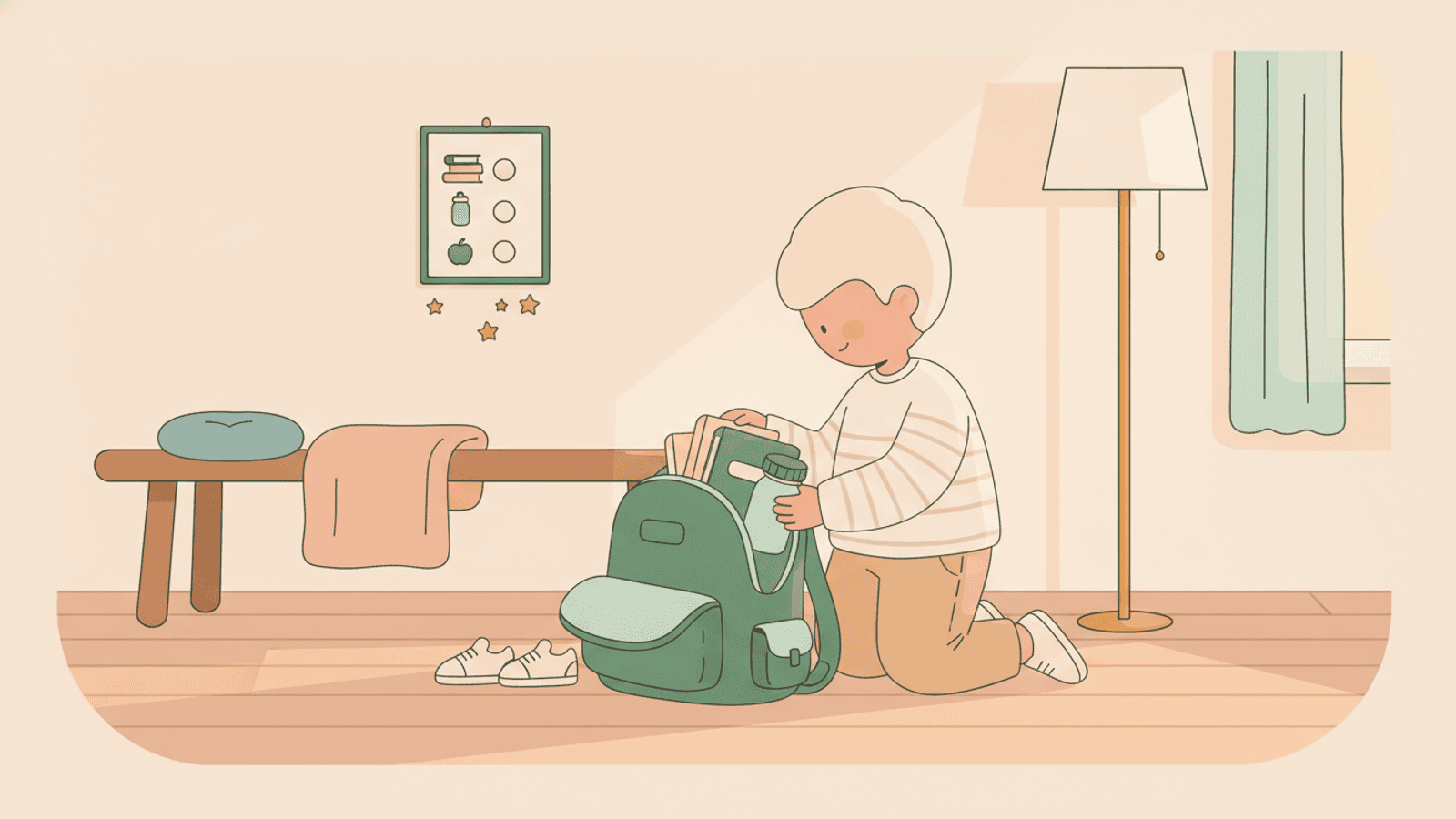
Children learning to do things themselves are slow and messy, and that is exactly what learning looks like. The spilled cereal, the ten-minute struggle with buttons, the school bag packed in a strange order, these are not failures. They are practice.
Where you can, build in extra time so independence does not collide with a rushed morning. A task done slowly by your child is worth far more than the same task done quickly by you.
When to step in
Stepping back is not the same as being absent, and there are clear moments to move in. Step in when there is a genuine safety risk, when your child has tipped from struggle into real distress, or when they have genuinely exhausted their strategies and are asking for help.
When you do help, help lightly. Solve the one part that is blocking them, then hand the task straight back. The aim is to get them unstuck, not to finish it for them.
Children with ADHD or autism: scaffold, then fade
Some children need much more support to attempt hard things, and children with ADHD or autism often fall into this group. The principle still holds, but the method shifts: you do not remove the challenge, you scaffold it, then gradually fade the support as they grow into it.
Scaffolding might mean breaking a task into visible steps, adding a picture for each stage, giving a clear sense of how long something will take, or standing nearby for reassurance. Crucially, scaffolding is temporary by design. What helps this month can be quietly reduced next month.
This matters because the alternative, doing the hard thing for them permanently, denies these children the same growth every child deserves. Fading support, one small step at a time, is how a child who needed full guidance today becomes one who manages on their own tomorrow.
How Routined helps
Routined is built around this exact idea of scaffolding you can fade. Families can turn a hard task into clear steps, using either a Standard text-and-checkbox view or a Visual Support mode with big picture cards drawn from a built-in library, AI images or your own photos. An optional visual countdown timer and a voice recording per step give extra support that plays automatically when your child opens the step.
As your child grows more capable, you can simplify the routine, remove pictures or drop the prompts, fading the scaffolding rather than the challenge. A mood check before and after, plus optional rewards, help you notice progress and keep the focus on effort.
The takeaway
Letting your child do hard things is one of the most loving things you can do, even though it often feels like the opposite in the moment. Stay close, wait a little longer, offer the least help needed, and protect the productive struggle where real confidence is built. You are not leaving your child to sink; you are teaching them, one wobble at a time, that they can swim.
Read more
Frequently asked questions
What does letting your child do hard things actually mean?
It means letting your child attempt tasks that are just beyond their current ability and holding back from taking over the moment it gets difficult. You stay present and supportive, but you let them do the thinking and problem-solving so they build real competence.
Isn't letting my child struggle just cruel?
No, as long as it is productive struggle rather than real distress. Productive struggle looks like a frustrated but engaged child who is still trying. If they tip into panic, tears that will not settle or complete shutdown, that is your cue to step in and help.
How do I know when to step in and help?
Step in when there is a safety risk, when your child has moved from struggle into genuine distress, or when they have truly run out of strategies and are asking for help. When you do help, offer the smallest amount needed and then hand the task straight back.
How is this different for children with ADHD or autism?
The principle is the same, but these children usually need more scaffolding to attempt hard things. Instead of removing the challenge, you add support such as visual steps, timers or reassurance, then gradually fade that support as your child grows more capable.
What should I praise if my child's result isn't perfect?
Praise the effort and the strategy rather than the finished result. Comments like "you kept going even when that was tricky" or "you did that whole thing yourself" teach your child that trying matters more than getting it right first time.