Parent Burnout When Raising a Neurodivergent Child: Signs and What Actually Helps
Parent burnout is chronic depletion, not a character flaw. Here is how it looks in families with ADHD or autism, the warning signs worth taking seriously, and what genuinely reduces the load.
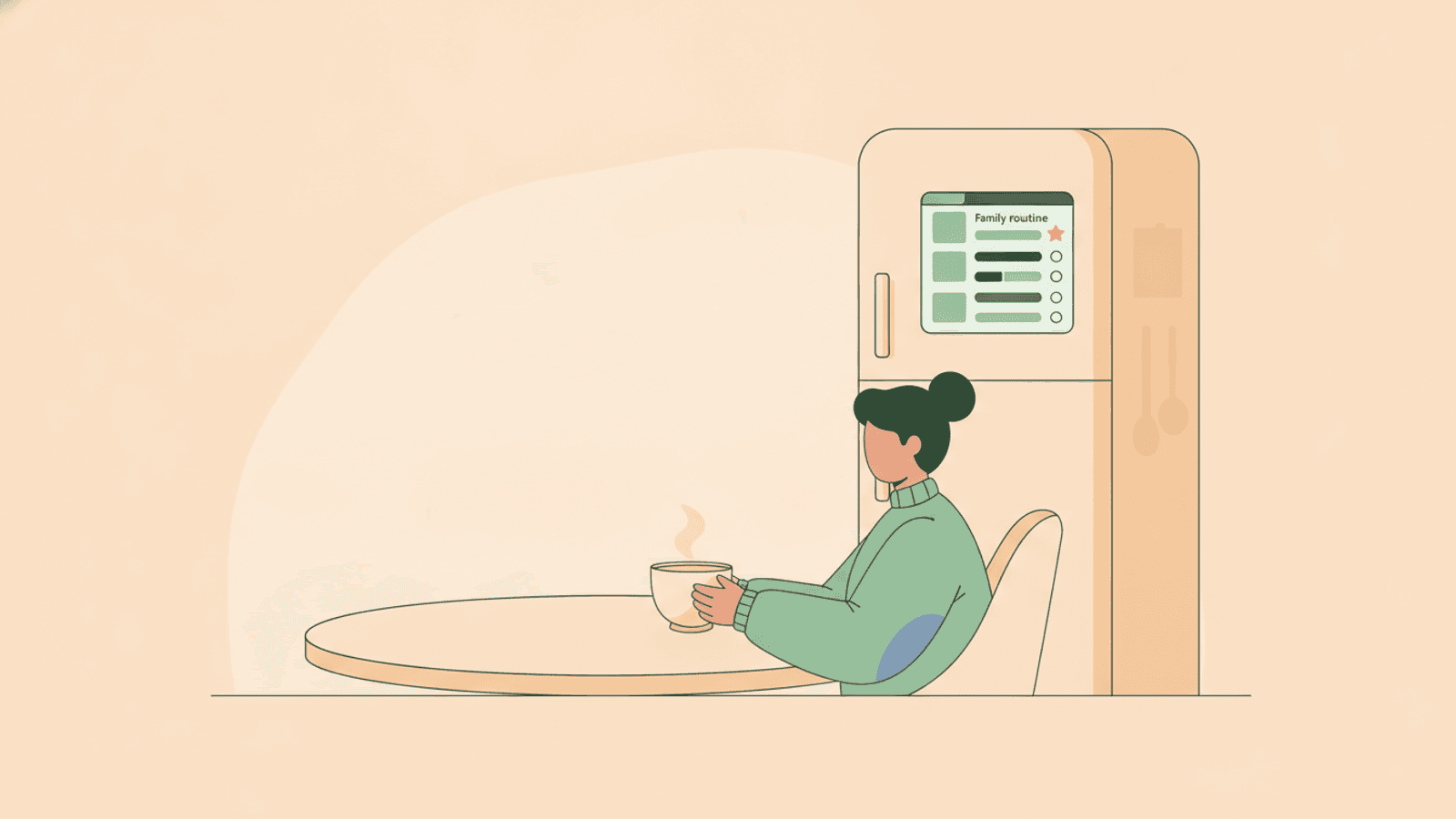
Parent burnout is a state of chronic depletion that builds up when the demands of caring for your child stay higher than your capacity to recover, month after month. In families raising a child with ADHD or autism it is common, and it is not a sign that you are failing, that you are weak, or that you love your child less. It is a load problem, not a character problem.
If you have started dreading mornings, snapping in a way that frightens you, or feeling strangely flat around a child you adore, you are not reading the signs wrong. That is what this looks like.
What is parent burnout?
Parent burnout, sometimes called parental burnout, describes three things happening together: overwhelming exhaustion tied specifically to your parenting role, a growing emotional distance from your child, and a sense that you are no longer the parent you used to be. Researchers treat it as distinct from general depression, although the two can overlap and often do.
The clearest difference from ordinary tiredness is recovery. Ordinary tiredness lifts after a long sleep, a quiet weekend, or a week off. Burnout does not. You wake up already empty, and a good day does not refill the tank, because the demand never actually paused.
Why parent burnout hits harder in neurodivergent families
The exhaustion in NPF families is not simply more of the same parenting. It has a different shape, and most of it is invisible from the outside.
- Administrative load on top of emotional load: referrals, assessments, school meetings, forms, waiting lists, phone calls that have to be made during your own working hours.
- Advocacy fatigue: explaining, justifying and re-explaining your child's needs to people who each meet them for twenty minutes.
- Constant micro-monitoring: tracking where your child is in a task, how close they are to overload, whether the next transition will land.
- No autopilot: routines other families run on habit have to be actively steered by you, every single time.
- Transitions as flashpoints: getting out the door, ending screen time, bedtime. Several a day, each with real potential to go badly.
- Fewer recovery windows: harder to find childcare, harder to leave your child with someone who understands, harder to say yes to an invitation.
- Judgement from outside: the looks in the supermarket, the relative who is sure it is really about discipline.
Any one of these is manageable. Stacked, running for years, with no defined end date, they produce a kind of tiredness that sleep does not touch.
You are not burnt out because your child is difficult. You are burnt out because you have been doing the work of three support systems on your own.
Warning signs worth taking seriously
Burnout rarely announces itself. It shows up as small changes you explain away. These are the ones worth paying attention to.
- Irritability that scares you. Not just being short-tempered, but reactions that feel bigger than you, followed by shame.
- Emotional flatness. You go through the motions of care but feel very little while doing it.
- Dreading mornings, or dreading pick-up time, before anything has even gone wrong.
- Losing joy in your child. You can still list what you love about them, but you cannot feel it.
- Escape fantasies: driving past the turning, being signed off sick, anything that would make it stop legitimately.
- Physical signals: recurring headaches, stomach problems, infections that keep coming back, waking at four in the morning.
- Hiding. Turning down help, not answering messages, not telling anyone how bad it has become.
This is general information, not a diagnosis. If several of these have been true for more than a couple of weeks, or if you ever have thoughts of harming yourself or your child, that is a signal to contact your doctor or a mental health service now rather than later. Telling a professional is not a report on your parenting. It is how the load gets reduced.
Why standard self-care advice usually fails here
Most advice assumes exhaustion is a shortage of rest, so it prescribes rest: a bath, a walk, an early night. In NPF families the problem is usually a surplus of demand instead, and rest that leaves the demand untouched simply moves it to tomorrow.
Worse, self-care advice quietly adds a task. Now you have to schedule the yoga, feel guilty about skipping it, and manage the disappointment when fifteen minutes of walking does not repair a two-year deficit. The useful question is not what can I add for myself. It is what can carry weight instead of me.
What actually reduces the load
Externalise the structure
The heaviest and least visible job in an NPF family is being the reminder. You hold every step of every routine in your head and release them one at a time, all day long. Moving that structure out of your head and into something your child can see is the single biggest reduction available to most parents.
It can be a laminated picture sequence on the bathroom door, a whiteboard, or an app. In Routined, each step gets an image, an optional timer and, if you want, a recording of your own voice that plays when your child opens the step, so the routine does the prompting instead of you. The tool is not the point. The point is that when the routine holds the sequence, you stop being the nag, and the same conflict stops happening twice a day.
Have a bad-day version of every routine
Decide in advance, while you are calm, what the minimum acceptable version of the morning looks like. Perhaps: clothes on, something eaten, out the door. Teeth, made bed, packed lunch prepared together, all optional.
Writing it down beforehand matters, because at twenty to eight, exhausted, you cannot make that call fairly. Lowering demands on a bad day is not letting standards slip. It is a planned response to a predictable situation.
Decide what to stop doing
Burnout does not end by becoming more efficient. It ends when something comes off the list. Pick three things this week and actually drop them.
- Activities your child tolerates rather than enjoys, and that you drive to.
- Homework battles you have already lost, at least until you have talked to the school about adjustments.
- Hosting, baking, costumes for theme days: anything performed mainly for other adults.
- Two recurring conflicts that are not about safety. Concede them for a month and see what it buys you.
Protect one recovery window that needs no planning
Not a hobby, not a course, nothing that has to be booked. Twenty minutes that reliably exist, at the same time, most days, where nobody needs anything from you. Predictability is what makes it restorative, not the length.
Asking for help without it feeling like defeat
Vague offers are hard to accept, because accepting them means managing another person. So do not ask for help in general. Ask for one concrete, bounded task.
For example: could you collect her every Thursday at four and keep her until six. Or: could you sit in the school meeting with me and take notes. Specific requests are easier to say yes to, easier to repeat, and they cost you almost no coordination.
If saying it out loud is hard, try the version most people can manage: I am not doing well, and I need this one thing. You do not owe anyone the full picture in order to qualify for help.
Sharing the invisible load between two adults
Where there are two adults, the split is rarely about who does more chores. It is about who holds the mental file: who remembers the appointment exists, who notices the shoes have become too small, who knows which words tip the evening over.
Name those jobs out loud and give each one an owner rather than a helper. Ownership means that person notices, decides and follows up without being asked. Useful ones to divide: healthcare and appointments, school contact, clothes and equipment, birthdays and social life, the morning routine, the bedtime routine.
It also helps enormously if both adults can see the same routine in the same form, so your child gets the same steps regardless of who is on duty, and neither adult has to be briefed first. Consistency lowers your child's stress and removes a translation job from whoever currently carries everything.
When to seek professional support
Consider contacting your doctor, a psychologist or your local health service if the exhaustion has lasted more than a few weeks, if you feel emotionally numb toward your child, if you are struggling to function at work or at home, if alcohol has become part of how you get through evenings, or if you have thoughts of harming yourself. Those are reasons for support, not verdicts on you.
Ask specifically about parental burnout, and about what practical support exists for families with a neurodivergent child where you live: respite care, contact person schemes, carer support, parent groups, adjustments at school. Practical relief usually helps more than advice, and you are allowed to ask for both.
One last thing worth holding on to. Recovering from parent burnout does not require you to become a calmer, more patient person through sheer will. It requires the load to get smaller. Every step you move out of your head and into a system, every task you hand over, every demand you drop on a bad day, is a real repair, even when it feels like giving up.
Read more
Frequently asked questions
What is the difference between parent burnout and normal tiredness?
Normal tiredness lifts after rest: a good night's sleep or a quiet weekend restores you. Parent burnout does not respond to rest, because the demand never pauses. It also includes emotional distance from your child and a feeling that you are no longer the parent you used to be, which ordinary tiredness does not.
Is parent burnout more common when a child has ADHD or autism?
Studies consistently find higher rates of parental exhaustion in families of children with a disability or a neurodevelopmental condition. The load is chronic, largely invisible, and administrative on top of the emotional work, and recovery windows are harder to arrange. It is a response to circumstances, not a reflection of your parenting.
What are the warning signs of parent burnout?
Common signs include irritability that frightens you, emotional flatness toward your child, dreading mornings, losing joy in things you used to enjoy together, fantasies of escaping, and physical symptoms such as headaches, stomach problems or early waking. Withdrawing from friends and refusing help are also typical. If several have lasted more than a couple of weeks, speak to a health professional.
Does self-care help with parent burnout?
Rest alone rarely resolves it, because the core problem is usually too much demand rather than too little rest. What tends to help more is reducing load: moving structure out of your head and into visual routines, lowering demands on bad days, deciding what to stop doing, and getting concrete help with specific tasks.
When should I see a doctor about parent burnout?
Contact your doctor or a mental health service if the exhaustion has lasted more than a few weeks, if you feel numb toward your child, if you cannot function at work or at home, or if you have any thoughts of harming yourself or your child. Seeking help is a way to get the load reduced, not a judgement on you as a parent.