Take a nap
Breaking off a fun game to sleep in the middle of the day can feel deeply unfair, especially when the body is wide awake. A picture showing the play returns afterward makes the shift easier to agree to, so see the steps below.
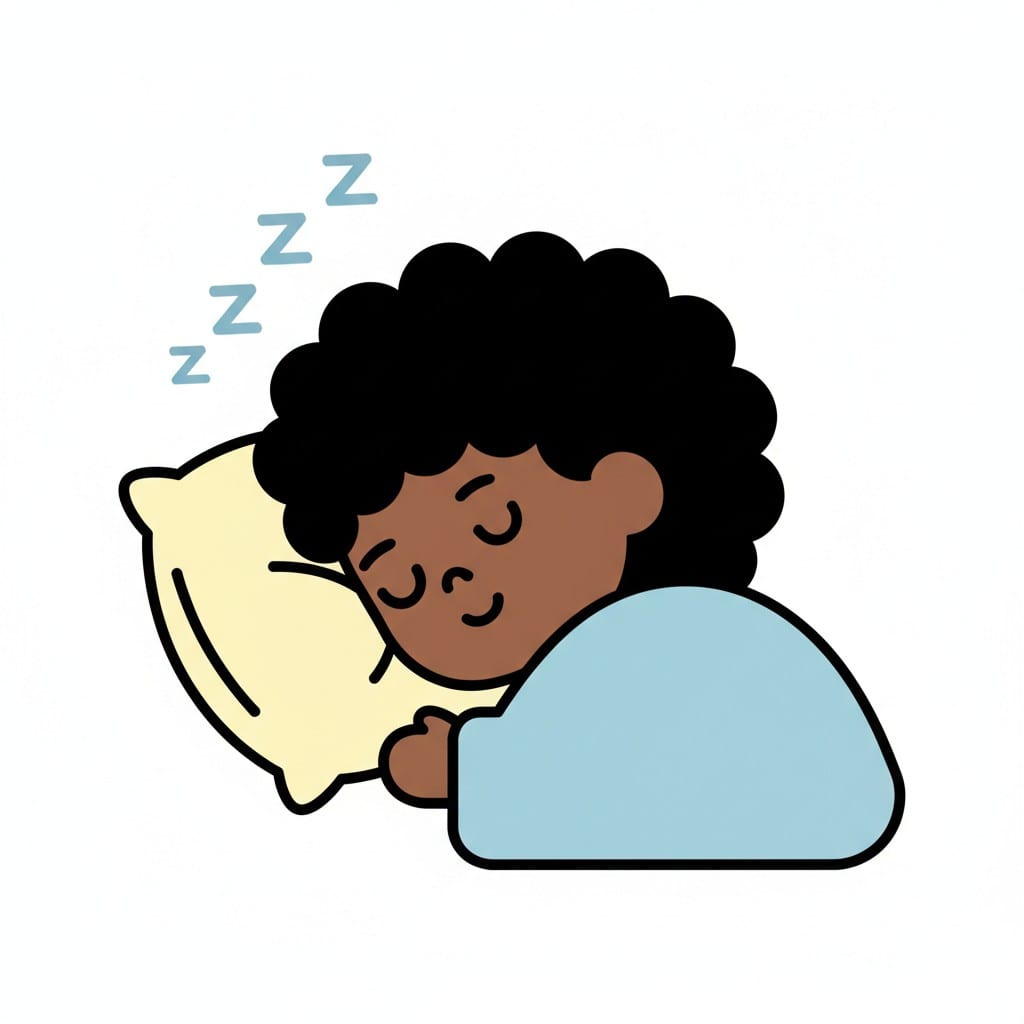 ♀
♀Take a nap
A child sleeps on a pillow under a blanket with zzz symbols showing sleep.
About this visual support
In the middle of the day the body rarely wants to rest. The game is at its best, the light is still strong, and lying down feels both pointless and wrong. For many children it is not the sleeping itself that is hard, but leaving something in progress for a pause they did not ask for and see no point in right then.
Visual support helps by making the transition visible and time-bound. When the pictures show putting the toys aside, drawing the curtain, lying down, and clearly also what comes after the rest, it gets easier to let go of what you were doing. The rest gains a beginning and an end instead of feeling endless, and then it becomes less frightening to enter.
Let the child place a picture of the game they will return to beside the bed, so there is a concrete promise resting nearby. Knowing the play is waiting softens the protest, because the pause becomes a gap and not an ending. In Routined you can place a nap between two activities, so both the rest and what follows show in the same flow and the child sees the whole arc.
This image is part of these ready-made schedules
Use this image in a schedule
Build your own visual schedule with this image and download it as a print-ready PDF. Completely free.

More similar visual supports
Nap in the stroller
A child sleeping inside a red stroller with the yellow sun canopy raised and two...
Stroller nap
A child with brown hair sleeping on a pillow in a blue pram with the canopy rais...
Bedroom
A bedroom scene with a made bed, a bedside table with a lamp, and a window showi...
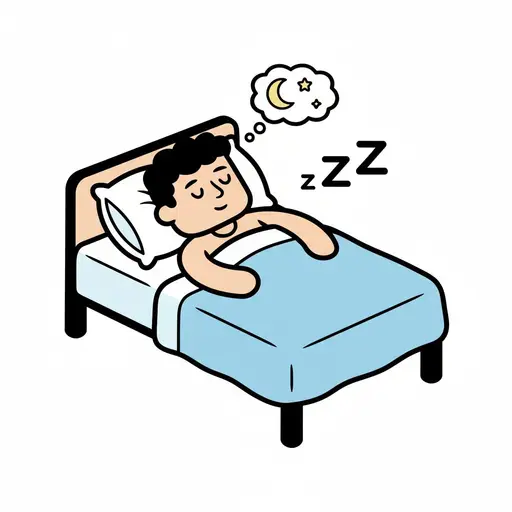
In Bed Quiet Time
A boy lies in a bed under a blue blanket with a thought bubble showing a moon an...
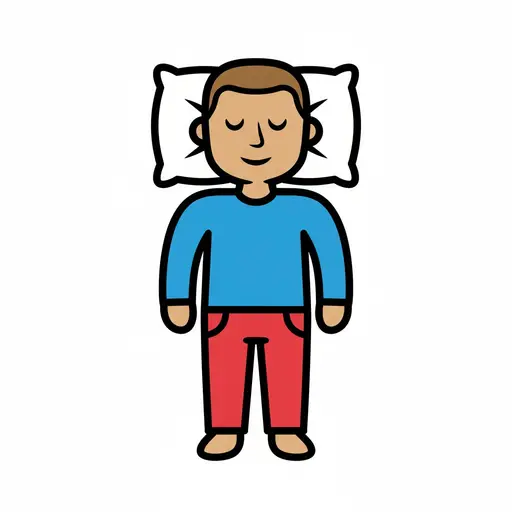
Lie down
A boy is lying down on a pillow with his eyes closed.
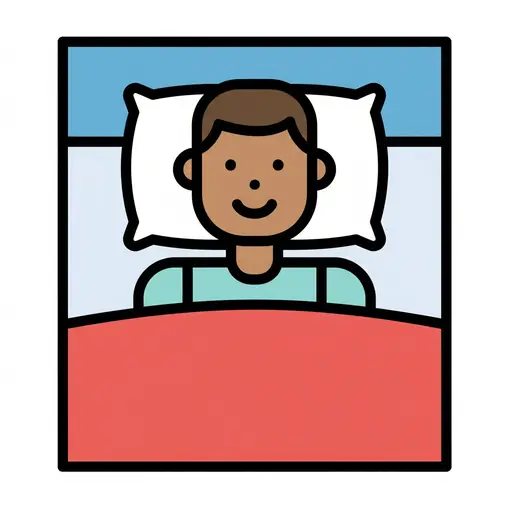
Lie in bed
A boy resting with his head on the pillow in bed.
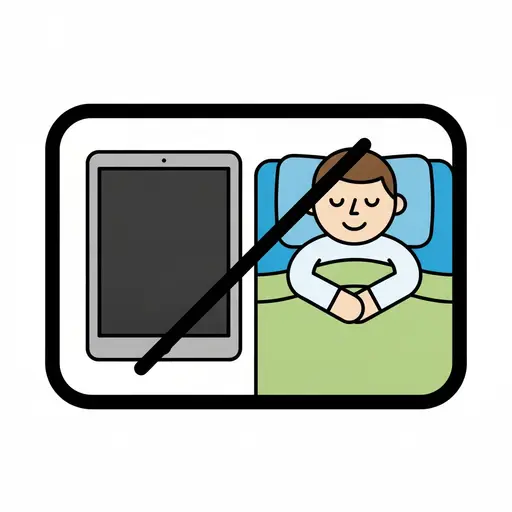
No iPad, Rest
A crossed-out iPad next to a child resting in bed.
Bedtime routine
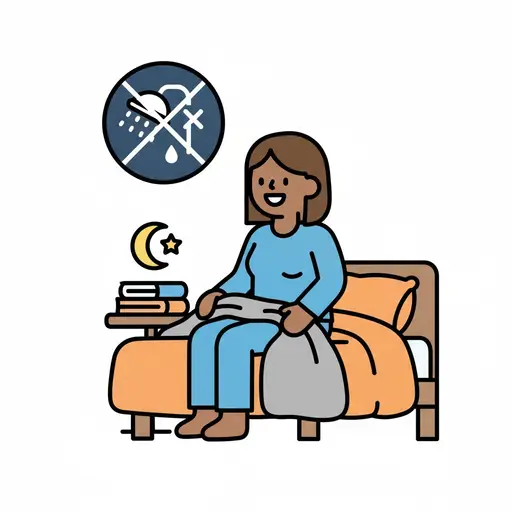
A person sits on the bed with books beside them, with a symbol showing the showe...
Take the visual supports with you
In Routined you build schedules from these pictures, add timers and voice instructions, and your child follows the day on their own.


* 14-day free trial included for new users.