Dinner games
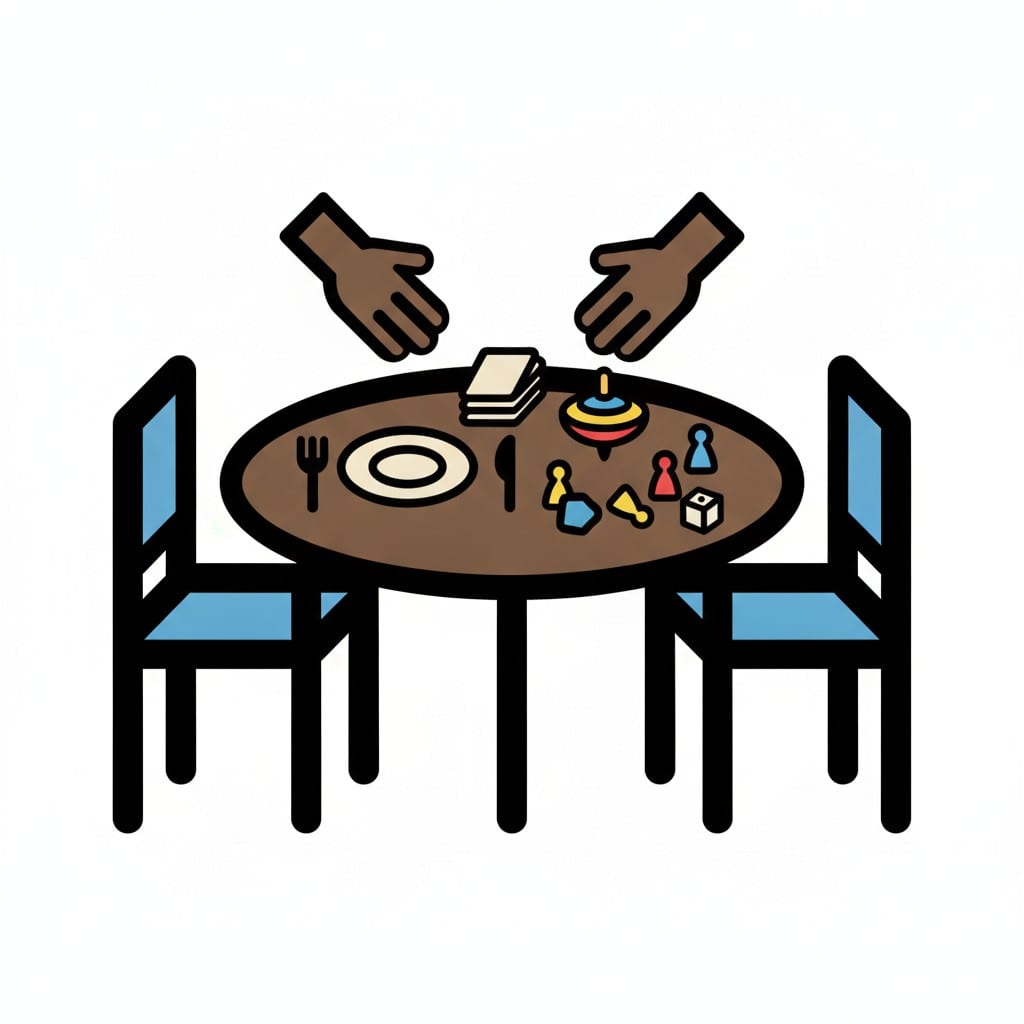
Games at the table make the meal pleasant, but they blend two activities and need clear boundaries for when you eat and when you play. A picture shows both parts and their order. See how the support works below.
 ♀
♀Dinner games
A table with a plate and small game pieces, with hands playing.
About this visual support
A game at the dinner table can turn a slow meal into something to look forward to. At the same time it carries a built-in risk: when food and play mix, it becomes unclear what you are expected to do first, and for a child who finds it hard to switch between activities, that very vagueness can create more stress than joy.
Visual support sorts it out by showing both parts and the order they come in: first we eat for a while, then we play. When the boundary lives on a picture, the child does not have to guess, and the conflict about playing instead of eating comes up less often. The picture makes the unspoken rule visible and concrete.
A tip: let the game be a reward that comes after the food, and show the transition with a picture so it feels fair and predictable. Then the meal becomes a path to the fun, not an obstacle. In the Routined app you can place the meal and the game as two steps in a row, so each gets its own clear place.
Use this image in a schedule
Build your own visual schedule with this image and download it as a print-ready PDF. Completely free.

More similar visual supports
Cards and dinner
A smiling girl with voluminous curly hair holding playing cards in one hand and ...
Cards and pasta
A smiling woman with long brown hair and a red shirt holding a hand of playing c...
Sit at table
A woman sits at a table with a bowl and a cup.
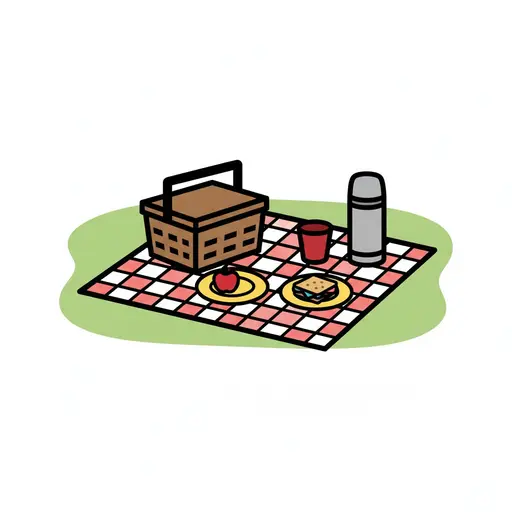
Picnic
A red and white checked picnic blanket on grass with a brown wicker basket, a si...
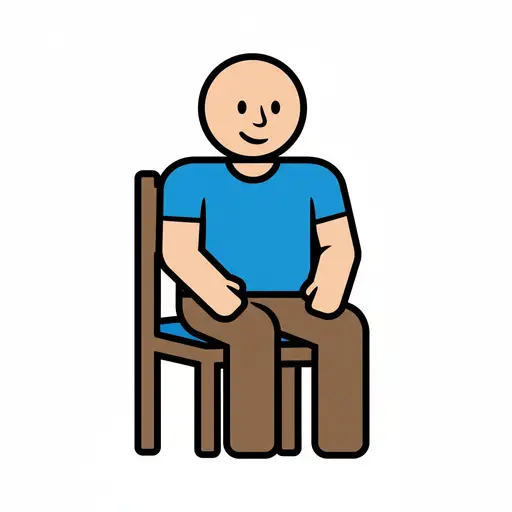
Settle into chair
A person sits upright on a wooden chair, facing forward with a smile.
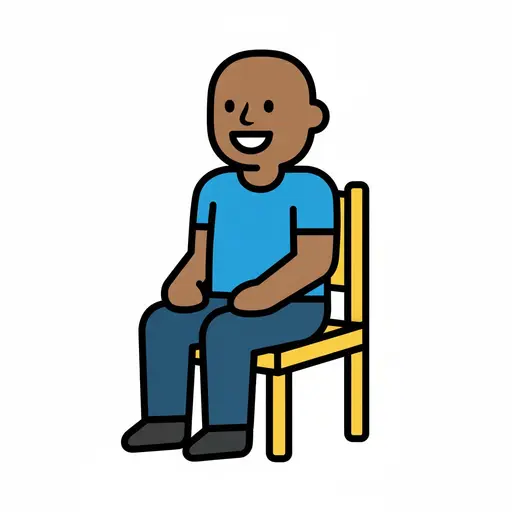
Sit on chair
A person sits on a yellow chair, smiling.
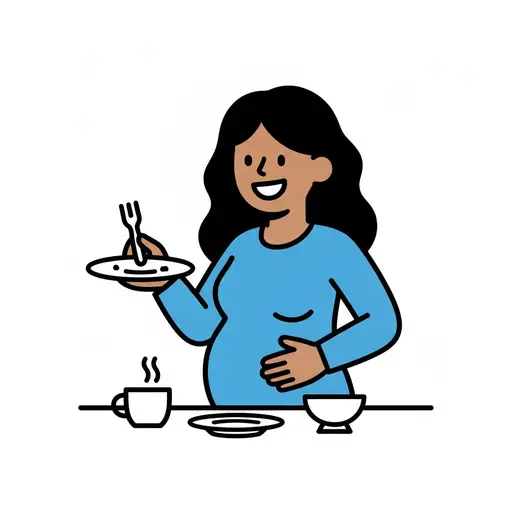
After dinner
A woman holds a plate with a fork and rests a hand on her stomach, with a cup an...
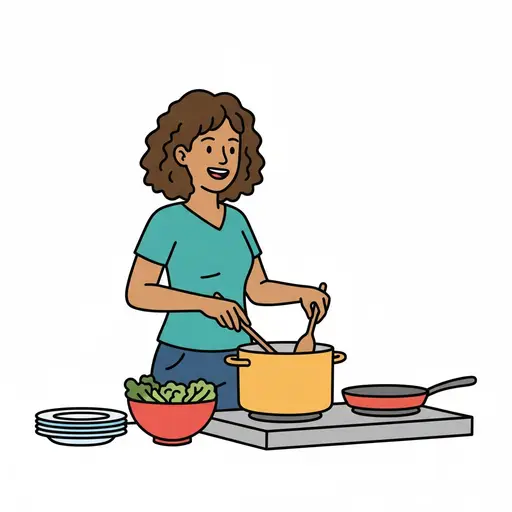
Cook dinner
A person stirs a yellow pot with a salad bowl, a frying pan and plates on the co...
Take the visual supports with you
In Routined you build schedules from these pictures, add timers and voice instructions, and your child follows the day on their own.


* 14-day free trial included for new users.