Teaching Your Child to Follow Their Own Schedule
A warm, practical guide to teaching your child to follow their own schedule, from visual plans they can read alone to ticking off their own steps and gradually handing over control.

To teach a child to follow their own schedule, hand them a visual plan they can read without you, then gradually step back from reminding. It is the slow shift from a parent-managed day to a child-managed one, where your child sees what comes next, ticks off each step themselves and learns to trust the plan instead of the nagging. You are not lowering your involvement all at once, you are transferring ownership one routine at a time.
This takes longer than simply telling your child what to do, and that is the point. Every time you narrate the next step for them, you do the remembering on their behalf. A schedule they own moves that job into their hands, which is exactly where independence grows.
Why teaching a child to follow their own schedule matters
Following a schedule independently draws on executive function: holding a sequence in mind, starting a task, resisting distraction and moving on. These skills develop slowly through childhood, and for many children they develop unevenly. A schedule your child can see and manage acts like scaffolding while those skills come online.
There are three everyday payoffs worth naming:
- Ownership: a child who checks their own list feels the day is theirs, not something being done to them.
- Fewer battles: when the schedule gives the instruction, you stop being the person who repeats it ten times.
- Confidence: finishing a routine without being managed is a small, repeatable win a child can feel proud of.
For children with ADHD or autism this matters even more. External structure is not a crutch that holds them back, it is an independence aid. A predictable, visible plan reduces the working-memory load and the anxiety of not knowing what comes next, which frees up energy for actually doing the steps.
Start with a visual schedule your child can read alone
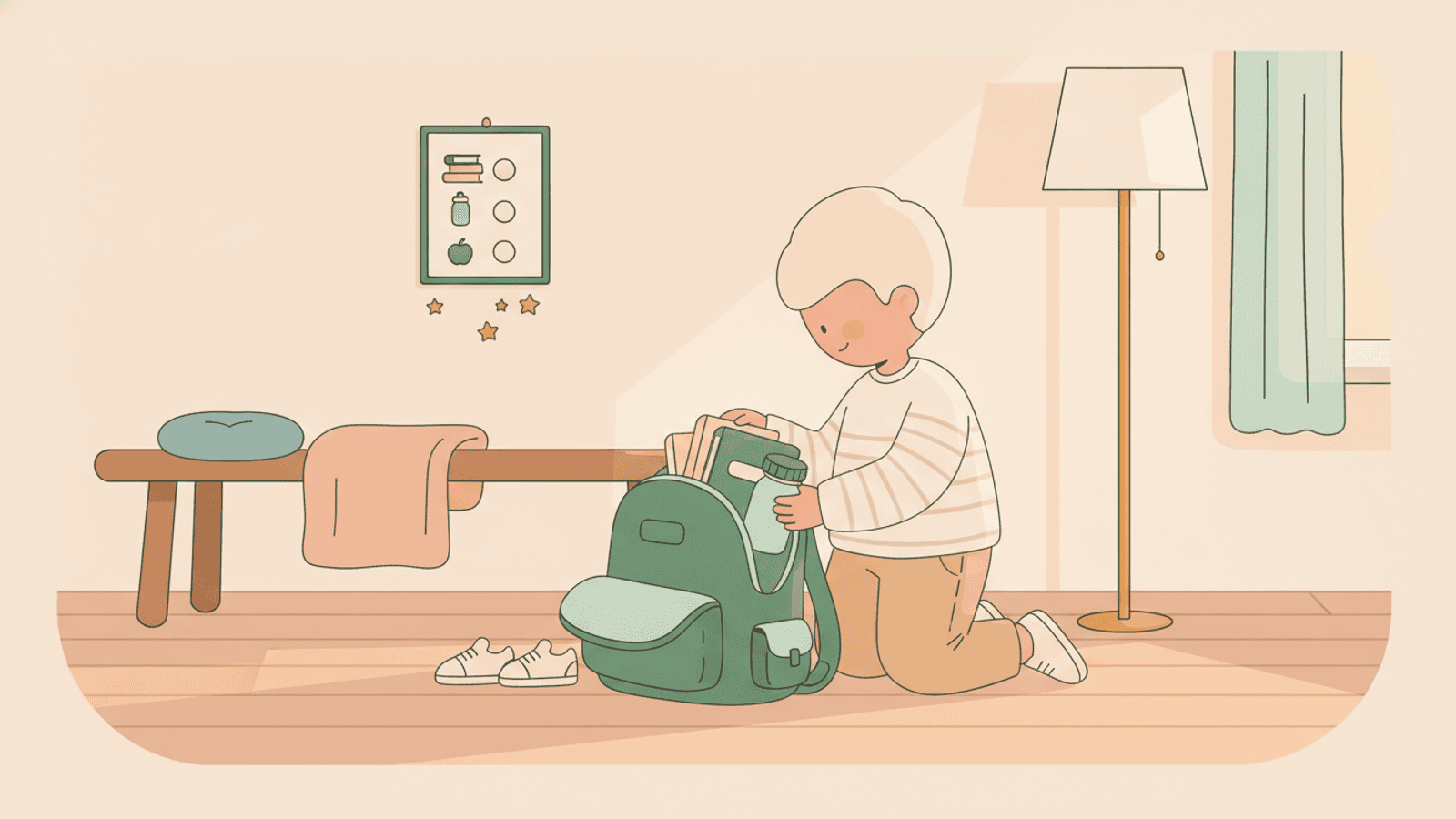
The first move is a schedule your child can understand without reading a single word from you. For younger children or non-readers, that means pictures: one clear image per step, in order, top to bottom or left to right.
Keep it short. A morning routine of four to six steps is far more usable than a comprehensive list of twelve. If a child has to scan a wall of items to find where they are, the schedule becomes another thing that overwhelms rather than helps.
Make it visible where it is needed
Put the schedule where the routine happens. A getting-dressed sequence belongs in the bedroom, a bedtime routine near the bathroom and bed. A schedule your child has to walk to another room to check is a schedule they will forget to check.
Involve your child in building it
A schedule handed down from above feels like a set of orders. A schedule your child helped build feels like a plan they agreed to. The difference in cooperation is enormous.
Sit down together and let them weigh in on real choices:
- The order of steps, where order does not matter (socks before or after teeth).
- Which picture or photo represents each step.
- How long a task should reasonably take.
- What the reward is for finishing the whole routine.
When a child chooses the photo for brushing teeth or decides that getting dressed comes before breakfast, they are far more likely to follow the plan, because it is genuinely theirs.
Let them tick off their own steps
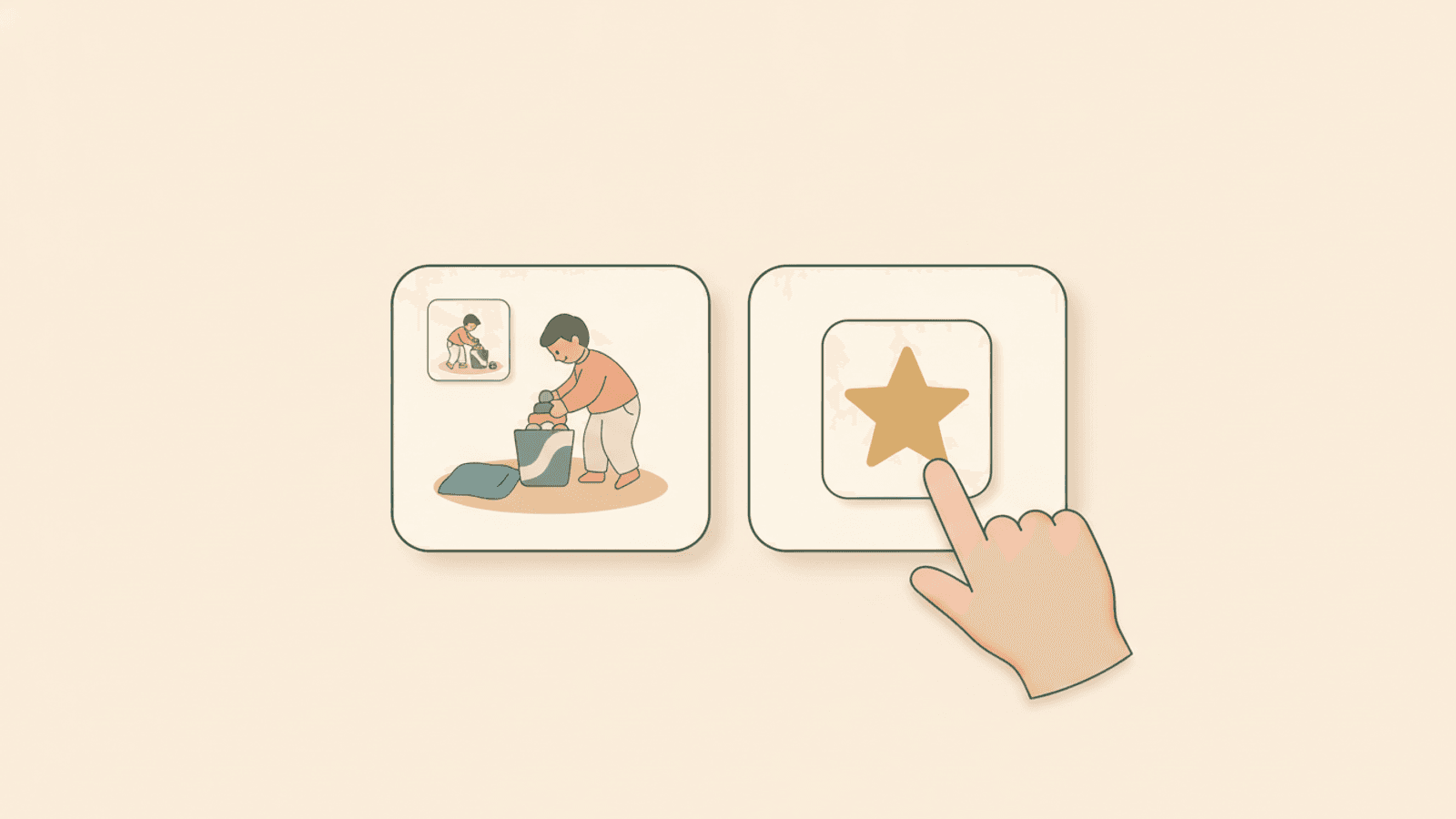
The moment a child physically marks a step done, something shifts. Ticking a box, moving a card, tapping a picture, this is the difference between watching a schedule and running one.
Self-checking does three useful things at once. It gives immediate feedback, so your child sees progress in real time. It creates a natural pause to notice what comes next. And it removes you from the loop, because the child, not the parent, decides when a step is complete.
Resist the urge to tick things off for them, even when it would be faster. The small friction of them doing it is where the learning lives.
Let natural consequences do some of the teaching
This is the hardest part for most parents. If your child does not follow their schedule and forgets their gym kit, the instinct is to rescue, to remind one more time, to drive it to school. Sometimes stepping back teaches more than stepping in.
A forgotten item, a missed step or a rushed morning is not a failure of the system, it is feedback. A child who feels the mild, safe consequence of skipping a step learns why the schedule is worth following in a way no lecture achieves. Keep the consequences proportionate and age-appropriate, and let the schedule, rather than your voice, be the thing they learn to rely on.
Hand over control gradually
Independence is not a switch you flip, it is a dial you turn slowly. Think of your role moving through stages:
- You lead: you walk through each step together, pointing at the schedule.
- You prompt: you point to the schedule instead of naming the step, letting it give the instruction.
- You are nearby: your child runs the routine while you stay available but quiet.
- They own it: your child checks and completes the routine on their own, and tells you when it is done.
Move down the list only when the current stage feels comfortable, and expect to move back up on hard days. A tired, unwell or overwhelmed child may need more support for a while, and that is not backsliding, it is responsiveness.
Tools that make it easier
You can build a perfectly good schedule with laminated cards and a bit of blu-tack. Physical visual boards, a simple first-then card and a kitchen timer will take many families a long way, and there is no need to reach for an app to begin.
What tools add is consistency and portability. A timer turns the vague pressure of hurry up into a visible, neutral countdown that is easier for a child to respond to than a nagging voice. A schedule that travels means the same structure works at home, at a grandparent's house or on a trip.
How Routined helps
Routined is one calm option for families who want their schedule in one place. It offers two display modes, a Standard text-and-checkboxes view and a Visual Support view with big picture cards, so it can grow with your child as they start to read. Each step can carry a picture from the built-in library, an AI image or your own photo, an optional visual countdown timer and even a short voice recording that plays automatically when your child opens the step. When the routine is finished, an allowance pot can fill in proportion to how much was completed, giving your child a clear, motivating reason to run the schedule themselves.
The takeaway
Teaching a child to follow their own schedule is really an exercise in patience and gradual release. Give them a plan they can read alone, build it together, let them tick off their own steps and allow the odd forgotten item to teach its quiet lesson. Step back a little further each week. The goal is not a child who obeys a schedule, but one who has quietly learned to run their own day, and a home with a good deal less nagging in it.
Read more
Frequently asked questions
At what age can a child follow their own schedule?
Many children can follow a simple picture schedule with support from around three or four, and manage a short routine largely on their own by five to seven. Ages vary widely, especially for children with ADHD or autism, so follow your child's readiness rather than the calendar.
Should the schedule use pictures or words?
Use whatever your child can read independently. Pictures suit younger children and non-readers, while words or a mix work as reading develops. The test is simple: can your child understand the next step without you explaining it?
Is relying on a visual schedule a crutch for children with ADHD or autism?
No. External structure is an independence aid, not a crutch. It reduces the working-memory and anxiety load of remembering what comes next, freeing your child to actually do the steps and build lasting routine skills.
What if my child ignores the schedule?
Start smaller, involve them in rebuilding it and let safe, natural consequences of skipping a step do some teaching. Point to the schedule rather than repeating instructions, so the plan, not your voice, becomes the thing they follow.
How do I stop reminding and let my child take over?
Hand over gradually. Move from leading each step, to pointing at the schedule, to staying nearby, to full independence, advancing only when the current stage feels comfortable and stepping back in on hard days.