The Low-Arousal Approach: How Staying Calm Helps Your Child Calm Down
When a child is escalating, matching their intensity pours fuel on the fire. The low-arousal approach does the opposite, and it can change the whole day.
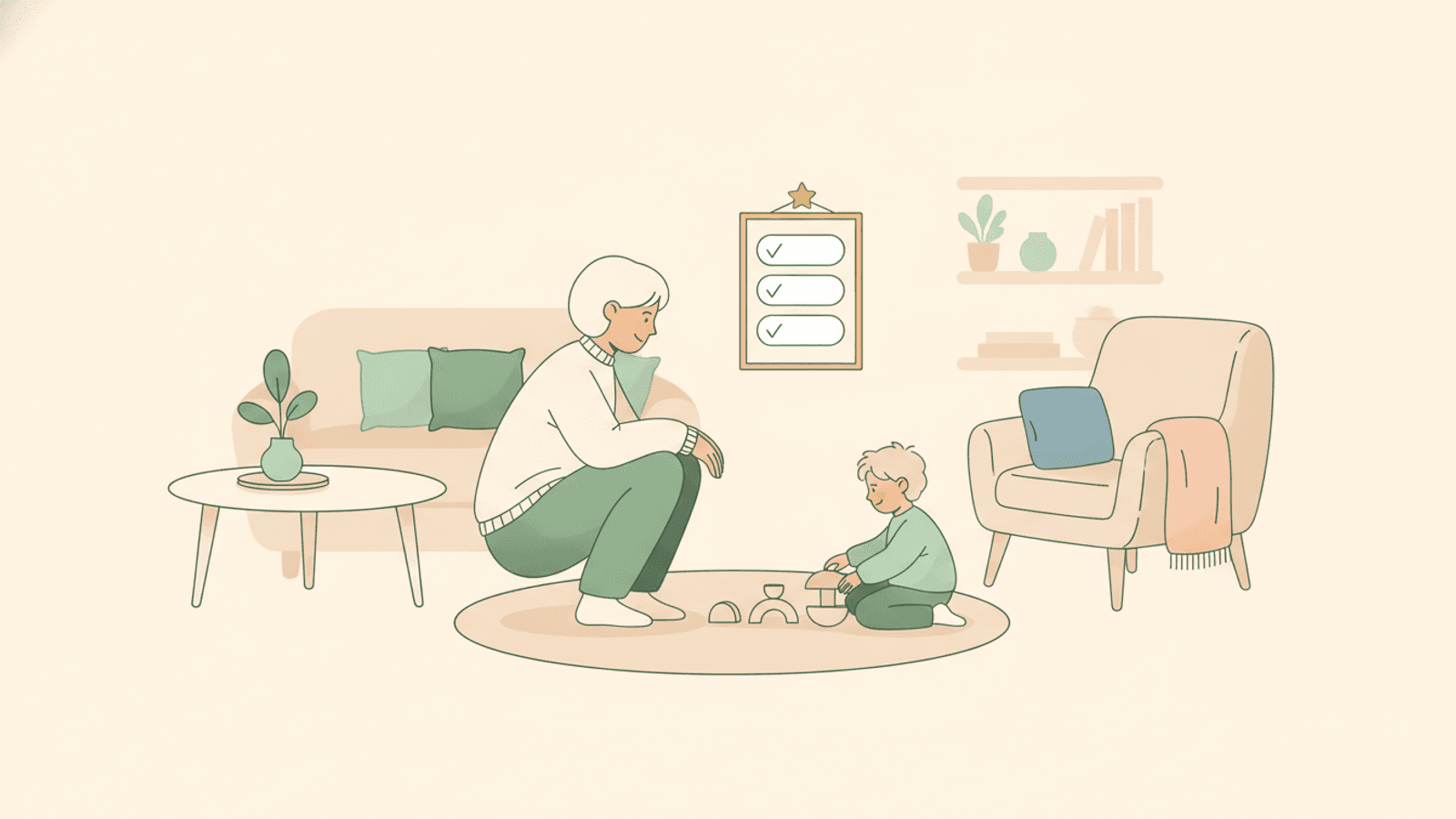
The low-arousal approach is a calm, non-confrontational way of responding to a child who is upset, angry or refusing, and it is built on a simple idea: emotions are contagious. If you stay calm and lower your demands in the heat of the moment, your child has something calm to borrow, and the situation settles faster. If you raise your voice and pile on demands, you add fuel to the fire.
The approach was developed to support people whose behaviour can become challenging, and the psychologist Bo Hejlskov Elvén helped make it widely used in homes and schools across the Nordic countries. You do not need a diagnosis in the family to use it. It works for most children, and it is especially helpful when a child has ADHD, autism or a smaller window for stress.
What is the low-arousal approach?
At its core, the low-arousal approach says that a child who has lost control cannot be reasoned, taught or disciplined into calm in that moment, because the thinking part of the brain is offline. Your job in the moment is not to win, teach a lesson or get compliance. It is to keep everyone safe and bring the arousal down so your child can come back to themselves. The learning happens later, when everyone is calm again.
In practice that means three things: manage your own reaction first, manage the situation so the pressure drops, and then, once it is over, look at what happened and change what you can so it is less likely next time.
Calm is contagious, and so is stress
Children co-regulate: they borrow a calm nervous system from the adult beside them before they can regulate on their own. This is why a stressed, loud response tends to escalate a child, while a slow, quiet one tends to bring them down. You are not being permissive by staying calm. You are lending your child the regulation they cannot yet find alone.
In a full meltdown this is even more true. A meltdown is not misbehaviour you can punish away; it is a nervous system that is overwhelmed. For the in-the-moment steps, see our guide to meltdowns.
Lowering your own arousal in the moment
This is the hardest part, because your body wants to match your child’s intensity. A few concrete moves help:
- Say less. Fewer words, shorter sentences, longer pauses. A child in distress cannot process a lecture.
- Lower your voice and slow down instead of getting louder and faster.
- Give physical space. Step back, unclench, drop your shoulders. Avoid looming, cornering, or demanding eye contact.
- Avoid touch unless you know it helps. For many children, being grabbed or held escalates things.
- Don’t take the bait. Insults, thrown objects and “I hate you” are symptoms, not the argument. You do not have to respond to every one.
- Offer a way out, not an ultimatum. “I’ll be right here when you’re ready” beats “Do it now, or else.”
Lowering demands without “giving in”
Low-arousal is often misunderstood as letting the child win. It is not. There is a difference between pausing a demand during a crisis and abandoning a boundary. In the moment, you step back so the storm can pass. Later, when your child is calm, you can revisit the expectation, repair, and try again.
A useful question in the heat of it is: “Do I need to win this right now, or do I just need this to be over?” Winning a power struggle with an overwhelmed child usually costs far more than it gains. Safety and the relationship come first; the lesson can wait an hour.
Reducing demands can be as simple as dropping the non-essential ones. During a hard moment, the shoes can wait, the exact order of the bedtime routine can flex, and “say sorry properly” can happen tomorrow. You are triaging, not surrendering.
After the storm: evaluate and change
Once everyone is calm, the low-arousal approach asks a different question from “How do I punish this?” It asks “What made this so hard, and what can I change?” Look for the trigger: hunger, tiredness, a surprise change, a transition, too many demands stacked together, a sensory overload. Meltdowns and blow-ups are usually predictable once you look back at the hour before.
Then change the environment, not just the child. This is where structure does the heavy lifting. If mornings blow up at the same step every day, the fix is rarely more willpower; it is a more predictable morning.
How structure prevents escalation before it starts
Most conflicts are not really about defiance. They are about unclear expectations, abrupt transitions, and a parent having to nag, repeat and referee all day. Every one of those is a flashpoint you can lower in advance.
Predictable routines mean the day stops being a series of surprise demands. A visual routine your child can follow themselves removes most of the “do it now” friction, because the next step comes from the chart, not from you. Forewarnings and a visible timer make transitions, the single biggest trigger for many children, far less explosive. Transitions and forewarnings has more on this.
This is exactly what Routined is built to help with. It turns your routines into clear visual steps with pictures and a visible timer for each step, and the next step is always in view, so the routine does the reminding instead of you. That means fewer repeated demands, fewer surprise transitions, and fewer flashpoints to escalate in the first place. Its mood check-ins can also help you notice patterns in how your child is doing around particular routines. The app does not calm your child for you; it removes a lot of the daily friction that sets these moments off.
A note on ADHD, autism and PDA
The low-arousal approach is not lax parenting, and it is not only for neurodivergent children. But it matters most when a child has a smaller window of tolerance. Children with ADHD or autism often reach overload faster and take longer to recover, so demands and confrontation land harder. For a child with a strong demand-avoidant profile (sometimes called PDA), ordinary pressure and even praise can trigger the very refusal you are trying to avoid, and a calm, low-demand, collaborative style is often the only thing that works.
If your child avoids everyday demands with an intensity that looks like panic rather than defiance, our introduction to demand avoidance may help.
This is general information, not a substitute for professional advice. If aggression, self-harm or meltdowns are frequent or unsafe, talk to your doctor or your child’s support team.
Read more
- Meltdowns: what to do in the moment — a calm, three-step framework for the hardest moments.
- Transitions and forewarnings — the five-minute habit that prevents most blow-ups.
- Demand avoidance (PDA): a gentle introduction — when ordinary demands trigger real panic.
- Neurodiversity and visual support — how visual structure calms daily life.
Frequently asked questions
What is the low-arousal approach?
It is a calm, non-confrontational way of responding when a child is upset or refusing. You keep your own arousal low, use fewer words, and lower your demands in the moment so the child can borrow your calm and settle. You address the behaviour and any consequences later, once everyone is regulated.
Isn’t staying calm just letting my child win?
No. Pausing a demand during a crisis is not the same as dropping a boundary. You step back so the storm can pass, then revisit the expectation calmly afterwards. The goal is not to lose the power struggle but to avoid having it while your child’s thinking brain is offline.
Does the low-arousal approach mean no rules or consequences?
No. Rules and natural consequences still matter; you just apply them when your child is calm, not in the middle of an escalation. In the heat of the moment, teaching and consequences do not land, they only add fuel.
How is it different from ignoring behaviour?
You are not ignoring your child; you stay present and calm while choosing not to react to every provocation. You keep everyone safe and connected, and you respond to the underlying need rather than the surface behaviour.
Does it work for children with ADHD or autism?
Yes, and it often matters most for them. Children with ADHD or autism tend to reach overload faster and recover more slowly, so calm, low-demand responses and a predictable, visual daily structure reduce how often things escalate in the first place.