Darker Evenings and the Autumn Clock Change: Protecting Your Child’s Sleep
The extra hour is a myth for anyone with small children. Here is how to prepare for the clock change and survive the dark Nordic season.
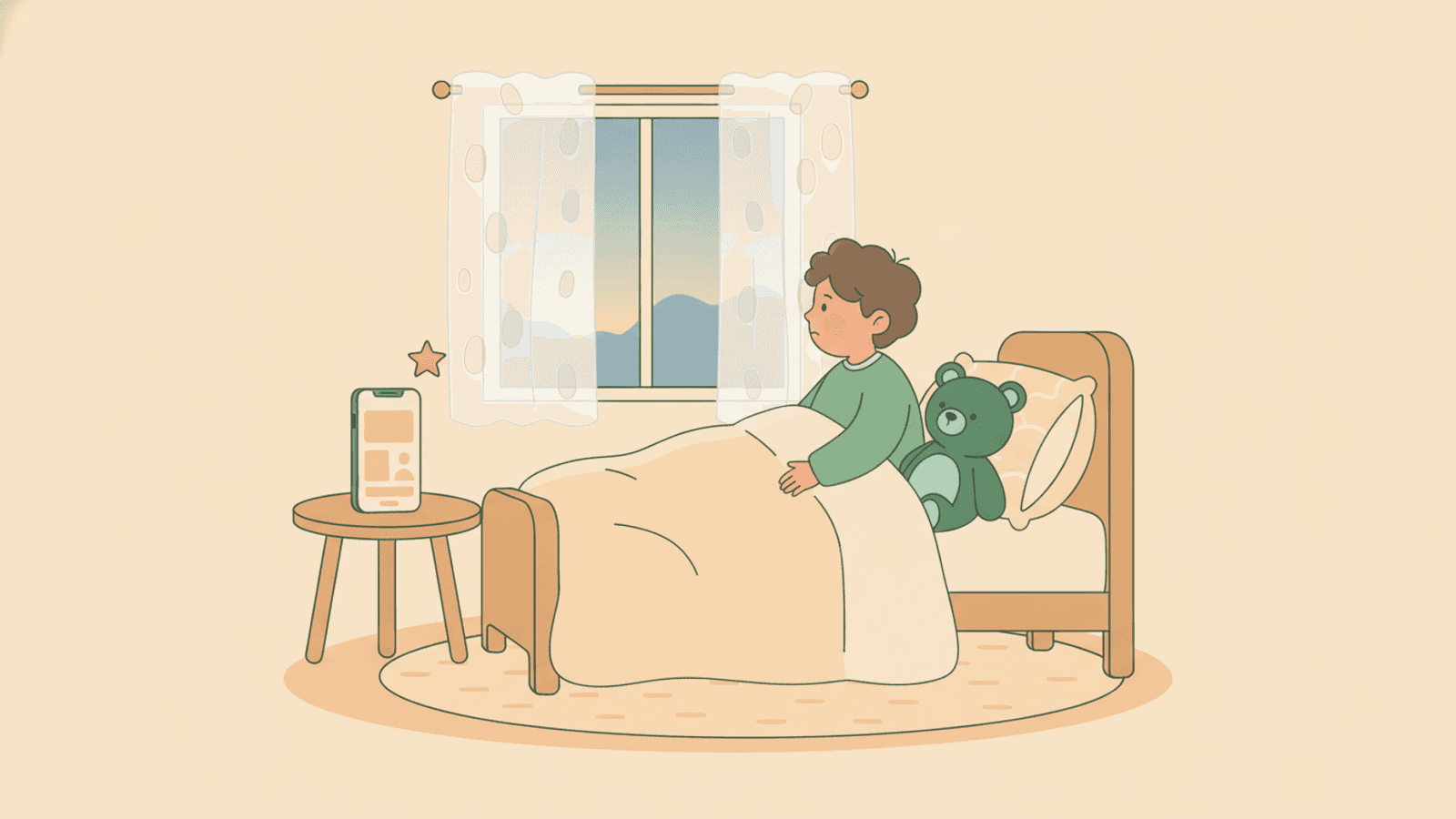
When the clocks go back in autumn, most young children do not get an extra hour of sleep. They wake at the same body time, which the clock now calls an hour earlier. The fix is simple and it has to start before the change: shift bedtime later by ten to fifteen minutes a day for four to six days, get bright light into the morning, and keep every other part of the evening exactly the same.
In most of Europe, including the Nordic countries, the clocks go back on the last Sunday in October — in 2026 that is 25 October. For families with school-age children the shift itself is small, but it lands in the same weeks that mornings get dark and afternoons end early, and it is that combination that makes autumn sleep harder than the hour alone suggests.
Why autumn is harder than parents expect
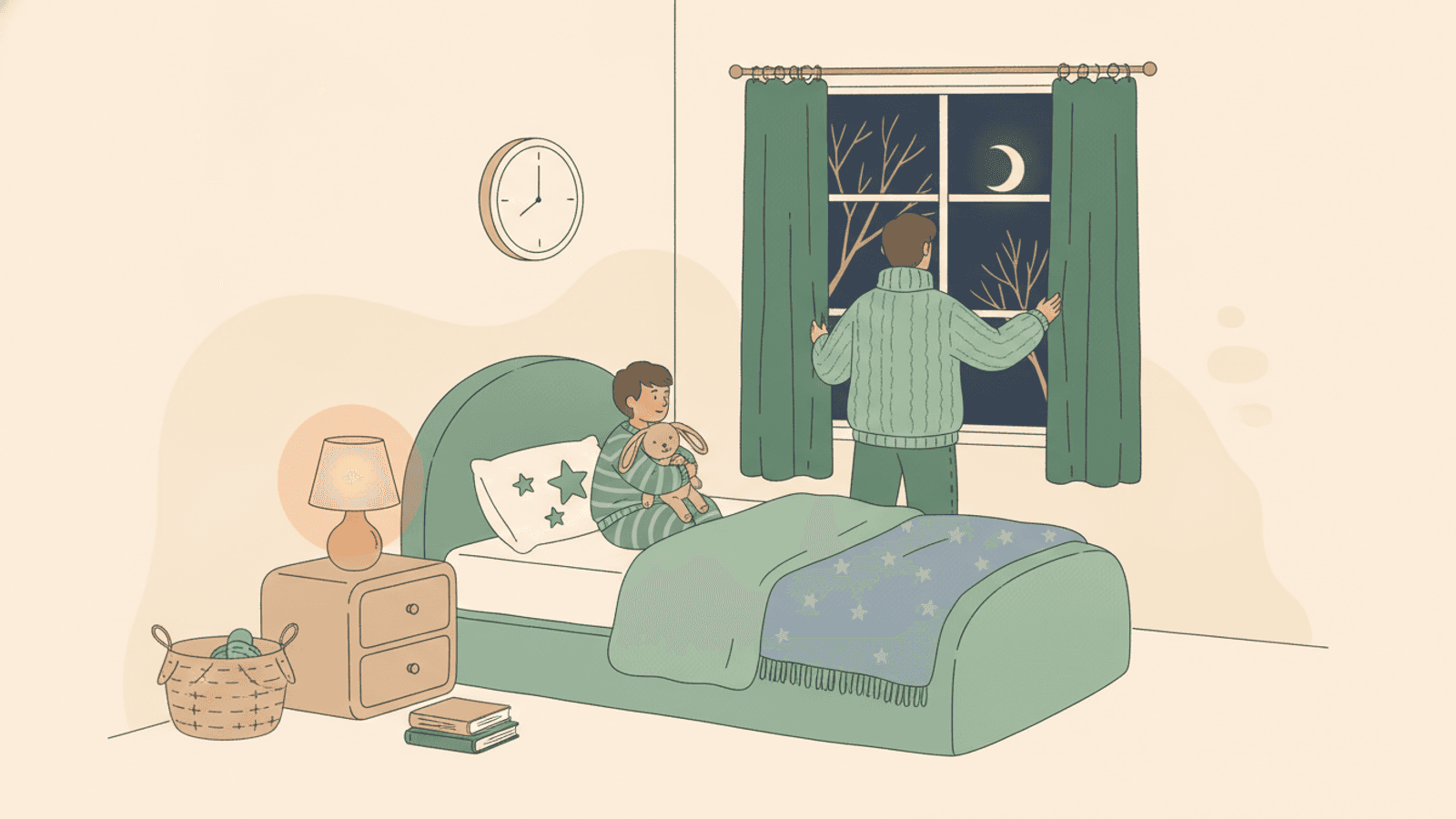
Light is the main signal your child’s body clock uses. In the Nordics, October and November take that signal away at both ends of the day: you wake in the dark, and it is dark again before dinner. The body reads dark mornings as "still night" and dark afternoons as "already night", and neither is helpful.
- Waking gets harder. A dark bedroom at seven in the morning is physiologically the same as the middle of the night.
- Evenings feel later than they are. Children get tired earlier, then get a second wind if bedtime drifts past it.
- Less outdoor time. Less daylight and less physical activity both make falling asleep harder.
- More time indoors together. Which means more friction in the hour that most needs calm.
What the extra hour actually does
A child who reliably wakes at 06:30 will, on the Sunday morning, wake at what the clock now calls 05:30. Nothing has changed inside them. Older children and teenagers usually absorb this in a day or two. Toddlers and preschoolers, who run on a tighter internal schedule, often need a week.
If early waking is already your household’s problem, the clock change makes it briefly worse, and the strategies in when your child wakes too early are worth having in place before the weekend rather than after.
The gradual shift: start six days before
This is the version that works for most young children, and it costs almost nothing.
- Six days before: move bedtime, dinner and the start of the wind-down ten to fifteen minutes later.
- Every day or two: another ten to fifteen minutes later, until you are an hour later than usual.
- Move the whole day, not just bedtime. Meals and naps anchor the body clock as much as lights-out does.
- On the night itself: go back to the normal clock time. Your child is already there.
- Wake them at the usual clock time on the first two mornings, even if they slept in. Consistent wake times fix this faster than anything else.
If that sounds like too much choreography for your household, the honest alternative is to do nothing and accept three to seven wobbly days. That is a perfectly reasonable choice, especially with school-age children.
Morning light is the strongest lever
The single most effective thing you can do all autumn is get light into your child in the first hour after waking. Outdoors is best, even under grey cloud, because outdoor light is far brighter than any room. On genuinely dark Nordic mornings, turn on every light in the kitchen and open the curtains anyway, and put the walk to school or preschool as early in the routine as you can.
Then reverse it in the evening: lower the lights an hour before bed, keep screens out of the last half hour, and let the house get visibly duller. Children read the light level long before they read the clock.
Keep the evening identical
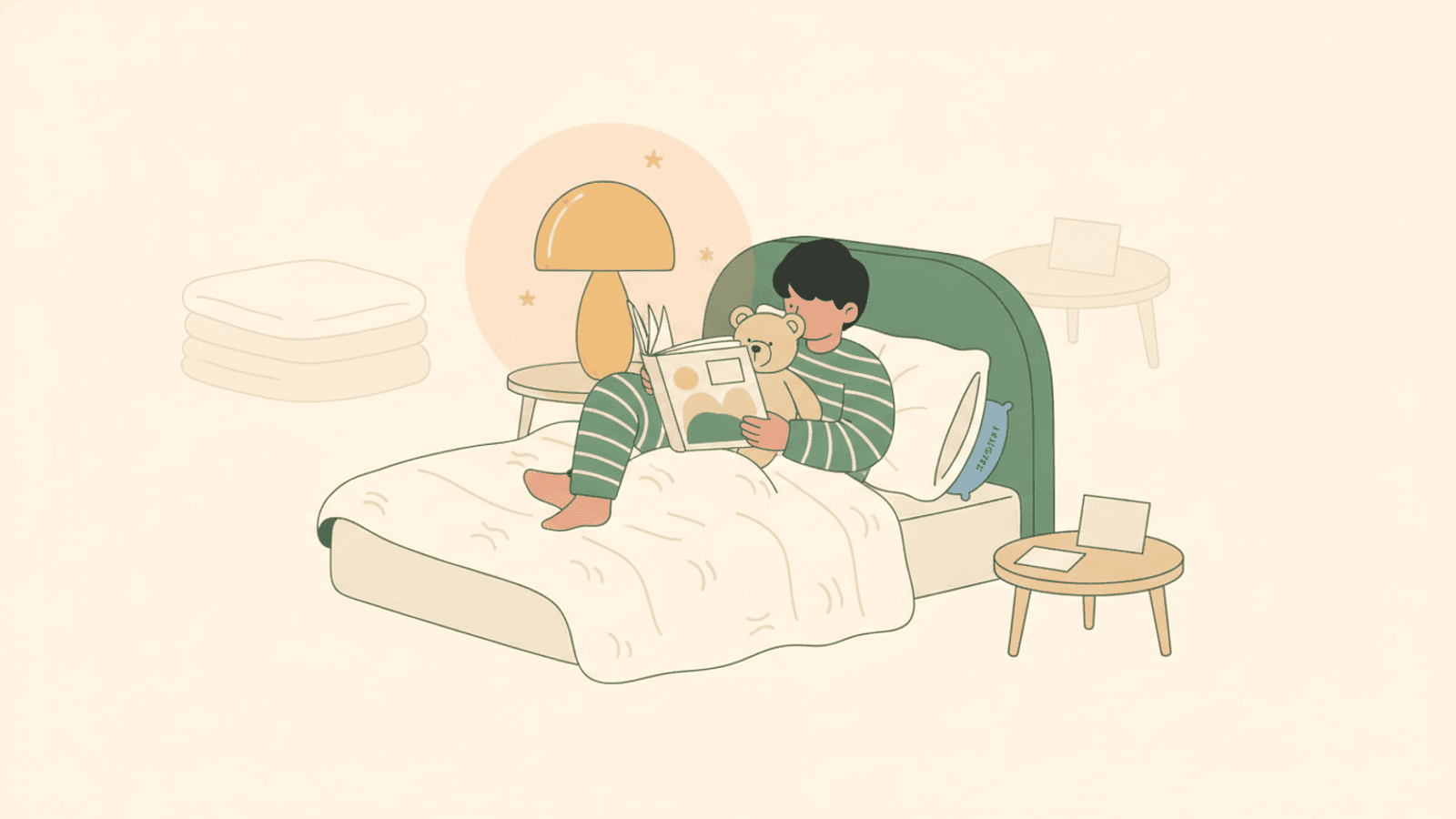
The hour before bed should be the most boring, most repeatable part of your day, and this is exactly the week not to redesign it. Same order, same length, same words. If you do not have a fixed sequence yet, the 30-minute wind-down is a good place to start, and a written routine schedule makes it survive the weeks when everyone is tired.
This is where Routined earns its place in a dark October. The evening exists as steps with a picture and a timer on each one, identical on both parents’ phones, so the routine does not quietly get shorter just because it is dark and everyone is fed up.
The bedroom in autumn
Spring is a problem of too much light; autumn is usually the opposite. Keep the room dark enough for sleep, but do not black out the morning entirely, because a little natural light helps your child wake at the right time. If your child wakes in the dark and cannot tell whether it is night or morning, a simple light on a timer or a clock that changes colour at the get-up time removes a surprising amount of 5 a.m. negotiation.
Children who find the change harder
Children with ADHD or autism often have a body clock that resists shifting and a lower tolerance for anything unpredictable, so a one-hour move can cost a full week. Two things help: start the gradual shift earlier, over eight or nine days rather than five, and tell them in advance that it is coming, with a visible countdown. Everything else about the day should stay exactly the same that week.
Sleep problems are common alongside ADHD and autism, and if your child has never slept well rather than just wobbling around the clock change, that is worth raising with your doctor or care team. This article is general information, not medical advice.
What not to do
- Do not keep your child up very late the night before to "use up" the hour. It usually produces an overtired child who wakes even earlier.
- Do not add a long compensating nap. A short one is fine; a two-hour afternoon sleep will move bedtime the wrong way.
- Do not change several things at once. This is not the week to also drop the nap or move to a new bed.
- Do not treat the first bad morning as proof that it failed. Three to seven days is normal.
The week before: a checklist
- Pick your method: gradual shift, or do nothing and ride it out.
- Move dinner and the wind-down, not just lights-out.
- Plan morning light for the following week: outdoors early, bright indoors when it is dark.
- Keep the evening routine identical, and tell your child what is happening.
- Protect the wake time on the first two mornings after the change.
Read more
- Light spring evenings and sleep — the same problem in reverse, six months later.
- When your child wakes too early — what to do about 5 a.m., clock change or not.
- The 30-minute wind-down — the evening sequence that makes bedtime predictable.
Frequently asked questions
When do the clocks change and how does it affect children?
In most of Europe, including the Nordic countries, the clocks go back on the last Sunday in October, which in 2026 is 25 October. Young children usually wake at their normal body time, which the clock now calls an hour earlier, so the "extra hour" mostly turns into an early start.
Should I shift bedtime gradually or just let it happen?
Both work. For toddlers and preschoolers, moving bedtime and meals ten to fifteen minutes later each day for four to six days beforehand usually means barely noticing the change. For school-age children, doing nothing and accepting a few wobbly days is perfectly reasonable.
My child wakes at 5 a.m. after the change. What do I do?
Hold the normal wake time: get them up at the usual clock time, get bright light into the morning, and keep meals and bedtime where they should be. Resist making bedtime earlier to compensate, because that tends to reinforce the early waking. Most children resettle within a week.
How long does it take a child to adjust?
Typically three to seven days. Older children and teenagers often adjust in a day or two. Toddlers, preschoolers and children who are sensitive to change usually need the full week, and sometimes a little longer if the shift was not prepared for.
Do darker autumn months affect children’s mood?
Some children do become flatter, more tired or more irritable as the light disappears, and daily outdoor time in the middle of the day is the most practical countermeasure. If your child’s mood, energy or appetite changes markedly every autumn, it is worth raising with your doctor rather than waiting it out.