Building Your Child's Emotional Vocabulary: Putting Words to Feelings
A child who can say “I’m frustrated” is doing something powerful — turning a storm into words. Emotional vocabulary underpins everything from self-regulation to friendships, and it is one of the most useful things you can teach. Here is how to build it.
A child who can say “I’m frustrated” instead of throwing the toy is doing something genuinely powerful: turning a storm of feeling into words. Emotional vocabulary — simply having the words for feelings — underpins almost everything, from self-regulation and behaviour to friendships and resilience. It is one of the most useful things you can teach a child, and the good news is that it is built through ordinary everyday moments, not formal lessons.
Why the words matter so much
Naming a feeling literally helps calm the emotional brain — the principle often summed up as “name it to tame it.” A child who can label what they are feeling is far better placed to handle it, and to tell you about it, rather than biting, hitting or melting down. Most young children start with a tiny palette — happy, sad, angry, scared — and giving them more words gives them more understanding and, with it, more control.
Narrate feelings out loud
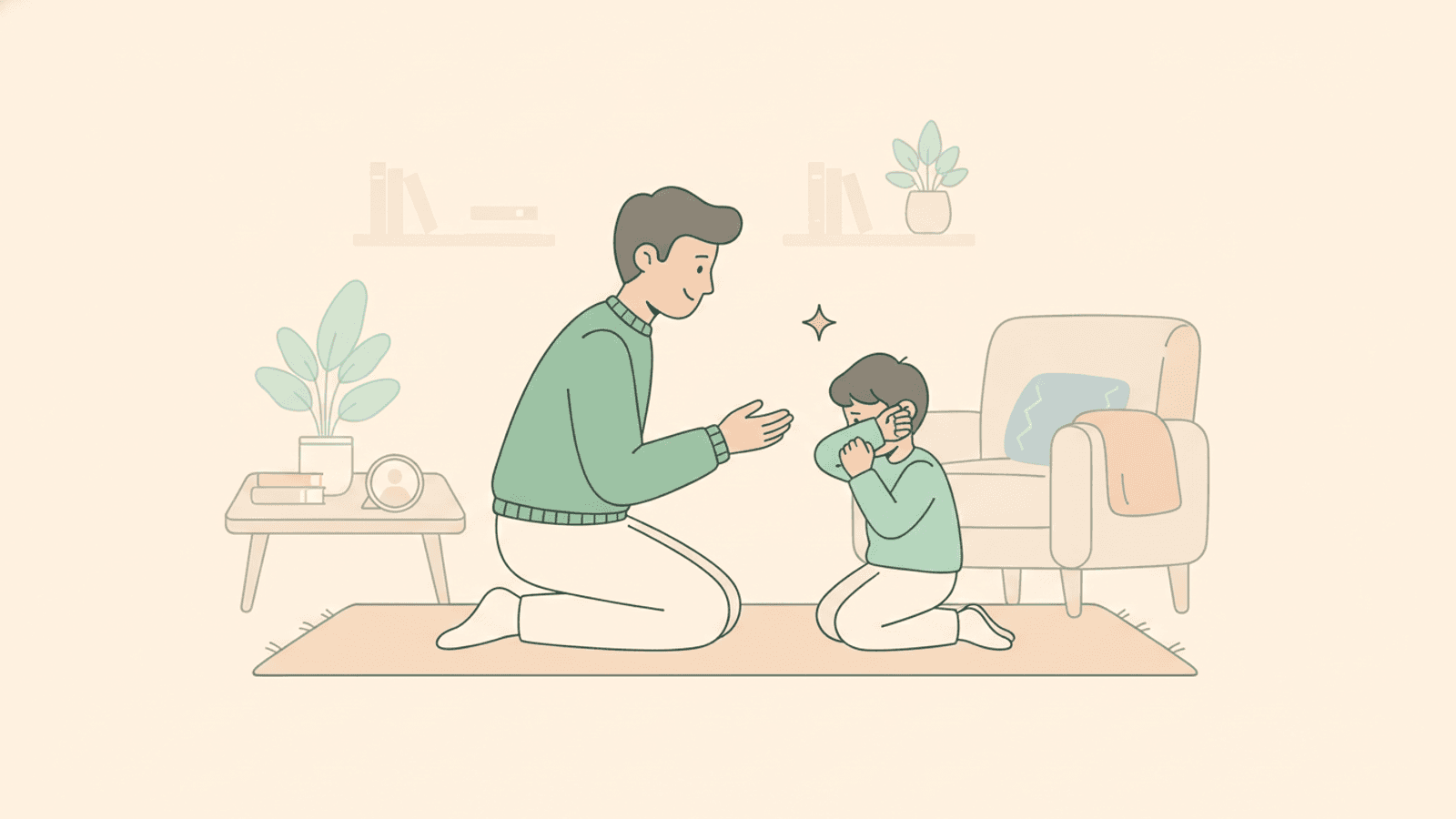
The main way children learn feeling words is by hearing us use them, attached to real moments. Name their feelings — “you look really disappointed that the park is closed” — and narrate your own — “I’m feeling frustrated that we’re running late, so I’m going to take a deep breath.” This running commentary does double duty: it teaches the vocabulary, and it quietly shows that feelings are normal, nameable and manageable rather than frightening.
Expand past the big four
Go beyond happy, sad, angry and scared to the more precise words: frustrated, disappointed, nervous, jealous, embarrassed, overwhelmed, proud, lonely, excited. The more exactly a child can name what is going on inside, the better they understand themselves and the easier it is to help. You do not teach these in a sit-down lesson; you sprinkle them into everyday moments as the feelings actually come up.
Tools that help
- Read books about feelings and talk about how the characters feel and why.
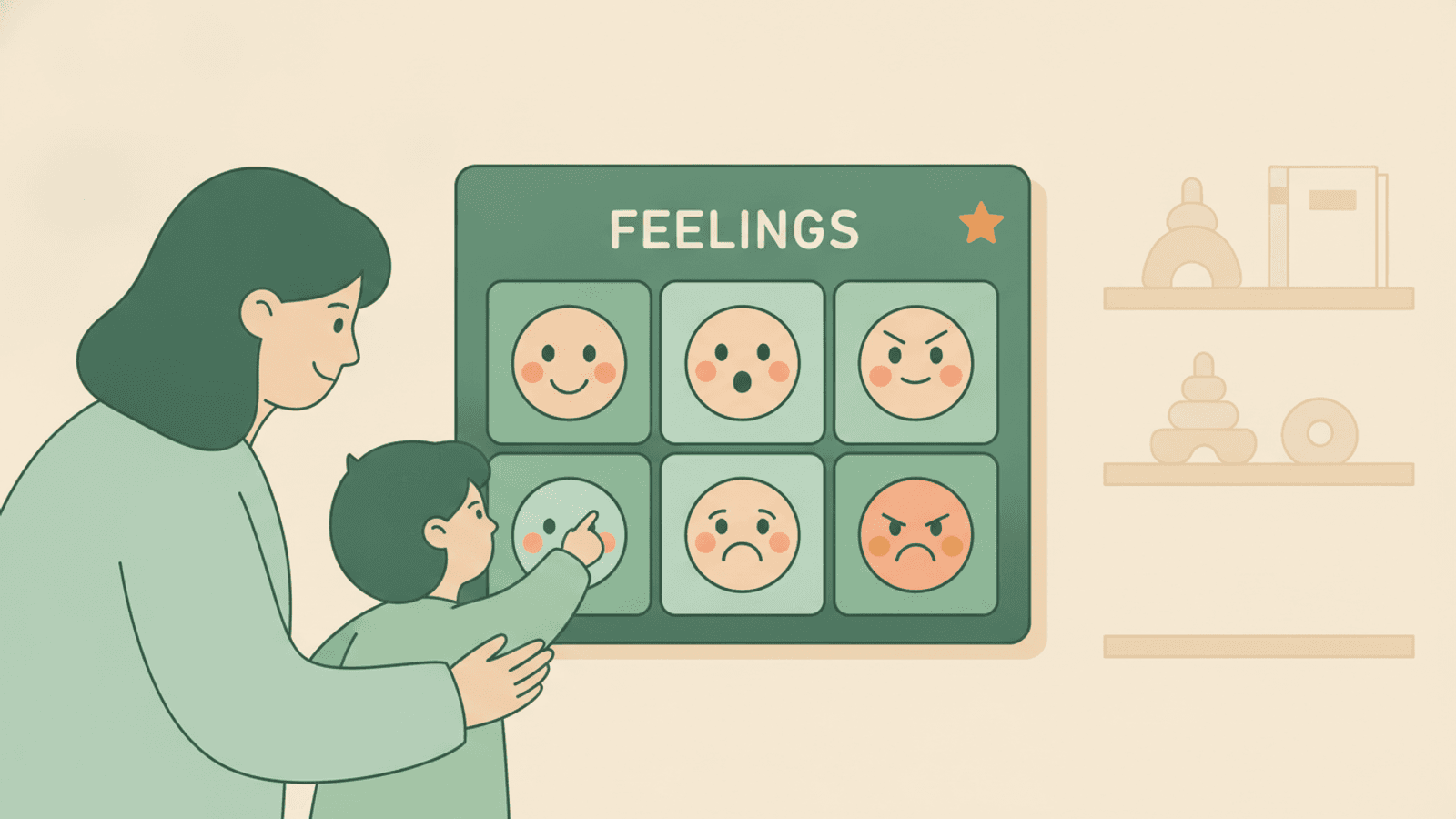
- Use a feelings chart or poster with faces, and let your child point to how they feel right now.
- Play with it — name feelings in pretend play, make faces together, guess each other’s emotions.
- Connect feelings to the body — “where do you feel the worry, is it a fluttery tummy?”
Accept all feelings, limit behaviour
A key principle runs through all of this: every feeling is okay, even the uncomfortable ones — it is behaviour that has limits, not feelings. “It is okay to feel jealous; it is not okay to grab.” When children learn that no feeling is bad, shameful or forbidden, they stop hiding what they feel and start naming it instead, which is the entire point of building the vocabulary in the first place.
Be patient and keep it low-key
Resist the urge to interrogate — “but how do you FEEL?” — or to correct your child’s words. Just keep modelling and gently offering options: “maybe you’re feeling a bit nervous?” This is a skill that builds over years, not weeks. A child who regularly hears a rich feelings vocabulary, used calmly and often, gradually absorbs it and makes it their own.
For children with ADHD or autism
Many neurodivergent children find it genuinely hard to notice and name their internal states, sometimes called alexithymia, so a feeling can arrive as behaviour with no warning. Be extra explicit, lean heavily on visuals like charts, faces and scales, connect feelings firmly to body sensations, and go slower than you would expect to. This is a skill that can absolutely be taught, with patience. This article is general guidance, not medical advice.
Read more
Frequently asked questions
Why is it important for children to name their feelings?
Naming a feeling helps calm the emotional brain and gives a child a way to handle and communicate it, rather than acting it out through biting, hitting or melting down. A good emotional vocabulary underpins self-regulation, behaviour and friendships.
How do I teach my child to talk about their feelings?
Mainly by narrating feelings out loud — naming theirs and your own in real moments — and by reading books, using a feelings chart, and playing with emotions. Keep it low-key and woven into daily life rather than a formal lesson, and model it consistently over time.
What feelings words should I teach my child?
Start with happy, sad, angry and scared, then expand to more precise words like frustrated, disappointed, nervous, jealous, embarrassed, overwhelmed, proud, lonely and excited. The more exactly a child can name a feeling, the better they understand and manage it.
Should I tell my child not to feel a certain way?
No. Every feeling is acceptable, even uncomfortable ones — it is behaviour that has limits. Saying “don’t be jealous” teaches children to hide feelings; saying “it’s okay to feel jealous, it’s not okay to grab” teaches them to name feelings and manage behaviour.
My child can't say how they feel — how do I help?
Offer words gently rather than interrogating, use a feelings chart with faces they can point to, connect feelings to body sensations, and keep modelling your own. Some children, especially neurodivergent ones, find naming feelings genuinely hard, so go slowly and stay patient.