How to Ask for Help as a Parent (and Actually Get It)
People say "let me know if I can help" and mean it. The problem is the ask, not their willingness. Here is how to make one that gets a yes.
To ask for help as a parent and actually get it, you need three things: a specific request, a named person, and a time. "I am struggling" is honest but unanswerable. "Could you take Elsa from four to six on Thursday?" is something a person can say yes or no to. Most offers of help fail at the request stage, not at the willingness stage.
This matters more than it sounds. Families where one adult carries everything do not fail dramatically. They fail slowly, through a long run of days where nobody had any slack. Getting help is not a sign that things have gone wrong. It is how the load stays inside what two adults, or one, can actually carry.
Why parents do not ask
Almost everyone recognises at least two of these.
- It feels like admitting failure. The unspoken rule is that a competent parent copes alone, which nobody has ever actually managed.
- Everyone looks busy. So you decide in advance, on their behalf, that they will say no. They never get asked.
- You do not know what to ask for. When you are worn down, the load is a fog rather than a list, and a fog cannot be handed over.
- Previous help was worse than none. Someone came, disrupted the routine, gave advice and left, and now the whole category feels risky.
- The child is complicated. If your child has extra needs, the pool of people who can step in is genuinely smaller, and that is easy to turn into "nobody can help".
One more, worth naming: if you are the parent carrying the invisible planning load, asking for help is itself another task. Working out what to delegate, to whom, and briefing them takes energy you do not have, so you do it yourself again. That loop is the actual problem.
Vague asks fail. Specific asks work.
People rarely refuse because they do not care. They refuse, or quietly do nothing, because they cannot picture what you want. A good ask names the task, the time, the length and the exit.
- Instead of "I could use some help sometimes" → "Could you pick Noah up on Tuesdays this month? It is fifteen minutes."
- Instead of "We never get a break" → "Could you have both children from ten to one on Saturday?"
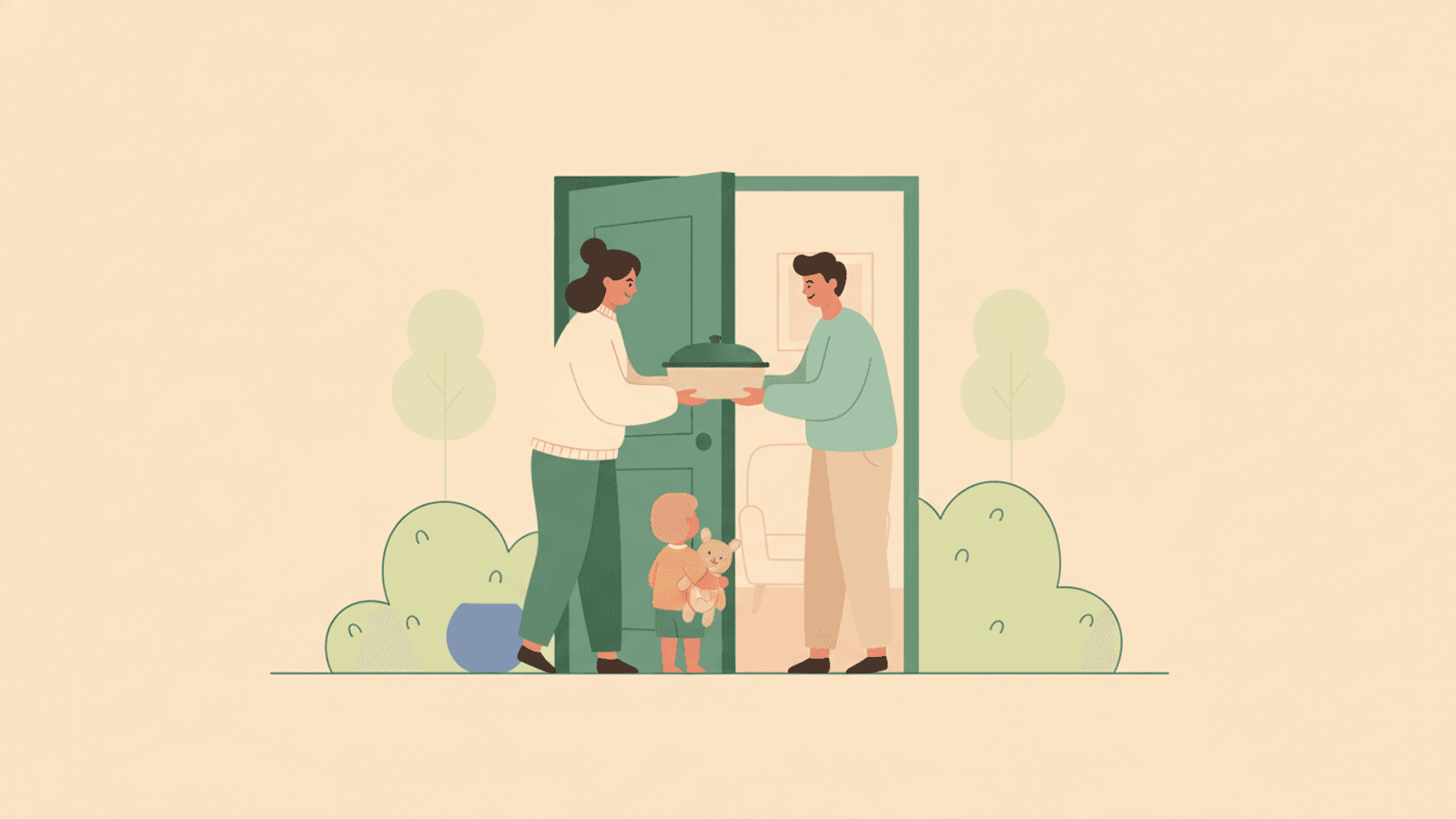
- Instead of "I am so behind" → "Could you cook double on Wednesday and drop half here?"
- Instead of "School is a nightmare" → "Could you come to the meeting on the 12th and take notes while I talk?"
Add an easy exit every time: "and it is completely fine to say no". It sounds like a small thing. It removes the social cost of refusing, which is exactly what makes people willing to say yes the next time you ask.
Make a help map before you need it
Sit down once, when nothing is on fire, and write five short lists. This takes fifteen minutes and it is what turns "nobody can help" into a set of options.
- The other adult in the house. Which whole areas could they own, not assist with?
- Family. Who is nearby, who is far but useful by phone, who is good with your particular child?
- Friends and neighbours. Who has children the same age, who lives on the route, who has offered before?
- School or preschool. Who is your actual contact person, and what have you not asked them for yet?
- Formal support. Healthcare, the assessment team, your municipality or region, patient and parent associations.
Then, against each name, write one thing that person could realistically do. You are not asking yet. You are removing the hardest part of asking, which is deciding what to ask for while exhausted.
Make it easy to help you
The second reason help fails is that helping your family requires knowing your family. If the person who steps in has to ask you eleven questions first, you have not really handed anything over.
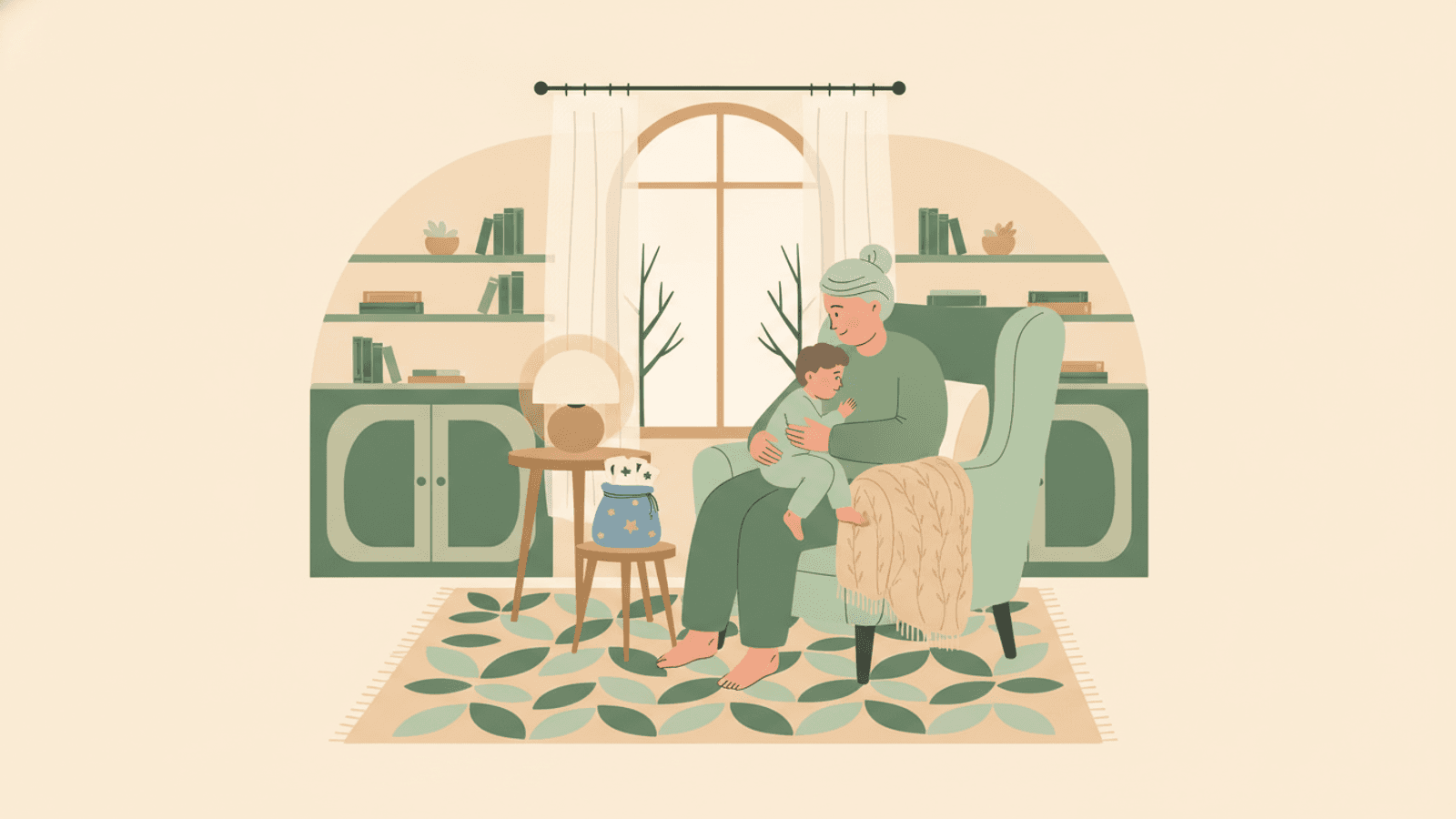
Write the routine down instead of explaining it. A visiting adult who can see the steps, in order, with pictures, does not need a briefing, and your child gets the same evening they always get. That is also why a stay at grandparents’ house goes better when the routine travels with the child instead of living in your head.
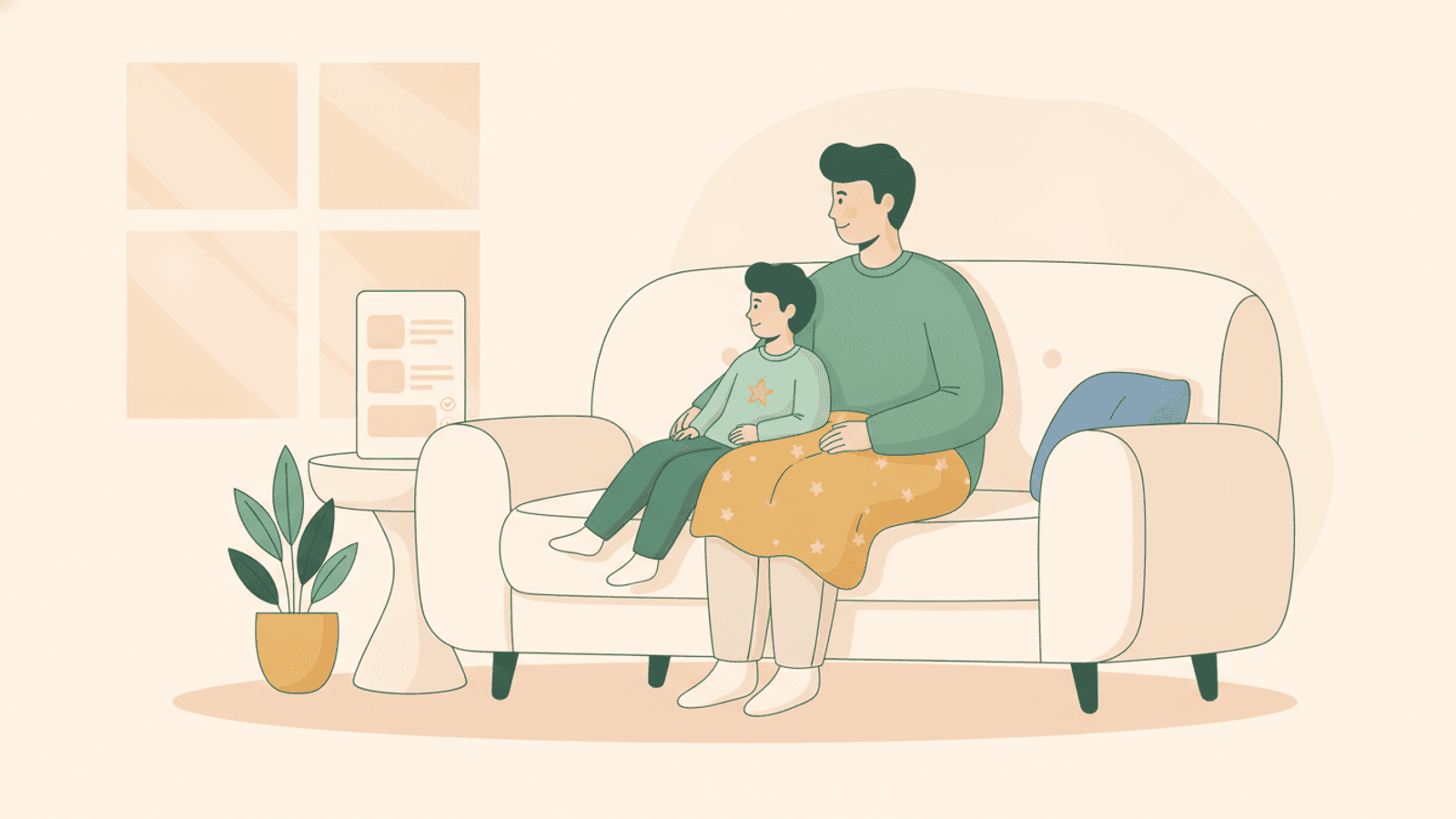
This is the practical part Routined handles. Each routine step can have a picture, a timer and a checklist, and your child can follow it on their own device, so someone helping out follows the same plan you would have run. Another adult who is regularly responsible for your child can be invited with a QR code and sees the same routines in real time.
Standing arrangements beat one-off rescues
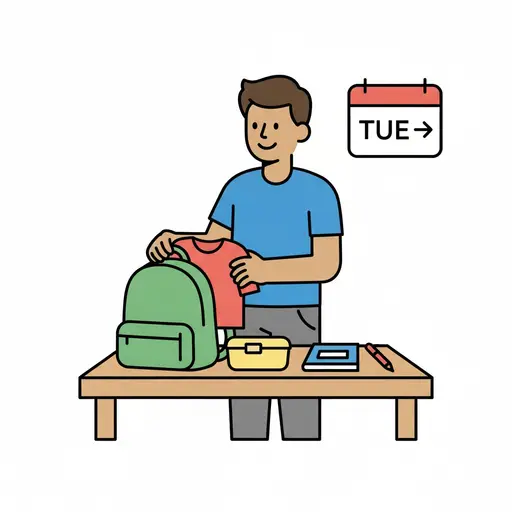
A recurring, boring arrangement is worth far more than an occasional heroic favour. Every Tuesday pickup, the same neighbour, no negotiation. It costs the helper less because it becomes routine for them too, and it costs you nothing to arrange each week.
Aim for one standing arrangement rather than five vague offers. If you can only get one thing in place this month, make it the recurring one.
When the help is not helpful
Some help costs more than it gives: the relative who undoes the routine, the friend who arrives to give advice, the offer that comes with a running commentary on your parenting. You are allowed to decline it, and you can do it without a fight.
- "Thanks, that is kind. What would actually help is X."
- "We are keeping bedtime the same everywhere this month, so please stick to the list."
- "I am not looking for suggestions right now, I just wanted to tell someone."
And accept help you did not choose. If someone offers to mow the lawn when you wanted childcare, a mown lawn is still one fewer thing. Not every offer has to solve the biggest problem.
Formal support is a request, not a favour
Practical support from schools, healthcare and public services varies by country, but the pattern is the same everywhere: it is rarely offered, and usually granted to the people who ask, in writing, and follow up. Put requests in writing, keep a copy, ask what the decision was based on if the answer is no, and ask who else you should be talking to. If you are early in this process after an assessment, the first steps after a diagnosis are a reasonable place to start.
Parent and patient associations are often the fastest route to knowing what exists in your area, because other parents have already made the mistakes.
Reciprocity without a ledger
Many parents avoid asking because they cannot imagine paying it back right now. In practice, most helpers are not keeping score, and the way to keep a support network alive is not to settle debts but to stay in it: say yes when you can, be specific about what you can offer, and be honest when you cannot. "I cannot do Saturdays but I can always do a school pickup" is a genuine contribution.
Three things to do this week
- Write the help map. Fifteen minutes, five lists, one realistic task per name.
- Make one specific ask, with a time and an easy exit.
- Turn one thing that already works into a standing arrangement.
Read more
- When your child stays with grandparents — keeping the routine intact in someone else’s home.
- When parents become project managers — why the invisible planning lands on one person, and how to move some of it.
- Routine schedule for children — a written routine anyone can follow, including whoever is helping out.
Frequently asked questions
How do I ask for help without feeling like a failure?
Reframe the request as logistics rather than confession. You are not saying you cannot cope; you are saying Thursday afternoons need two adults and there is one. Specific, practical asks feel different to make and different to receive than general admissions of struggle.
What if I do not have family nearby?
Most support in practice comes from people who are simply close by: neighbours, other parents in the class, the family whose child does the same activity. Start with a small reciprocal arrangement, like alternating pickups, which is easy for both sides and does not require anyone to feel indebted.
People say "let me know if I can help" but nothing happens. Why?
Because the offer is real but the request never comes, and most people will not guess what you need. Answer the offer in the moment with something concrete: "Actually yes, could you take her on Saturday morning for two hours?" Vague offers turn into help only when you convert them.
How do I hand over a routine without a long briefing?
Write it down as steps in order, with pictures where it helps, and let the helper or the child follow it directly. A visible routine removes the handover conversation entirely and means your child gets the same sequence they are used to.
How do I say no to help that makes things harder?
Thank them for the offer, then redirect: "That is kind. What would really help is X." If they undo routines, be concrete about the boundary rather than the person: "We are keeping bedtime the same everywhere this month." Declining badly fitting help protects the relationship as well as your week.