Whining: Why Children Do It and How to Respond
Few sounds fray a parent faster than a whine — it can feel designed to. But whining is communication: usually a child telling you a need is not met, in the only way they have right now. Here is how to respond so it works less and fades faster.
Few sounds fray a parent’s nerves faster than a whine — it can genuinely feel engineered to get under your skin. But whining is communication, not warfare. It is almost always a child telling you that a need is not being met, in the only way they have available right now. Once you hear it that way, you can respond in a way that meets the real need while making the whining itself work less and fade faster.
Why children whine
Whining almost always sits on top of an unmet need — your child is tired, hungry, overwhelmed, craving connection or attention, or simply does not yet have the skill to ask in a better way. It is also learned. If whining gets a result, even a frustrated “stop whining!”, the brain quietly files it as an effective strategy. So two things keep whining alive: the underlying need driving it, and the fact that, often, it works.
Separate the whine from the need
The trick is to address the genuine need while not rewarding the whining tone. A tired, disconnected child whining for a snack may well need both the snack and the connection — but handing it over the instant the whine starts teaches that whining is what gets results. The aim is to meet the need, but not because of the whine, so your child slowly learns that the need gets met either way, and the whining earns nothing extra.
Do not reinforce the whining voice
- Stay calm — whining back or snapping rewards it with the big reaction it was looking for.
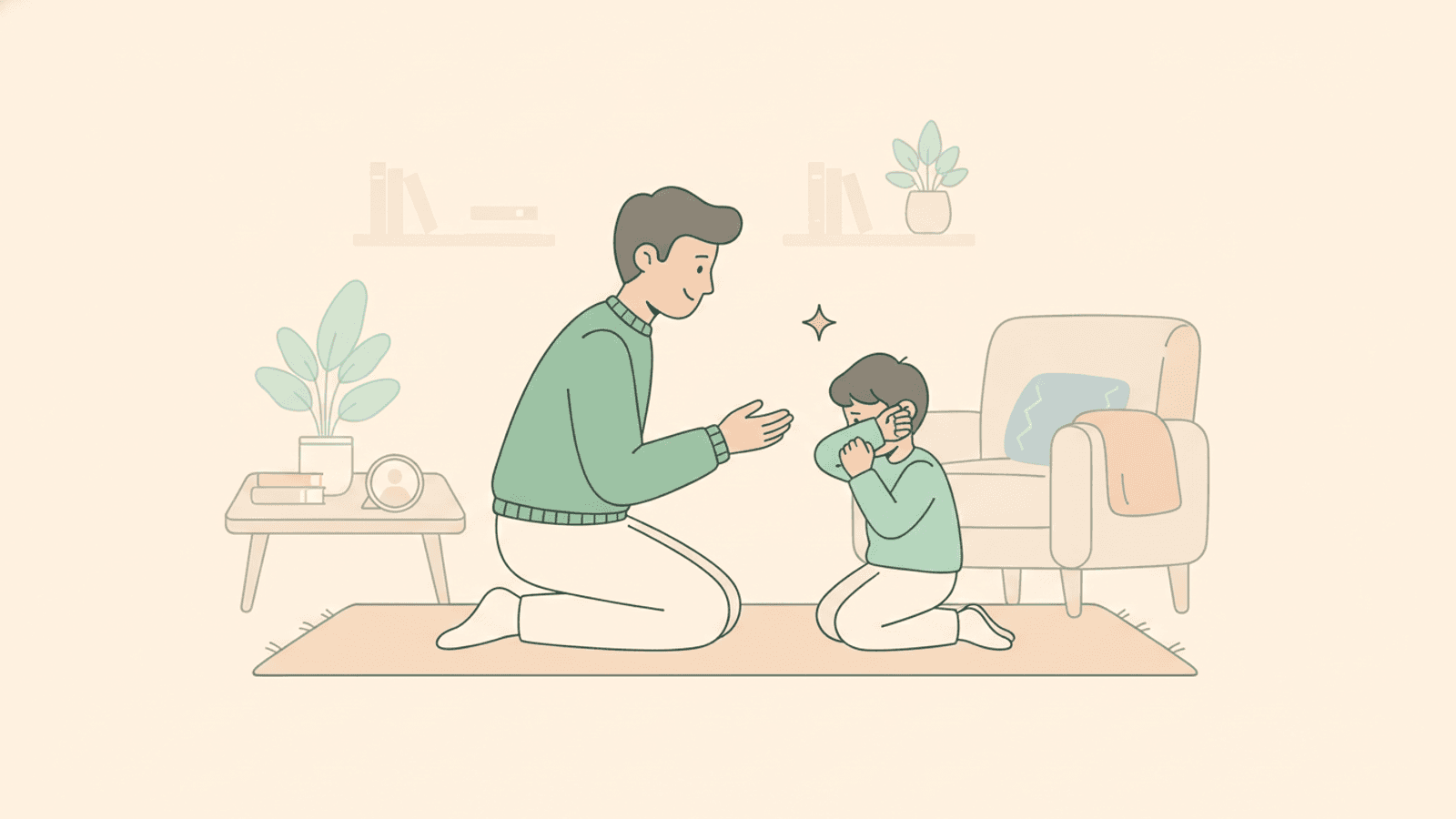
- Name it gently and ask for the regular voice — “I can’t quite understand the whiny voice; can you ask me in your normal voice?”
- Respond warmly the moment they switch, so you reinforce the better way immediately.
- Do not cave to the whine itself — if the answer is no, a whinier version does not change it.
Teach the "regular voice"
Young children genuinely do not always hear the difference between their whiny voice and their normal one. Practise in calm moments: model the two voices playfully, name them, and warmly praise the regular voice when you hear it in everyday life. Over time your child learns, through repetition, that the regular voice gets a faster, warmer and more helpful response than the whine ever does.
Prevent it: HALT and connection
Most whining spikes when a child is Hungry, Angry or upset, Lonely, or Tired — the classic HALT. Heading those off with regular snacks, downtime after school, small one-on-one connection top-ups and enough sleep cuts whining dramatically. A connected, rested child whines far less than a depleted one, whatever in-the-moment technique you use, so prevention is by far the most powerful tool you have.
When it feels constant
A sudden spike in whining often signals a change or stress — a new sibling, pressure at school, or simply less attention than usual — so it is worth looking for what has been depleted rather than just the behaviour. Persistent, intense whining alongside real distress can be worth a chat with a professional, but the vast majority of whining is ordinary and eases steadily with connection and consistency.
For children with ADHD or autism
A lower frustration tolerance, sensory overwhelm and difficulty finding the right words mean whining is often a sign of dysregulation rather than manipulation. Meet the need, lower your demands, and do not expect a calm “big voice” from a child who is already overloaded — co-regulate first, and teach the voice later, when they are settled. This article is general guidance, not medical advice.
Read more
Frequently asked questions
Why does my child whine so much?
Whining usually sits on top of an unmet need — tiredness, hunger, overwhelm or a craving for connection — combined with the fact that it often gets a result. Both keep it going, so meeting the need and not rewarding the whining tone together reduce it.
How do I get my child to stop whining?
Stay calm, name the whiny voice and ask for the regular one, respond warmly the moment they switch, and meet the genuine need without giving in to the whine itself. Prevent it by heading off hunger, tiredness and disconnection before they build.
Should I ignore whining?
Ignore the whining tone rather than the child — do not reward the whiny voice with a big reaction or instant results, but do acknowledge and meet the real need behind it. Pure ignoring misses the unmet need that is usually driving it.
What is the HALT method?
HALT stands for Hungry, Angry, Lonely, Tired — the four states that drive most whining and other tricky behaviour. Checking and heading off these needs with snacks, calm, connection and rest prevents far more whining than any in-the-moment response.
Is whining manipulative?
Not in a calculated sense. Whining is communication of an unmet need in the only way a child has right now, reinforced because it sometimes works. Treating it as a need to meet, rather than manipulation to punish, is both kinder and more effective.