Self-Care for Parents of Neurodivergent Children: What Actually Fits
Take a long bath, book a weekend away. None of it fits a household like yours. Here is the smaller, more boring version that actually works.
Self-care for parents of neurodivergent children has to be smaller and more scheduled than the version in the magazines. Most advice assumes a spare hour, a babysitter you can call at short notice and a body that is not running on broken sleep. In a household with ADHD or autism in it, you often have none of the three. What works instead is recovery measured in minutes rather than weekends, a deliberate cut in how much the week demands, and a routine that keeps running on the days you are not at your best.
Self-care here means protecting the resources the household actually runs on: sleep, food, quiet, and contact with other adults. It is maintenance, not a treat, and it is not selfish. You are the regulating adult in a home where at least one person needs to borrow calm from somebody. If there is nothing left to borrow, the whole system gets louder.
Why the usual advice does not fit
The standard suggestions assume things that are simply not available. A babysitter has to know what a meltdown looks like and what to do about it, so the pool of people you can leave your child with is small. Evenings out depend on a bedtime that goes to plan. Long-range plans depend on a week you can predict, and you often cannot.
There is also the vigilance. Many parents of neurodivergent children describe never fully switching off, because part of their attention is always tracking the room: the noise level, the next transition, whether the sensory load is building. That background monitoring is genuinely tiring, and it does not stop just because you have sat down.
On top of that sits the planning. Appointments, school meetings, forms, medication, who needs a forewarning about what. The parent carrying most of that invisible planning load is usually the one with the least recovery, because their head is never actually off duty.
The five resources worth defending
When there is not enough of everything, defend these in order. Each one has a minimum version that still counts.
- Sleep. The first thing to protect and the first thing you will sacrifice. Minimum version: going to bed thirty minutes earlier two nights a week.
- Food. Not nutrition philosophy. One meal a day eaten sitting down, not standing at the counter while supervising someone.
- Daylight and movement. Ten minutes outside, ideally before the afternoon. Walking to the shop counts.
- Quiet. Sensory recovery for you. Ear defenders or headphones in the kitchen are not rude. Ten minutes with no sound is a real intervention.
- Other adults. One conversation a week with someone who is not being managed by you. A phone call counts.
Recovery in minutes, not weekends
The whole-weekend model of rest is not available and waiting for it means never resting at all. Small, repeatable recovery beats a rare big one, because it survives contact with your actual calendar.
- The ten minutes after drop-off, spent sitting in the car or on a bench instead of starting the next task.
- A shower with the door closed and no one talking through it.
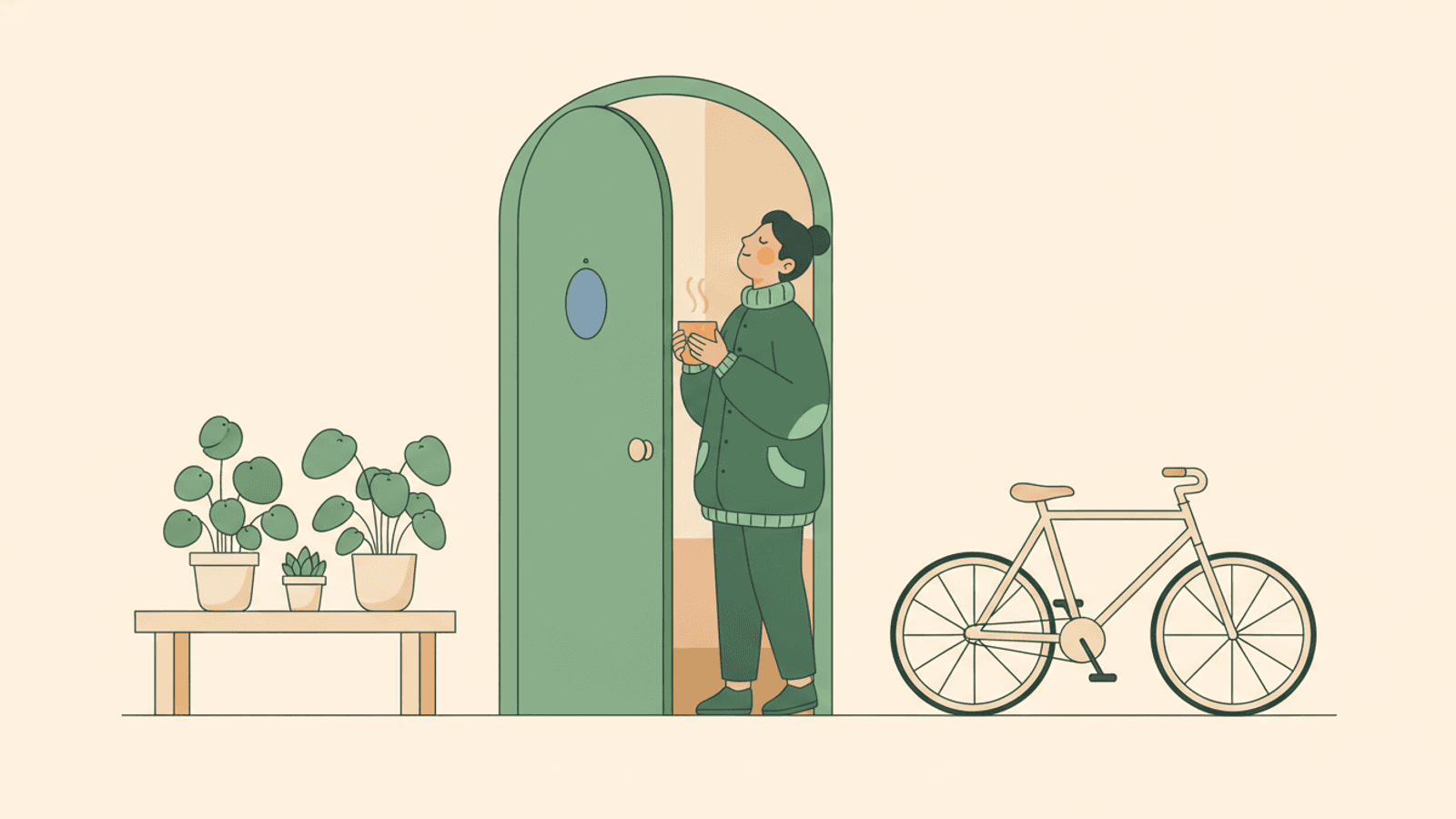
- One cup of something hot that you drink while it is still hot.
- Headphones on for one journey, with the thing you like rather than the thing that is useful.
- Fifteen minutes after bedtime that is genuinely yours before the tidying starts.
The trap most parents fall into is staying up late to reclaim the day, then paying for it at 06:30. If your evening time is the only time that feels like yours, shorten it deliberately rather than losing the night. Two shorter evenings and a slept-through night beat five late ones.
Cut the demand, do not just add recovery
Self-care that sits on top of an impossible week does not work. Something has to come off the list. Look for the demands that produce the most friction for the least value: the extra activity nobody enjoys, the errand that adds a transition, the ambitious cooking on the worst day of the week.
A large part of the daily load is not tasks but repetition: being the reminder, over and over. That is exactly what visual support takes off you. When the sequence is visible, the child follows the plan instead of your voice, and you stop being the one who has to say it a fourth time.
This is the practical part Routined is for. Each routine step can carry a picture, a timer and a checklist, and both adults see the same plan in real time on their own phones, so the work can actually be split instead of living in one person’s head.
Sleep, when sleep is the thing you cannot get
If your child wakes at night, sharing the load in shifts beats both of you sleeping badly. Agree who is on duty, and let the other one genuinely be off, with earplugs and a closed door. Alternating nights is usually better than splitting each night, because one full night of sleep restores more than two halves.
If nights are consistently broken over months, that is worth raising with your child’s doctor or care team rather than treating as a permanent fact of your life. Sleep problems are common alongside ADHD and autism, and they are often treatable. This article is general information, not medical advice.
Other adults, and what to actually ask for
Peer support is the thing parents most often say made the difference, and it is not the same as therapy. Other parents of neurodivergent children understand the specifics without a preamble, which removes an exhausting amount of explaining. A local association, a moderated online group, or one person you can text on a bad Tuesday all count. If a group leaves you more anxious than when you arrived, it is the wrong group.
When someone says "let me know if I can help", most people mean it and simply have no idea what to offer. Have specific answers ready.
- "Could you take my other child on Saturday morning for two hours?"
- "Could you cook double on Wednesday and drop half here?"
- "Could you sit with him from four to five so I can sleep?"
- "Could you come with me to the school meeting and take notes?"
When self-care is not the answer
Rest fixes tiredness. It does not fix a load that is genuinely too big for the number of adults carrying it, and it does not fix depression. If you feel flat most days for weeks, cannot enjoy anything, dread the mornings, or feel nothing when your child needs you, that is a signal to talk to your doctor or local health service rather than to try harder at self-care.
It is also worth pushing on the practical support you are entitled to, which varies by country: respite care, support contact people, school accommodations, or help from the team that handled the assessment. If you are early in that process, the first steps after a diagnosis are a reasonable place to start.
A realistic weekly minimum
Not aspirational. This is the floor, and hitting it most weeks is a genuine result.
- One meal a day eaten sitting down.
- Ten minutes outside on most days.
- Two nights with an earlier bedtime.
- One conversation with an adult who is not your child or your colleague.
- One block of thirty minutes a week when another adult is fully in charge.
Read more
- When parents become project managers — why the invisible planning lands on one person, and how to move some of it.
- First steps after an ADHD or autism diagnosis — what to do, and what can wait.
- Meltdowns: what to do in the moment — the situations that drain the most energy, handled with less of it.
Frequently asked questions
What does self-care mean for a parent of a neurodivergent child?
It means protecting the basic resources the household runs on: sleep, food, daylight, quiet and contact with other adults. Not spa days. In practice it looks like ten-minute recoveries repeated often, a deliberate reduction in what the week demands, and shared routines so the load does not sit with one person.
I have no time and no babysitter. Where do I start?
Start with sleep and one meal a day sitting down, because both are free and both change how the rest of the day feels. Then find ten minutes that already exist in your day, usually right after drop-off, and stop filling them with the next task.
Is it selfish to take time for myself?
No. A child who struggles to regulate borrows calm from the adult beside them, and you cannot lend what you do not have. Rest is what makes you able to stay calm during the fourth transition of the day, so it is part of the care your child receives, not a subtraction from it.
How do we share the load when one parent carries more?
Move whole areas, not individual tasks. "You own bedtime and the school contact" works; "help me more" does not, because the planning still lives with you. Writing the routines down where both of you can see and edit them is what makes handing something over possible.
When should I get professional help?
If low mood lasts most days for several weeks, if you cannot enjoy things you used to, if you are constantly on edge, or if you have thoughts of harming yourself, contact your doctor or local health service. That is not a failure of self-care, it is the right tool for a different problem.