Physiotherapy
The visit to the physiotherapist is only the start. Most of the work happens at home, day after day, with no coach standing beside you. The pictures below make the exercises easy to recognise and follow.
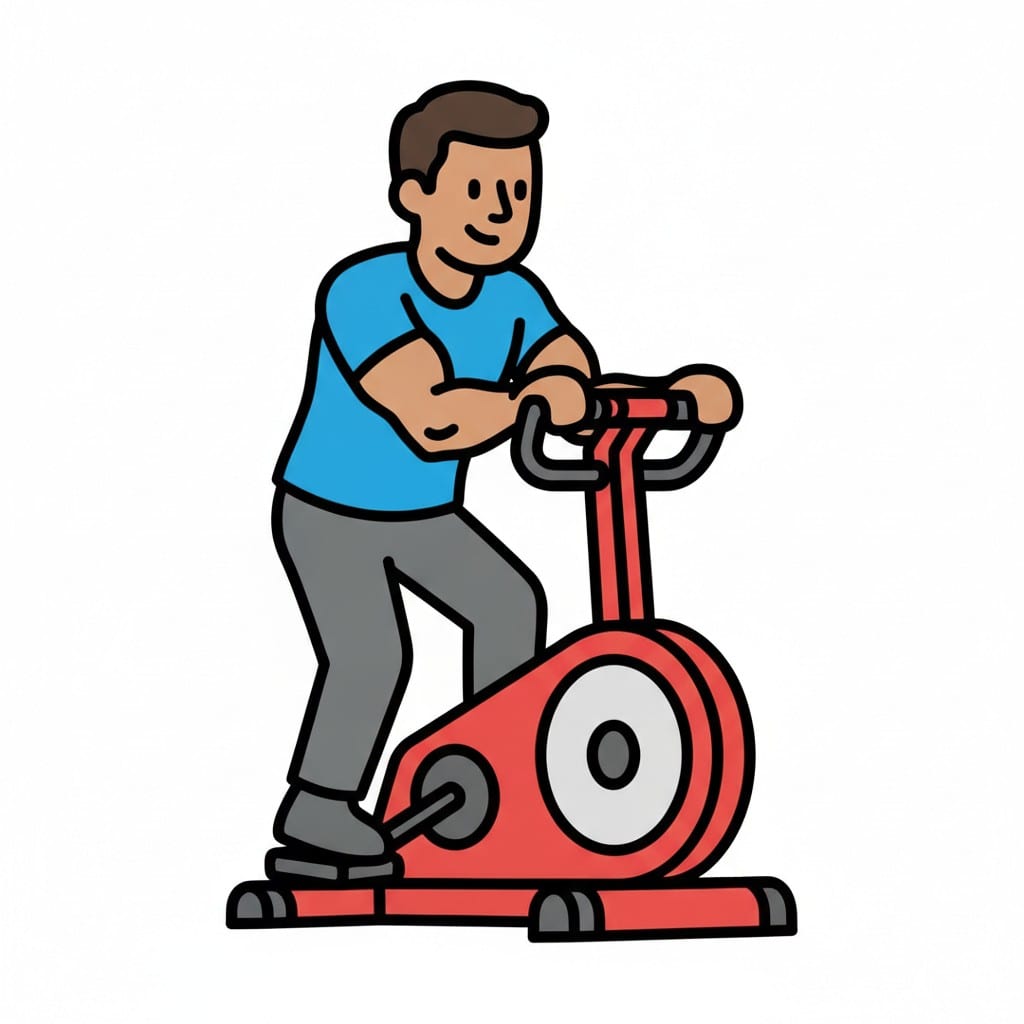 ♂
♂Exercise bike training
A man pedals on an exercise bike as part of his training.
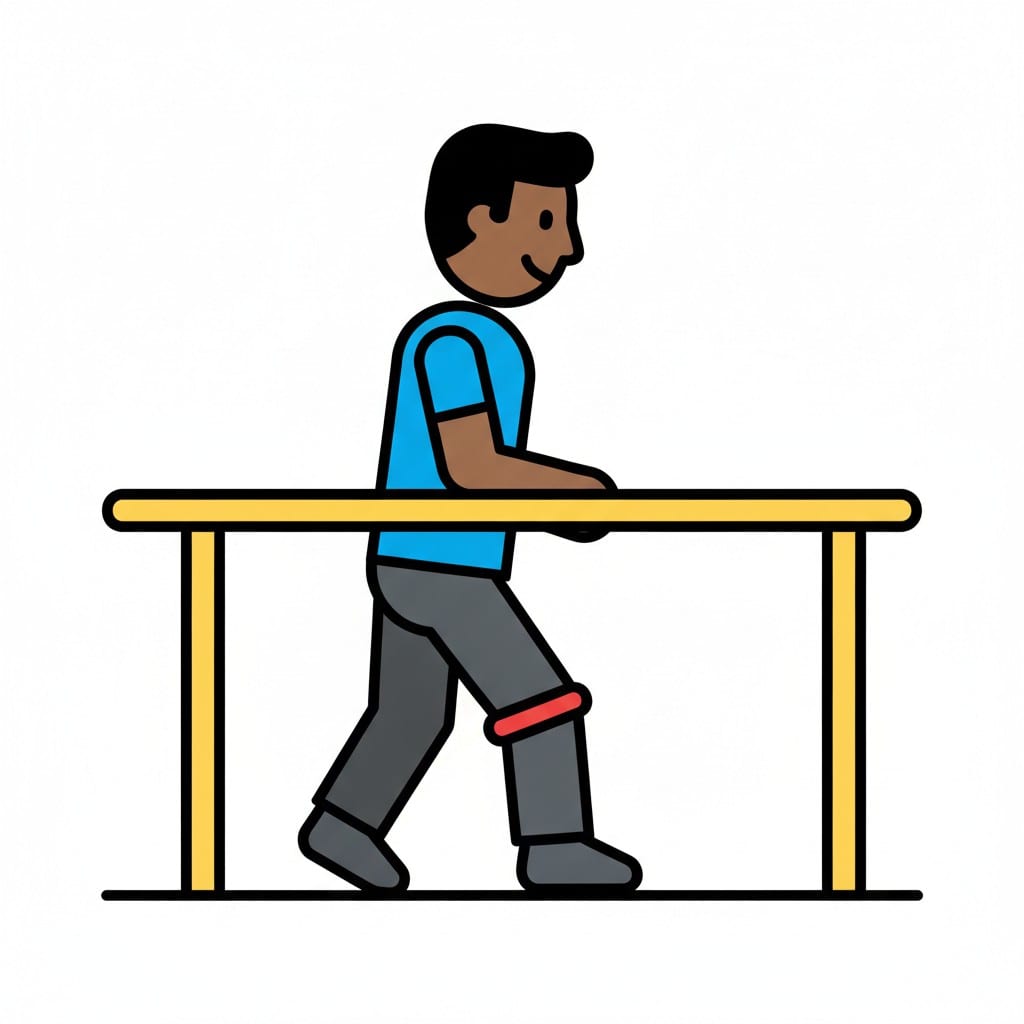 ♂
♂Walking between parallel bars
A man walks between two rails, holding on for support.
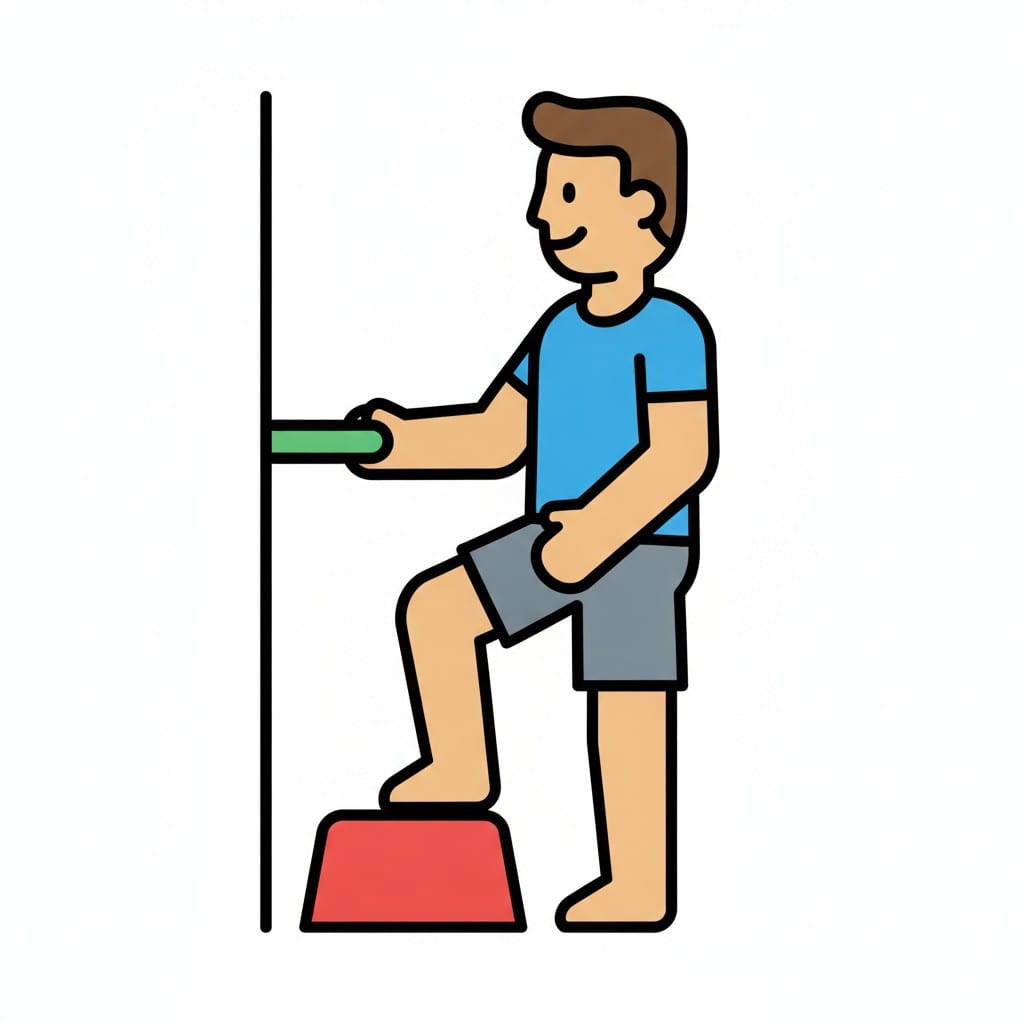 ♂
♂Step-up exercise
A man holds a handrail and steps up onto a low stool with one foot.
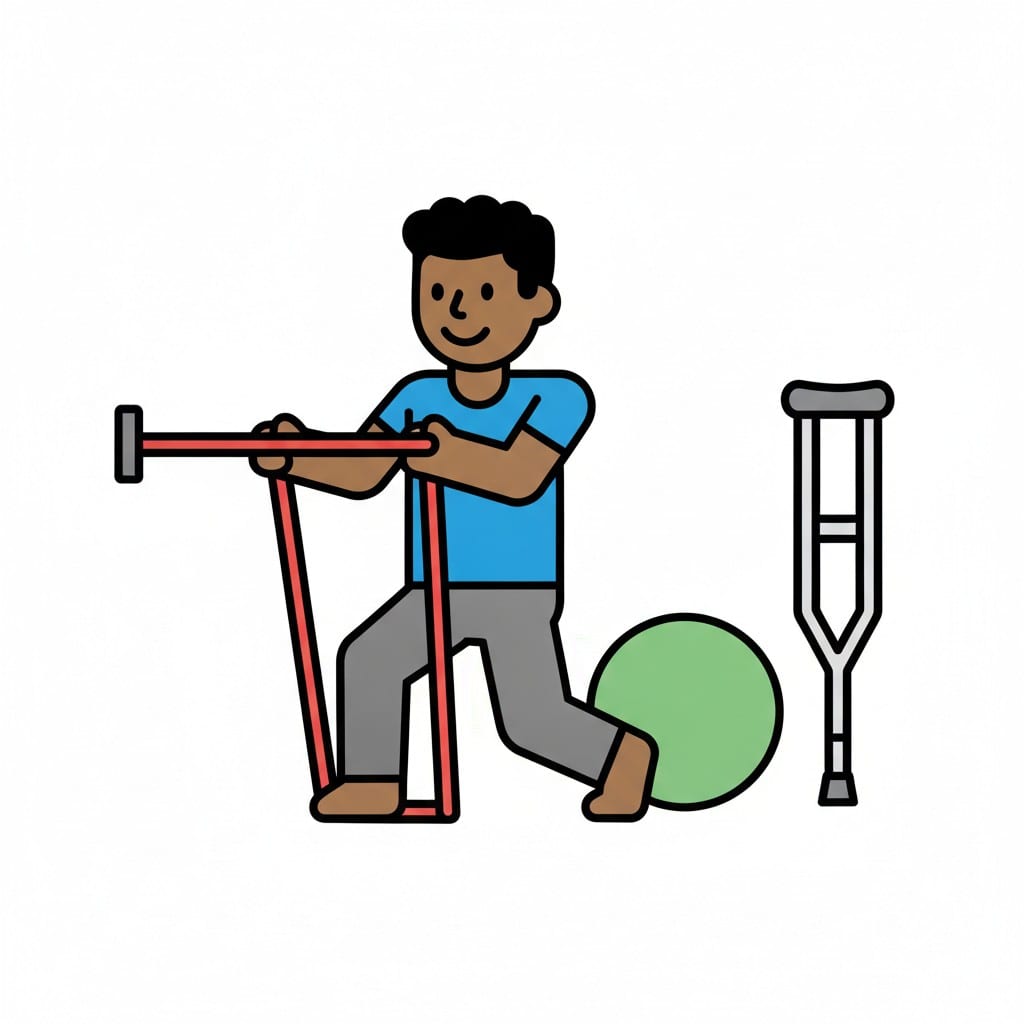 ♂
♂Resistance band training
A boy trains with a resistance band, with an exercise ball and a crutch beside him.
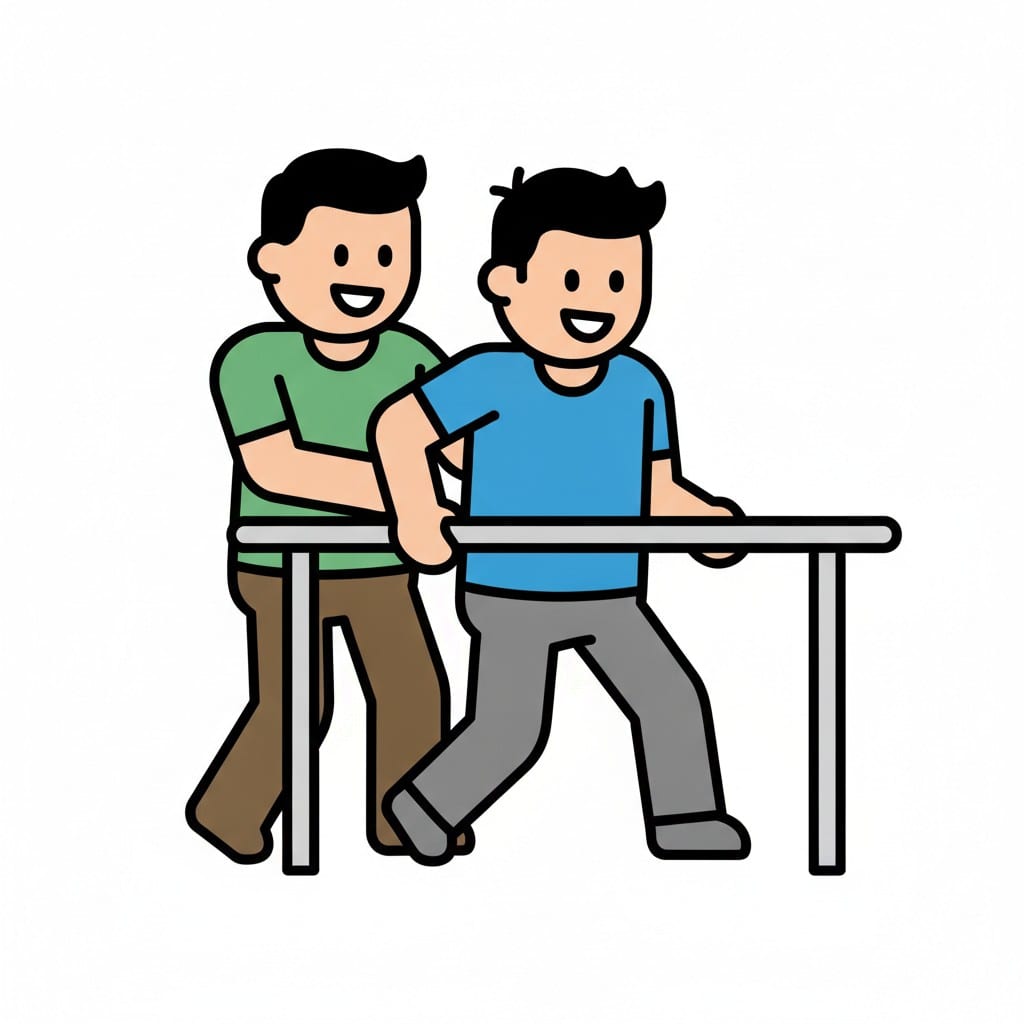 ♂
♂Walking with a physiotherapist
A physiotherapist supports a boy walking between two rails.
 ♂
♂At the physiotherapist
A physiotherapist helps a boy step up while holding a bar, with a ball and an exercise band in the room.
About this visual support
Ten squats, thirty seconds of balance, three rounds with the band. At the clinic it sounds simple, and children often do the exercises nicely while the physiotherapist demonstrates. At home it is a different story. There is no special room, nobody counting out loud and often no set time of day, and after a week the exercises have blurred together or quietly dropped away. It is not a lack of will. It is hard to stick with something that is boring, repetitive and shows no visible results for weeks.
Visual support helps in two ways. The pictures remind the child exactly how each exercise should look, so they do not have to remember instructions from the visit. And they turn the session into a short, contained list with a clear end. A concrete tip is to ask the physiotherapist to check the cards, or take your own photos of the child during the appointment, so every card shows the right position. Then hang the cards where the exercises happen, for example by the bed or in the hallway.
For a child who trains every day, a simple tick after each session makes progress visible. In Routined you can set up the training as its own routine with pictures, a timer and check-offs. You can try the app for 14 days, and the pictures here are free to download.
Use this image in a schedule
Build your own visual schedule with this image and download it as a print-ready PDF. Completely free.

More similar visual supports
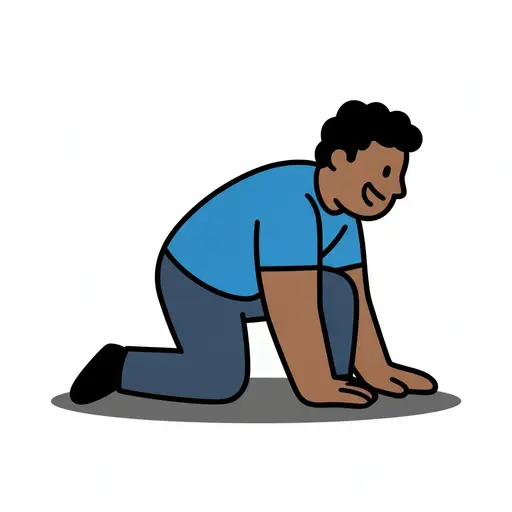
Get up off the floor
A child on hands and knees getting up from the floor.
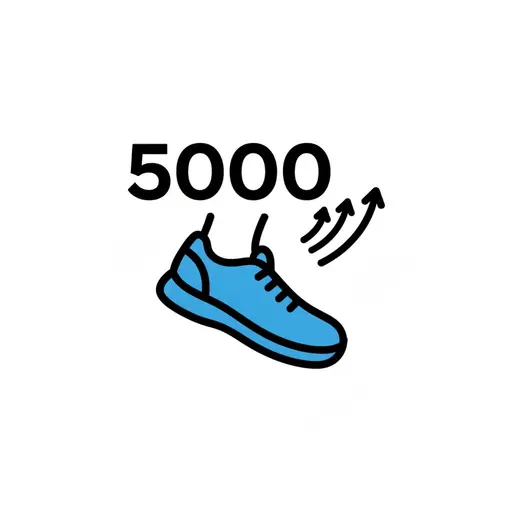
5000 Steps
A blue sneaker with the number 5000 and arrows showing movement.
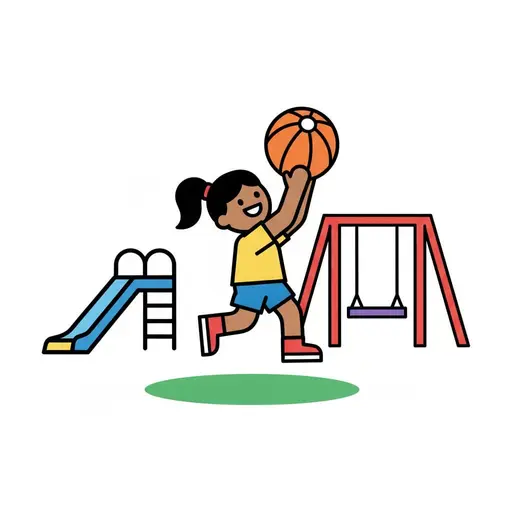
Active play
A girl jumps with a basketball in a playground with a slide and swings.

Allergy medicine
Medicine bottle with a red cross next to a capsule, a leaf, and a cloud.

Antibiotics
A medicine bottle with capsules and a person taking their medicine.
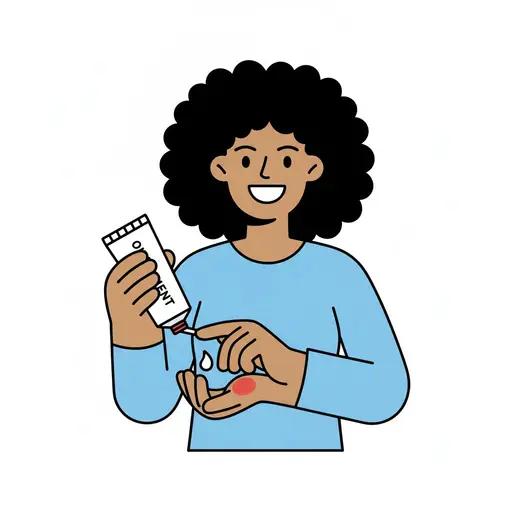
Apply ointment
A woman rubs ointment from a tube onto her hand.
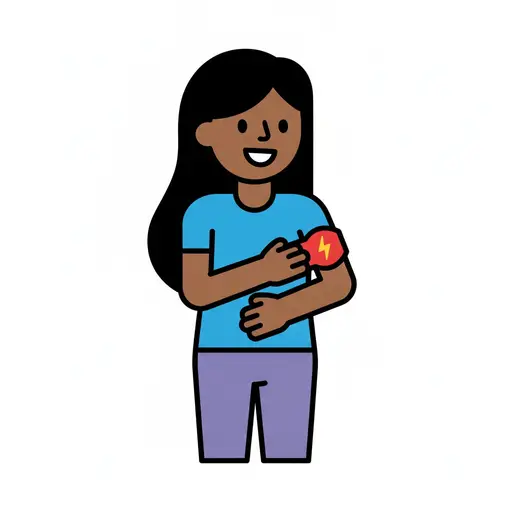
Armband
A person wears a red armband on their upper arm and points at it.
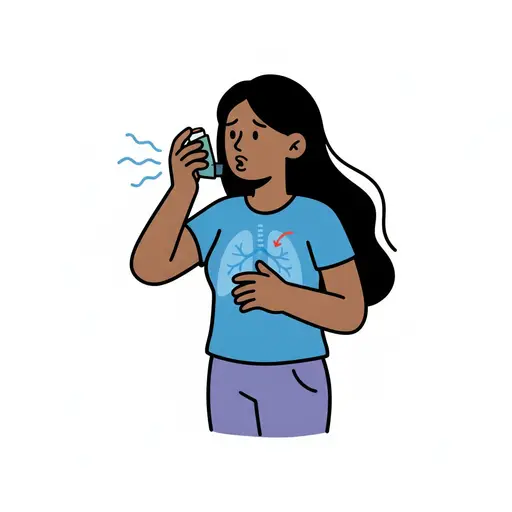
Asthma
A person with a worried expression brings a blue inhaler to their mouth and hold...
Take the visual supports with you
In Routined you build schedules from these pictures, add timers and voice instructions, and your child follows the day on their own.


* 14-day free trial, then $2.39 a month or $20.99 a year (US pricing). Cancel anytime.