Sit still
Sitting still looks passive, but for a body that wants to move it is work that continues the whole time, and without a visible end nobody knows how long it has to last. The visual support below gives stillness a clear beginning and something to aim for.
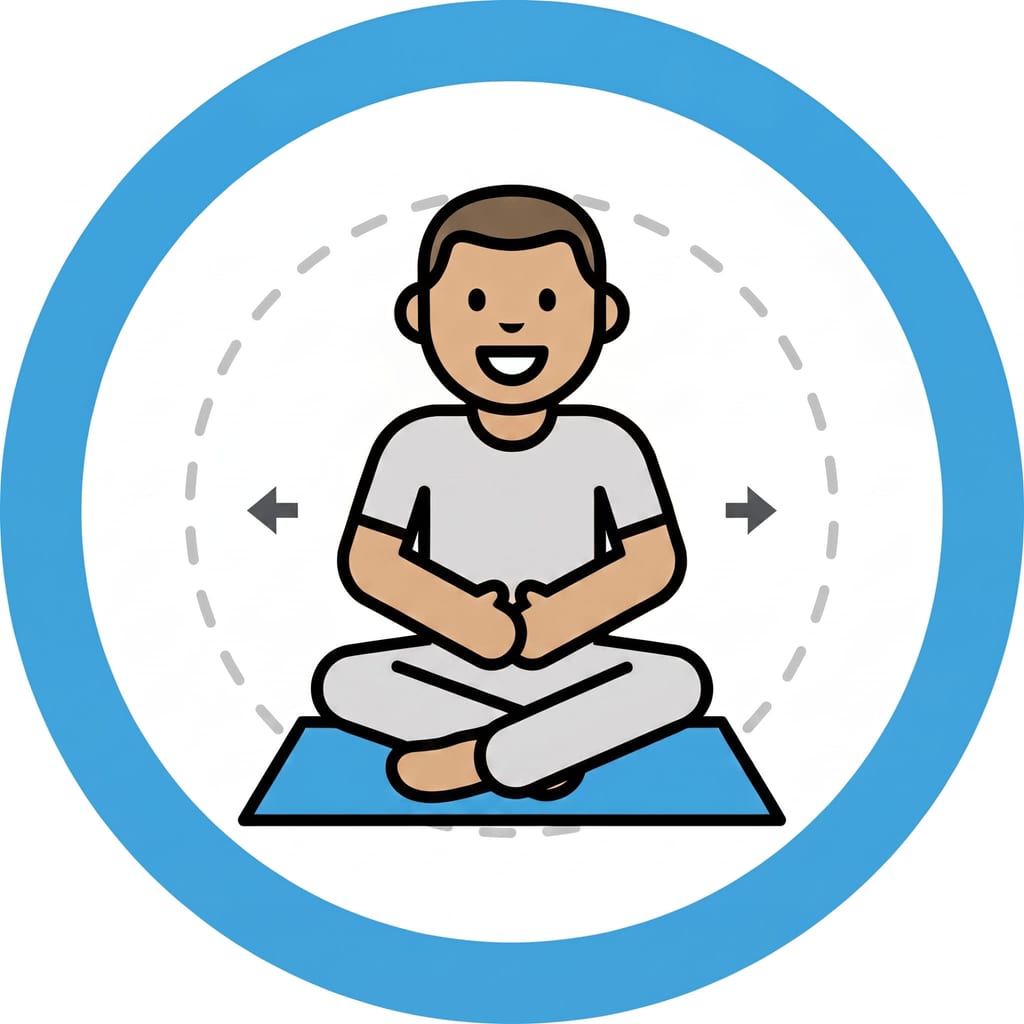 ♂
♂Boy sitting still on a mat
A boy sits cross-legged on a blue mat and stays calmly within his own space.
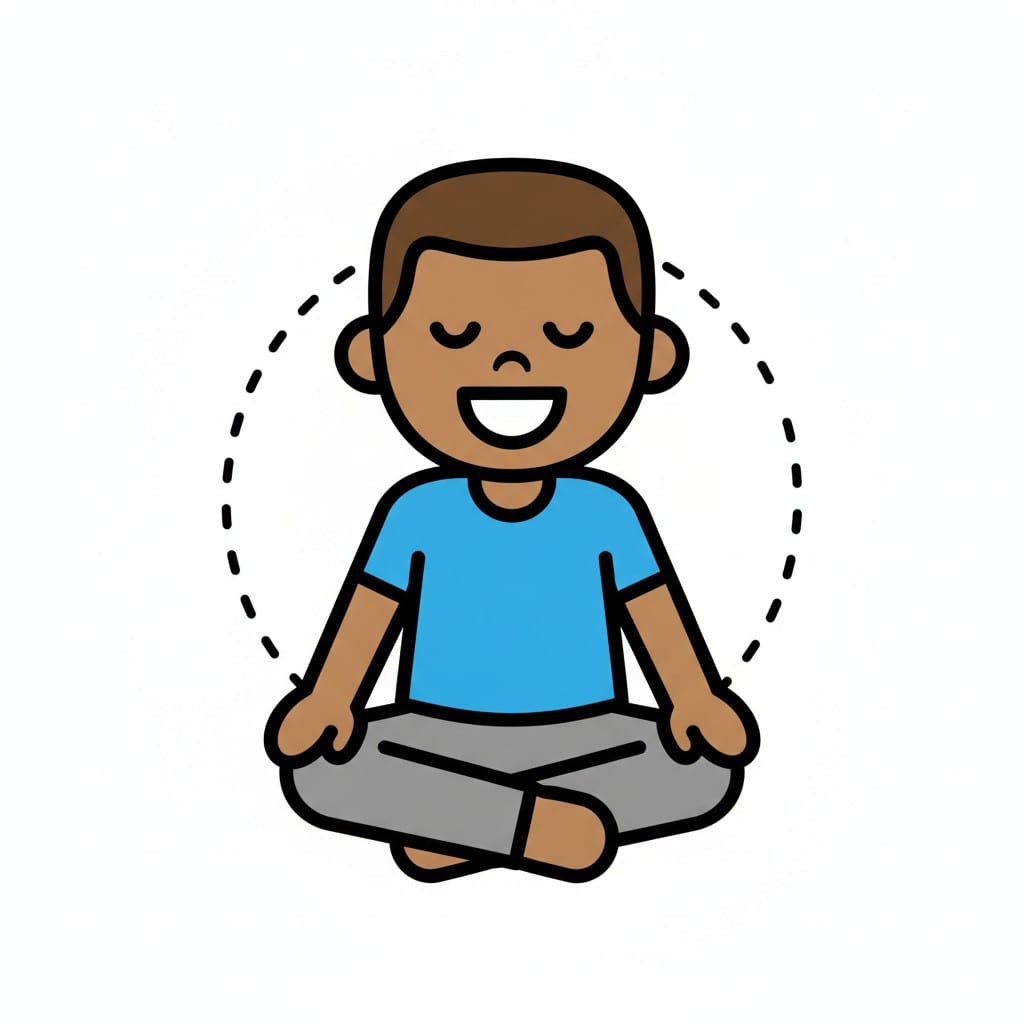 ♂
♂Boy sitting still with eyes closed
With his eyes closed, a boy sits cross-legged and breathes calmly.
About this visual support
A body that seeks movement is not doing nothing while it sits still. It is holding back. Muscles tense, the gaze wanders, a foot starts bouncing, and all the while a small piece of work is going on that nobody outside can see. That is why the instruction to sit still is sometimes met with resistance: the child already knows it costs something.
What decides whether the effort is bearable is rarely willingness but time. Stillness with no end point is unlimited, and unlimited feels heavier than merely long. Visual support puts a frame around the moment: one picture for sitting down, one for breathing calmly, one for whatever comes afterwards. Once the end exists as a picture, it is possible to hold out until it arrives.
Start short, shorter than you think is needed. Two minutes that succeed are worth more than ten that fall apart, and you can add half a minute at a time. Give the body something quiet to do as well: feet flat on the floor, hands resting on the thighs. In Routined you can set stillness up as its own step with a timer, so the child watches the time shrink instead of asking about it.
Use this image in a schedule
Build your own visual schedule with this image and download it as a print-ready PDF. Completely free.

More similar visual supports
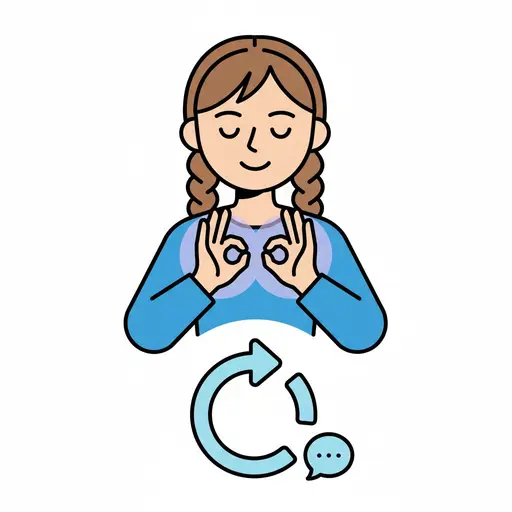
Quiet reset
A girl with closed eyes breathes calmly with her hands at her chest beside a res...

Calm Activity
A boy sits cross-legged on the floor reading an open book.
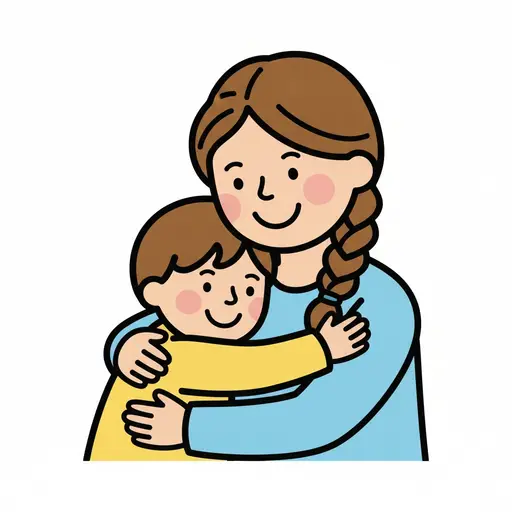
Cuddle with mom
A mother and child hug each other closely.
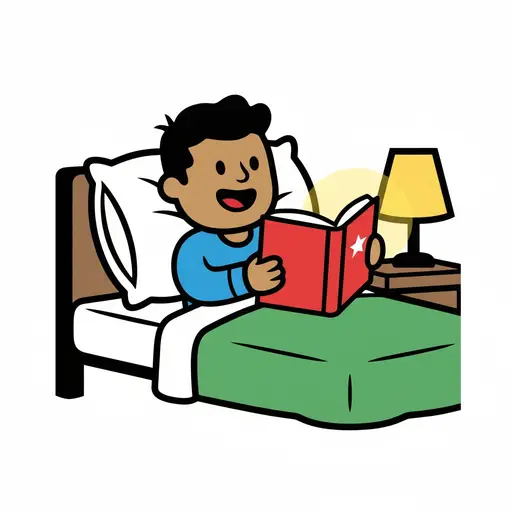
Engage with literature in bed
A person is lying in bed, propped up against a pillow, reading a red book with a...

Evening calm
A picture of a dark blue night sky with a moon and stars above a house and some ...

Feeling
A happy child with a heart and sound waves above them.

Listen to an audiobook
A girl wearing headphones smiles and holds a tablet showing a book.
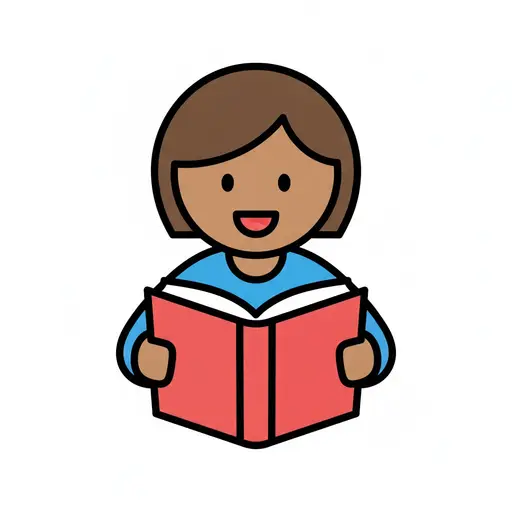
Mom reads
A mother smiles while holding an open red book.
Take the visual supports with you
In Routined you build schedules from these pictures, add timers and voice instructions, and your child follows the day on their own.


* 14-day free trial included for new users.