Push-ups
As long as nobody has said how many, push-ups feel like something without an end. A set number tells the body how to spread the effort, and the visual support below shows both the posture and how many are left.
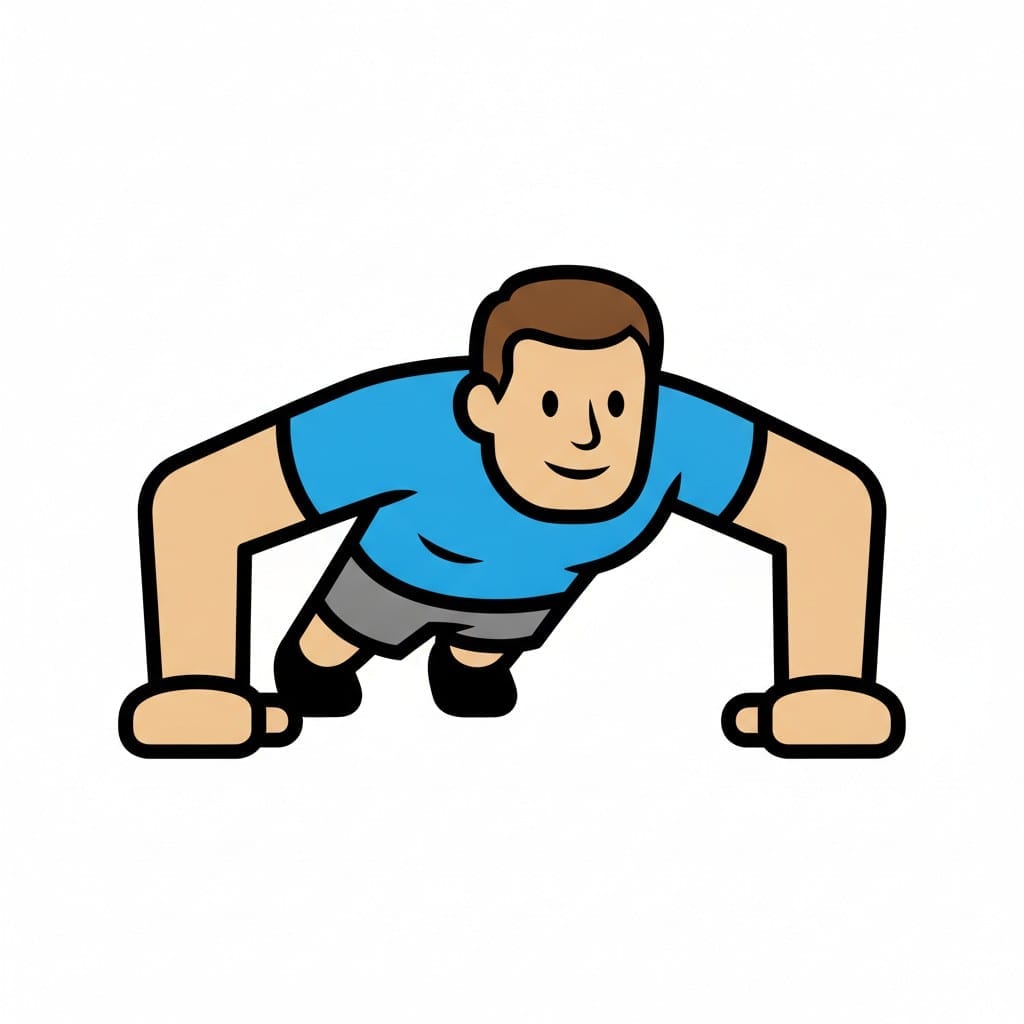 ♂
♂Boy doing push-ups
A boy in a blue t-shirt holds a push-up position with his hands on the floor.
About this visual support
The difference between five push-ups and an unspecified number is not about strength but about overview. A child who cannot see where the end lies will either spend everything at once and run out after two, or back away before the first attempt. Effort cannot be rationed when it has no edge to count towards.
Visual support solves two separate problems here. One is posture: a straight line from shoulder to heel is hard to describe in words to someone who cannot see themselves from the side, but easy to compare against a picture. The other is counting. A row of five boxes makes every completed push-up visible, and the last box is a promise that this really does end.
Let the child pick the number within a narrow range, three or five, and keep that number steady for a week before raising it. Managing three every day builds more than failing at ten once. In the Routined app, push-ups can sit as their own step with a picture, a count and a timer that shows the rest between sets.
Use this image in a schedule
Build your own visual schedule with this image and download it as a print-ready PDF. Completely free.

More similar visual supports
Home workout
A woman in workout clothes does a lunge holding dumbbells at home.
Squat with band pulldown
A man holds a squat while pulling two resistance bands down towards his chest.
Activity and exercise
A woman lifts a small dumbbell while holding a tablet that shows a progress char...
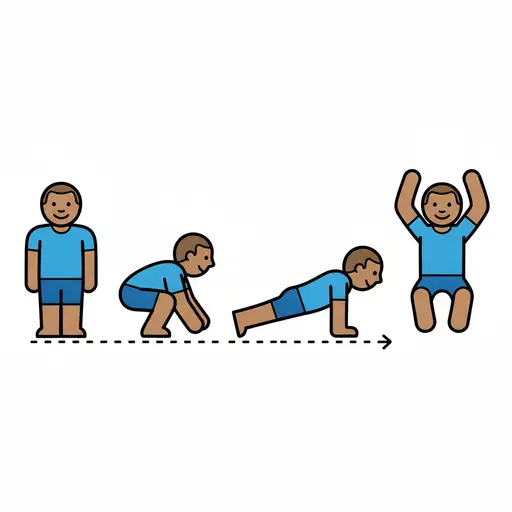
Burpees
Four figures in a row show a boy standing, squatting down, dropping into a plank...
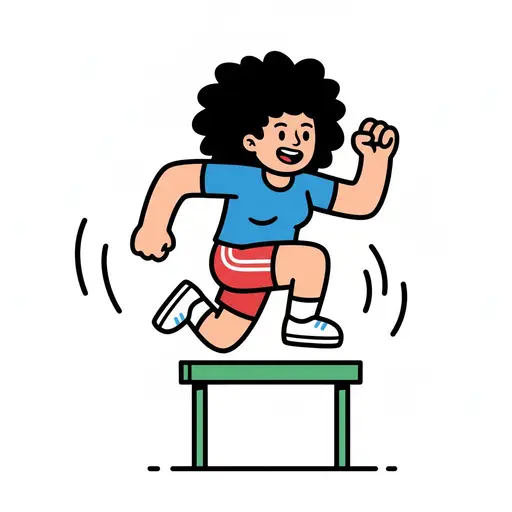
Exercise
Cartoon illustration of a woman in sportswear jumping over a green hurdle.
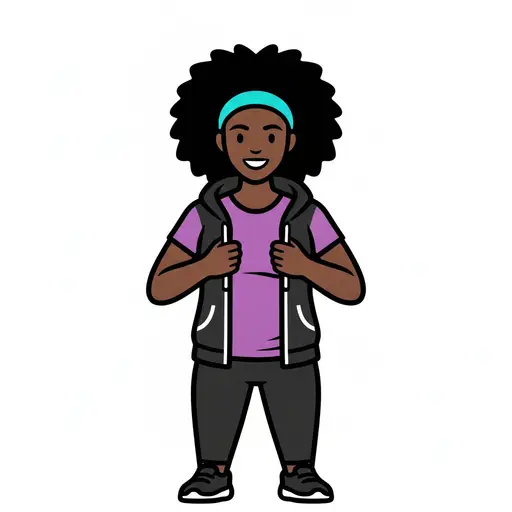
Get dressed for exercise
A child stands dressed in leggings, a t-shirt, a vest, a headband and trainers.
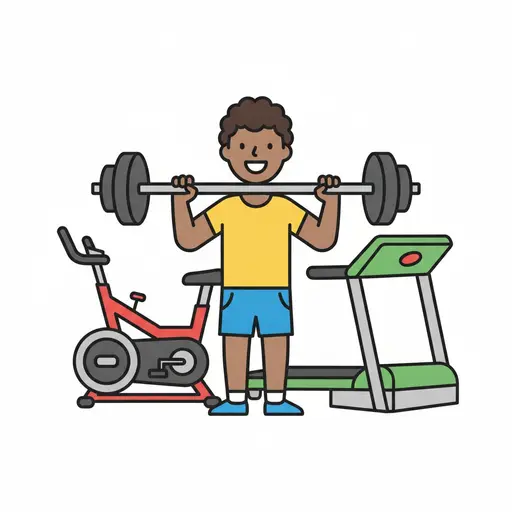
Gym time
A child lifts a barbell in a gym with an exercise bike and a treadmill behind.
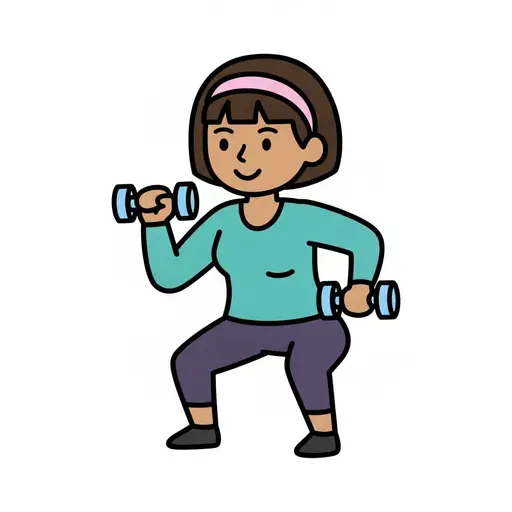
Mum works out
An adult with a headband does a squat holding two dumbbells.
Take the visual supports with you
In Routined you build schedules from these pictures, add timers and voice instructions, and your child follows the day on their own.


* 14-day free trial included for new users.