Stay In Bed
Staying put when the body is wide awake and the room is quiet is surprisingly hard. The visual support shows that lying still is part of the night, with a clear end. See how the steps can look below.
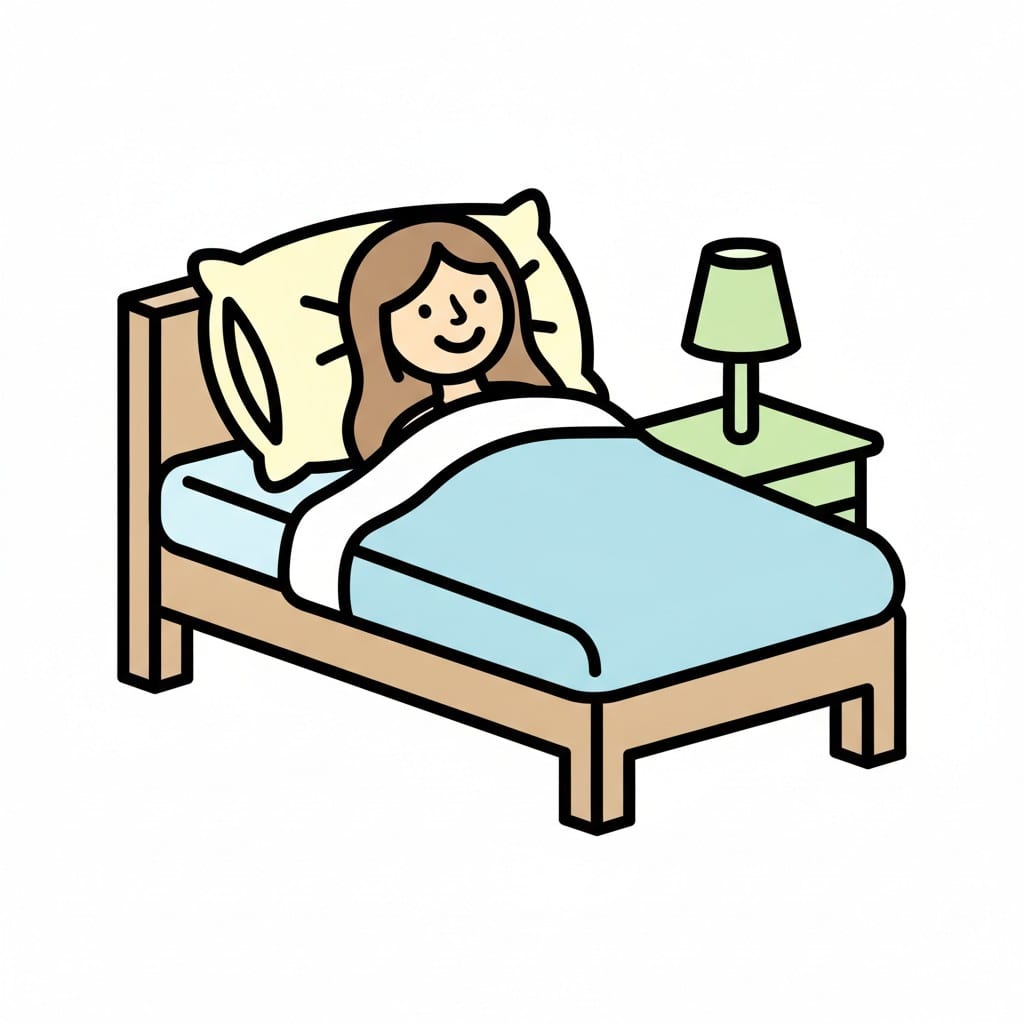
Stay in bed
A girl lies contentedly in bed under the covers with a bedside lamp nearby.
About this visual support
The dark sometimes makes the body lively, the exact opposite of what you hope for. Your child lies there and the thoughts start to spin, the legs want to move and suddenly it feels impossible just to be still. Staying in bed means holding back even when the whole body says get up.
Visual support gives that still moment a shape. When your child sees pictures of lying still, closing their eyes and waiting for morning, it becomes clear that staying put is not a punishment but part of sleeping. The picture reminds them what the body should do when the head wants something else, and gives them something to fix their eyes on in the dark instead of getting up.
One concrete tip: tie the staying put to something the body is allowed to do, like breathing slowly or patting a soft toy. Then your child has a task that fits with lying still, rather than just a ban on getting up. For children who struggle to wind down, a small anchor like that can make the night calmer. If you want to build the whole evening up to sleep, you can do it in the Routined app.
Use this image in a schedule
Build your own visual schedule with this image and download it as a print-ready PDF. Completely free.

More similar visual supports
Bedroom
A bedroom scene with a made bed, a bedside table with a lamp, and a window showi...
Bedtime
A girl with long wavy hair sleeps peacefully in her bed under a white duvet, wea...
Sleep
A woman sleeps with her head on a white pillow under a blue blanket, and the let...
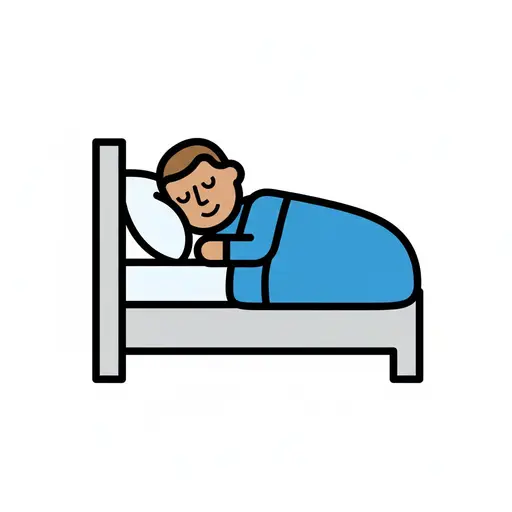
Sleep alone
A person is sleeping peacefully in a bed, covered with a blue blanket.
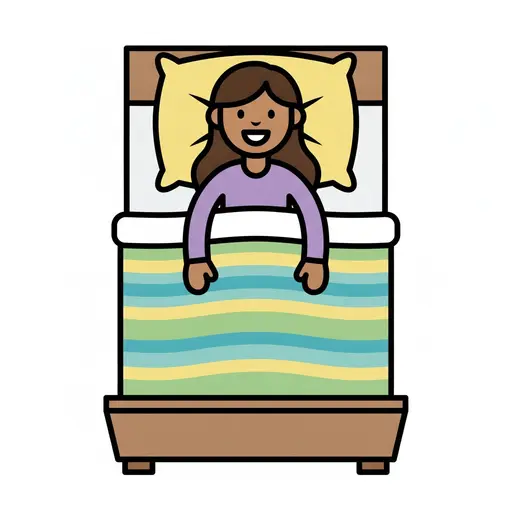
Bed
A smiling girl lies in a bed with a yellow pillow and a striped duvet in green, ...
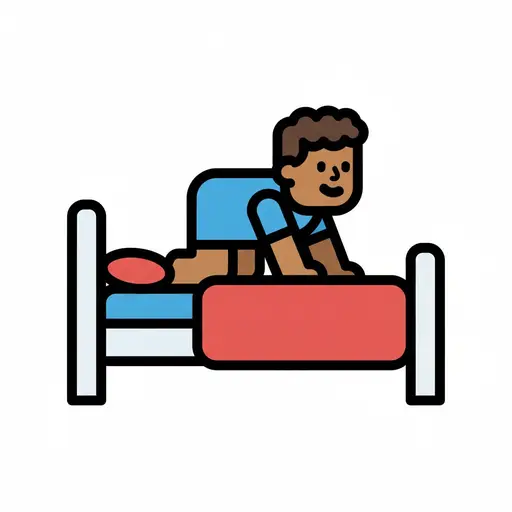
Crawl into bed
An illustration of a boy crawling into a bed.
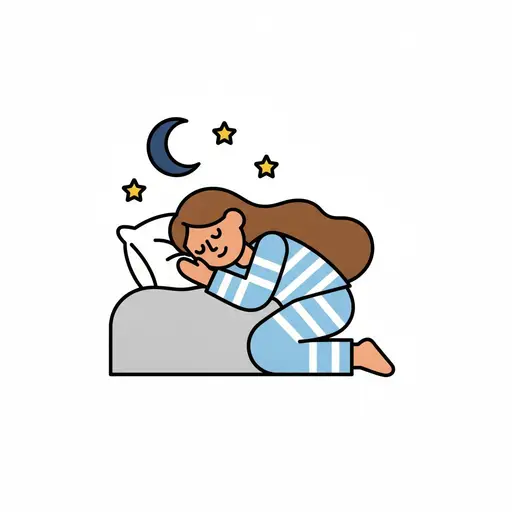
Go to sleep
A girl in blue striped pyjamas lies asleep on a pillow, with a moon and stars ab...
In Bed Quiet Time
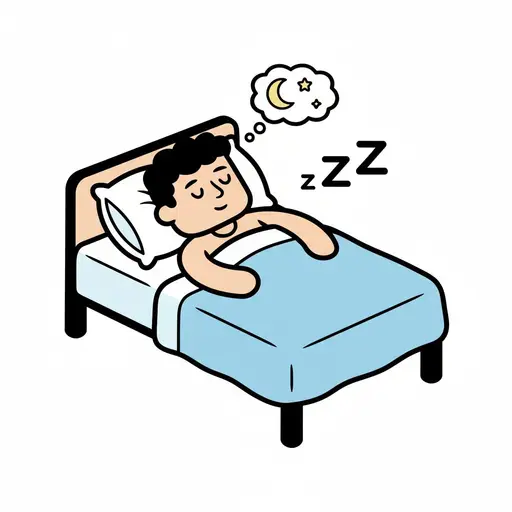
A boy lies in a bed under a blue blanket with a thought bubble showing a moon an...
Take the visual supports with you
In Routined you build schedules from these pictures, add timers and voice instructions, and your child follows the day on their own.


* 14-day free trial included for new users.